
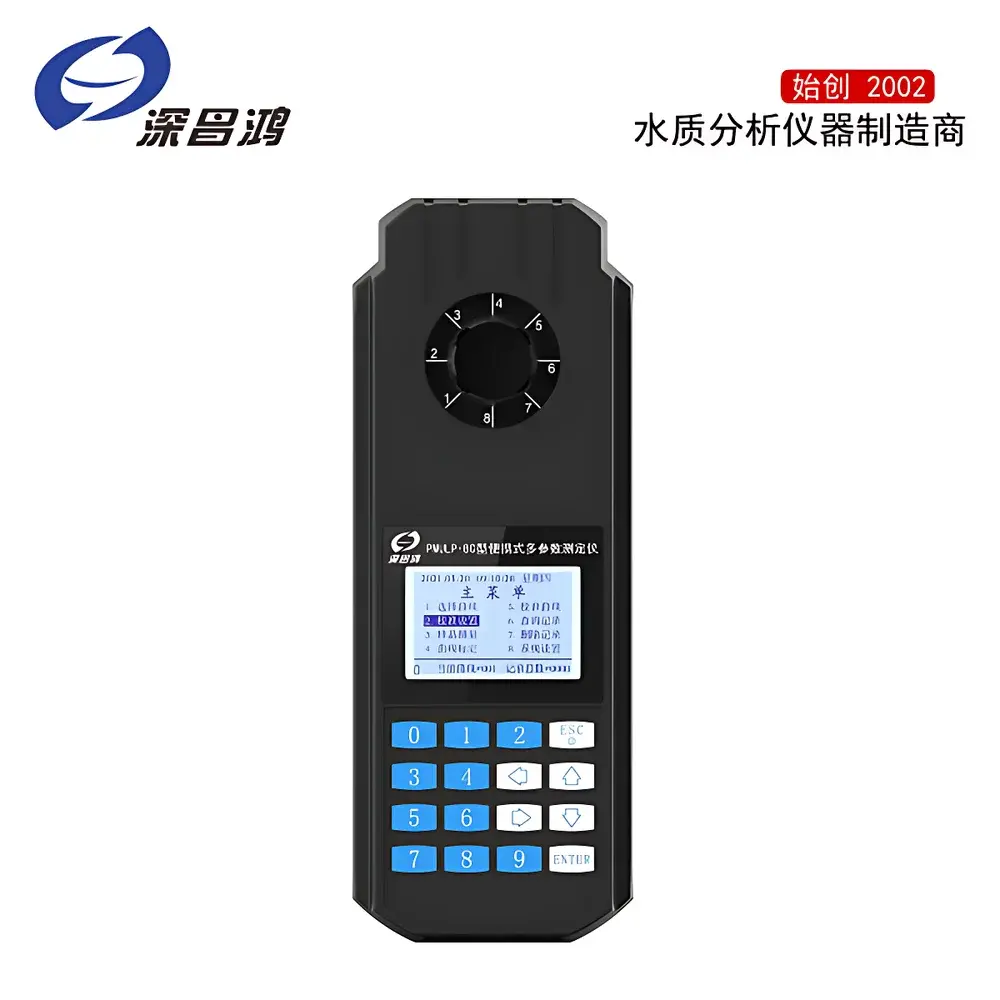
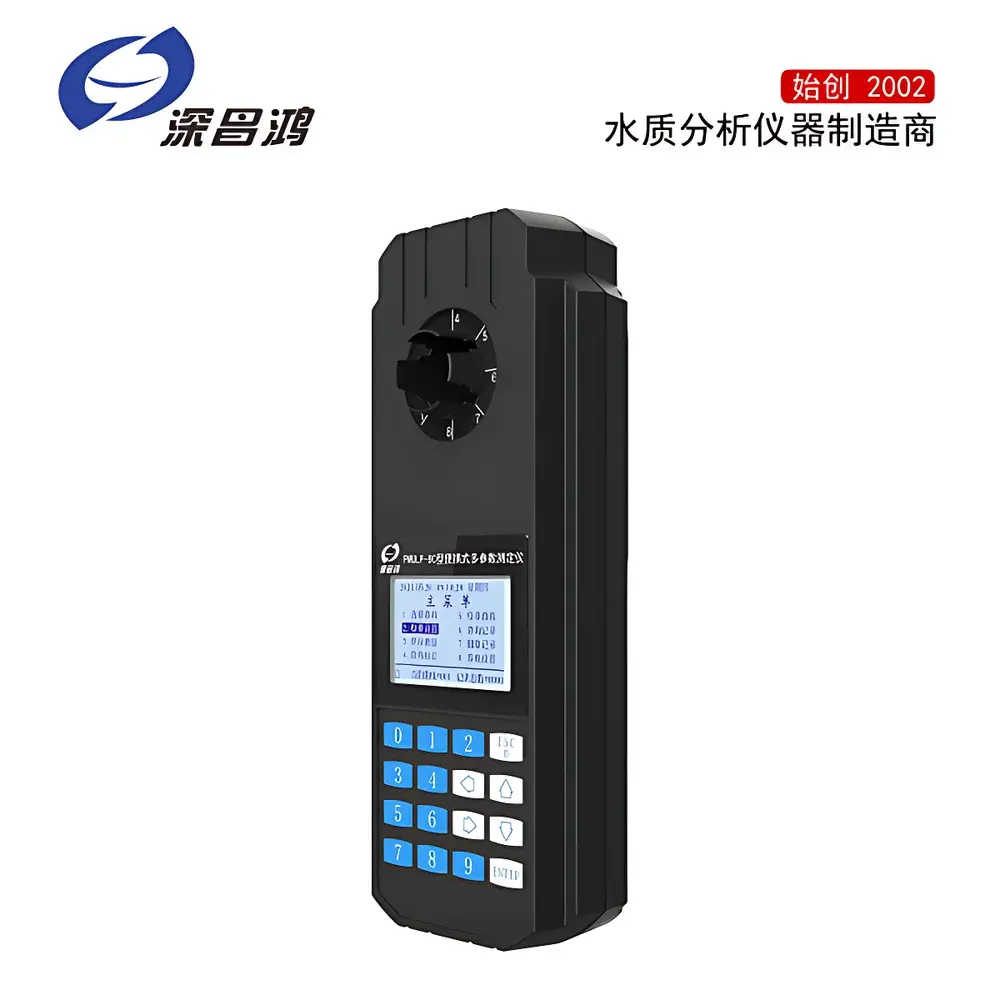
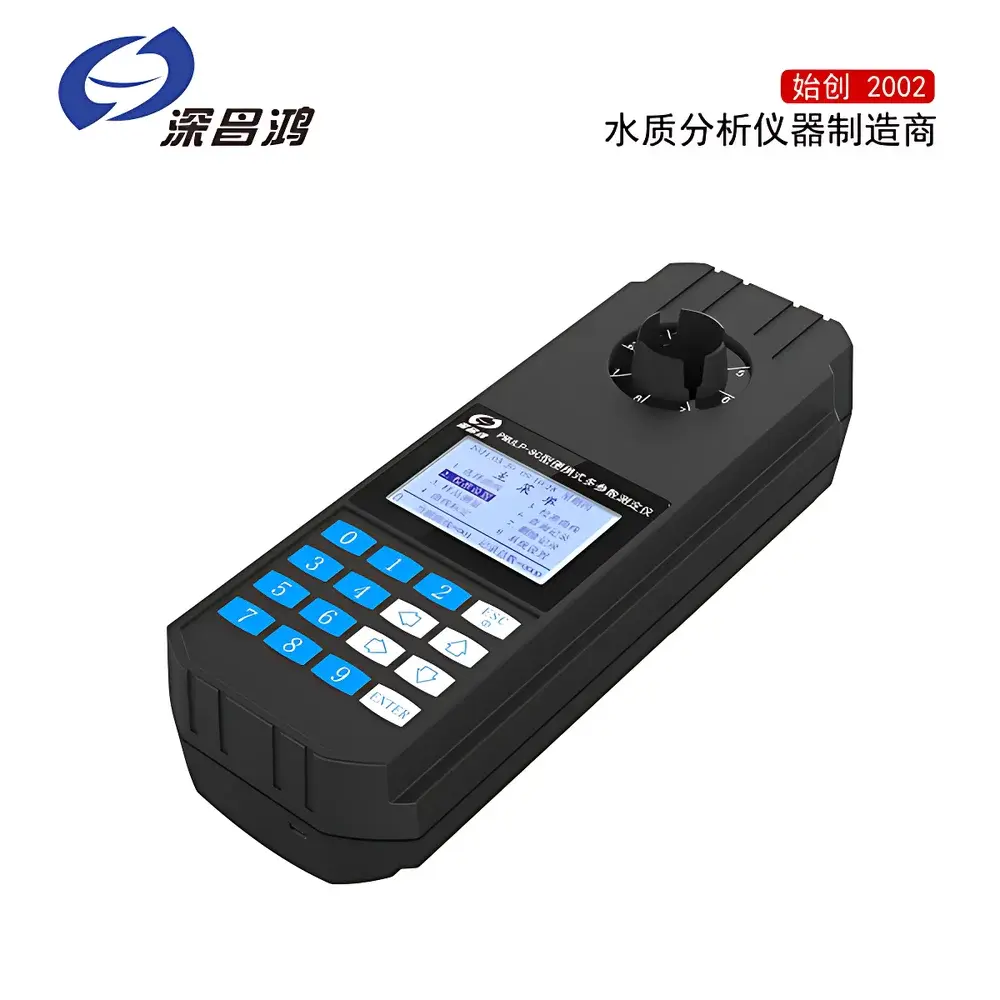
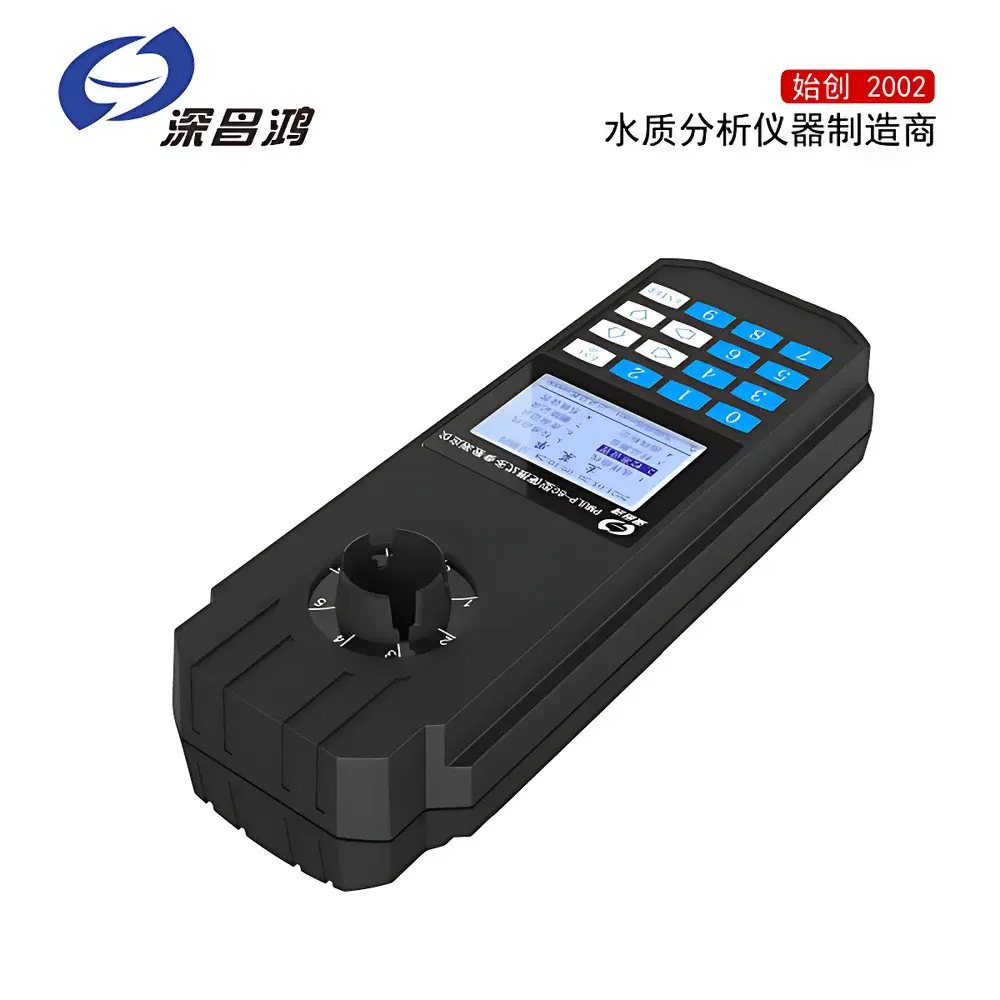
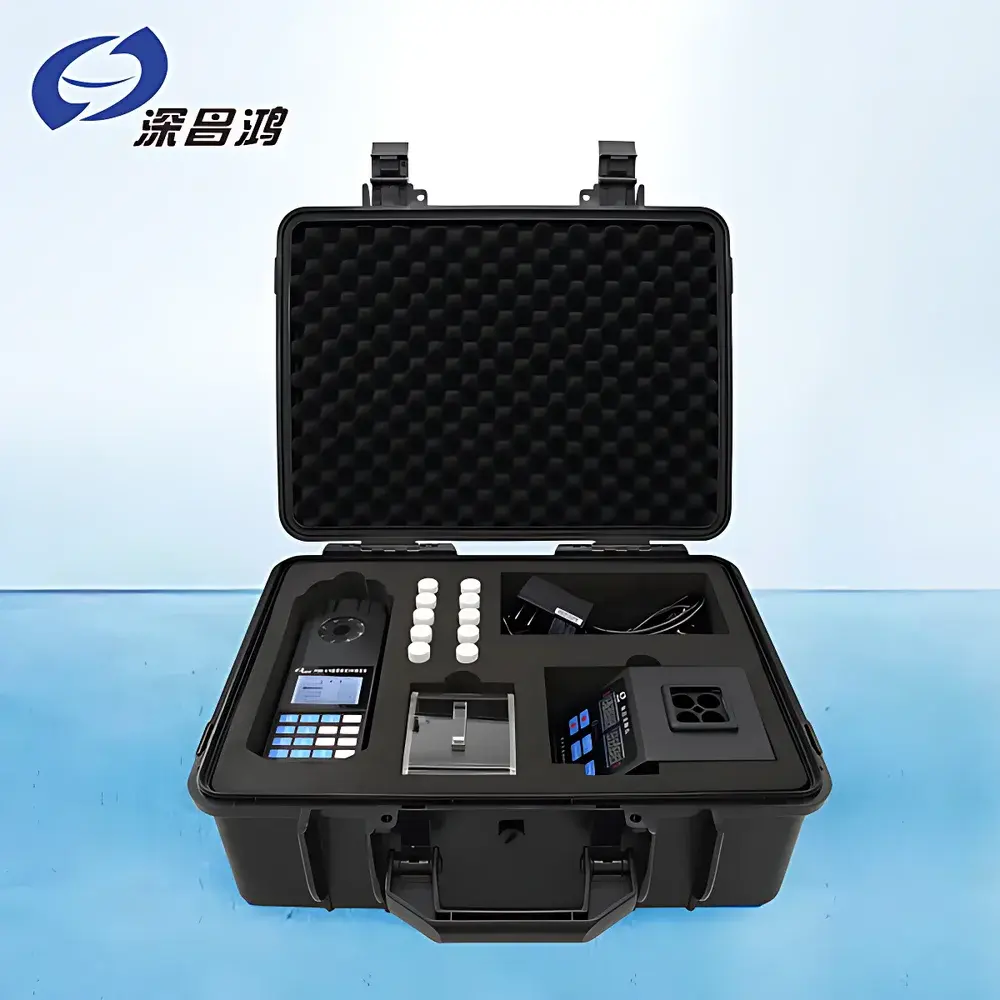
Shenchanghong PMULP-4C/8C Portable Multi-Parameter Water Quality Analyzer
| [Brand | Shenchanghong |
|---|---|
| Origin | Guangdong, China |
| Manufacturer Type | Direct Manufacturer |
| Product Category | Domestic |
| Model | PMULP-4C / PMULP-8C |
| Instrument Type | Portable / Handheld Water Quality Analyzer |
| Detection Capability | Multi-parameter water quality analysis |
| Wavelength Options | 420, 440, 470, 520, 560, 610, 630, 660, 680, 700 nm (4 or 8 user-selectable wavelengths) |
| Optical Stability | ≤0.002 A / 20 min |
| Wavelength Accuracy | ±1 nm from nominal center wavelength |
| Display | LCD with backlight |
| Power Supply | Rechargeable lithium-ion battery |
| Enclosure Rating | IP65 |
| Dimensions | 80 × 230 × 55 mm |
| Weight | 500 g |
| Data Interface | USB port for data export to PC] |
Overview
The Shenchanghong PMULP-4C and PMULP-8C are portable, multi-parameter water quality analyzers engineered for field-deployable quantitative analysis of over 50 common inorganic and organic water contaminants. These instruments operate on the principle of single-wavelength spectrophotometry based on the Beer–Lambert law: a stable light source passes through a pre-treated sample cuvette, and absorbance at a selected wavelength is measured to determine analyte concentration via pre-calibrated calibration curves. Unlike benchtop spectrophotometers, the PMULP series integrates narrow-band interference filters and cold-light LED sources to eliminate thermal drift and ensure optical stability under variable ambient conditions—critical for outdoor sampling, wastewater monitoring, drinking water verification, and environmental compliance inspections. The dual-channel architecture (4- or 8-wavelength configurations) enables simultaneous or sequential measurement of multiple parameters without manual filter swapping or wavelength recalibration.
Key Features
- Cold-light LED optical system with narrow-band interference filters—no warm-up time required and minimal photometric drift.
- Automated wavelength selection: users select target parameters via intuitive menu; instrument automatically engages corresponding optical path and calibration curve.
- High-reproducibility optical train manufactured to tight tolerances—optical stability maintained at ≤0.002 A over 20 minutes per ASTM E275 and ISO 7027-compliant protocols.
- IP65-rated ABS polymer housing—dust-tight and protected against low-pressure water jets, suitable for humid field environments and mobile laboratory use.
- Integrated rechargeable lithium-ion battery (≥8 hours continuous operation), eliminating disposable battery dependency and reducing long-term operational cost.
- Backlit LCD display with graphical interface—supports multilingual prompts (English default), real-time absorbance readout, and on-device pass/fail flagging against regulatory thresholds.
- USB 2.0 interface for direct data transfer to Windows-based PCs; exported files comply with CSV and XLSX formats for traceability and LIMS integration.
Sample Compatibility & Compliance
The PMULP-4C/8C supports standard 10-mm rectangular cuvettes and accommodates both pre-packaged reagent vials and user-prepared colorimetric assays. Sample volume requirement is 2.5–5.0 mL per test, compatible with EPA-approved digestion and derivatization procedures for COD (Mn method), total phosphorus, ammonia nitrogen, chlorine species, heavy metals (e.g., Cr(VI), Cd, Pb, Hg), and nutrients (NO₃⁻-N, NO₂⁻-N, PO₄³⁻). Method validation aligns with key international standards including ISO 8467 (COD), ISO 6878 (total phosphorus), ISO 7150-1 (ammonia), and APHA Standard Methods 4500-Cl G (free chlorine). While not certified under FDA 21 CFR Part 11, the device supports GLP-aligned workflows through timestamped data logging, operator ID entry, and audit-ready export files.
Software & Data Management
No proprietary software installation is required—the PMULP series functions as a USB mass-storage device upon connection. All measurements—including date/time stamp, parameter name, absorbance value, calculated concentration, and measurement uncertainty—are stored internally (up to 1,000 records). Users may export datasets for post-processing in Excel, R, or validated LIMS platforms. Calibration coefficients and custom method files can be loaded via USB; factory-default curves are preloaded for all listed parameters. Firmware updates are distributed as signed binary packages to maintain integrity and version control across fleet deployments.
Applications
- Field verification of municipal drinking water quality against WHO and national regulatory limits (e.g., Cl₂ residual, NO₃⁻, F⁻, As).
- Routine effluent monitoring at wastewater treatment plants—tracking NH₃-N, TP, COD, and heavy metal discharge compliance.
- Aquaculture and hydroponics management—real-time assessment of NH₄⁺, NO₂⁻, PO₄³⁻, and dissolved oxygen (colorimetric mode).
- Environmental site assessments—screening for Cr(VI), Pb, Hg, and cyanide in surface and groundwater samples.
- Educational laboratories—teaching quantitative analytical chemistry principles using standardized colorimetric protocols.
- Emergency response—rapid identification of contamination events (e.g., chlorine loss, nitrate leaching, industrial metal release).
FAQ
What regulatory standards does the PMULP series support?
The instrument implements methodologies aligned with ISO, APHA Standard Methods, and Chinese national standards (e.g., HJ/T 399–2007 for COD). It is not CE-marked or FDA-cleared but is widely deployed in non-GMP field applications.
Can I add custom calibration curves for unlisted analytes?
Yes—users may import user-defined calibration equations (linear, quadratic, or polynomial) via USB, provided absorbance-concentration relationships are experimentally validated.
Is the instrument suitable for seawater or high-salinity samples?
Matrix interference may occur above 10,000 µS/cm conductivity; dilution or matrix-matched calibration is recommended for brackish or marine applications.
How often does the optical system require recalibration?
Factory calibration remains stable for ≥12 months under normal use; annual verification with NIST-traceable neutral density filters is advised for QA/QC programs.
Does the device meet IP65 requirements for outdoor rain exposure?
Yes—tested per IEC 60529:2013; it withstands vertical water droplets and low-pressure spray from any direction, though submersion is prohibited.
Related Products







