
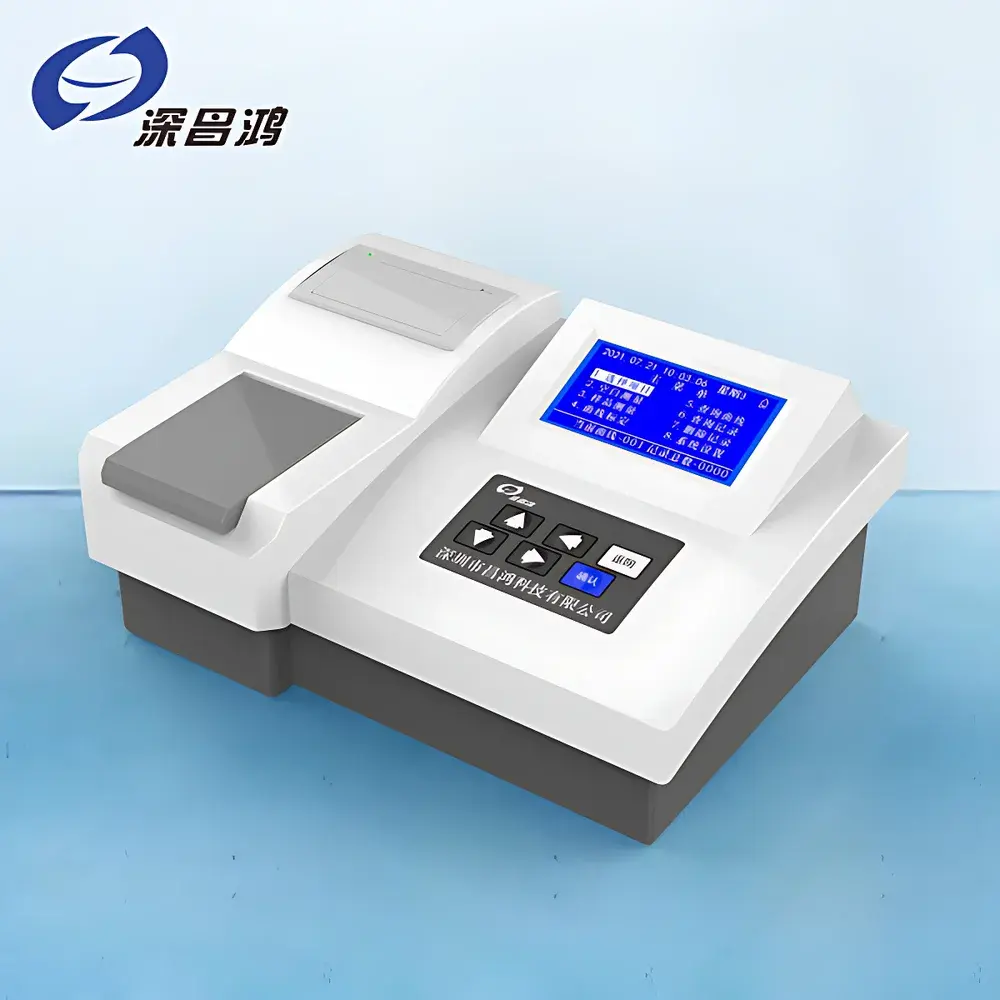
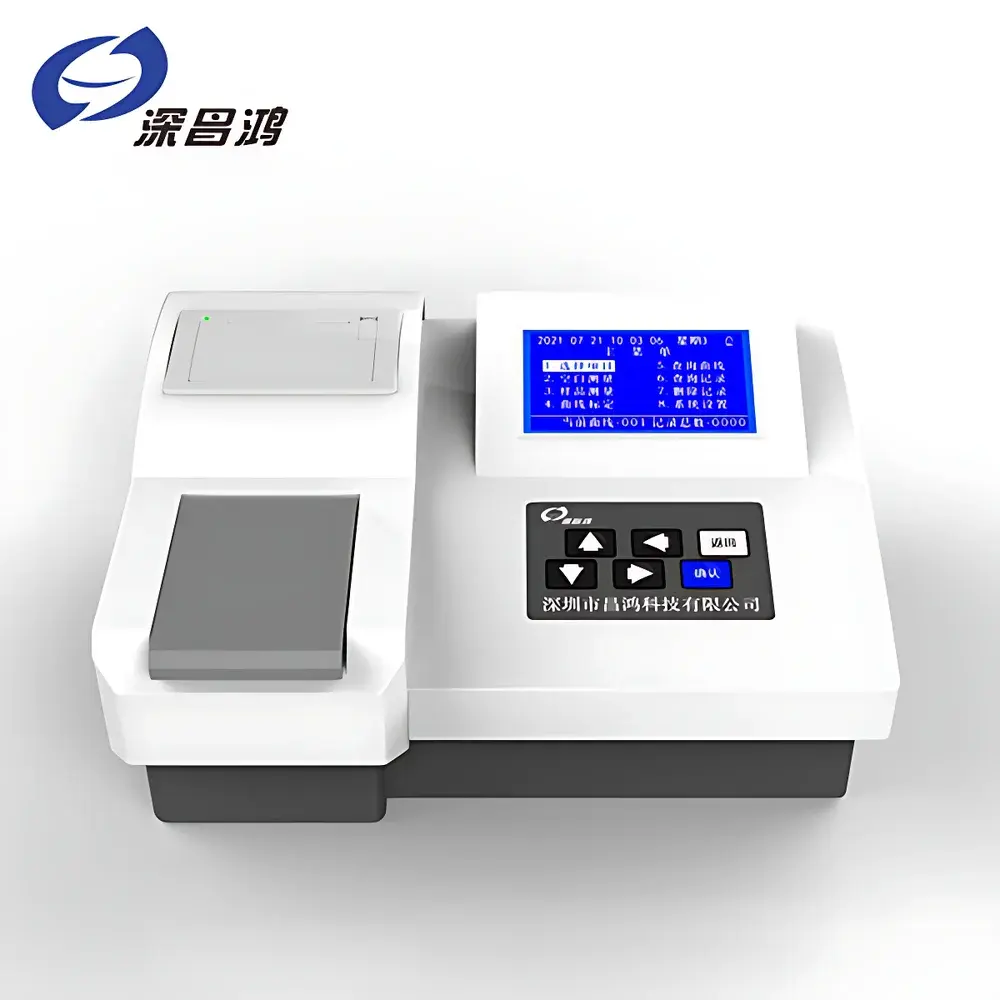
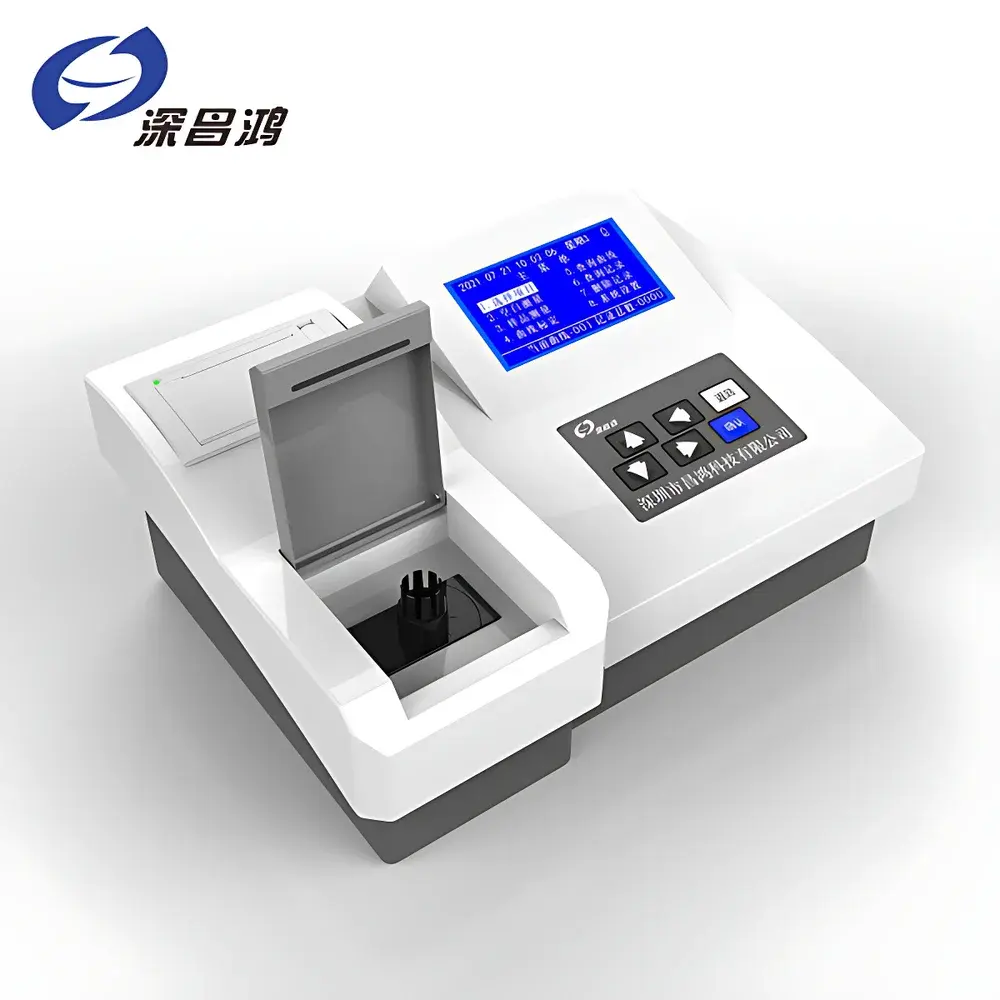
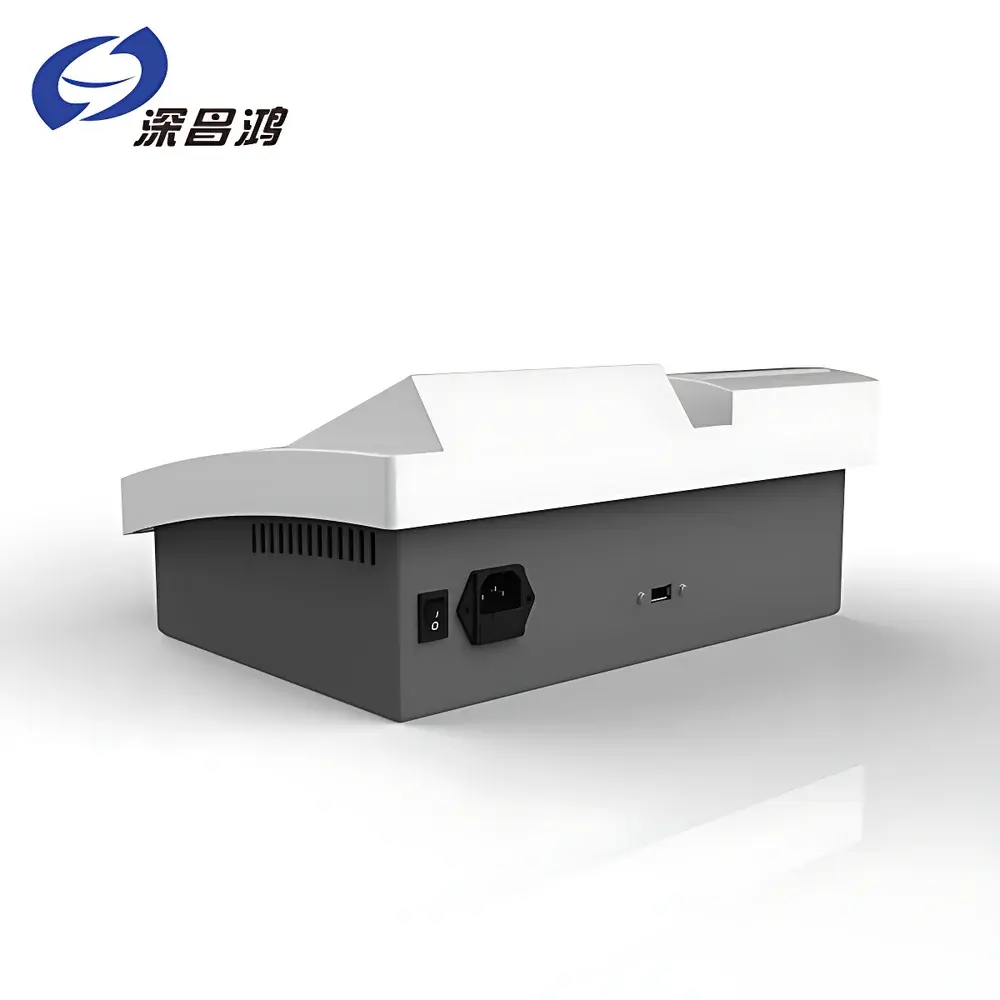
Shenchanghong TBRD-801 Aquaculture Water Quality Analyzer
| Brand | Shenchanghong |
|---|---|
| Origin | Guangdong, China |
| Manufacturer Type | Manufacturer |
| Product Origin | Domestic (China) |
| Model | TBRD-801 |
| Instrument Type | Laboratory Water Quality Analyzer |
| Measurable Parameters | pH, Dissolved Oxygen (DO), Salinity, Ammonia-Nitrogen (NH₃-N), Sulfide (S²⁻), Nitrite (NO₂⁻), Mercury (Hg), Cadmium (Cd) |
| Measurement Ranges | pH 5.0–8.0 |
| Accuracy | ±0.2 (pH), ±0.1 mg/L or ±5% (DO), ±0.2% (Salinity), ±0.1 mg/L or ±5% (NH₃-N), ±5% FS (S²⁻), ±0.05 mg/L or ±5% (NO₂⁻), ±0.005 mg/L or ±5% (Hg), ±5% FS (Cd) |
| Dimensions | 340 × 250 × 130 mm |
| Weight | 4 kg |
| Data Storage | 10 preloaded calibration curves + 500 measurement records (non-volatile memory) |
| Display | LCD with Chinese/English bilingual interface |
| Connectivity | USB port for PC data transfer |
| Printing | Integrated thermal printer for immediate or historical record printing |
| Optical System | Imported long-life light source + high-stability optical path |
| Power Supply | Standard AC adapter |
Overview
The Shenchanghong TBRD-801 Aquaculture Water Quality Analyzer is a multi-parameter benchtop instrument engineered for precise, field-deployable monitoring of critical water quality indicators in aquaculture systems. It operates on standardized colorimetric and electrochemical measurement principles: pH and dissolved oxygen are determined via calibrated electrode-based sensing; salinity is measured using conductivity-to-ppt conversion algorithms compliant with ASTM D1125 and ISO 7888; while ammonia-nitrogen, nitrite, sulfide, mercury, and cadmium employ spectrophotometric analysis at optimized wavelengths—leveraging stable LED light sources and precision optical filters to ensure reproducible absorbance quantification per EPA Method 350.1 (ammonia), EPA Method 354.1 (nitrite), and APHA Standard Methods 4500-S²⁻ E (sulfide). Designed specifically for hatcheries, recirculating aquaculture systems (RAS), and pond management, the TBRD-801 delivers laboratory-grade accuracy in a portable footprint, supporting rapid decision-making to mitigate stressors such as hypoxia, ammonia toxicity, or heavy metal accumulation.
Key Features
- Multi-parameter capability covering eight regulated aquaculture parameters: pH, dissolved oxygen, salinity, ammonia-nitrogen, sulfide, nitrite, mercury, and cadmium — all within a single compact unit.
- Bilingual (Chinese/English) LCD interface with intuitive menu navigation, enabling seamless operation by technicians across international facilities and training environments.
- Non-volatile memory storing up to 10 user-defined calibration curves and 500 measurement records — retained during power loss per IEC 60730-1 Annex H requirements for data integrity.
- Integrated thermal printer supporting on-demand hardcopy output of real-time results or historical datasets — traceable via timestamped printouts for QA/QC documentation.
- USB interface compliant with USB 2.0 specifications for bidirectional data exchange with Windows-based laboratory information management systems (LIMS) or Excel-based trend analysis tools.
- Optical architecture featuring imported long-life LEDs and thermally stabilized photodetectors, minimizing drift and ensuring ≤±0.5% inter-day repeatability under ambient temperature fluctuations (20–30°C).
Sample Compatibility & Compliance
The TBRD-801 accepts standard 10-mm pathlength glass or quartz cuvettes (included) and supports both grab sampling and continuous flow-through configurations via optional adapter kits. All analytical methods align with internationally recognized protocols: pH and conductivity measurements conform to ISO 10523 and ISO 7888; dissolved oxygen adheres to ISO 5814; ammonia and nitrite determinations follow APHA Standard Methods 4500-NH₃ G and 4500-NO₂ B, respectively. The instrument’s design supports GLP-compliant workflows — including operator ID logging (via optional software), audit-trail-enabled calibration history, and electronic signature-ready reporting when integrated with validated LIMS platforms. Heavy metal modules meet detection limit thresholds specified in China’s GB 11607-89 and EU Directive 2008/105/EC for aquatic environmental quality standards.
Software & Data Management
Data export is facilitated through native USB mass-storage mode — no proprietary drivers required. Raw measurement files (.csv) contain parameter name, timestamp (YYYY-MM-DD HH:MM:SS), measured value, unit, operator ID (if assigned), and calibration status flag. Optional desktop software (Windows 10/11 compatible) provides curve fitting (linear, quadratic, cubic), statistical summaries (mean, SD, CV%), trend visualization over time, and customizable report generation aligned with ISO/IEC 17025 clause 7.8. All data transfers comply with FDA 21 CFR Part 11 requirements when paired with electronic signature validation modules and system access controls.
Applications
- Real-time monitoring of water quality in shrimp, tilapia, and salmonid hatcheries to prevent larval mortality linked to sublethal NH₃-N or low DO events.
- Validation of biofilter performance in RAS by tracking nitrite spikes and ammonia removal efficiency across hydraulic retention times.
- Pre-harvest screening of heavy metals (Hg, Cd) in effluent discharge points to ensure compliance with local regulatory thresholds prior to release.
- Field verification of sensor drift in deployed multiparameter sondes using TBRD-801 as a reference analyzer per ASTM D5119.
- Educational use in aquaculture degree programs for teaching method validation, matrix interference assessment, and standard addition protocols.
FAQ
What calibration standards are required for daily operation?
NIST-traceable pH buffer solutions (pH 4.01, 7.00, 10.01), DO zero solution (sodium sulfite), and certified reference materials (CRMs) for NH₃-N (NIST SRM 2162), NO₂⁻ (AccuStandard N-100-10), and Cd (SPEX CertiPrep C-100-10) are recommended for initial setup and periodic verification.
Is the instrument suitable for seawater applications?
Yes — the salinity module is calibrated from 0.0 to 28.0 ppt and validated for use in brackish and marine aquaculture systems; DO compensation automatically adjusts for chloride ion interference per Winkler titration correction factors.
How is measurement uncertainty reported?
Uncertainty budgets are provided in the technical manual per GUM (JCGM 100:2008), incorporating contributions from calibration standard uncertainty, repeatability, linearity deviation, and environmental temperature effects.
Can custom calibration curves be imported via USB?
Yes — .csv-formatted curve coefficients (slope, intercept, polynomial order) can be loaded directly into instrument memory without firmware modification.
Does the device support remote firmware updates?
Firmware upgrades are performed locally via USB-connected PC using signed binary packages; no cloud connectivity or internet dependency is implemented to maintain data sovereignty and network security.
Related Products







