
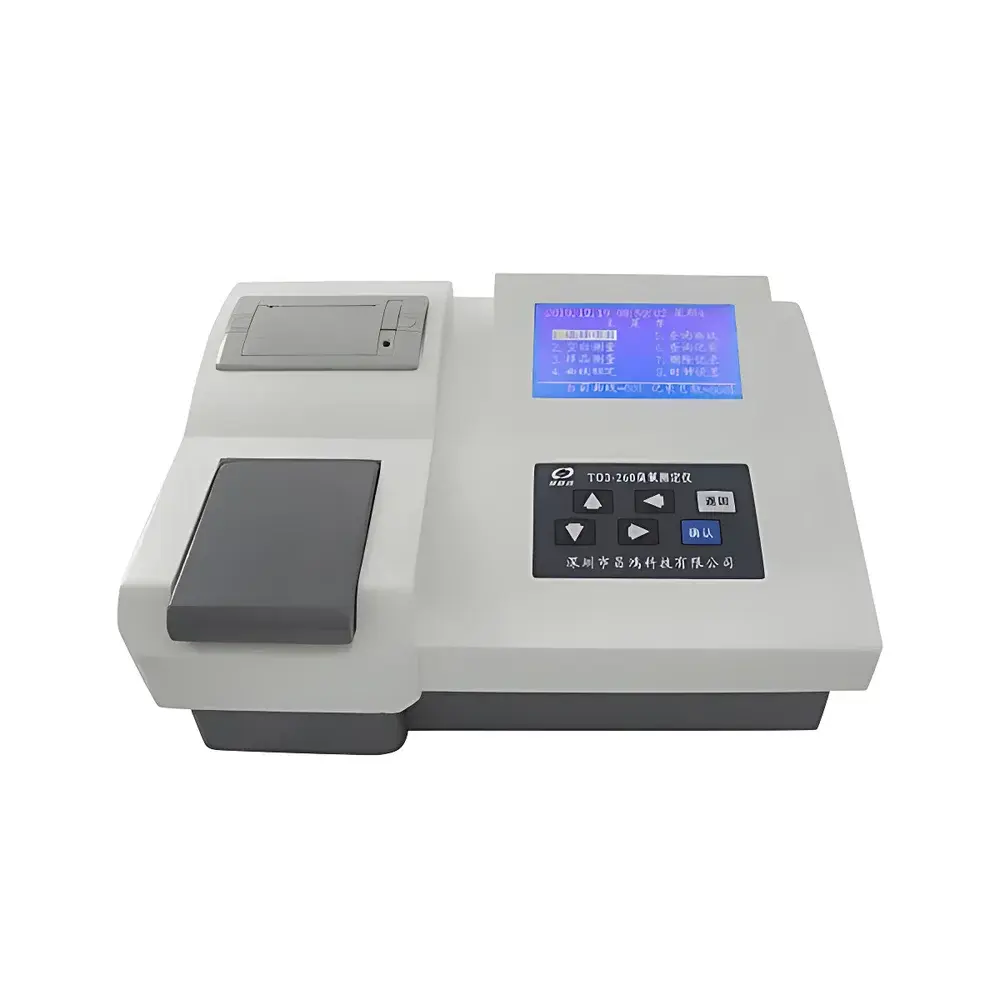
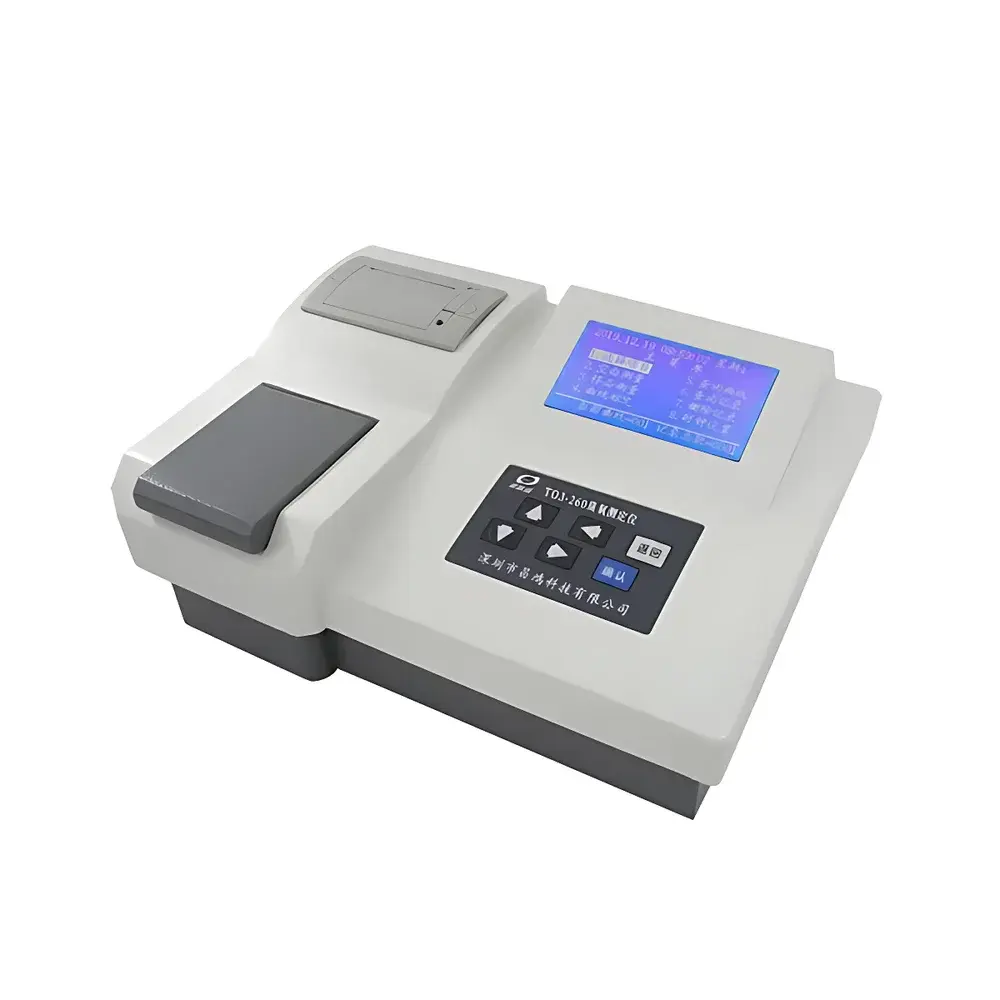
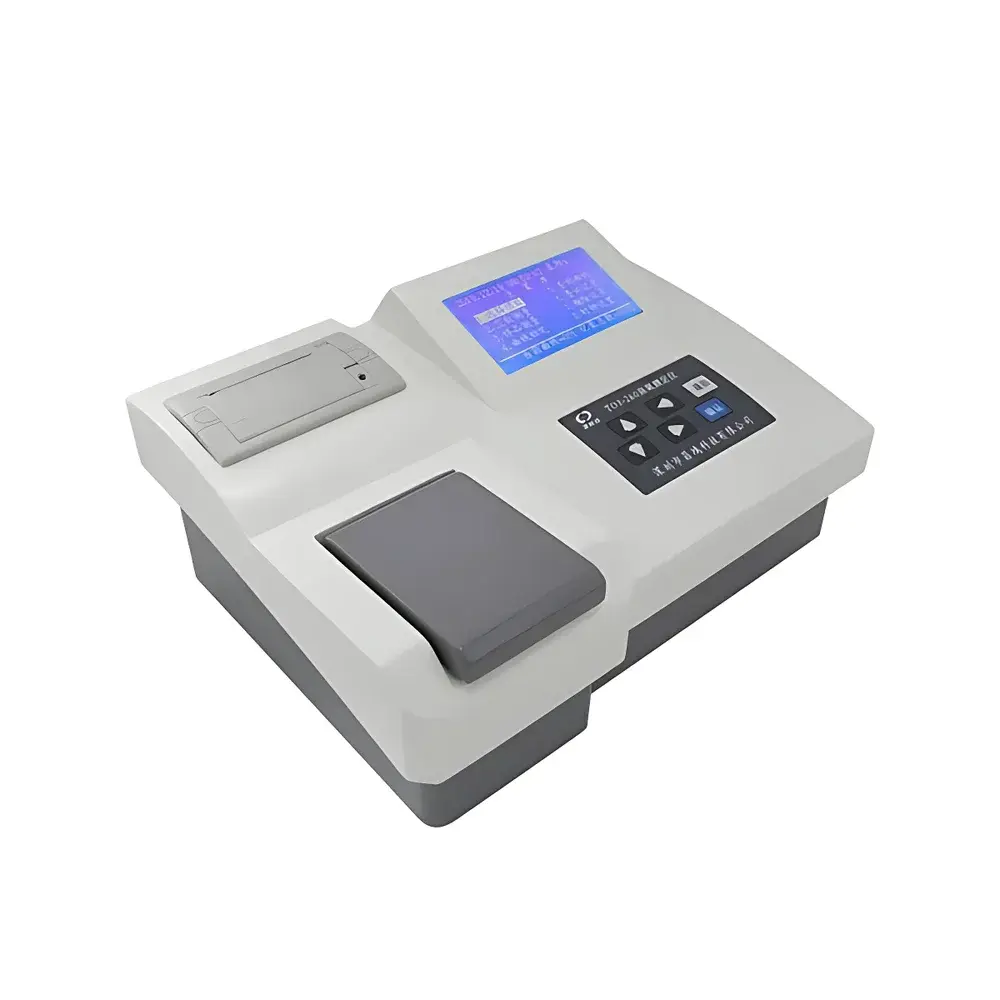
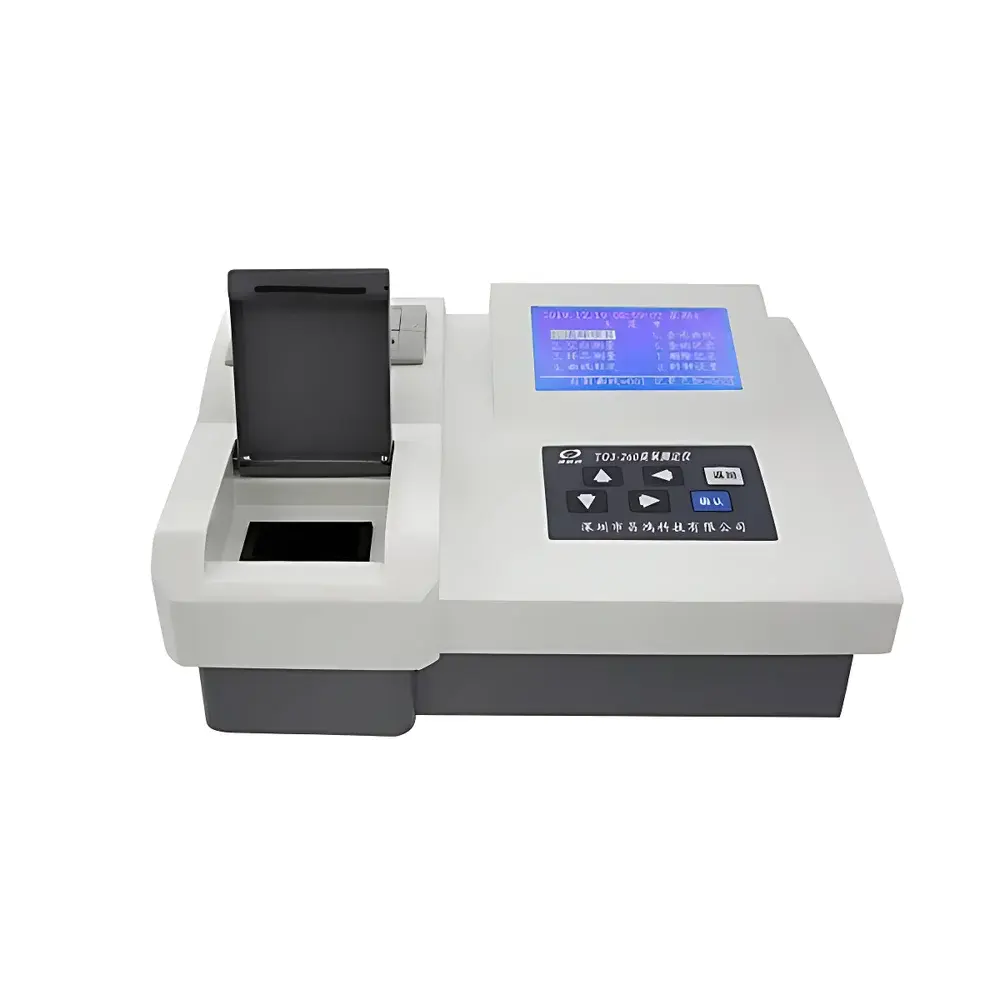
Shenchanghong TO3-260 Laboratory Ozone Analyzer
| Brand | Shenchanghong |
|---|---|
| Origin | Guangdong, China |
| Manufacturer Type | Direct Manufacturer |
| Country of Origin | China |
| Model | TO3-260 |
| Instrument Type | Benchtop Laboratory Analyzer |
| Operating Temperature | 5–40 °C |
| Reagent Storage/Use Temperature | 5–40 °C |
| Repeatability | ≤3% |
| Sample Throughput | 1 sample per batch |
| Analysis Time | 20 min |
| Measurement Range | 0.01–2.5 mg/L O₃ |
| Accuracy (Abs. Error) | ≤±5% |
| Optical Drift | <0.002 A over 20 min |
| Dimensions (W×D×H) | 266 × 200 × 130 mm |
| Weight | 1 kg |
| Power Supply | AC 220 ± 22 V, 50 ± 0.5 Hz |
| Relative Humidity Limit | ≤85% RH (non-condensing) |
Overview
The Shenchanghong TO3-260 Laboratory Ozone Analyzer is a benchtop photometric instrument engineered for precise, routine quantification of dissolved ozone (O₃) in aqueous samples using the indigo trisulfonate (ITS) colorimetric method—recognized in standard methods including APHA 4500-O₃ B and ISO 13798:2021. It employs a stable monochromatic cold light source (100,000-hour lifetime LED) coupled with a narrow-band optical filter system operating at the optimal absorption wavelength (λ ≈ 600 nm), minimizing spectral interference and ensuring high photometric fidelity. The analyzer integrates an embedded 16-bit microcontroller platform with low-power architecture, enabling robust signal processing, real-time absorbance calculation, and direct concentration output in mg/L. Designed for laboratory environments where regulatory traceability and operational consistency are critical, the TO3-260 delivers high reproducibility under ambient conditions compliant with ISO/IEC 17025 environmental monitoring prerequisites.
Key Features
- High-stability monochromatic LED light source with calibrated narrow-band optical filtering, delivering <0.002 A photometric drift over 20 minutes—meeting ASTM D1293 and ISO 7027 baseline stability requirements for spectrophotometric water analysis.
- Large backlit LCD display with intuitive Chinese-language menu navigation; supports dual-language interface configuration (optional firmware upgrade).
- Onboard data management: stores up to 10 user-defined calibration curves and 500 measurement records with timestamp; retains all data during power interruption.
- Dual calibration flexibility: factory-preloaded ITS standard curve plus editable user calibration mode for method validation or matrix-matched standards.
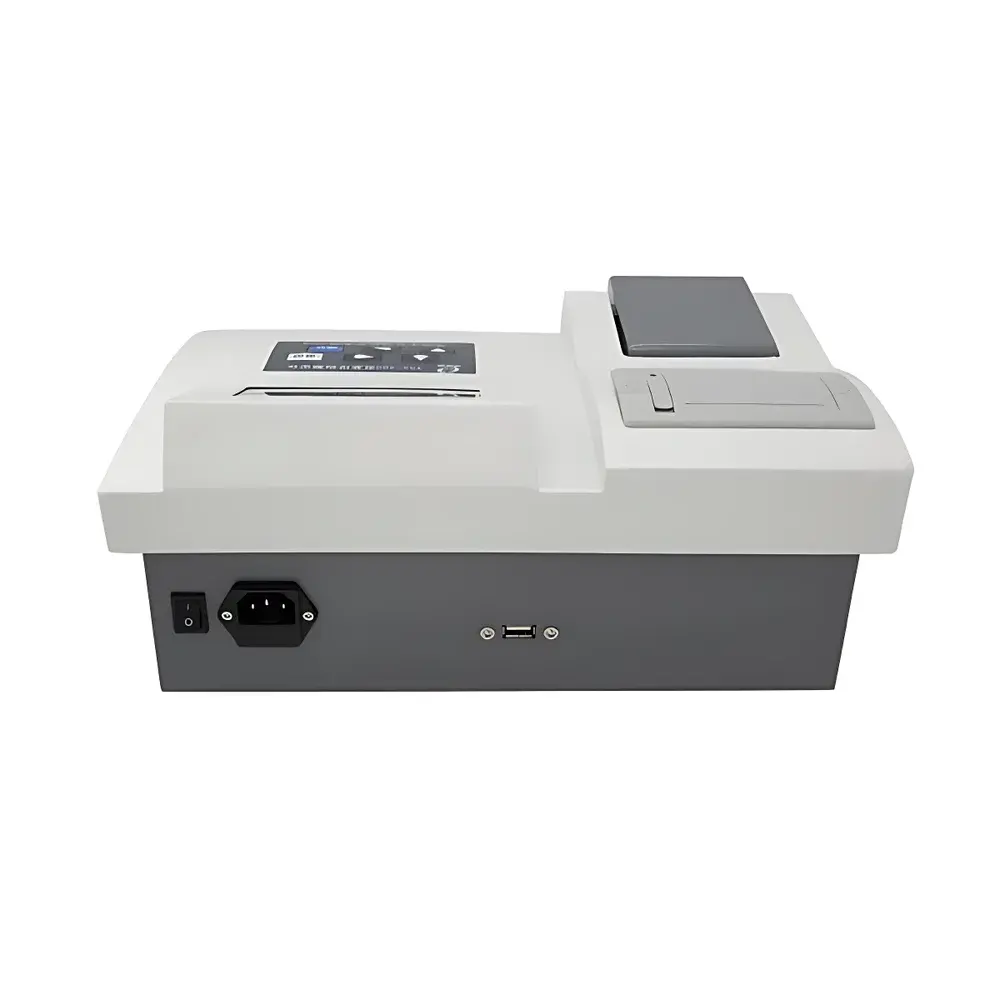
- Integrated thermal printer for immediate hardcopy reporting; USB 2.0 port enables secure export of raw absorbance values, concentration results, and calibration metadata to external PCs or LIMS systems.
- Compact, lightweight design (1 kg) with EMI-shielded housing and vibration-dampened optical path—optimized for shared lab benches without dedicated isolation tables.
Sample Compatibility & Compliance
The TO3-260 is validated for use with potable water, surface water, groundwater, municipal wastewater, and industrial effluents containing residual ozone concentrations within the 0.01–2.5 mg/L range. Sample matrices must be free of turbidity >5 NTU and suspended solids that interfere with color development; optional pre-filtration via 0.45 µm membrane filters is recommended per US EPA Method 334.0 guidance. The instrument complies with general laboratory safety standards IEC 61010-1 and electromagnetic compatibility requirements per CISPR 11 Group 1, Class B. While not certified for GLP/GMP environments out-of-the-box, its audit-ready data logging (with operator ID tagging and calibration history tracking) supports alignment with FDA 21 CFR Part 11 when deployed with validated SOPs and electronic signature protocols.
Software & Data Management
Data acquisition and reporting are managed entirely through the onboard firmware—no external software installation required. Each measurement event logs absorbance at 600 nm, calculated concentration, date/time stamp, operator ID (if enabled), and active calibration curve ID. USB exports generate CSV-formatted files compatible with Excel, LabArchives, or ELN platforms. Firmware supports firmware updates via USB drive and includes built-in diagnostics for lamp intensity verification, zero-check validation, and optical path contamination alerts. Calibration curve coefficients (linear or polynomial) are stored with full version control and revision timestamps—enabling retrospective uncertainty assessment per ISO/IEC 17025 Clause 7.7.
Applications
- Validation of ozone disinfection efficacy in drinking water treatment plants (per WHO Guidelines for Drinking-water Quality, 4th ed.).
- Monitoring residual ozone decay kinetics in distribution systems and contact tanks.
- Performance evaluation of ozone generators and destruct units in pharmaceutical clean utilities.
- Research on ozone-based advanced oxidation processes (AOPs) for micropollutant degradation in wastewater reuse studies.
- Quality control of ozonated process water in semiconductor fabrication and biopharmaceutical manufacturing.
- Educational laboratories requiring ISO-aligned, hands-on training in redox-based water quality parameter analysis.
FAQ
What ozone measurement principle does the TO3-260 employ?
It uses the standardized indigo trisulfonate (ITS) colorimetric method, where ozone selectively decolorizes the blue ITS dye in proportion to concentration, measured photometrically at 600 nm.
Is the instrument suitable for field deployment?
No—it is designed exclusively for controlled laboratory environments (5–40 °C, ≤85% RH); it lacks battery operation, ruggedized housing, or IP-rated enclosure.
Can the TO3-260 measure ozone in gas phase?
No—this model is strictly for aqueous-phase dissolved ozone analysis; gas-phase ozone requires UV absorption or electrochemical sensors.
How often must the calibration curve be re-verified?
Per ISO 8466-1, initial calibration verification is required before first use; subsequent verification is recommended daily for regulated testing or after every 10 samples in high-throughput labs.
Does the device support multi-point calibration?
Yes—up to 8-point linear or quadratic calibration curves can be programmed and stored alongside the default ITS curve.
Related Products







