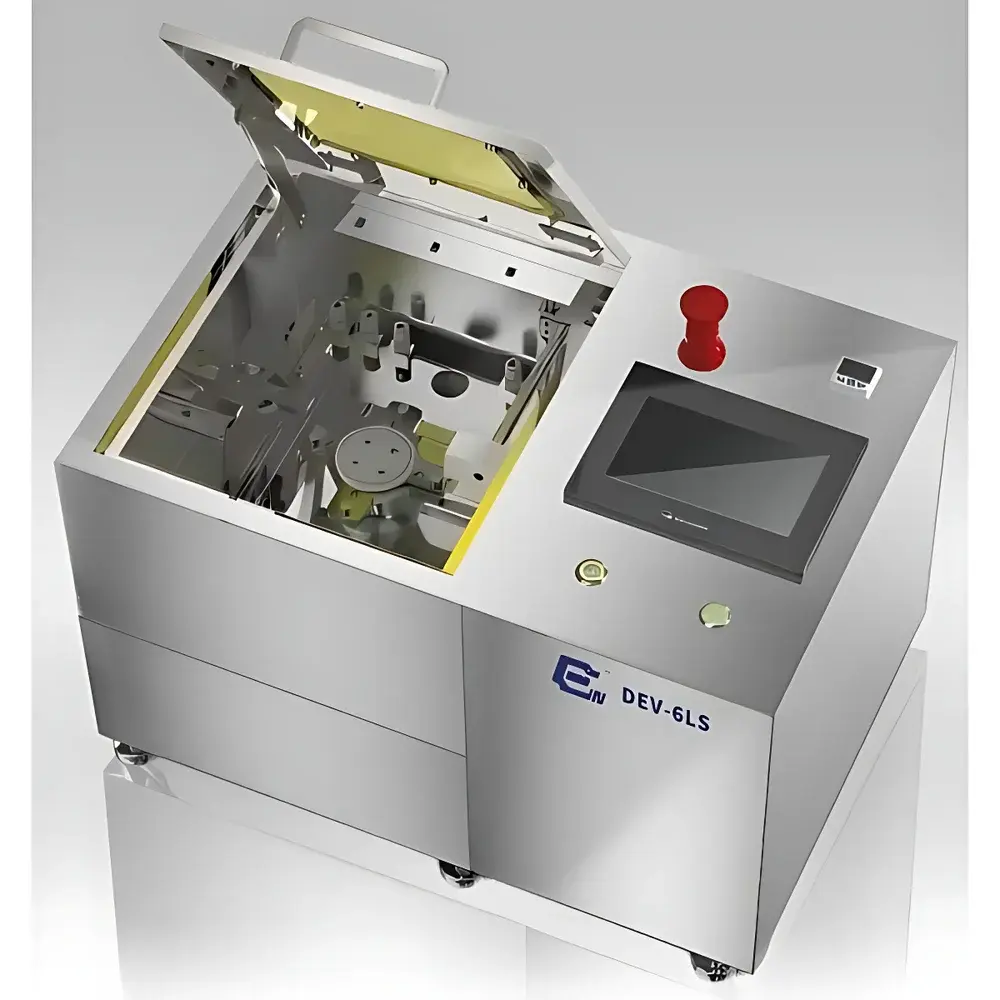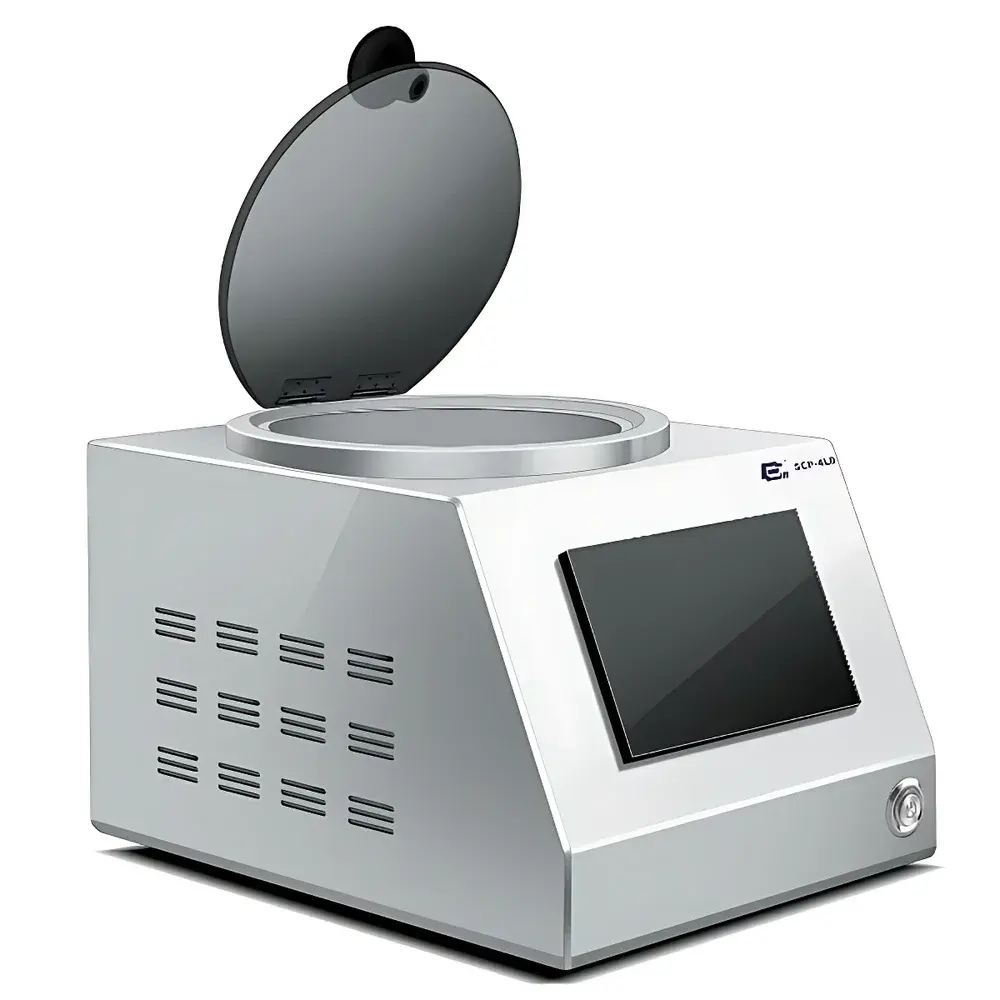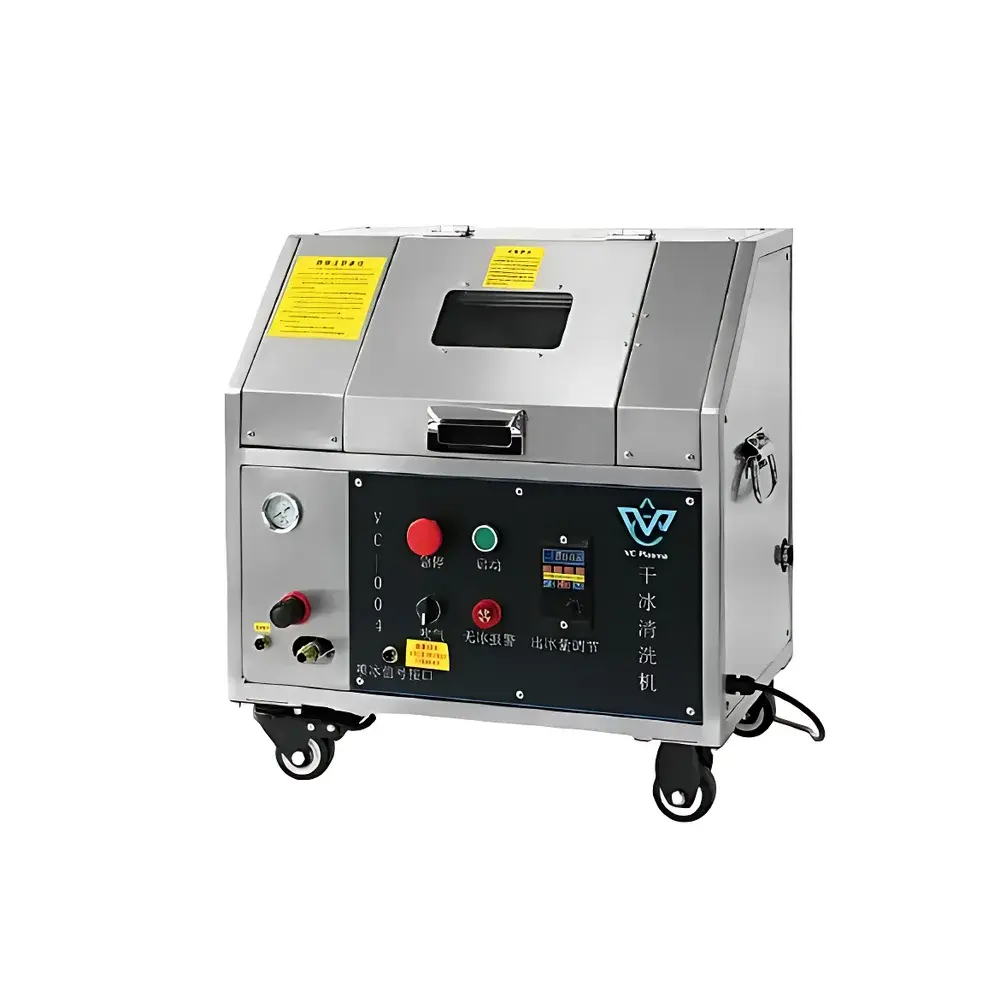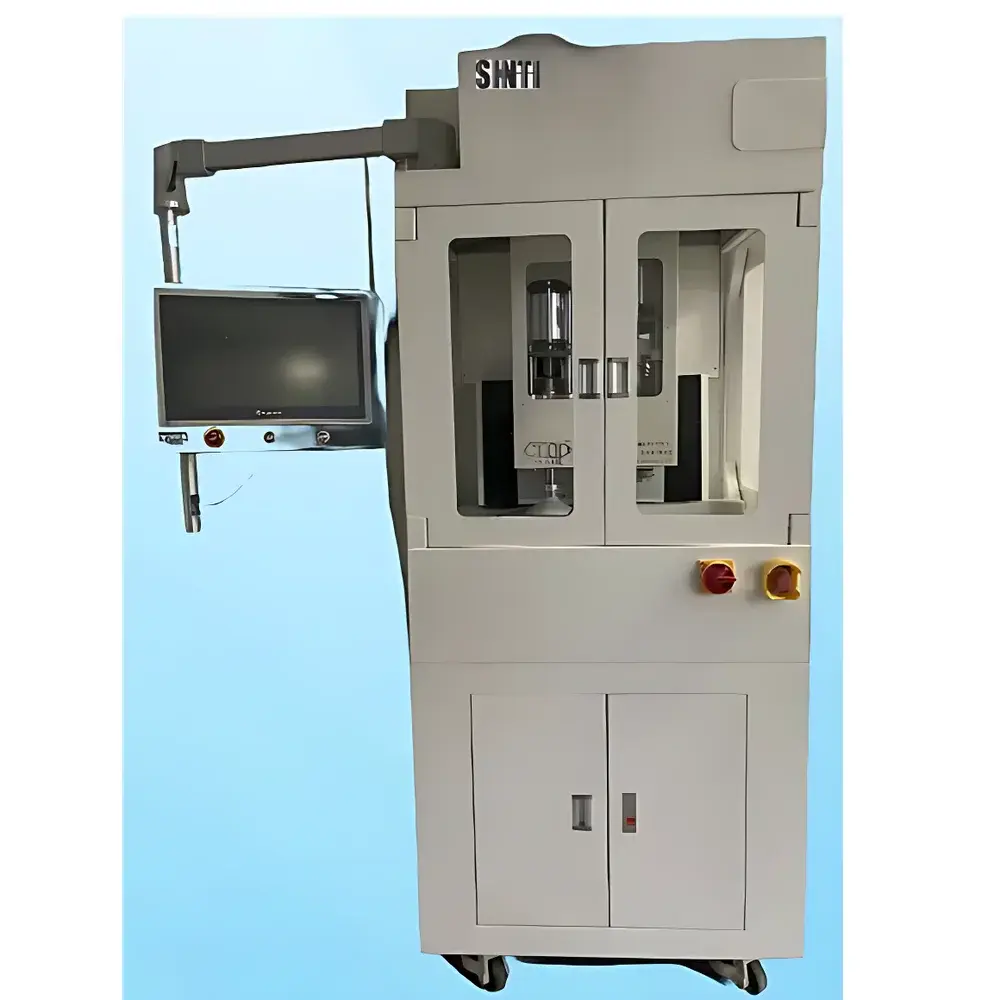
SHNTI CMP20 Chemical Mechanical Polishing System
| Brand | SHNTI |
|---|---|
| Origin | Shanghai, China |
| Model | CMP20 |
| Wafer Size | 2", 4", 6" |
| Platen Count | 1 |
| Platen/Head/Conditioner Speed | 0–300 rpm (continuously adjustable) |
| Polishing Head Downforce | 0–4 psi (at 4") |
| Slurry & DI Water Flow | 0–300 mL/min (per channel, peristaltic pump) |
| Stroke Range (Head/Conditioner Reciprocation) | 90 mm |
| Dimensions (L×W×H) | 800 mm × 1000 mm × 2000 mm |
| Optional Modules | Electrochemical Unit (±10 V / ±250 mA, 2-/3-electrode support, CV, etc.), UV Module (λ = 95 nm, 1020 mm × 100 mm emission area, 200 W input power) |
Overview
The SHNTI CMP20 Chemical Mechanical Polishing System is a precision-engineered wet-process platform designed for semiconductor R&D labs and pilot-line fabrication facilities requiring reproducible, controllable planarization of silicon, metal, and compound semiconductor substrates. It operates on the fundamental principle of synergistic chemical-mechanical interaction: a rotating wafer—held under controlled pneumatic downforce by a multi-zone polishing head—is pressed against a rotating polyurethane or fixed-abrasive polishing pad. A precisely metered slurry—delivered via dual independent peristaltic pumps—forms a dynamic fluid film at the wafer-pad interface. Within this film, oxidizing agents (e.g., H2O2, Fe(NO3)3) chemically modify surface layers (e.g., converting Cu to CuO), while colloidal silica or alumina abrasives mechanically remove the softened or converted material. This cyclic chemical passivation and mechanical removal enables sub-nanometer surface roughness (Ra < 0.2 nm achievable on SiO2 or Cu films) and high uniformity across 2″, 4″, and 6″ wafers. The system’s architecture supports both conventional CMP and advanced hybrid processes—including electrochemical-assisted CMP (EC-CMP) and UV-enhanced oxidation—making it suitable for emerging applications in MEMS, advanced packaging, and heterogeneous integration.
Key Features
- Modular, open-architecture design with standardized I/O interfaces for third-party sensor integration (e.g., in-situ friction torque monitoring, pH/ORP probes)
- Pneumatically actuated polishing head with zone-specific pressure control (0–4 psi range, calibrated and traceable to NIST standards)
- Independent, servo-controlled rotation of polishing head (0–300 rpm), platen (0–300 rpm), and conditioner (0–300 rpm), all with ≤0.1 rpm resolution and real-time feedback
- Bi-directional reciprocating motion (90 mm stroke, programmable speed and dwell time) for uniform pad conditioning and extended pad lifetime
- Dual-channel fluid delivery: one for abrasive slurry, one for deionized water—each with 0–300 mL/min flow range, pulse-free peristaltic pumping, and integrated flow calibration
- 7-inch industrial-grade capacitive touchscreen HMI with ISO/IEC 62443-compliant firmware, supporting recipe-based operation, parameter logging, and audit trail generation
- Optional electrochemical module compliant with ASTM E2001 and ISO 12944-6 for in-situ potential/current control during polishing (±10 V, ±250 mA, full CV, LSV, EIS capability)
- Optional deep-UV module (95 nm excimer source) enabling photochemical oxide growth acceleration on Cu, Ni, and Co surfaces—validated per SEMI F20 and JEDEC JESD22-A108 standards
Sample Compatibility & Compliance
The CMP20 accommodates bare and patterned wafers up to 6 inches (150 mm) in diameter, including silicon, silicon carbide (SiC), gallium arsenide (GaAs), copper blanket and patterned films, nickel-MEMS structures, and metal-on-polymer substrates. All wetted components (slurry lines, chuck seals, pad carrier) are constructed from PTFE, EPDM, and 316L stainless steel to ensure compatibility with acidic, alkaline, and oxidizing slurries (pH 2–12). The system meets CE machinery directive 2006/42/EC and EMC directive 2014/30/EU. Its software architecture supports 21 CFR Part 11-compliant electronic records and signatures when paired with SHNTI’s optional LabManager Pro software suite, fulfilling GLP/GMP documentation requirements for process validation and qualification studies.
Software & Data Management
Control and data acquisition are managed via SHNTI’s embedded CMPControl v3.2 firmware, which stores up to 1,000 process recipes with hierarchical access control (operator, engineer, admin levels). Each run logs timestamped parameters—including real-time torque, pressure, slurry flow, and head temperature—at 10 Hz sampling rate. Raw data exports to CSV or HDF5 format; trend analysis and SPC charts (X̄/R, Cpk) are generated within the optional DataInsight Analytics add-on. Audit trails record user logins, parameter changes, and recipe executions with immutable timestamps—fully compliant with ISO 9001:2015 clause 8.5.2 and IATF 16949 requirements for traceability in automotive semiconductor manufacturing.
Applications
- Front-end-of-line (FEOL) shallow trench isolation (STI) planarization on Si wafers
- Back-end-of-line (BEOL) copper damascene interconnect polishing with endpoint detection readiness
- MEMS device release and surface smoothing of Ni, Cu, and Al microstructures
- R&D of low-k dielectric polishing using non-aqueous slurries
- Electrochemical mechanical polishing (ECMP) of cobalt and ruthenium barrier layers
- UV-assisted polishing of ultra-thin GaN-on-Si epitaxial layers for power electronics
FAQ
What wafer sizes does the CMP20 support?
The system is mechanically and software-configured for 2-inch (50 mm), 4-inch (100 mm), and 6-inch (150 mm) wafers. Chuck adapters and pressure distribution algorithms are optimized per size to maintain uniform downforce across the entire surface.
Is the system compatible with slurry recycling systems?
Yes—the slurry and DI water inlet ports conform to ISO 2852 sanitary clamp standards, enabling direct integration with external filtration and recirculation units. Flow sensors and pressure transducers support closed-loop feedback control.
Can the electrochemical module be used simultaneously with polishing?
Absolutely. The EC module features galvanic isolation and synchronized trigger signals with the main controller, allowing simultaneous application of bias voltage/current and mechanical polishing—essential for studying reaction kinetics during EC-CMP.
Does the system include endpoint detection capability?
The base configuration provides analog outputs for integration with external optical interferometers or eddy-current sensors. SHNTI offers an optional in-situ reflectance endpoint kit (635 nm LED + photodiode array) with real-time FFT-based signal processing.
What documentation is provided for regulatory compliance?
Each unit ships with a Factory Acceptance Test (FAT) report, electrical safety certification (TÜV Rheinland), CE Declaration of Conformity, and a complete set of IQ/OQ protocols aligned with ISO 13485 and SEMI S2/S8 guidelines.