
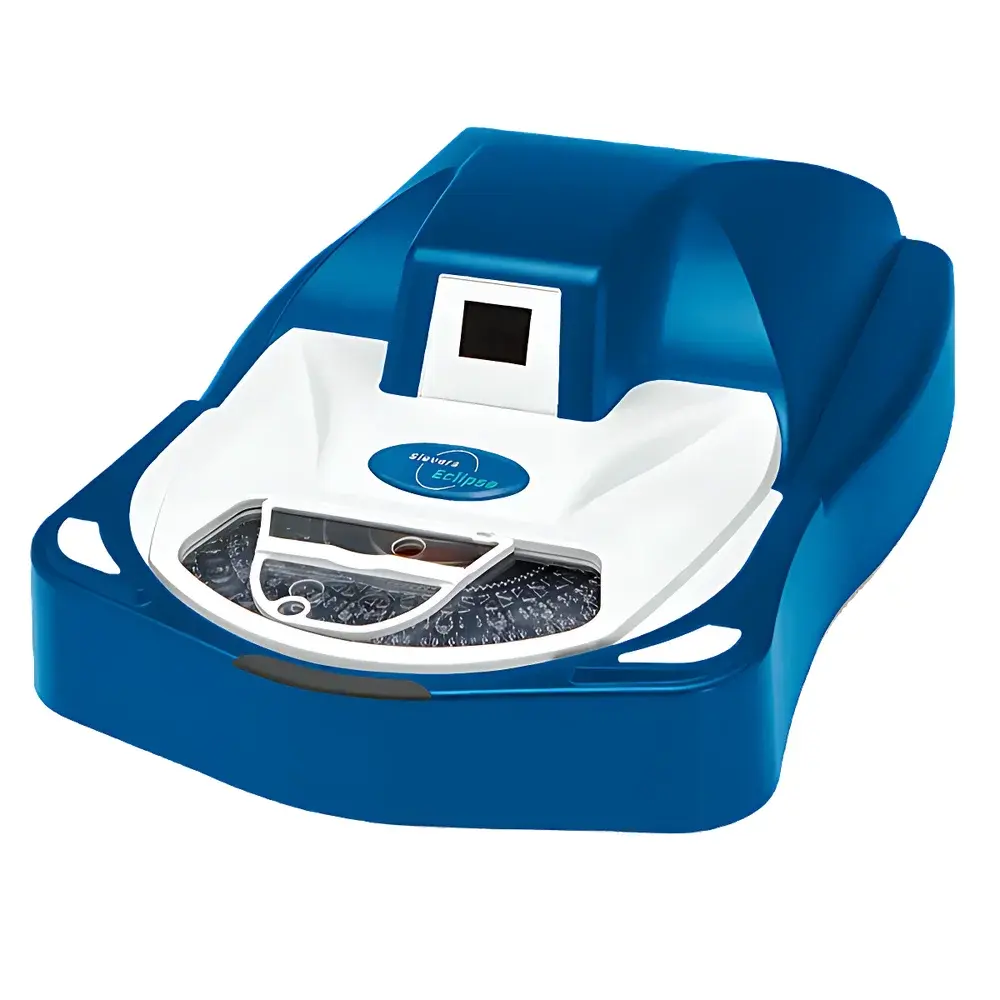
Sievers Eclipse Bacterial Endotoxin Testing Instrument
| Brand | Sievers (Veolia) |
|---|---|
| Origin | USA |
| Manufacturer Type | Original Equipment Manufacturer (OEM) |
| Product Category | Imported |
| Model | Eclipse |
| Pricing | Upon Request |
Overview
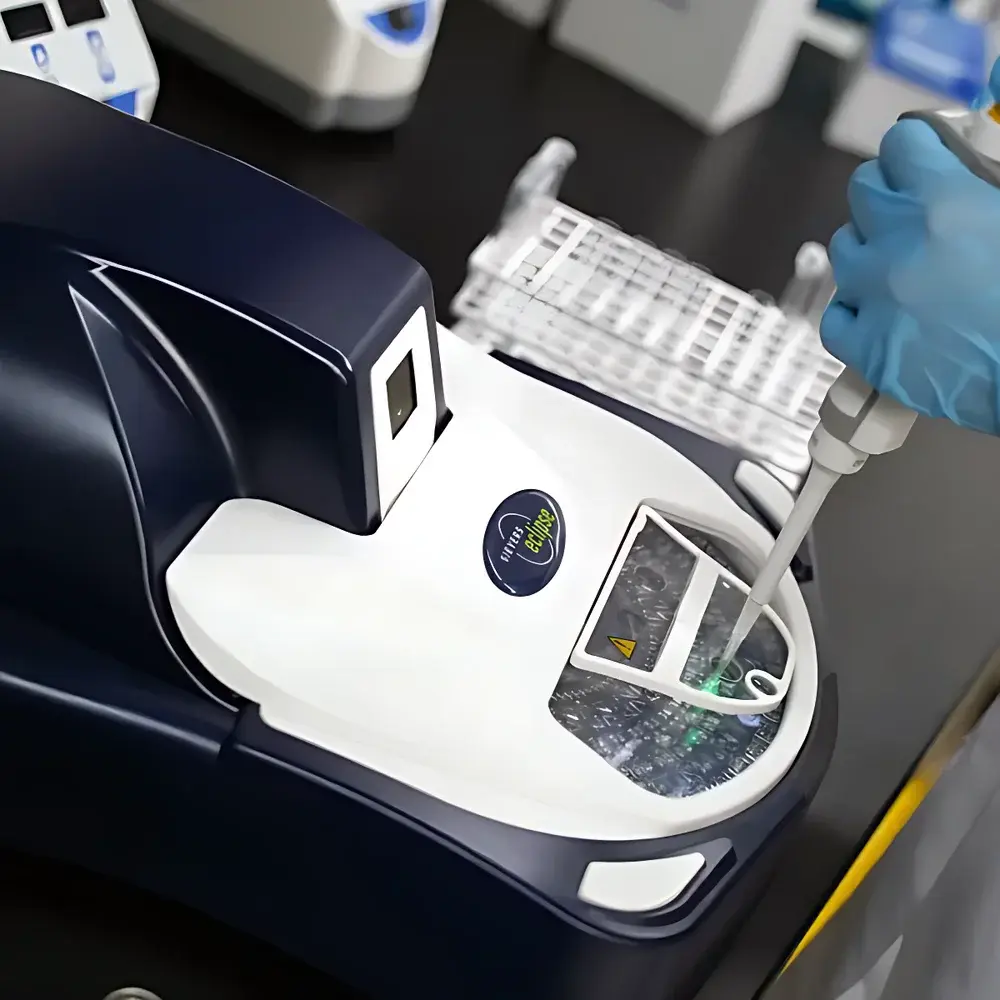
The Sievers Eclipse Bacterial Endotoxin Testing Instrument is an FDA-registered, regulatory-compliant platform engineered for kinetic chromogenic Limulus Amebocyte Lysate (LAL) assays. It implements a patented microfluidic microplate architecture to automate endotoxin quantification without robotic liquid handlers—reducing assay setup time by up to 85% and LAL reagent consumption by up to 90% versus conventional manual or semi-automated methods. The system operates on the principle of enzymatic cleavage of a chromogenic substrate by Factor C in the presence of endotoxin, with absorbance measured at 405 nm under tightly controlled thermal conditions (37 ± 0.5 °C). Designed explicitly for pharmaceutical quality control laboratories, the Eclipse platform delivers reproducible, audit-ready results while fully satisfying harmonized pharmacopeial requirements: USP , EP 2.6.14, and JP 4.01. Its integrated optical detection system acquires data every 5 seconds across 104 optical cells per plate, enabling high-resolution kinetic profiling of reaction progress for robust endpoint determination.
Key Features
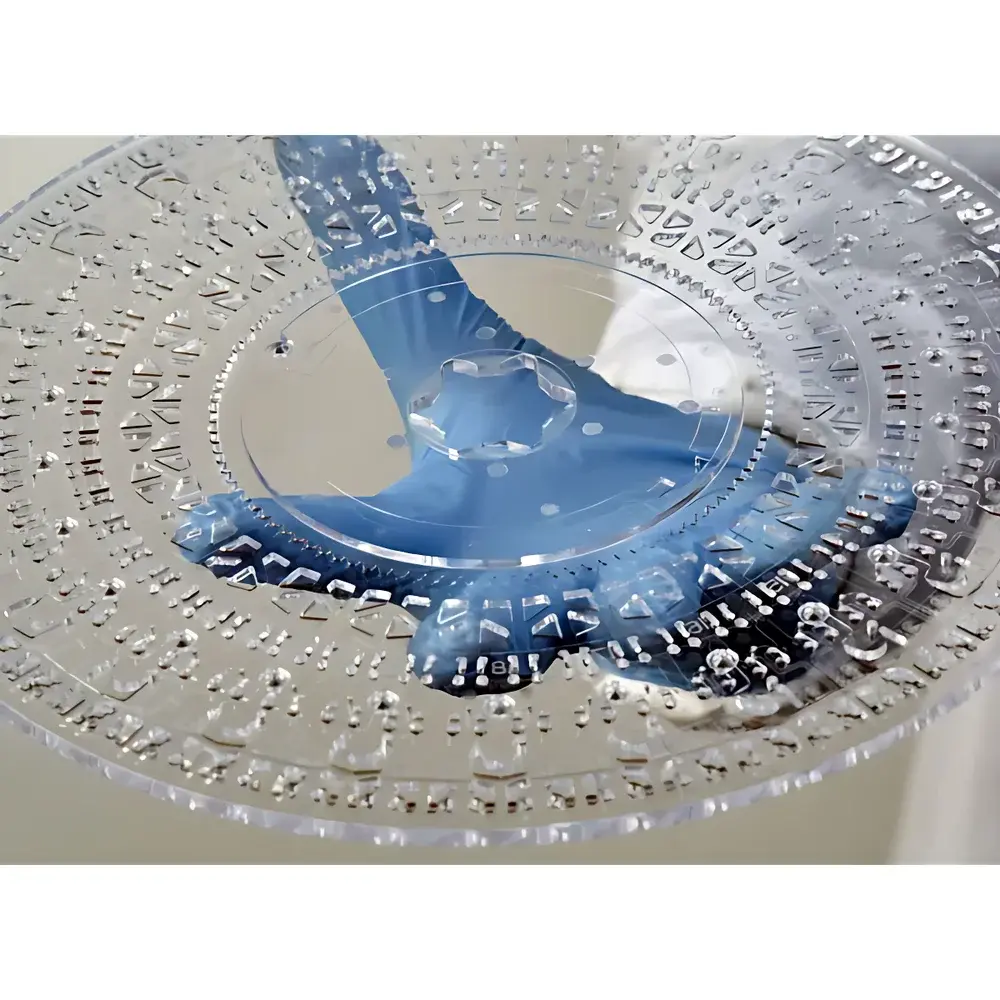
- Patented Eclipse microplate with pre-embedded endotoxin standards and Positive Product Control (PPC) zones—eliminates manual standard dilution and pipetting errors
- Complete assay setup in ≤30 pipetting steps; full 21-sample (duplicated) run initiated in under 9 minutes
- Kinetic chromogenic detection mode with sensitivity down to 0.005 EU/mL and precision ≤15% CV
- Onboard temperature-controlled incubation at 37 ± 0.5 °C using Peltier-based heating/cooling and real-time monitoring
- Dual-wavelength optical system: 405 nm detection channel with 1450 nm fluid fault detection for bubble and meniscus verification
- Optical linearity R ≥ 0.980 over the dynamic range (0.005–50 EU/mL); absorbance accuracy validated per ISO 8655 and ASTM E275
- Compact benchtop footprint (35.1 × 50.3 × 17.5 cm) with integrated centrifugal fluid distribution and pneumatic chamber actuation
Sample Compatibility & Compliance
The Eclipse instrument accepts aqueous samples compatible with LAL methodology—including water for injection (WFI), sterile saline, buffer solutions, and formulated drug products—as long as they are free of interfering substances (e.g., chelators, surfactants, or β-glucan). All assays utilize commercially available, FDA-licensed LAL reagents, ensuring traceability to NIST-traceable reference standards. The platform is validated for GLP and GMP environments and supports full compliance with 21 CFR Part 11, ALCOA+ data integrity principles, and Annex 11 requirements. Audit trails record all user actions, parameter changes, calibration events, and result modifications with immutable timestamps and electronic signatures. System suitability testing (SST), inhibition/enhancement testing, and PPC validation are embedded into the workflow per USP Section 4.
Software & Data Management
Eclipse Enterprise Software is a validated, role-based application designed for regulated pharmaceutical QC labs. It provides configurable assay templates, automated pass/fail logic per pharmacopeial acceptance criteria, and export capabilities compliant with CDISC SDTM and CSV formats. All raw kinetic data—including time-stamped 405 nm absorbance values, temperature logs, and optical cell status—are stored in a secure, encrypted local database. Electronic records meet FDA 21 CFR Part 11 requirements for electronic signatures, audit trail retention (>30 years), and system access controls. Software validation documentation (IQ/OQ/PQ protocols, URS, and risk assessments) is supplied with the system. Remote diagnostics and firmware updates are supported via authenticated USB interface only—no network connectivity required to maintain air-gapped security.
Applications
- Final container release testing of parenteral drugs, vaccines, and medical devices per USP
- In-process monitoring of bioreactor harvests, purification intermediates, and formulation buffers
- Water system qualification (PW, WFI, and pure steam condensate) per USP
- Raw material screening for endotoxin contamination in excipients and active pharmaceutical ingredients (APIs)
- Stability study support with kinetic data archiving for trend analysis across batches and timepoints
- Method transfer between sites using standardized Eclipse microplates and software configurations
FAQ
Does the Eclipse system require external robotics or third-party liquid handlers?
No—the Eclipse microplate integrates microfluidic channels, embedded standards, and centrifugal fluid metering to eliminate dependency on robotic arms or multi-channel pipettors.
Can I use my existing FDA-licensed LAL reagents with the Eclipse platform?
Yes—Eclipse is fully compatible with all commercially available kinetic chromogenic LAL reagents approved by the FDA and other global regulatory authorities.
How is temperature uniformity maintained across all 104 optical cells during the assay?
The analyzer uses a solid-state Peltier module coupled with precision thermistors and closed-loop feedback control to maintain 37 ± 0.5 °C within the microplate chamber throughout the entire kinetic run.
Is the Eclipse software qualified for use in a 21 CFR Part 11 environment?
Yes—Eclipse Enterprise Software includes built-in electronic signatures, audit trail generation, role-based permissions, and data encryption, and it ships with full validation documentation supporting Part 11 compliance.
What is the shelf life and storage requirement for the Eclipse microplates?
Unopened Eclipse microplates have a 12-month shelf life when stored at 2–8 °C; no freezing or desiccation is required. Plates are single-use and sterilized via gamma irradiation prior to packaging.
Related Products





