
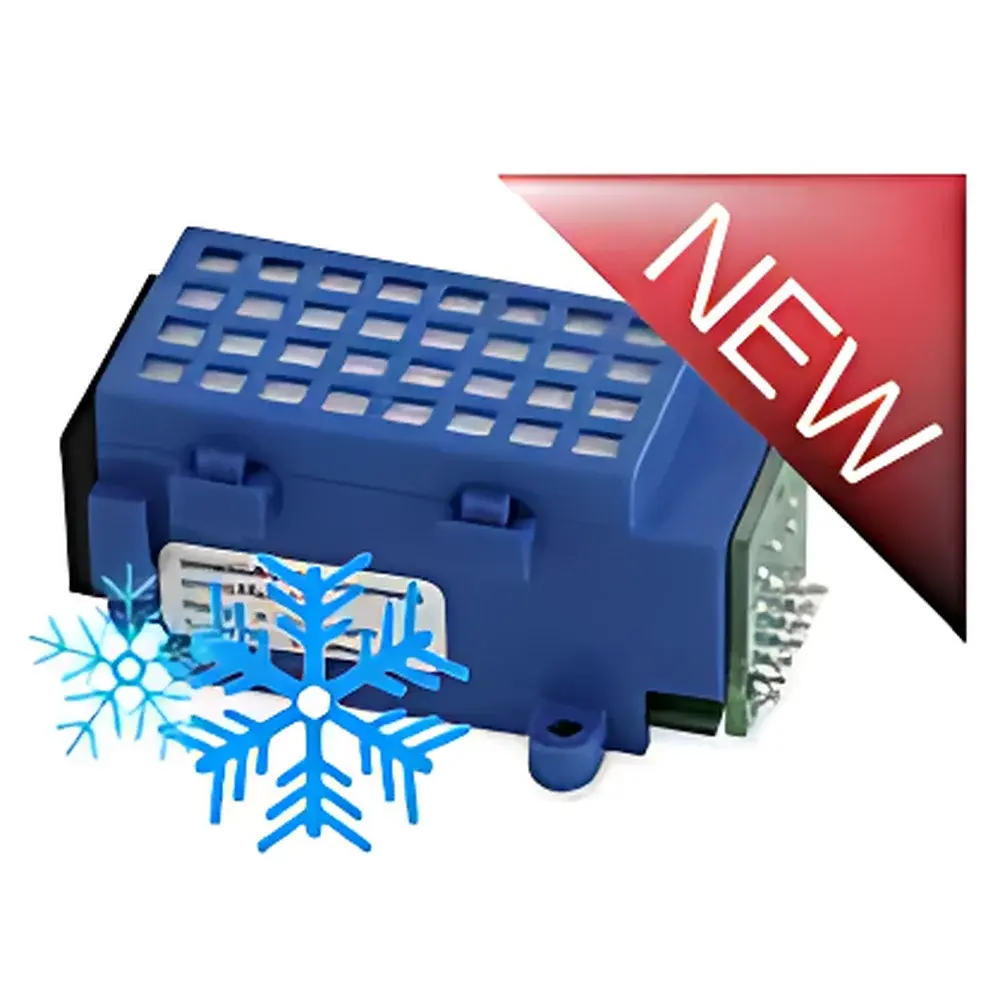
SmartGas R134A Infrared Refrigerant Gas Sensor
| Brand | SmartGas |
|---|---|
| Origin | Germany |
| Model | SM-R134a / SMC-R134a / SMF-R134a / SMP-R134a |
| Detection Principle | Non-Dispersive Infrared (NDIR) |
| Measurement Range | 0–2000 ppm |
| Lower Detection Limit | 2 ppm |
| Accuracy | ±2% of full scale (±40 ppm) |
| Resolution | 2 ppm |
| Repeatability | ±0.5% of reading |
| Operating Temperature Compensation | Integrated |
| Output Options | 4–20 mA, 0–1 V / 0–2.5 V analog, RS485 (Modbus RTU), USB |
| Enclosure Types | Diffusion (SM/SMC), Flow-through/Pipe-mount (SMF/SMP) |
| Cross-Sensitivity | Negligible to H₂O, CO₂, ethanol |
| Expected Service Life | ≥10 years |
| Compliance | Designed for industrial gas monitoring per IEC 61000-6-2/6-4, EN 61326-1 (EMC), RoHS, CE |
Overview
The SmartGas SM-R134a series is a family of non-dispersive infrared (NDIR) refrigerant gas sensors engineered for continuous, high-stability detection of 1,1,1,2-tetrafluoroethane (R134a) in industrial and commercial HVAC/R environments. Based on dual-wavelength, dual-beam optical architecture, the sensor employs a reference channel with a non-absorbed wavelength to actively compensate for signal drift caused by LED aging, optical window fouling, or detector responsivity variation—eliminating the need for frequent zero calibration. Unlike electrochemical sensors, which degrade due to electrolyte evaporation and electrode poisoning, NDIR-based detection provides intrinsic chemical selectivity through fundamental vibrational absorption bands in the mid-infrared spectrum (~10.2 µm for R134a), ensuring immunity to common interferents including water vapor, carbon dioxide, and alcohols. The sensor’s solid-state design, absence of consumables, and temperature-compensated signal processing support unattended operation over a minimum service life of 10 years under typical ambient conditions (−20 °C to +50 °C).
Key Features
- Dual-wavelength, dual-beam NDIR optics with built-in temperature compensation for long-term baseline stability
- Low detection limit of 2 ppm and full-scale range of 0–2000 ppm, optimized for leak detection and process concentration monitoring
- Multi-configuration mechanical design: diffusion-type (SM, SMC) and pipe-mount flow-through variants (SMF, SMP) for flexible integration into ducts, chillers, or recovery systems
- Standardized analog outputs (4–20 mA, 0–1 V / 0–2.5 V) and digital Modbus RTU over RS485 for seamless integration into BMS, PLC, or SCADA platforms
- Robust IP65-rated housing with stainless steel or high-performance polymer options; compatible with standard 6 mm or 8 mm sampling tubing
- No cross-sensitivity to humidity, CO₂, or volatile organic compounds—validated per ISO 16000-23 and ASTM D6792 test protocols
- Factory-calibrated with traceable NIST-traceable R134a standards; calibration certificate provided with each unit
Sample Compatibility & Compliance
The SM-R134a sensor is designed for direct measurement of gaseous R134a in ambient air, nitrogen-purged enclosures, or low-velocity process streams. It operates reliably across relative humidity ranges of 15–90% RH (non-condensing) and is insensitive to barometric pressure fluctuations within ±10 kPa. Units conform to electromagnetic compatibility requirements per EN 61326-1 (industrial environment), functional safety guidelines per IEC 61508 SIL 2 (hardware fault tolerance), and environmental directives including RoHS 2011/65/EU and REACH. While not intrinsically safe certified, explosion-proof enclosures (e.g., ATEX Zone 2 / Class I Div 2) are available upon request for hazardous area deployment. All models support GLP-compliant data logging when paired with SmartGas’ optional data acquisition modules.
Software & Data Management
SmartGas provides configuration and diagnostic software (SmartConfig v3.x) for Windows-based commissioning, real-time signal visualization, and firmware updates via USB or RS485. The Modbus RTU interface supports standard function codes (03h, 06h, 10h) for reading measured values, status flags (e.g., sensor fault, temperature out-of-range), and calibration metadata. When integrated into enterprise monitoring systems, the sensor enables audit-ready data trails compliant with FDA 21 CFR Part 11 (electronic records/signatures) when used with validated software layers. Optional cloud gateway modules support MQTT/HTTPS transmission to AWS IoT Core or Azure IoT Hub with TLS 1.2 encryption and configurable reporting intervals (1 s to 1 h).
Applications
- HVAC/R equipment leak detection in chiller plants, refrigerated warehouses, and transport refrigeration units
- Refrigerant recovery and recycling stations requiring precise endpoint verification (e.g., <50 ppm residual R134a)
- Automotive AC service bays for compliance with EPA Section 609 and EU F-Gas Regulation (EU) No 517/2014
- Manufacturing QA/QC of R134a-filled components (compressors, condensers, expansion valves)
- Environmental health & safety (EHS) monitoring in laboratories handling fluorinated refrigerants
- OEM integration into portable gas analyzers, fixed-gas detection panels, and smart building automation controllers
FAQ
What is the recommended calibration interval for the SM-R134a sensor?
Annual calibration using certified R134a span gas (e.g., 1000 ppm in N₂) is recommended for critical applications; however, field validation with zero air and span checks every 6 months is sufficient for most industrial monitoring use cases.
Can the sensor operate in high-humidity or condensing environments?
The sensor is rated for up to 90% RH non-condensing. For applications involving intermittent condensation, installation with a hydrophobic particulate filter (e.g., PTFE membrane) and heated sample line is advised.
Is Modbus RTU communication compatible with standard industrial PLCs?
Yes—the RS485 interface implements standard Modbus RTU protocol at 9600 baud (default), 8N1, with slave ID programmable from 1–247; register maps are documented in the SmartGas Modbus Protocol Manual v2.1.
Does the sensor require warm-up time before stable readings?
Stabilization occurs within 60 seconds after power-on; full thermal equilibrium and optimal accuracy are achieved within 5 minutes at ambient temperatures above 15 °C.
How is long-term drift managed without manual recalibration?
The dual-beam optical design inherently corrects for intensity drift; combined with onboard temperature compensation and factory-set algorithmic baselines, typical drift remains below ±1% FS/year under controlled operating conditions.
Related Products







