
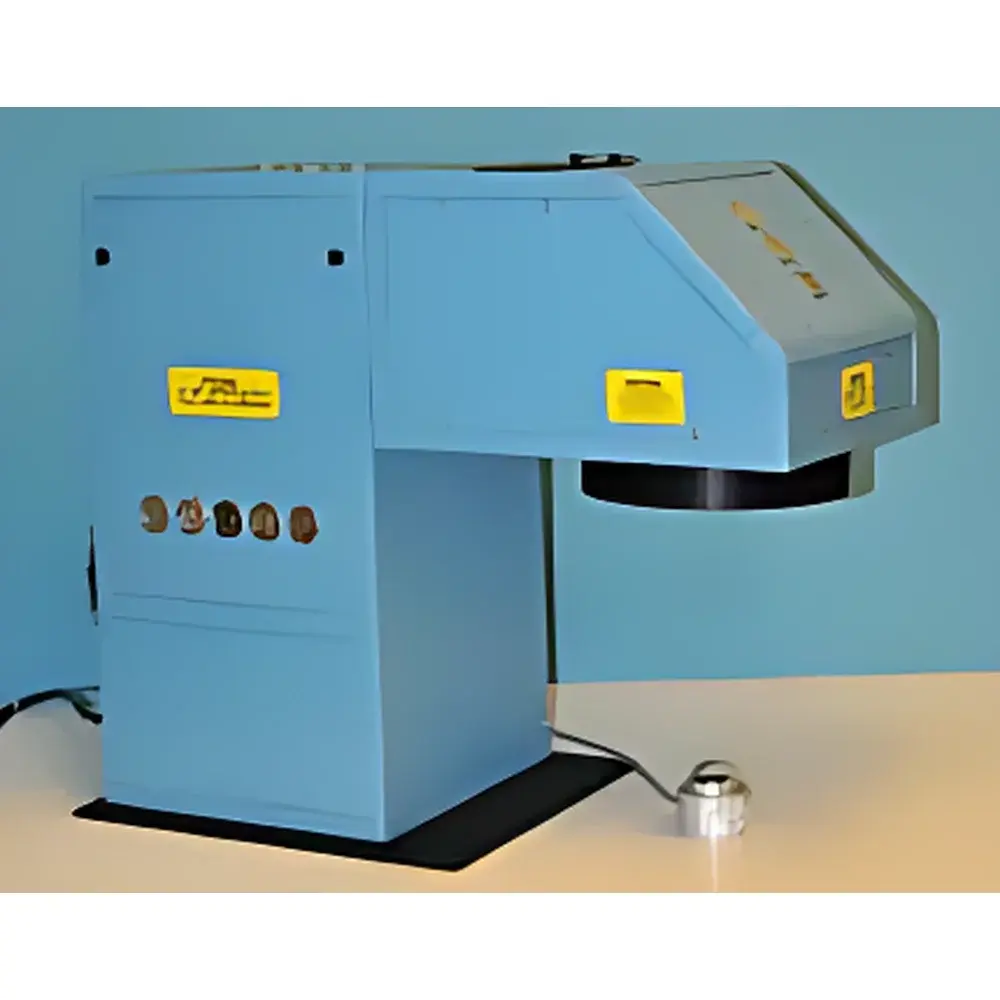
Solar Light LS1000 Class A Solar Simulator
| Brand | Solar Light |
|---|---|
| Origin | USA |
| Model | LS1000 |
| Spectral Output Options | UV, AM0, AM1.5, AM1 |
| Beam Shape | Circular or Square |
| Beam Diameter/Size | 2–12 in (circular), 4–12 in (square) |
| Uniformity | ±5% |
| Collimation Half-Angle | <4° |
| Light Source | 1000 W Xenon Short-Arc Lamp (also configurable with Hg-Xe or Mercury Arc) |
| Lamp Lifetime | ~900 hours |
| Calibration | NIST-traceable prior to shipment |
| Compliance | ASTM E927-05, E948-09, G173-03e1, G151, G155 |
| Optional Features | Electronic Shutter, Precision Dose Control System, Custom Filters, Air-Cooled Thermal Management |
Overview
The Solar Light LS1000 Class A Solar Simulator is a precision-engineered optical instrument designed for photovoltaic (PV) device characterization, materials aging studies, and optoelectronic testing under controlled, spectrally accurate illumination. It operates on the principle of broadband spectral replication using high-intensity short-arc xenon discharge lamps—optimized with elliptical reflectors and calibrated filter assemblies—to reproduce standardized solar irradiance spectra including AM0 (extraterrestrial), AM1.5G (terrestrial global), and AM1 (low-angle terrestrial). The system meets Class A requirements per ASTM E927-05 for spectral match, spatial uniformity, and temporal stability—ensuring traceable, repeatable irradiance conditions essential for IEC 61215, IEC 61646, and UL 1703 qualification testing. All units undergo full NIST-traceable radiometric calibration at the factory, with documented uncertainty budgets provided in the Certificate of Calibration.
Key Features
- Class A spectral match per ASTM E927-05 across UV–VIS–NIR (280–1200 nm), validated against reference spectroradiometers
- ±5% spatial uniformity over defined test plane—verified via ISO 9050-compliant scanning radiometer mapping
- Collimated output with half-angle <4°, enabling consistent incident angle control for angular response studies
- Modular lamp architecture supporting interchangeable 1000 W xenon, mercury-xenon, or pure mercury arc sources for tailored UV enhancement
- Integrated electronic shutter with TTL-triggered operation (response time <10 ms) for pulsed illumination protocols
- Stabilized 1000 W switch-mode power supply with adjustable current regulation (±0.1% line regulation) for precise irradiance tuning
- Ellipsoidal collector optics achieving >85% optical coupling efficiency from lamp arc to output beam
- Forced-air thermal management system maintaining lamp envelope temperature within ±2°C during continuous operation
- Optional real-time dose monitoring and closed-loop irradiance stabilization via integrated photodiode feedback
Sample Compatibility & Compliance
The LS1000 accommodates a wide range of sample geometries and mounting configurations—including standard PV mini-modules (up to 12″ × 12″), thin-film substrates, organic semiconductor films, and accelerated weathering coupons. Its configurable beam size (circular: 2″–12″; square: 4″–12″) supports both small-area cell IV characterization and large-area module-level stress testing. The simulator is fully compliant with ASTM G151 (standard practice for exposing nonmetallic materials), ASTM G155 (xenon-arc exposure apparatus), and ASTM E948-09 (electrical performance measurement of PV devices). For regulatory submissions, it satisfies data integrity requirements under FDA 21 CFR Part 11 when paired with Solar Light’s optional GLP/GMP-compliant software suite, which includes audit trails, user access controls, and electronic signature support.
Software & Data Management
Control and data acquisition are managed via Solar Light’s proprietary SimuView™ software platform (Windows-based), supporting automated irradiance ramping, timed exposure sequences, and synchronized IV curve capture using third-party source meters (e.g., Keysight B2900 series). Raw spectral data (3 nm resolution), irradiance logs, and shutter event timestamps are stored in HDF5 format with embedded metadata (wavelength, datetime, operator ID, calibration certificate ID). Export options include CSV, MATLAB .mat, and PDF reports compliant with ISO/IEC 17025 documentation standards. Optional integration with LabVIEW or Python APIs enables custom automation in high-throughput R&D environments.
Applications
- Quantum efficiency (QE) and external quantum efficiency (EQE) mapping of silicon, perovskite, CIGS, and organic PV cells
- Accelerated photostability and UV degradation testing per IEC 61215-2 MQT10 and ASTM D4329
- Calibration of reference cells traceable to NREL or PTB primary standards
- Spectral responsivity validation of pyranometers and photodiode-based irradiance sensors
- Photochemical reaction kinetics studies requiring tunable UV-VIS flux profiles
- Qualification of anti-reflective coatings and encapsulant yellowing under controlled AM1.5G exposure
FAQ
What calibration standards does the LS1000 conform to?
All LS1000 systems ship with NIST-traceable calibration certificates covering spectral irradiance (W/m²/nm), spatial uniformity, and temporal stability—performed in accordance with ISO/IEC 17025-accredited procedures.
Can the LS1000 be used for AM0 testing of space-grade solar cells?
Yes—the LS1000 supports AM0 spectral output via vacuum-compatible quartz filters and is routinely deployed in aerospace PV qualification labs meeting ECSS-E-ST-32-01C requirements.
Is remote operation supported?
Full Ethernet-based remote control is available via TCP/IP interface; SimuView™ supports headless operation with secure SSH tunneling and TLS-encrypted command streaming.
How often should recalibration be performed?
Annual recalibration is recommended for GLP/GMP environments; biannual verification is sufficient for R&D use—both performed by Solar Light’s ISO 17025-certified service lab.
Does the system meet IEC 60904-9:2020 Class AAA requirements?
The LS1000 achieves Class A for spectral match and uniformity; temporal stability meets Class A per IEC 60904-9:2020 when operated with active dose control and thermal stabilization enabled.



