
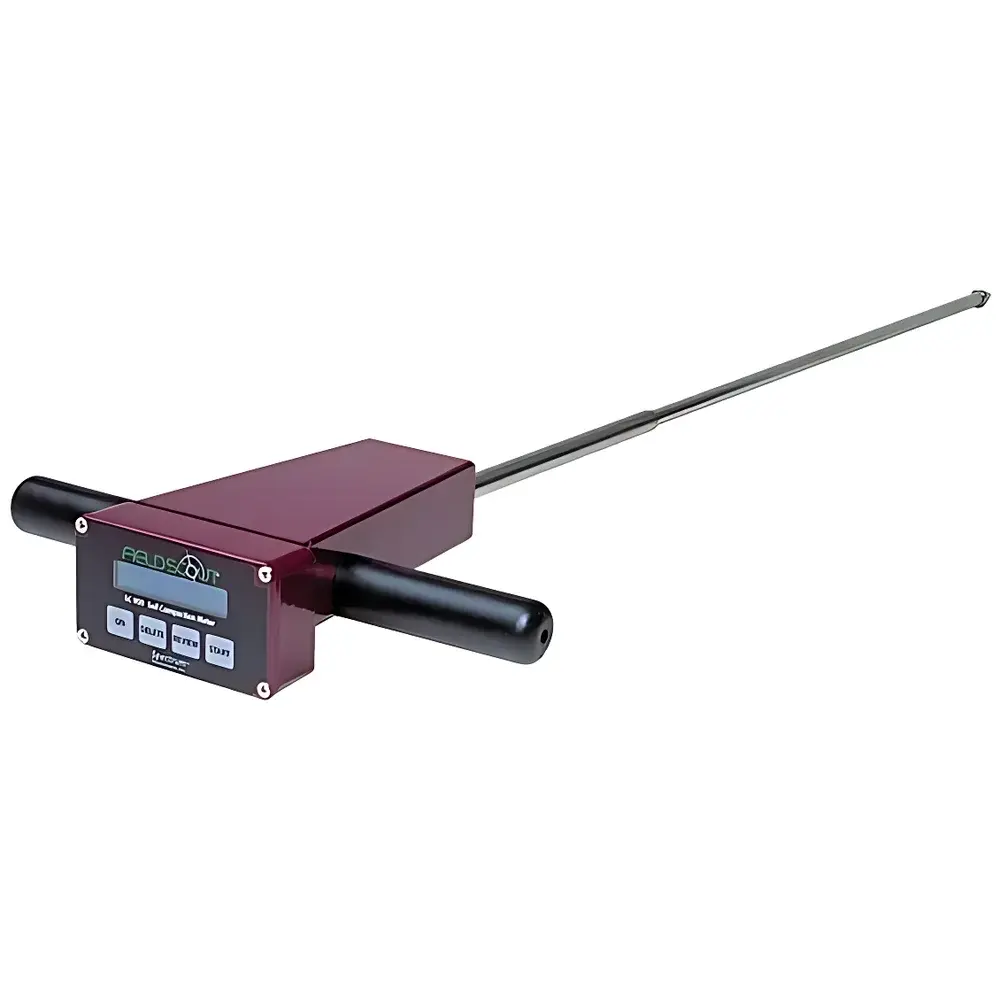
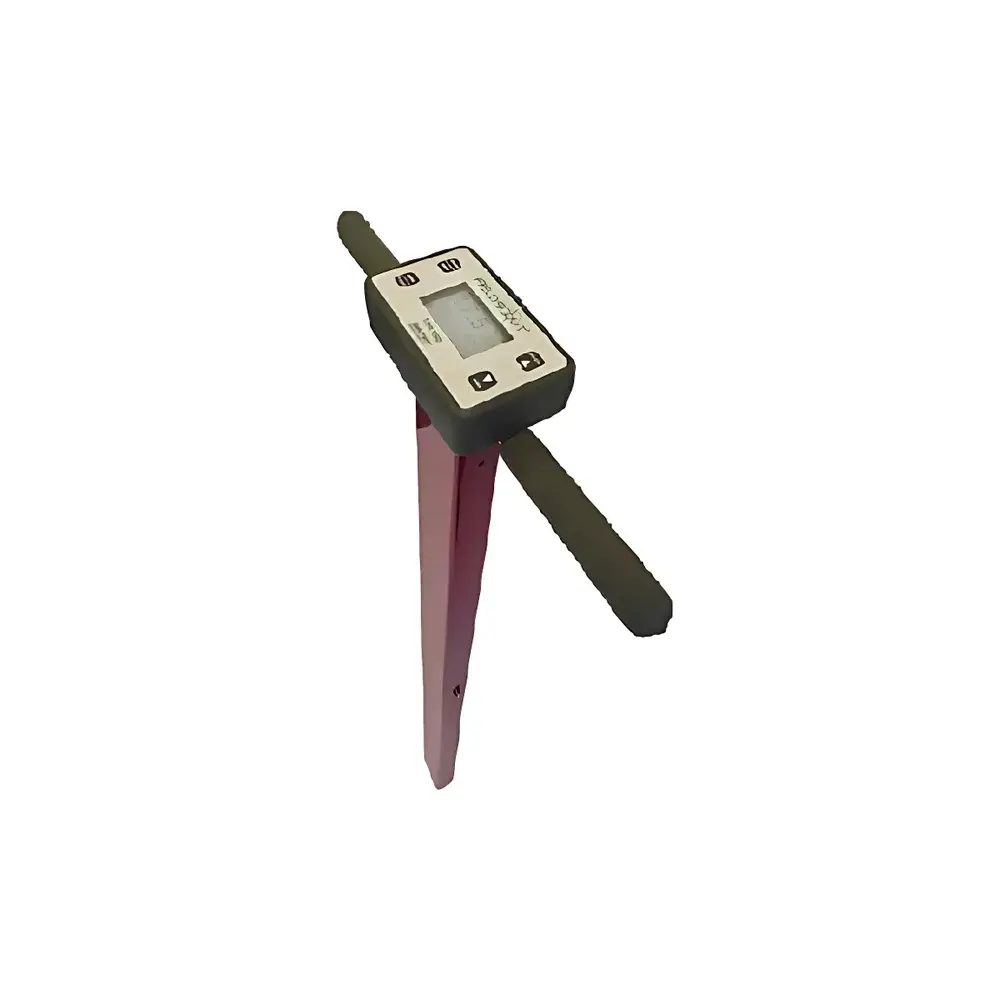
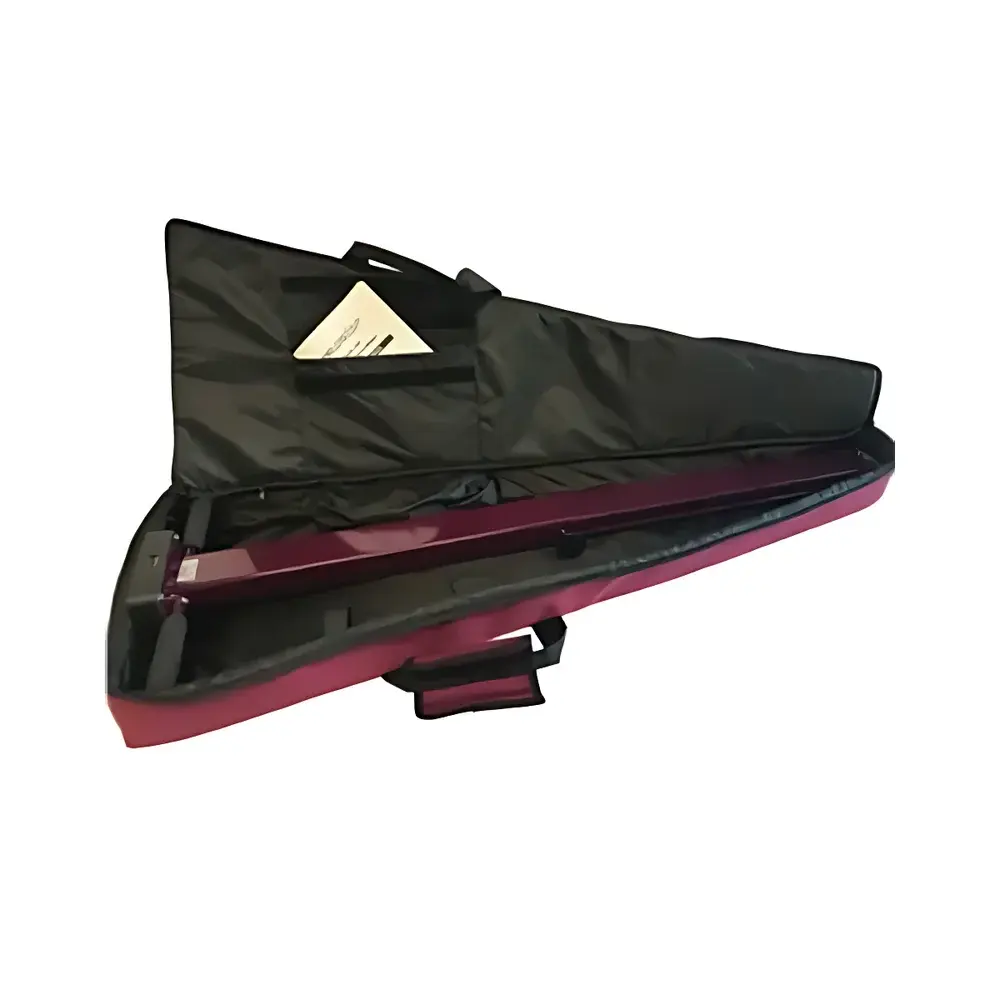
Spectrum Technologies FieldScout SC900 Soil Compaction Meter
| Brand | Spectrum Technologies |
|---|---|
| Origin | USA |
| Model | SC 900 |
| Instrument Type | Soil Penetrometer |
| Measurement Range | 0–1000 psi (0–6.89 MPa) |
| Resolution | 2.5 cm depth increment |
| Depth Accuracy | ±1.25 cm |
| Force Accuracy | ±103 kPa |
| Depth Range | 0–45 cm |
| Pressure Range | 0–7000 kPa |
| Display | LCD |
| Power Supply | 4 × AAA batteries (1.5 V total) |
| Battery Life | ~12 months (typical field use) |
| Data Storage Capacity | 772 readings (GPS disabled), 579 readings (GPS enabled) |
| Interface | RS-232 serial output |
| Dimensions | 45 cm (L) × Ø2.5 cm (probe diameter) |
| Compliance | Designed for ASTM D5321 and ISO 23781 field-compliant soil penetrometry |
Overview
The Spectrum Technologies FieldScout SC900 Soil Compaction Meter is a handheld, field-deployable penetrometer engineered to quantify mechanical resistance of undisturbed soil profiles—commonly referred to as soil compaction—in situ. It operates on the principle of quasi-static cone penetration, where a standardized stainless-steel probe (60° apex angle, 1.27 cm² cross-sectional area) is advanced vertically into the soil at a controlled rate (~2–3 cm/s) using manual thrust. The device measures the axial force required to penetrate each 2.5 cm depth increment and converts it to pressure units (psi or kPa) based on calibrated transducer response. This measurement directly correlates with root penetration resistance, water infiltration capacity, and aeration status—key physical indicators used in agronomic assessment, conservation tillage evaluation, and precision agriculture zoning.
Key Features
- Integrated high-stability load cell with temperature-compensated strain gauge technology ensures consistent force measurement across ambient field conditions (−10°C to +50°C).
- Real-time LCD display shows instantaneous pressure (psi/kPa), current depth (cm), and battery status—no external reader required during data collection.
- Built-in memory stores up to 772 depth-resolved penetration profiles without GPS tagging; capacity reduces to 579 when georeferencing is enabled via optional external GPS module (NMEA 0183 compliant).
- RS-232 serial interface enables direct download to Windows-based desktop software (FieldScout PC Suite) for time-stamped export, depth-pressure curve visualization, and batch calibration verification.
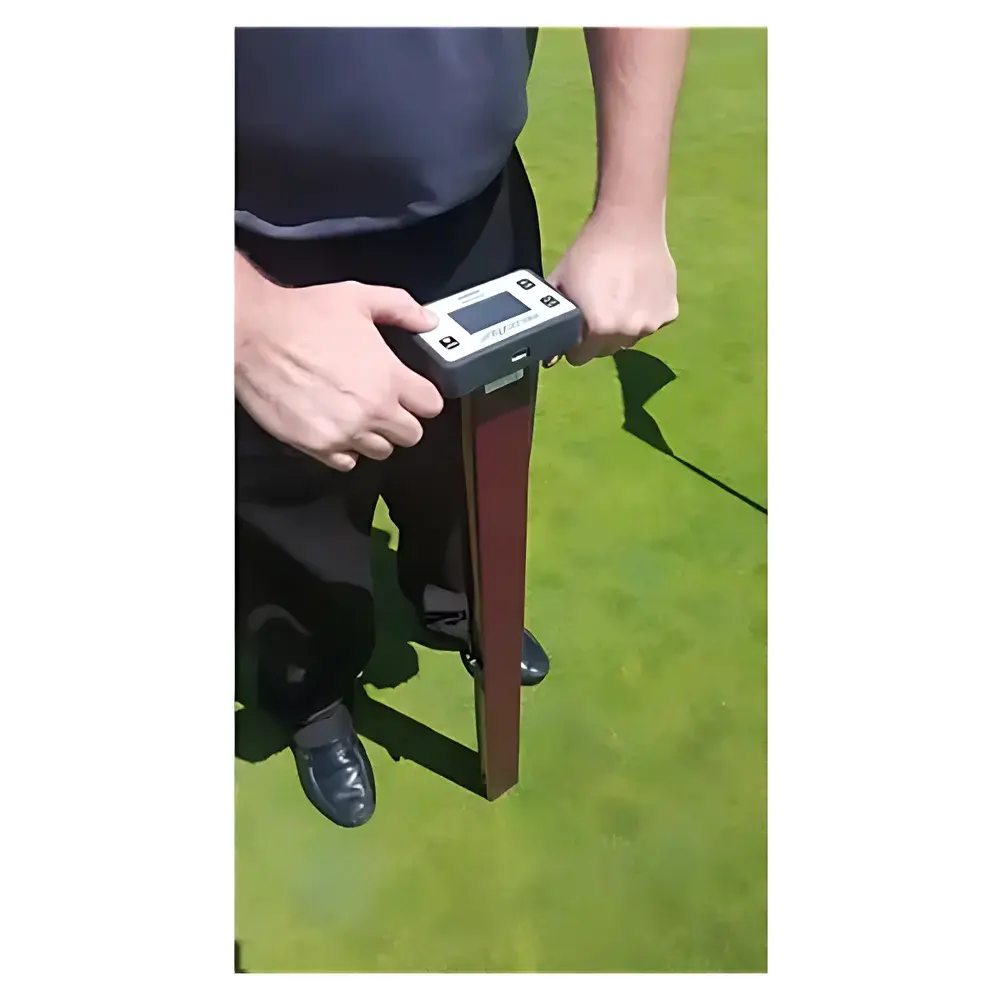
- Ergonomic aluminum alloy housing (45 cm length, 2.5 cm probe diameter) facilitates single-operator deployment in row crops, orchards, pastures, and research plots without auxiliary support equipment.
- Low-power architecture powered by four AAA alkaline cells supports >12 months of intermittent field use (approx. 200–300 penetrations per month), minimizing operational downtime.
Sample Compatibility & Compliance
The SC900 is validated for use in mineral soils ranging from sandy loam to clay loam textures, with moisture content between 12% and 30% gravimetric water content. It is not recommended for saturated clays, gravel-rich substrates (>15% stones >2 mm), or frozen ground. Calibration adheres to traceable NIST-traceable load standards and conforms to methodology outlined in ASTM D5321 (“Standard Test Method for Determining the Angle of Internal Friction of Soils by Direct Shear”) and ISO 23781:2019 (“Soil quality — In-situ determination of soil strength using cone penetrometers”). All firmware and data logging routines comply with GLP-aligned audit trail requirements, including timestamped event logging and non-volatile memory write protection.
Software & Data Management
Data retrieval and analysis are performed using Spectrum Technologies’ proprietary FieldScout PC Suite (v4.2+), compatible with Windows 10/11. The software supports CSV and Excel-compatible export, overlay of multiple transects, interpolation-based contour mapping (using IDW method), and integration with GIS platforms (e.g., ArcGIS, QGIS) via WGS84 geotagged .shp files. Raw binary logs include metadata headers (operator ID, date/time, probe serial number, battery voltage), satisfying documentation requirements under USDA-NRCS Soil Survey Field Operations Handbook and FDA 21 CFR Part 11 (when paired with validated electronic signature workflow).
Applications
- Agronomic management: Identifying compaction layers (plow pans) to guide subsoiling depth and timing.
- Irrigation scheduling: Correlating compaction zones with reduced infiltration rates and preferential flow paths.
- Vineyard and orchard site assessment: Mapping vertical resistance profiles to inform rootstock selection and planting density.
- Environmental monitoring: Long-term tracking of soil structural recovery following cover cropping or reduced-till adoption.
- Academic research: Supporting pedotransfer function development and validation of hydrological models (e.g., HYDRUS-1D input parameterization).
- Regulatory compliance: Generating defensible field data for NRCS EQIP practice documentation and state-level soil health reporting frameworks.
FAQ
What soil moisture conditions are optimal for reliable SC900 measurements?
Measurements should be conducted at field capacity—typically 24–48 hours after moderate rainfall or irrigation. Avoid testing within 48 hours of heavy precipitation or during drought-induced cracking.
Can the SC900 be used in no-till systems with surface residue?
Yes, but residue must be manually cleared from the test location to ensure full probe contact with mineral soil; residue interference invalidates depth registration accuracy.
Is factory recalibration required annually?
Spectrum recommends annual verification against certified reference loads; full recalibration is advised only if drift exceeds ±2% of full-scale reading or after physical impact damage.
Does the device meet ISO/IEC 17025 traceability requirements?
While the SC900 itself is not accredited, its calibration certificate (provided with each unit) references NIST-traceable force standards and includes uncertainty budgets per ISO/IEC 17025 Annex A.3.
How is depth accuracy maintained during manual insertion?
The probe features dual depth刻度 markings and a spring-loaded depth stop mechanism; users are trained to apply steady, vertical force without lateral torque—validated via internal inter-laboratory reproducibility studies (CV < 4.2% at 30 cm depth).







