
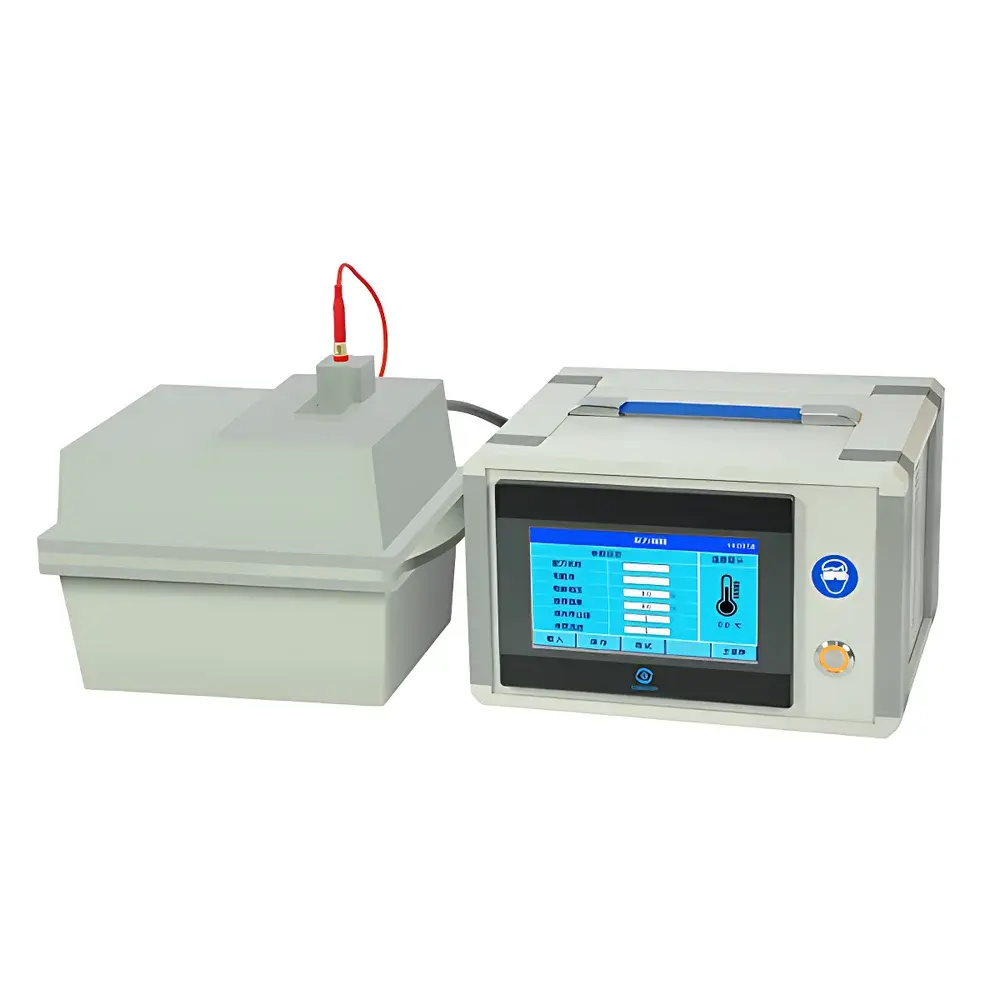
TJ100-SE Electrolytic Double-Jet Thinning System
| Brand | KJ GROUP (Shenyang Kejing) |
|---|---|
| Origin | Liaoning, China |
| Manufacturer Type | Authorized Distributor |
| Region | Domestic (PRC) |
| Model | TJ100-SE |
| Quotation | Upon Request |
| Rated Voltage | 220 V / 50 Hz |
| Rated Power | 600 W |
| Cooling Temperature Range | −35 °C (minimum), real-time display |
| Electrolysis Current Range | 0–2 A (DC) |
| Electrolysis Voltage Range | 0–220 V |
| Photo-Sensor Stop Threshold | 1–799 levels |
| Peristaltic Pump Speed Control | 1–99 steps |
| Electrolyte Volume Capacity | 500–800 mL |
| Standard Sample Holder | Φ3 mm disc-compatible |
| Electrolytic Cell Dimensions | 355 × 250 × 180 mm (L×W×H) |
| Inner Tank Dimensions | 150 × 185 × 50 mm (L×W×H) |
| Control Unit Dimensions | 320 × 300 × 200 mm (L×W×H) |
| Optional Cryogenic Circulator | 5 L reservoir, ethanol-based coolant, dual internal/external circulation, max flow 15 L/min, cooling capacity 1600 W @ 20 °C, no-load min temp −35 °C, temp stability ±1 °C, dimensions 640 × 450 × 890 mm, weight 40 kg |
| Construction Materials | Full-PVC corrosion-resistant electrolytic cell, dual-layer insulated tank, aluminum alloy control enclosure, platinum electrodes, replaceable 316L stainless steel nozzles |
Overview
The TJ100-SE Electrolytic Double-Jet Thinning System is a precision-engineered instrument designed for the preparation of electron-transparent thin foils from bulk metallic and alloy specimens—primarily for subsequent transmission electron microscopy (TEM) analysis. It operates on the principle of controlled anodic dissolution in a cryogenically stabilized electrolyte environment, where two opposing high-velocity electrolyte jets simultaneously erode both surfaces of a rotating disc-shaped sample. This symmetrical thinning geometry minimizes localized heating, suppresses preferential etching, and ensures uniform thickness reduction across the specimen’s central region—critical for achieving high-quality, artifact-free TEM lamellae. The system integrates real-time electrochemical monitoring, programmable voltage scanning, and independent low-temperature regulation to support reproducible, operator-independent thinning protocols compliant with standard metallurgical TEM sample preparation workflows.
Key Features
- 7-inch full-color capacitive touchscreen HMI with intuitive navigation, real-time graphical display of electrolyte temperature, current vs. time profiles, and voltage transients.
- Voltage scanning mode enabling automated acquisition of anodic polarization curves (e.g., for identifying optimal electropolishing potentials per ASTM E1558–22), supporting empirical method development for new alloys.
- High-resolution parameter storage and recall: user-defined presets include polishing voltage, pump speed, photo-sensor stop threshold, recommended electrolyte type, and target temperature—each assignable with custom naming.
- Corrosion-resistant peristaltic fluid delivery system with 99-step fine-tuned flow control, ensuring stable jet velocity and minimized pulsation-induced thickness nonuniformity.
- Modular dual-chamber electrolytic cell architecture: inner PVC tank nested within thermally insulated outer shell; physically isolated from control electronics to prevent electrolyte vapor ingress and long-term PCB degradation.
- Dedicated cryogenic circulation subsystem—externally mounted, ethanol-cooled, with PID-regulated temperature setpoint (−35 °C minimum) and ±1 °C stability—establishing a secondary thermal field directly within the electrolyte bath to suppress thermal drift during extended runs.
- Ergonomic, quick-release sample holder: rotary-lid design with integrated Pt counter electrodes and spring-loaded clamping mechanism; accommodates standard Φ3 mm TEM discs; bottom-segmented base eliminates capillary siphoning during electrolyte drainage.
Sample Compatibility & Compliance
The TJ100-SE is validated for use with a broad range of conductive materials including aluminum, copper, titanium, nickel-based superalloys, stainless steels (e.g., 304, 316L), and refractory metals (e.g., Mo, W). Non-conductive or semiconducting samples require conductive coating prior to operation. All wetted components—including electrolyte reservoir, nozzles, electrodes, and cell housing—are fabricated from chemically inert materials (PVC, 316L stainless steel, platinum) compatible with common TEM electrolytes such as perchloric acid–ethanol mixtures, acetic acid–nitric acid solutions, and orthophosphoric acid formulations. The system supports GLP-aligned documentation practices through timestamped parameter logging and configurable export of operational metadata (voltage, current, temperature, pump speed, stop event trigger) in CSV format—facilitating audit readiness under ISO/IEC 17025 or internal QA/QC frameworks.
Software & Data Management
No proprietary desktop software is required: all configuration, execution, and monitoring occur via the embedded touchscreen interface running a deterministic real-time control kernel. Operational logs—including start/stop timestamps, active preset ID, final photo-sensor reading, and peak current/voltage values—are retained onboard for ≥1000 sessions and exportable via USB flash drive. Data fields adhere to FAIR principles (Findable, Accessible, Interoperable, Reusable): CSV output includes SI-compliant units, explicit column headers, and UTF-8 encoding. For integration into laboratory information management systems (LIMS), optional RS-485 or Ethernet MODBUS TCP interfaces can be enabled upon request—supporting remote status polling and basic command initiation (start/stop/pause) without altering local HMI functionality.
Applications
- Routine TEM foil preparation for microstructural characterization of wrought, cast, and additively manufactured metallic components.
- Investigation of grain boundary segregation, dislocation substructure, and phase precipitation kinetics in heat-treated alloys.
- Preparation of cross-sectional TEM specimens from diffusion couples, weld interfaces, and coated systems (e.g., thermal barrier coatings).
- Method development for electropolishing parameters using polarization curve analysis—particularly valuable when adapting protocols for novel high-entropy alloys or intermetallics.
- Supporting failure analysis laboratories requiring rapid turnaround of site-specific metallurgical specimens under ISO 17020 or ASTM E3–22 compliance.
FAQ
What electrolytes are compatible with the TJ100-SE system?
Commonly used electrolytes include 10% perchloric acid in ethanol (for Al, Cu), 20% nitric acid in methanol (for Fe-based alloys), and 10% phosphoric acid in distilled water (for Ti). Always consult material-specific literature and perform compatibility testing before routine use.
Is the system suitable for preparing specimens from brittle intermetallics or ceramics?
No—the TJ100-SE is designed exclusively for electrically conductive metallic samples. Brittle or insulating materials require alternative preparation routes such as focused ion beam (FIB) milling or mechanical dimpling followed by low-energy ion polishing.
Can the cryogenic circulator be operated independently of the main unit?
Yes—the external chiller is a standalone unit with its own power supply and control panel; it may be used for other low-temperature applications requiring ethanol-compatible cooling loops.
How often should the 316L nozzles be replaced?
Under typical usage (≤5 h/week, standard electrolytes), nozzles maintain dimensional integrity for ≥6 months. Visual inspection for pitting or flow asymmetry is recommended every 100 operating hours.
Does the system meet electromagnetic compatibility (EMC) requirements for laboratory environments?
The TJ100-SE complies with GB/T 18268.1–2010 (equivalent to IEC 61326-1:2012 Class A emission limits) and has passed conducted/radiated immunity testing per GB/T 17626 series standards—suitable for shared instrumentation labs without dedicated RF shielding.



