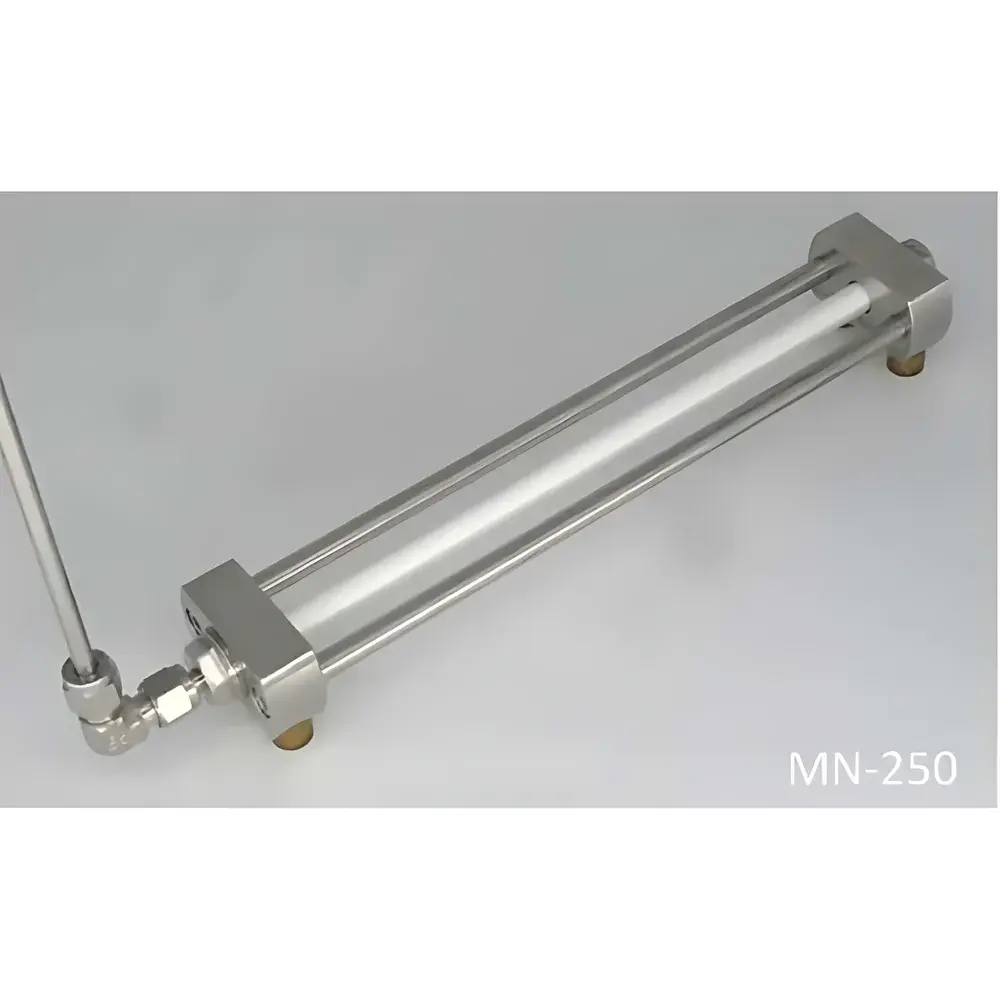
SPG MN-250 Internal-Pressure Micro/Nano Bubble Generator
| Brand | SPG |
|---|---|
| Origin | Japan |
| Model | MN-250 |
| Maximum Operating Pressure | 0.3 MPa |
| Membrane Tube Diameter | φ10 mm |
| Effective Membrane Length | 220 mm |
| Total Length | 250 mm |
| Membrane Pore Size | 1 µm (standard), optional materials: SUS304 / SUS316 stainless steel |
| Sealing Material | FKM O-rings |
| Gas Inlet Connection | 6 mm OD tubing |
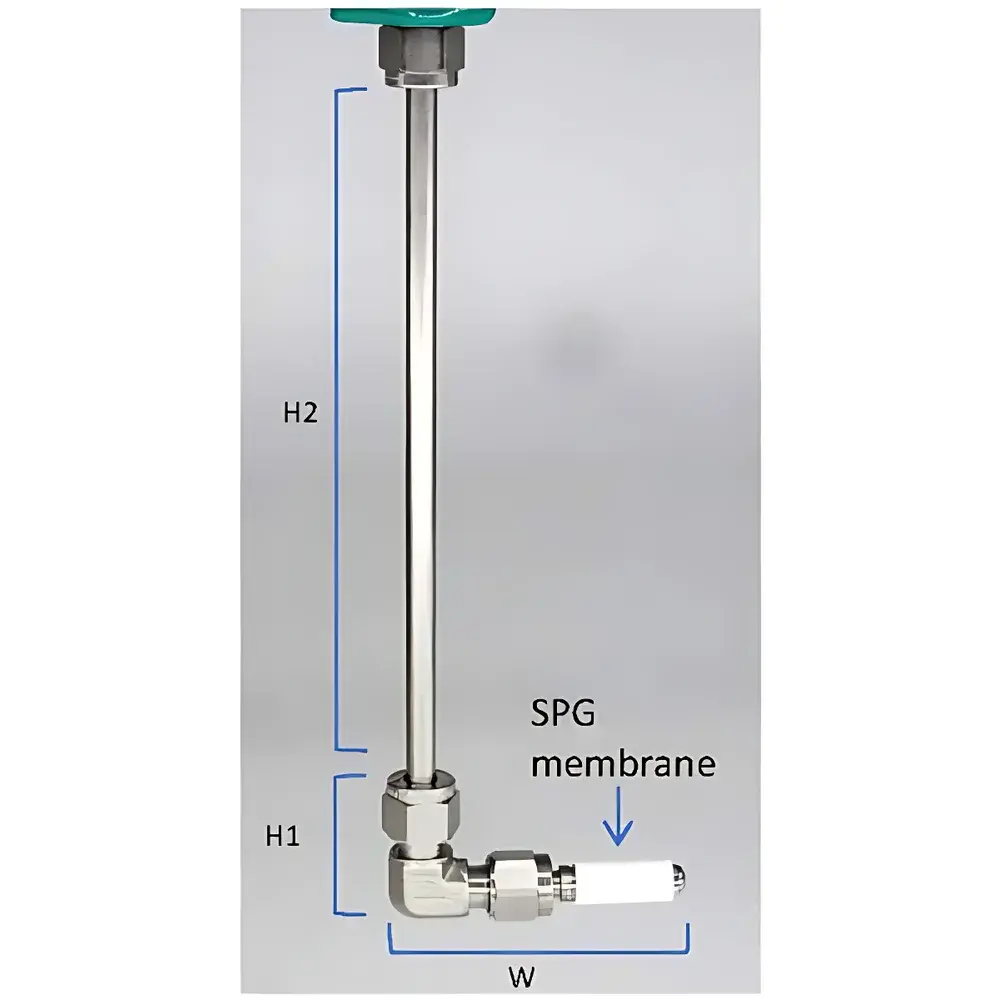
| Dimensions (W × D × H) | 310 mm × 50 mm × (38 mm + H₂), where H₂ (stainless steel shaft length) adjustable from 20–500 mm |
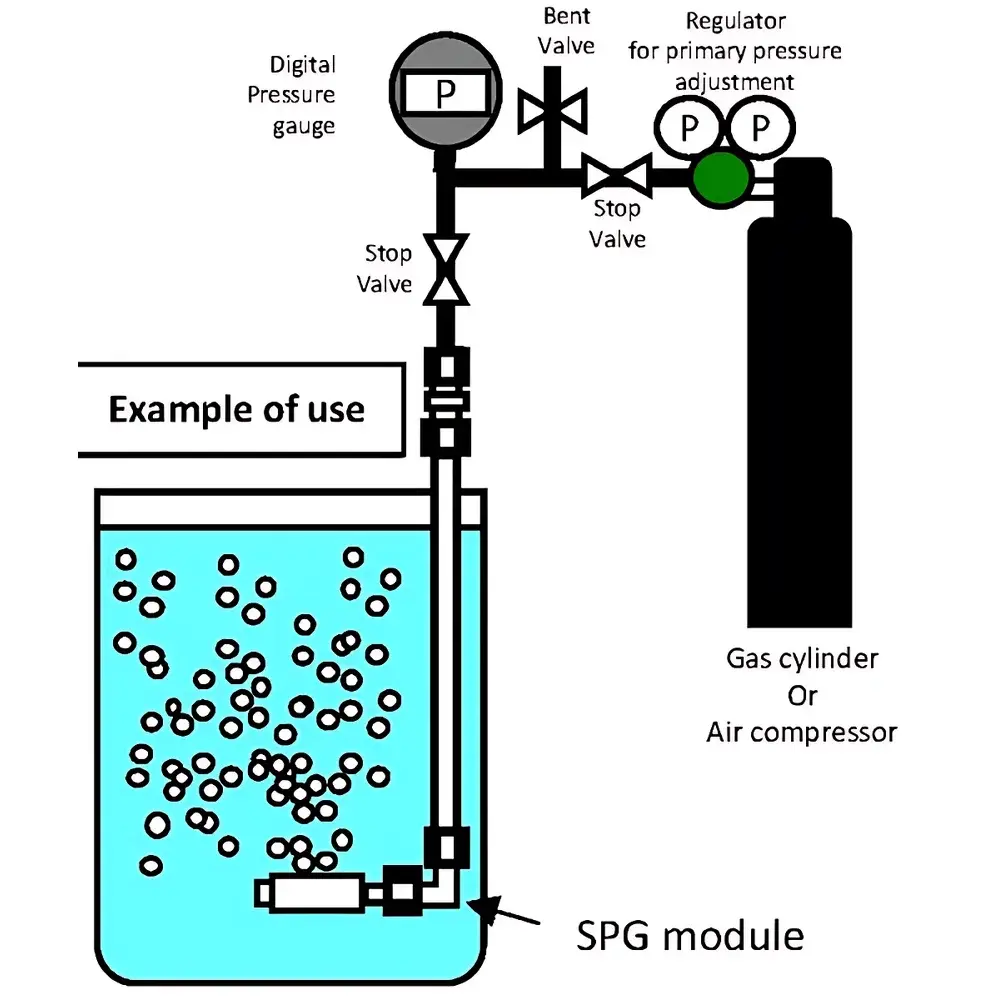
| Optional accessories | secondary pressure regulator, isolation valves, pressure gauges, and custom tubing kits |
Overview
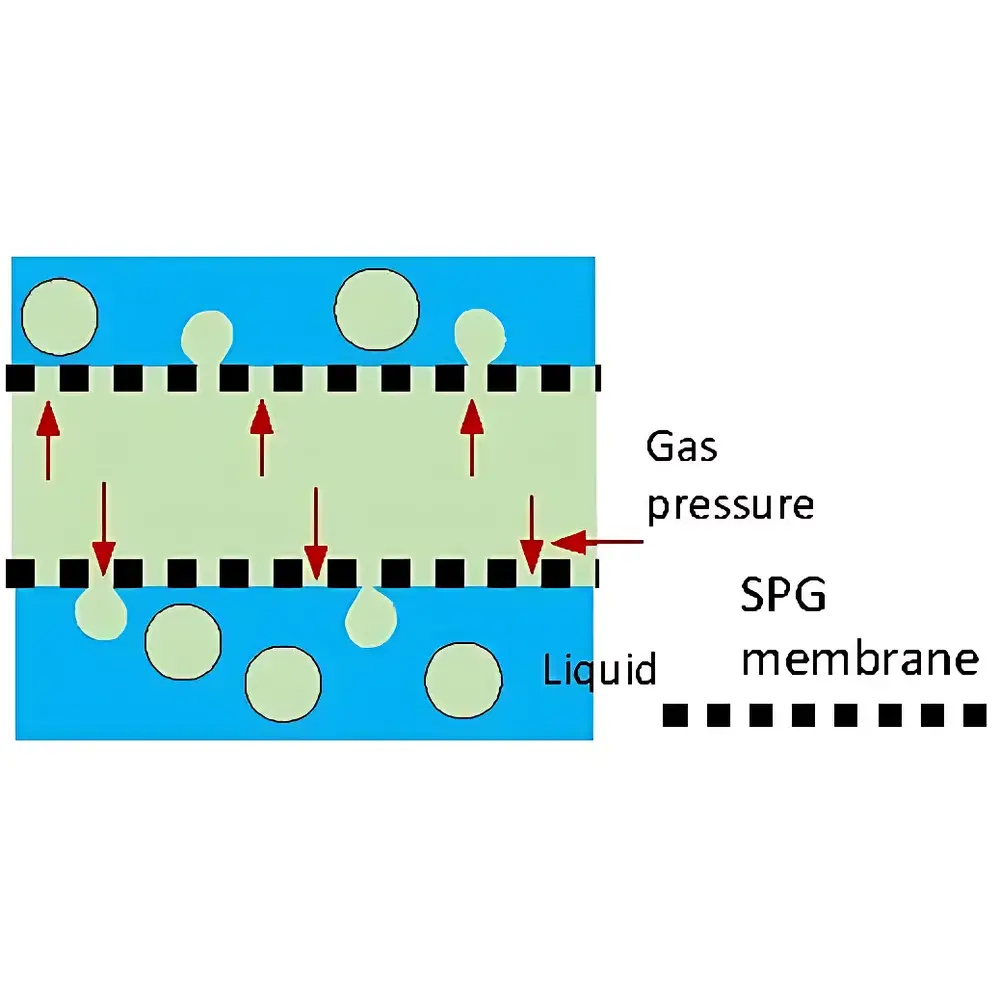
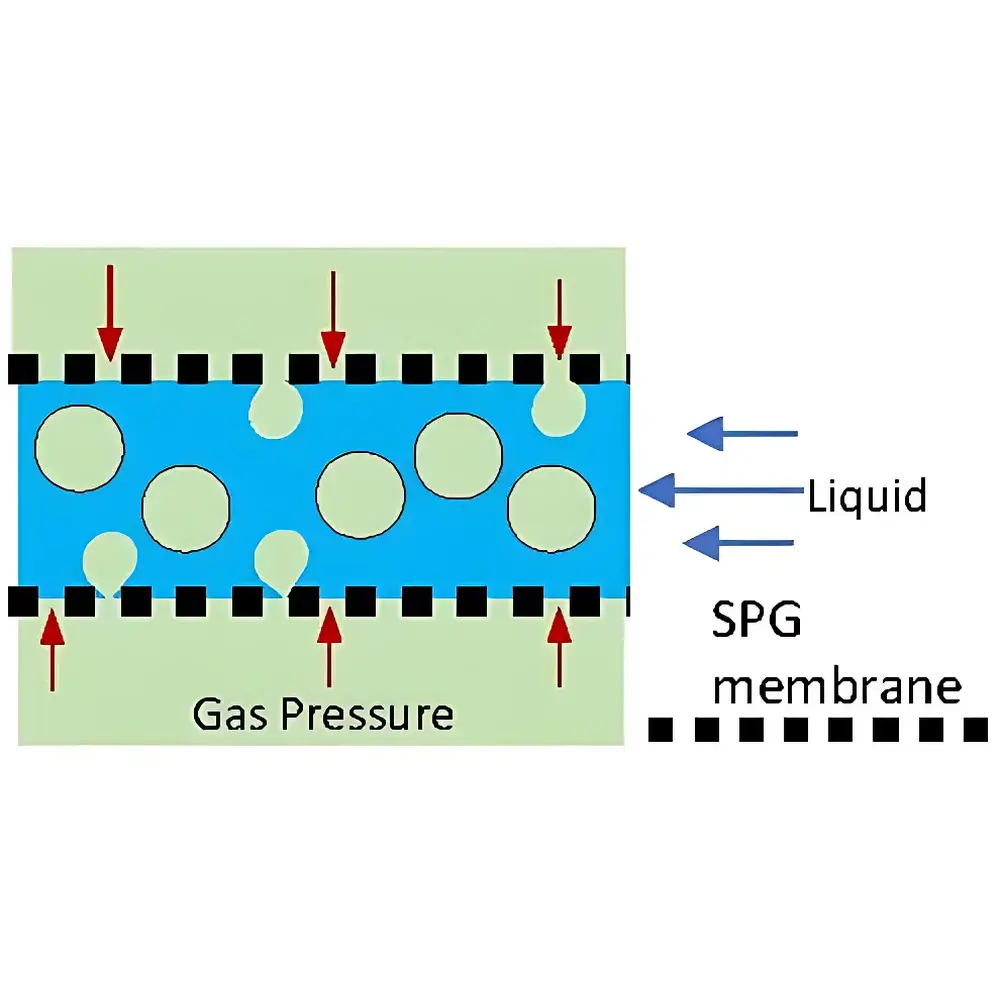
The SPG MN-250 Internal-Pressure Micro/Nano Bubble Generator is an engineered membrane-based dispersion system designed for the controlled, reproducible generation of microbubbles (1–100 µm) and nanobubbles (<1 µm) in aqueous and low-viscosity liquid media. It operates on the principle of pressurized gas permeation through a sintered stainless-steel microporous membrane under precisely regulated differential pressure. Unlike shear-based or venturi-type generators, this device leverages uniform pore geometry and laminar gas flow to produce bubbles with narrow size distribution and high volumetric stability—critical for applications requiring consistent interfacial area, prolonged bubble lifetime, and minimal coalescence. The MN-250 variant is optimized for batch volumes up to several liters, making it suitable for laboratory-scale process development, water treatment feasibility studies, and functional beverage formulation trials.
Key Features
- SPG (Shirasu Porous Glass)–derived sintered stainless-steel membrane with nominal pore size of 1 µm—certified for mechanical durability, chemical resistance, and thermal stability across pH 2–12 and temperatures up to 80 °C.
- Internal-pressure configuration ensures direct gas infusion into the liquid phase without external recirculation pumps or cavitation elements—minimizing energy input and avoiding sample degradation.
- Modular shaft design: stainless-steel central axis (H₂) with user-selectable length (20–500 mm) enables vertical immersion depth optimization for varying vessel geometries and liquid levels.
- Gas inlet compatible with standard 6 mm OD instrumentation tubing; integrated FKM O-ring seals ensure leak-tight operation at rated pressure (0.3 MPa gauge).
- Compact footprint (310 mm W × 50 mm D) facilitates integration into fume hoods, gloveboxes, or inline pilot systems; all wetted parts comply with FDA-listed materials per 21 CFR §177.2600.
Sample Compatibility & Compliance
The MN-250 is validated for use with deionized water, buffered saline solutions, dilute polymer dispersions (<5 cP), and low-surface-tension formulations (e.g., surfactant-stabilized systems). Bubble size distribution is influenced by liquid surface tension, gas solubility, and applied transmembrane pressure—empirical calibration is recommended for each fluid matrix. The device meets ISO 8502-3:2022 requirements for metallic surface cleanliness prior to assembly and conforms to JIS B 8265 for pressure equipment safety margins. While not certified as explosion-proof, it may be operated in Class I, Division 2 environments when paired with intrinsically safe gas control modules (optional accessory path).
Software & Data Management
The MN-250 is a standalone hardware module with no embedded firmware or digital interface. Process parameters—including inlet pressure, temperature, and cumulative gas volume—are monitored externally using calibrated pressure transducers (e.g., Honeywell ASDX series), mass flow controllers (Bronkhorst EL-FLOW Select), and data loggers compliant with 21 CFR Part 11 audit trail requirements. SPG provides technical documentation packages—including SOP templates, calibration checklists, and maintenance logs—that support GLP/GMP-aligned validation protocols (IQ/OQ/PQ). Raw bubble size data acquired via laser diffraction (e.g., Malvern Mastersizer 3000) or resonant mass measurement (Archimedes Particle Metrology) can be correlated to operational settings using SPG’s open-format Excel-based analysis toolkit.
Applications
- Advanced oxidation processes (AOPs): enhanced hydroxyl radical yield via nanobubble-mediated ozone or hydrogen peroxide activation.
- Aquaculture and hydroponics: dissolved oxygen enrichment with extended residence time and reduced off-gassing loss.
- Pharmaceutical colloidal suspensions: stabilization of lipid nanoparticles and protein-loaded microcarriers through interfacial charge modulation.
- Functional food R&D: incorporation of oxygen, nitrogen, or CO₂ nanobubbles to modify mouthfeel, shelf-life, and nutrient bioavailability.
- Materials science: templating of mesoporous silica or metal-organic frameworks (MOFs) using bubble-assembled soft templates.
FAQ
What is the maximum recommended operating pressure?
The MN-250 is rated for continuous operation at ≤0.3 MPa (gauge); exceeding this limit risks membrane deformation and irreversible pore widening.
Can the membrane be cleaned and reused?
Yes—standard cleaning involves sequential ultrasonication in 2% SDS (30 min), followed by 0.5 M HNO₃ (15 min), and final rinse with Type I water; pore integrity must be verified via bubble point test before reuse.
Is the MN-250 compatible with corrosive gases such as chlorine or SO₂?
No—only inert (N₂, Ar) or oxidizing but non-corrosive gases (O₂, O₃, air) are permitted; halogenated or acidic gases require Hastelloy C-276 membrane variants (custom order).
Does SPG provide bubble size characterization data for the MN-250?
Yes—application notes include DLS and HIAC-based size distributions for DI water at 0.1–0.3 MPa, measured at 25 °C and reported per ISO 22412:2017.
What regulatory documentation accompanies the unit?
Each shipment includes EC Declaration of Conformity (RoHS/REACH), material traceability certificates (SUS316 heat lot numbers), and Japanese Industrial Standard (JIS) certification for sintered metal porosity testing.