
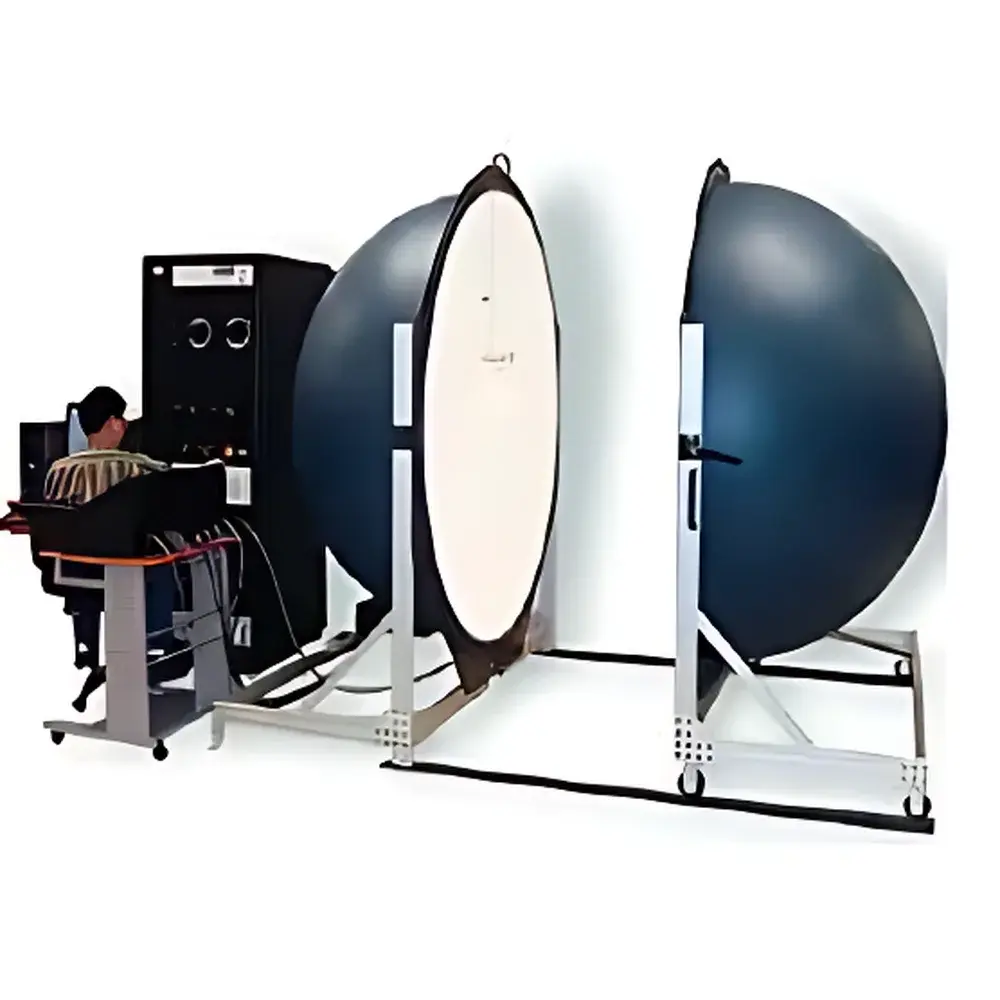
SPL SPL-LED-FL-CFL Luminous Efficacy & Photometric Testing System
| Brand | SPL |
|---|---|
| Origin | USA |
| Manufacturer Type | Authorized Distributor |
| Product Origin | Imported |
| Model | SPL-LED-FL-CFL |
| Pricing | Available Upon Request |
| Compliance | IESNA LM-9, LM-65, ANSI C78.377, CIE S 025/E:2015 |
| Spectral Range | 350–1050 nm |
| Detector | TE-cooled CCD spectrometer |
| Dynamic Range | >10⁶ (typical) |
| Solid Angle Coverage | 2π and 4π configurations |
Overview
The SPL-LED-FL-CFL Luminous Efficacy & Photometric Testing System is a fully integrated optical measurement platform engineered for standardized evaluation of luminous efficacy (lm/W), chromaticity, color rendering index (CRI/Rf), spectral power distribution (SPD), radiant flux, and electrical input parameters of general-service light sources. It operates on the principle of calibrated spectral radiometry combined with precision electrical metrology, enabling simultaneous acquisition of photometric, radiometric, and electrotechnical data in accordance with IESNA LM-9 (for LED lamps), LM-65 (for fluorescent lamps), and ANSI C78.377 (chromaticity requirements). The system employs a high-stability, thermoelectrically cooled CCD spectrometer with a spectral response spanning 350–1050 nm and optical resolution ≤1.5 nm (FWHM), ensuring accurate SPD reconstruction across visible and near-infrared bands. Its modular 2π integrating sphere and optional 4π configuration support total luminous flux measurements compliant with CIE S 025/E:2015 and IEC 62612, while the integrated absorption-correction auxiliary source compensates for sphere wall self-absorption—eliminating systematic bias inherent in conventional sphere-based photometry.
Key Features
- TE-cooled back-thinned CCD spectrometer delivering low-noise, high-sensitivity spectral acquisition with <100 counts RMS dark noise (1s integration)
- NIST-traceable factory calibration certificate included—no need for periodic return-to-factory recalibration
- Real-time spectral data streaming with synchronized electrical parameter logging (VAC, IAC, Pin, PF, THD)
- Dynamic range exceeding 10⁶ enables accurate measurement of both low-output CFLs and high-lumen-density COB LEDs without range switching
- Dual solid-angle configurations: 2π for lamp-in-sphere geometry (per IES LM-9) and 4π for bare-source or directional emitter testing (per CIE S 025)
- Integrated auxiliary correction source with programmable intensity control ensures <±0.3% uncertainty in sphere wall absorption compensation
- Self-contained firmware with embedded photometric algorithms per CIE 13.3, CIE 15, and CIE 224 for CRI (Ra, R9), TM-30-15 (Rf, Rg), and chromaticity (x,y; u’,v’)
Sample Compatibility & Compliance
The SPL-LED-FL-CFL system accommodates a broad spectrum of lamp geometries and drive conditions—including compact fluorescent lamps (CFLs), linear and circular fluorescent tubes (T5/T8/T12), integrated LED modules, retrofit A-lamps, PAR reflectors, MR16s, and bare LED packages operated under constant current or voltage. All mechanical fixtures are designed to maintain thermal stability during extended integration periods (>30 min), satisfying the thermal stabilization requirements of ANSI C78.377 and ENERGY STAR Program Requirements v2.1. The system’s firmware enforces mandatory test sequences defined in IES LM-65-14 (fluorescent) and LM-9-19 (LED), including preheat dwell, thermal soak, and stabilized measurement windows. Data outputs comply with IEC 62301 ed2.0 (standby power) and IEC 62675 (LED module electrical safety interface) where applicable. Full audit trail and user-accessible calibration history support GLP/GMP documentation workflows.
Software & Data Management
The system ships with SPL PhotonSuite v4.x—a Windows-based application supporting local operation and remote monitoring via Ethernet. It provides ISO/IEC 17025-aligned reporting templates (PDF/CSV/XLSX) with embedded metadata: instrument ID, calibration date, operator ID, ambient temperature/humidity, and measurement uncertainty budgets per GUM (JCGM 100:2008). Raw spectral datasets are stored in industry-standard JWS (Joint Spectral Format) and HDF5 containers, enabling interoperability with MATLAB, Python (via h5py), and third-party analysis tools. Role-based access control, electronic signatures, and 21 CFR Part 11-compliant audit logs are available as optional licensed modules for regulated laboratories requiring FDA or EU MDR compliance.
Applications
- Pre-certification testing for ENERGY STAR, DesignLights Consortium (DLC), and CE marking
- R&D validation of phosphor-converted white LEDs and UV-pumped solid-state lighting
- Manufacturing QC of CFL ballast efficiency and LED driver power factor
- Comparative analysis of lumen maintenance (LM-80/LM-84) test samples
- Photobiological safety assessment (IEC 62471) via spectral irradiance extrapolation
- Calibration transfer between primary standards labs and secondary test facilities
FAQ
Does the system support automated pass/fail evaluation against ENERGY STAR thresholds?
Yes—PhotonSuite includes configurable limit tables aligned with current ENERGY STAR Lamps V2.1 specifications, generating immediate PASS/FAIL flags for efficacy, CRI, R9, and chromaticity distance (SDCM).
Can the system measure pulsed or PWM-driven LED sources?
Yes—the spectrometer supports external trigger synchronization and adjustable integration gating to capture time-averaged spectra under modulated drive conditions, provided modulation frequency exceeds 100 Hz.
Is NIST traceability documented per individual unit?
Yes—each system ships with a unique NIST-traceable calibration report (NIST SRM 2035 referenced), including wavelength accuracy (±0.1 nm), irradiance responsivity (±1.2% k=2), and linearity verification data.
What electrical safety standards does the integrated power analyzer meet?
The embedded Class 1 power measurement module complies with IEC 61000-4-30 Class S and EN 61000-4-7 harmonic analysis requirements, with voltage/current channel isolation rated to CAT III 600 V.





