
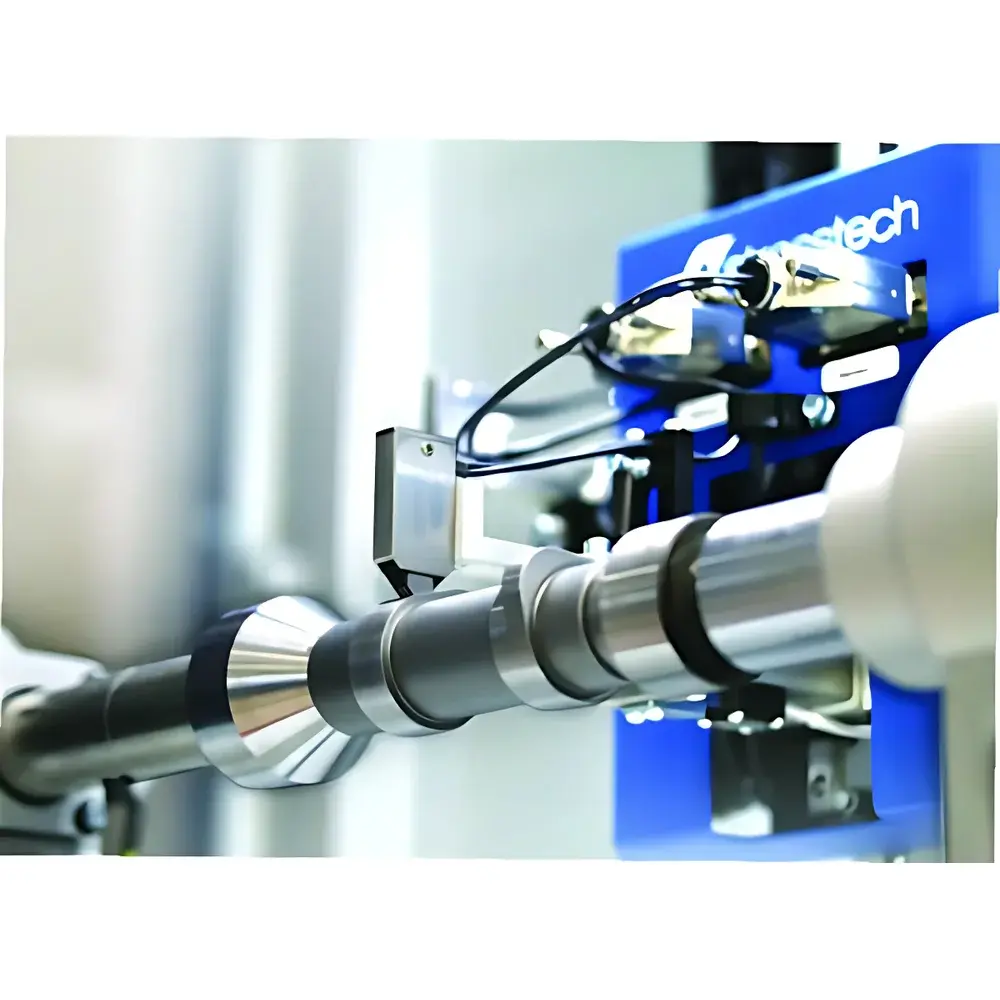
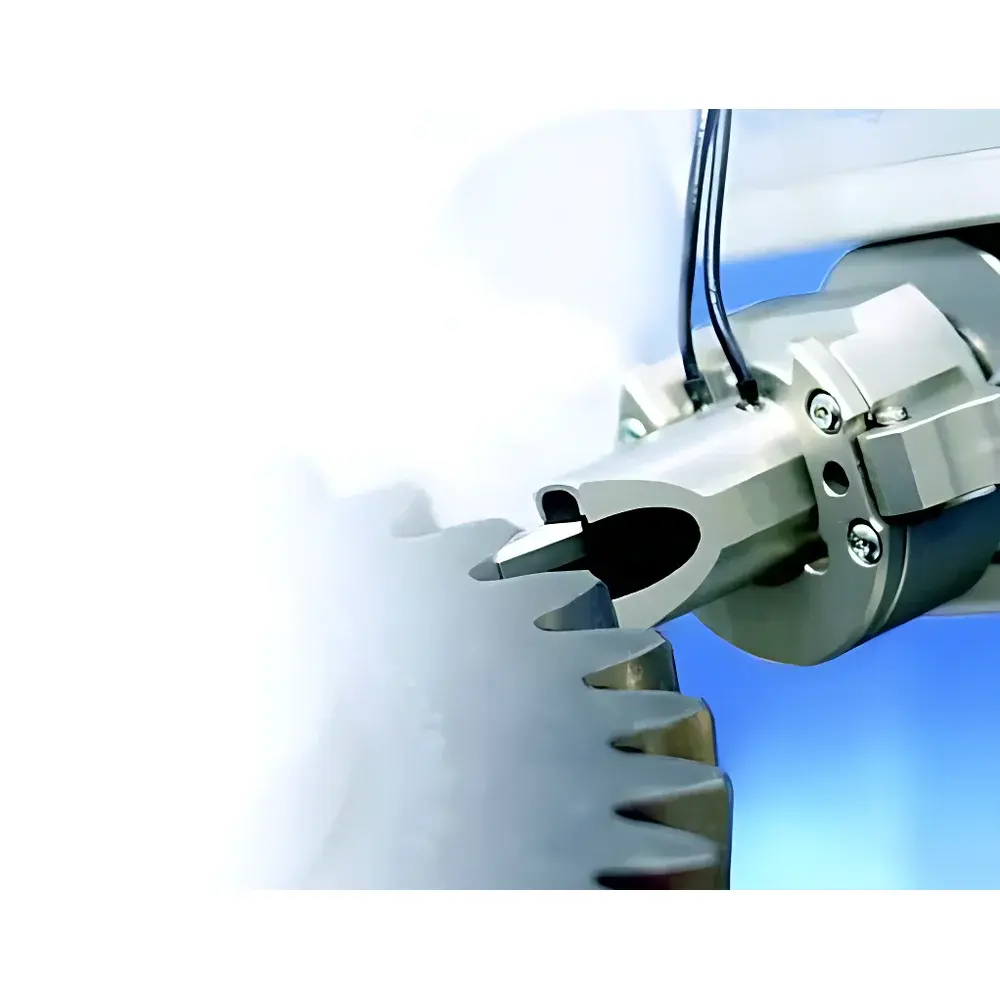
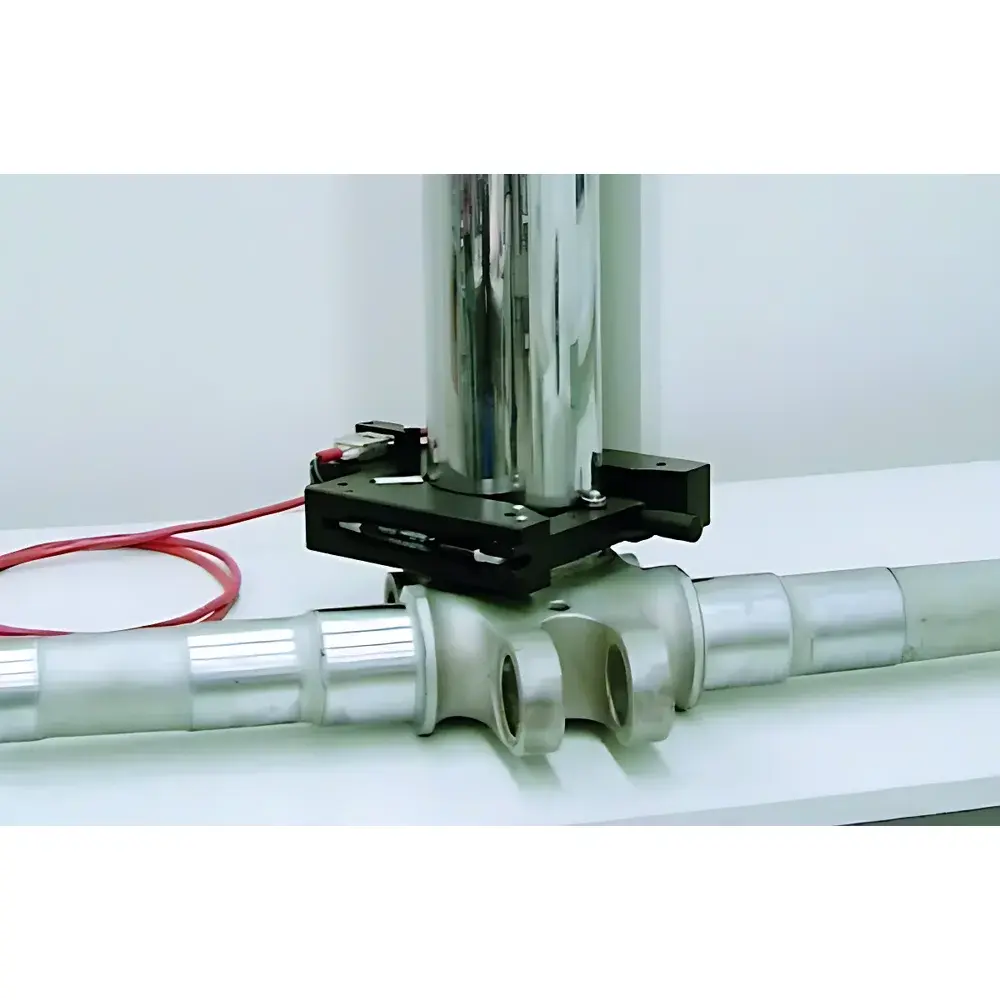
Stresstech Rollscan Portable Grinding Burn Detection System
| Brand | Stresstech Oy |
|---|---|
| Country of Origin | Finland |
| Model | Rollscan |
| Sensor Types | Electromagnetic (EMAT/Eddy Current) |
| Measurement Principle | Magnetic Permeability & Eddy Current Response to Surface Microstructural Changes |
| Compliance | ISO 17849, ASTM E3025, EN 10204 Type 3.1 |
| Software Platform | ViewScan (Optional Data Acquisition & Analysis Suite) |
| Power Supply | Rechargeable Li-ion Battery (≥8 h operation) |
| Operating Temperature | 0–40 °C |
| IP Rating | IP54 |
| Weight | <3.5 kg (host + sensor) |
Overview
The Stresstech Rollscan Portable Grinding Burn Detection System is a field-deployable non-destructive testing (NDT) instrument engineered for rapid, quantitative assessment of grinding-induced thermal damage on ferromagnetic and paramagnetic engineering components. Unlike conventional hardness or metallographic methods—which require destructive sampling and laboratory turnaround—the Rollscan operates on the principle of electromagnetic response variation: localized microstructural changes (e.g., untempered martensite, retained austenite decomposition, or softening zones) alter magnetic permeability and eddy current conductivity at the surface and near-surface layer (typically 0.1–2.0 mm depth). This enables real-time detection of grinding burns—including overtempered, rehardened, and tempered zones—without surface preparation, couplant, or electrical contact. Designed for high-reliability industries including aerospace, automotive powertrain, and bearing manufacturing, the system delivers repeatable pass/fail classification per OEM specifications (e.g., Boeing D6-17487, GM 6092M, Airbus AITM 6-1001), supporting both in-process verification and final inspection workflows.
Key Features
- True portable architecture: Integrated host unit, ergonomic hand-held sensor, and battery-powered operation enable on-machine, in-line, or shop-floor deployment—no external PC or mains connection required.
- Multi-sensor compatibility: Interchangeable probe configurations—including flat, curved, and contour-matched sensors—for consistent measurement across complex geometries (e.g., crankshaft journals, cam lobes, gear teeth flanks, landing gear spindles).
- Real-time analog signal visualization: On-device display shows raw voltage/current waveforms, enabling immediate operator recognition of permeability anomalies and magnetic domain disruptions associated with burn severity.
- Parameter tunability: Adjustable excitation frequency (100 Hz–10 kHz), gain, filtering bandwidth, and threshold logic allow optimization for material class (ferritic steels, Ni-based superalloys, Co-Cr alloys) and part geometry.
- No calibration compensation needed: Factory-traceable sensor characterization eliminates routine zeroing or reference standard dependency—reducing operator variability and procedural overhead.
- Ruggedized industrial design: IP54-rated enclosure, shock-absorbing housing, and operating temperature range of 0–40 °C ensure reliability in production environments subject to vibration, dust, and ambient thermal fluctuation.
Sample Compatibility & Compliance
The Rollscan system is validated for use on machined and heat-treated components fabricated from carbon steels, alloy steels (e.g., 4340, 52100), stainless steels (e.g., 440C, 17-4PH), nickel-based superalloys (e.g., Inconel 718), and cobalt-chromium alloys. It supports inspection of critical rotating parts including piston pins, transmission gears, bearing rings, camshafts, crankshafts, and aircraft landing gear components. All measurements conform to internationally recognized NDT standards: ISO 17849 (non-destructive testing — electromagnetic testing — guidelines for grinding burn detection), ASTM E3025 (standard practice for electromagnetic evaluation of grinding damage), and EN 10204 Type 3.1 material certification requirements. The system’s measurement traceability aligns with ISO/IEC 17025-accredited calibration protocols, and its data output structure supports integration into AS9100 and IATF 16949 quality management systems.
Software & Data Management
ViewScan software—available as an optional module—provides comprehensive post-acquisition analysis, reporting, and archival functionality. It supports synchronized multi-channel waveform capture, spatial mapping of burn severity (via encoded position feedback or manual coordinate tagging), statistical process control (SPC) charting (X̄-R, Cpk), and automated report generation compliant with PDF/A-1b and XML formats. Audit trails include full metadata: operator ID, timestamp, sensor serial number, parameter set, environmental conditions, and firmware version. For regulated environments, ViewScan optionally supports 21 CFR Part 11-compliant electronic signatures, role-based access control, and immutable data logging—facilitating GLP/GMP validation and FDA audit readiness.
Applications
- Aerospace: Final inspection of turbine engine shafts, helicopter transmission gears, and airframe landing gear components prior to acceptance testing.
- Automotive: In-line verification of camshaft and crankshaft grinding operations; sorting of hardened transmission synchronizer rings.
- Bearing & Gear Manufacturing: Screening of raceways and tooth flanks for subsurface tempering defects that precede premature fatigue failure.
- Power Generation: Assessment of generator rotor journals and turbine blade root attachments after precision grinding cycles.
- Research & Development: Correlation studies between grinding parameters (wheel speed, feed rate, coolant flow) and resulting microstructural integrity.
FAQ
What physical principle does the Rollscan use to detect grinding burns?
It relies on changes in magnetic permeability and eddy current conductivity induced by thermally altered microstructures—primarily untempered martensite, decomposed retained austenite, or overtempered zones—within the near-surface layer.
Can the Rollscan be used on non-ferrous materials such as titanium or aluminum?
No—it is specifically designed for ferromagnetic and paramagnetic alloys exhibiting measurable permeability shifts; it is not applicable to non-magnetic metals like Ti-6Al-4V or 7075 aluminum.
Is ViewScan software required to operate the device?
No—the core detection function operates autonomously on the embedded host; ViewScan is optional for advanced analysis, reporting, and data governance.
How is measurement repeatability ensured across different operators?
Through fixed sensor geometry, factory-calibrated excitation profiles, and elimination of manual zeroing—minimizing dependence on operator technique while maintaining ±3% inter-unit reproducibility per ISO 17849 Annex B.
Does the system support automated pass/fail decision logic?
Yes—threshold-based classification can be configured per part number and material specification, with configurable alarm outputs (visual, audible, digital I/O) for integration into PLC-controlled inspection stations.







