
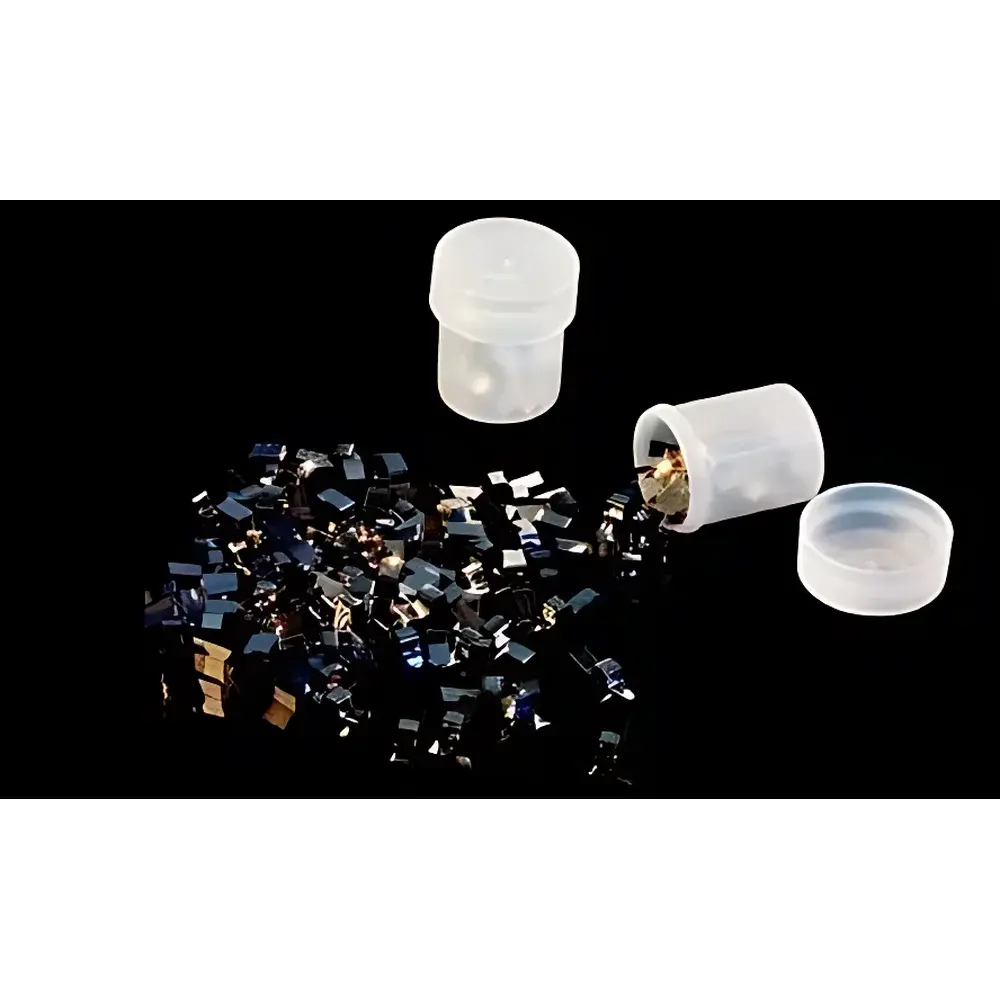
Sutter FILAMENTS/ACCESSORIES Box & Trough Filament Heating Elements for Micropipette Pullers
| Brand | Sutter |
|---|---|
| Origin | USA |
| Product Type | Replacement Filament Heating Elements |
| Compatible Models | P-1000, P-97, P-87, P80PC, P80C, PC-84, P-77B, P-30, P-2000, P-77A |
| Filament Types | Box (square), Trough (rectangular), Loop, Custom Pt/Ir, Nichrome |
| Dimensions Range | 1.5–4.5 mm width |
| Material Options | Kanthal A1, Nichrome, Platinum/Iridium alloy |
| Packaging | Minimum order quantity = 4 filaments |
Overview
Sutter FILAMENTS/ACCESSORIES are precision-engineered replacement heating elements designed exclusively for Sutter Instrument micropipette pullers—including the P-1000, P-97, P-87, P-30, P-2000, and P-77 series. These filaments serve as the thermal core of the puller’s glass-drawing mechanism, delivering controlled resistive heating to soften borosilicate or aluminosilicate capillary glass during programmable two-stage pulling protocols. Unlike generic heating wires, Sutter filaments are dimensionally calibrated and metallurgically optimized to ensure reproducible heat distribution, consistent taper geometry, and minimal thermal drift across thousands of pull cycles. Their geometry—whether box, trough, loop, or custom platinum/iridium—directly governs the resulting pipette’s tip diameter, wall thickness, taper length, and symmetry, making filament selection a critical experimental parameter in electrophysiology, microinjection, and single-cell manipulation workflows.
Key Features
- Application-specific geometries: Box filaments (e.g., FB255B, FB245B) deliver parallel-walled, long-tapered pipettes ideal for patch-clamp recording and slice electrophysiology; trough filaments (e.g., FT320B, FT345B) provide balanced taper control for thin-wall glass and rapid pull protocols.
- Material-grade consistency: Kanthal A1 (FeCrAl) filaments offer high-temperature stability (>1400 °C) and oxidation resistance; platinum/iridium (Pt/Ir) variants (FPS, FPS-CT) enable ultra-clean, low-contamination fire-polishing of quartz or coated pipettes under inert gas environments.
- Serial-number-matched compatibility: Loop filaments (FL3xxA/FL3xxX) are calibrated to match firmware revisions—models with serial number ≥160 require FL3xxA; earlier units use FL3xxX—ensuring optimal current density and thermal response.
- Dimensional traceability: All filaments specify both outer dimensions (e.g., 2.5 mm × 2.5 mm square) and cross-sectional width (e.g., 2.5 mm wide), enabling precise prediction of taper length per Sutter’s empirical heating profile models.
- Pre-programmed defaults: The P-1000 and P-97 ship factory-configured for FB255B (2.5 mm × 2.5 mm box); users may override via protocol editor but must recalibrate heat delay and velocity parameters when substituting filament types or widths.
Sample Compatibility & Compliance
Sutter filaments support standard capillary glass types including 1.0–1.5 mm OD borosilicate (e.g., Sutter BF150-86-10, Harvard 30-30-1), aluminosilicate (e.g., Sutter AF150-100-10), and quartz (e.g., Sutter QF100-60-10). Box filament sizing follows a validated offset rule: select a box whose inner dimension exceeds the glass OD by 1.0–1.5 mm to prevent mechanical binding while ensuring uniform radial heating. For IVF/ICSI applications requiring submicron tip openings, FB245B (2.5 mm × 4.5 mm) is recommended to generate asymmetric tapers with reinforced shanks. All filaments comply with RoHS Directive 2011/65/EU for hazardous substance restrictions and meet UL 61010-1 requirements for laboratory electrical safety. While not certified to ISO 13485, their use in GLP-compliant electrophysiology labs is supported by full traceability documentation (lot numbers, material certifications, dimensional QA reports).
Software & Data Management
Filament selection integrates directly into SutterPuller software (v7.0+), where users assign filament IDs to specific protocols. The software does not auto-detect filament type but enforces validation checks: attempting to load a P-30–specific filament (e.g., P30T20) on a P-97 will trigger a hardware mismatch warning. Audit trails log filament installation dates, cumulative pull counts per filament, and associated protocol parameters—enabling compliance with FDA 21 CFR Part 11 requirements when paired with validated electronic signatures and system access controls. Raw thermal calibration data (voltage vs. temperature curves) is available upon request for IQ/OQ documentation during lab instrument qualification.
Applications
- Patch-clamp electrophysiology: FB255B and FT320B produce symmetric, 1–5 µm tip diameters with <5% run-to-run variation in resistance (Rtip) across batches of BF150-86-10 glass.
- Intracytoplasmic sperm injection (ICSI): FB245B enables robust, non-clogging 5–8 µm tips with reinforced shank geometry suitable for repeated penetration of zona pellucida.
- Pronuclear injection: FB255B yields short, stiff tapers (30°, minimizing nuclear membrane rupture during transgenic embryo work.
- Fire-polishing: Platinum/iridium filaments (FPS series) operate at 800–1000 °C under N2 flow, reducing tip contamination and achieving sub-100 nm smoothness verified by SEM imaging.
- Quartz microneedles: FL325A loop filaments provide localized heating for controlled quartz softening without cracking—critical for nanoliter-scale microfluidic interfacing.
FAQ
What is the minimum order quantity for Sutter filaments?
The minimum purchase is four (4) filaments per order, regardless of type or configuration.
Can I use a trough filament in a puller configured for box filaments?
Yes—mechanically compatible—but taper geometry and pull kinetics will differ significantly; re-optimization of heat, velocity, and delay parameters is mandatory.
Do Sutter filaments require recalibration after installation?
No recalibration of the puller’s thermocouple is needed, but protocol parameters (especially heat duration and ramp rate) must be empirically adjusted for each filament type and width.
Are platinum/iridium filaments compatible with all Sutter pullers?
Pt/Ir filaments (FPS, FPS-CT) are rated for P-2000, P-97, and P-87 only; they are not rated for P-30 or P-1000 due to incompatible current delivery architecture.
How do I determine the correct box filament size for my glass tubing?
Measure the outer diameter (OD) of your capillary; select a box filament whose inner dimension is 1.0–1.5 mm larger than that OD—e.g., 1.5 mm OD glass requires a 2.5 mm × 2.5 mm box (FB255B).






