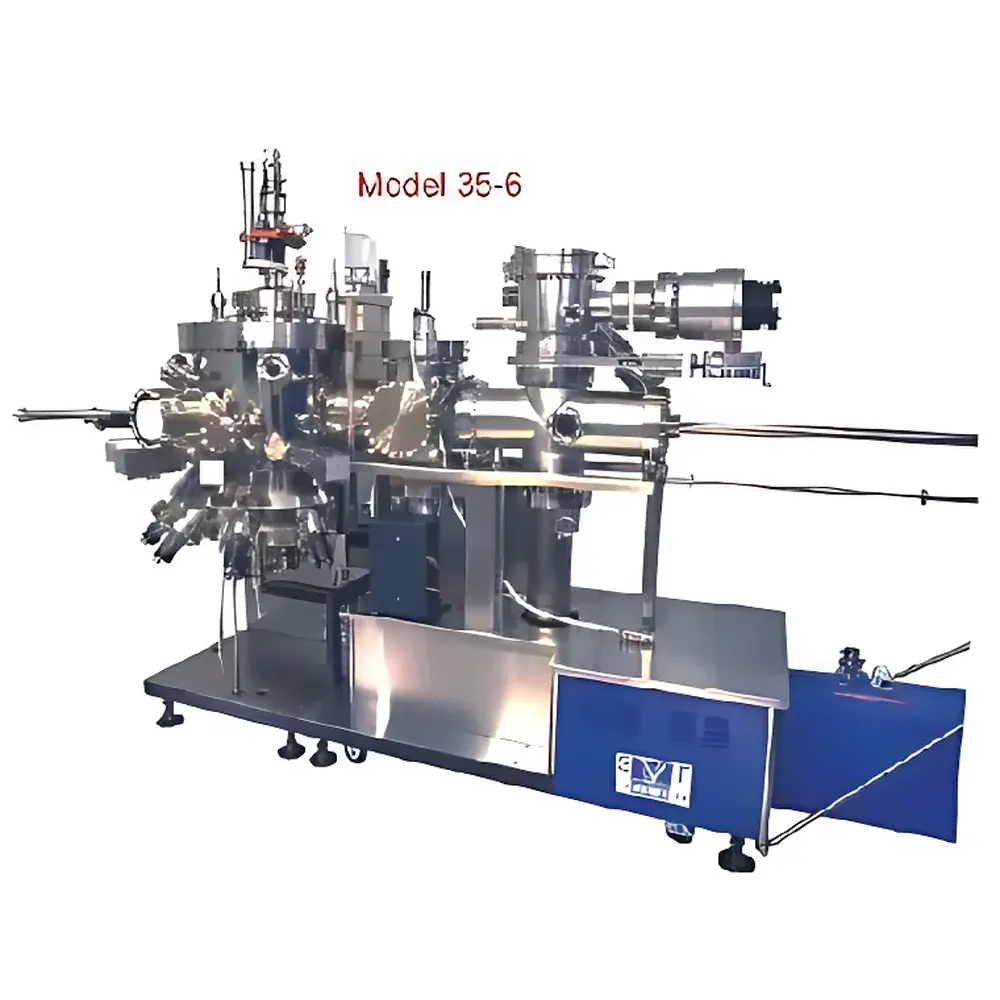
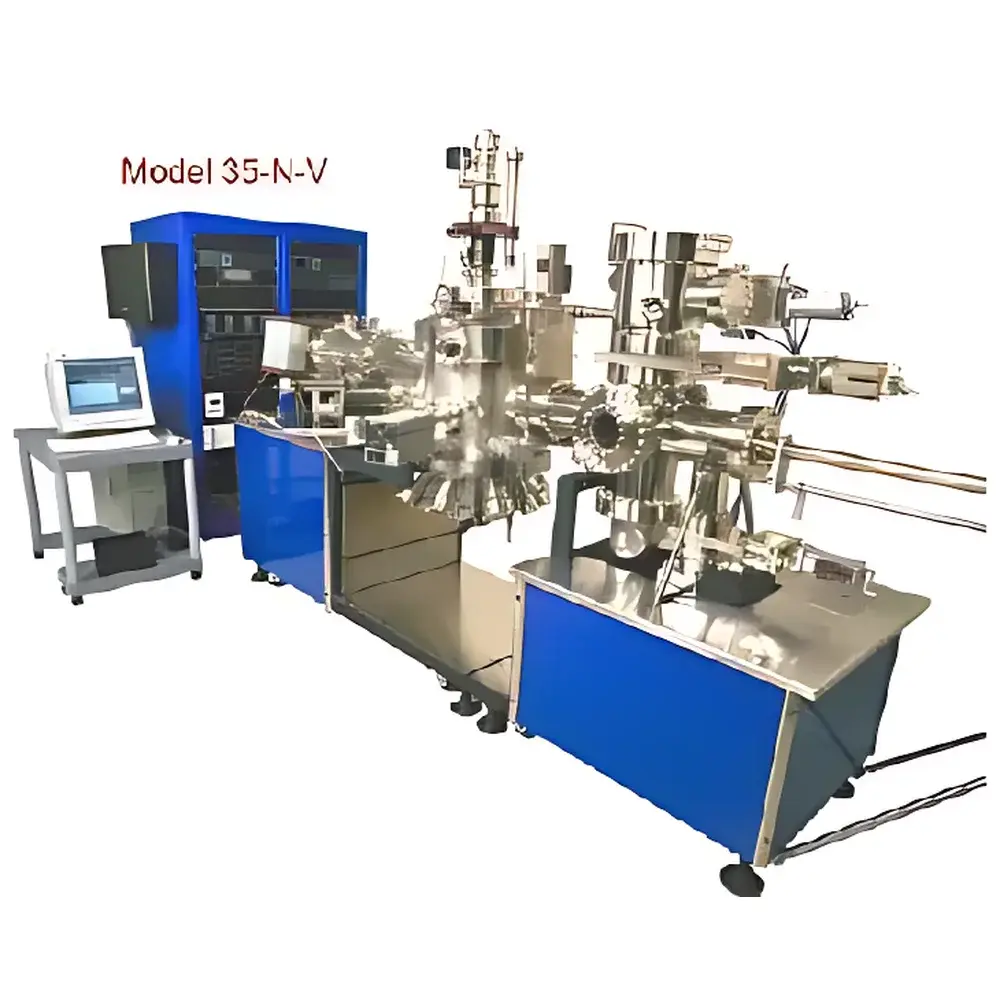
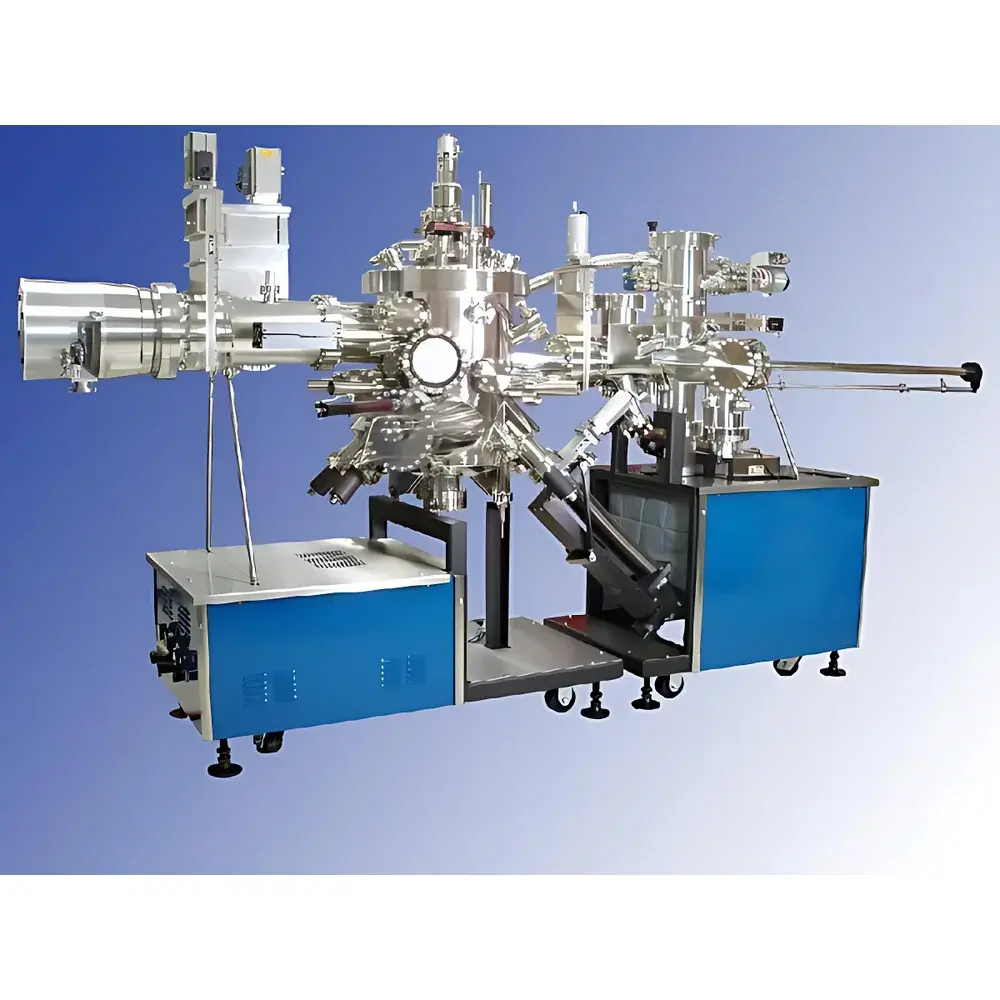
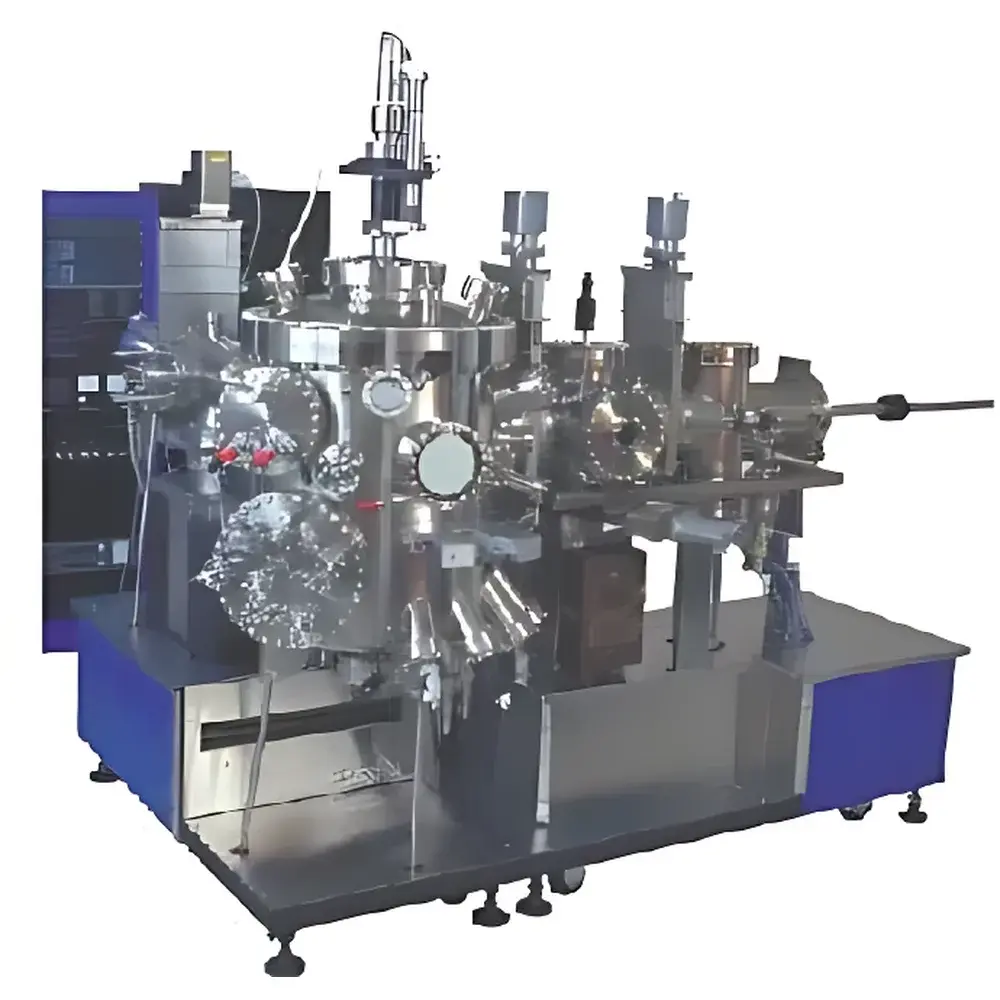
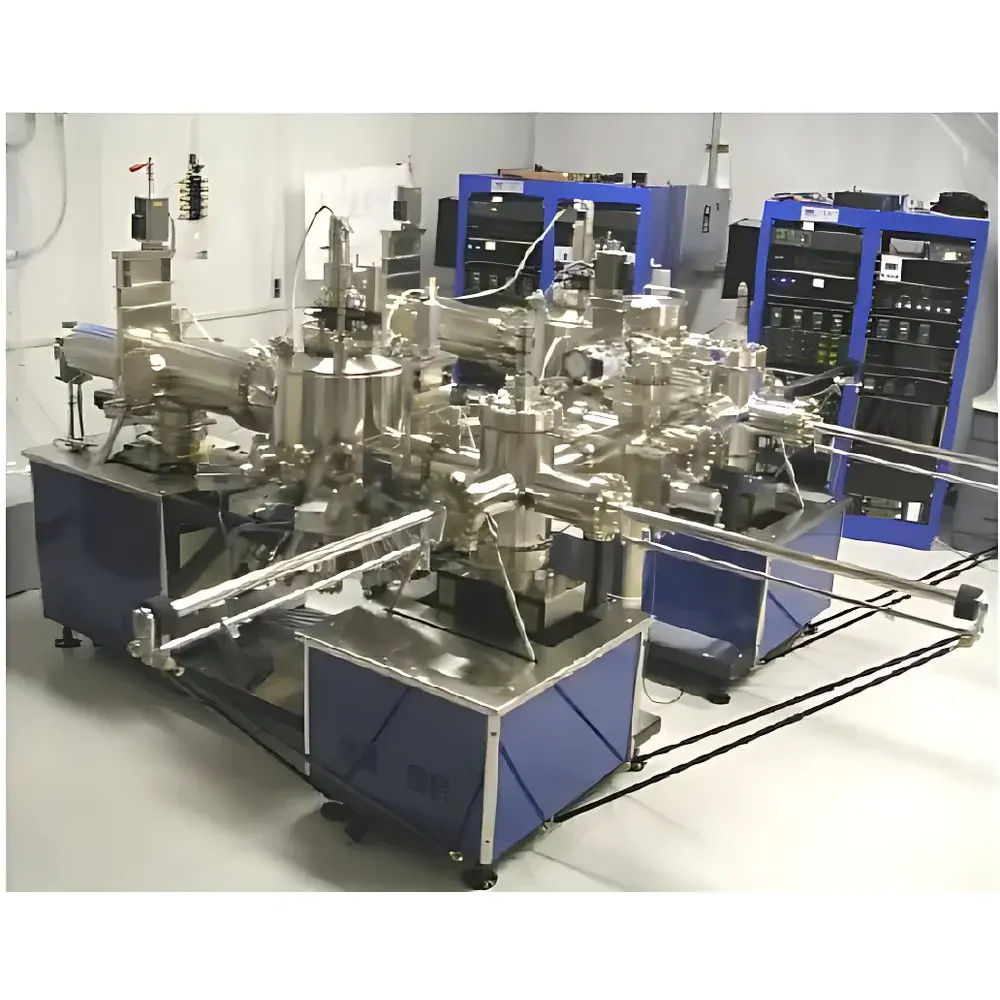
SVT Associates Model 35-6 MBE System – Modular Molecular Beam Epitaxy Platform for Compound Semiconductor Thin Film Growth
| Brand | SVT Associates |
|---|---|
| Origin | USA |
| Model | SVT-35 Series (e.g., 35-6, 35-N, 35-G-4, SM-6, S-8, 35-D, SVT-V, NanoFab, UVD-02, PLD-02, 35V14, 26-O-V) |
| Base Vacuum | < 1×10⁻¹⁰ Torr |
| Substrate Size Options | 2″, 3″, 4″, 6″, 8″, or multiple small wafers (up to 14″ in 35V14) |
| Source Capacity | Up to 10 effusion cells (standard), plus optional RF plasma sources, cracking cells, e-beam evaporators, or liquid-source injectors |
| Chamber Architecture | Modular UHV system with load-lock, prep/analysis chamber, and main growth chamber |
| Compliance | Designed for ASTM F1529, ISO 14644-1 Class 4 cleanroom integration, and GLP/GMP-aligned process documentation workflows |
Overview
The SVT Associates Model 35-6 Molecular Beam Epitaxy (MBE) System is a high-vacuum, ultra-precise thin-film growth platform engineered for the atomic-layer-controlled synthesis of epitaxial compound semiconductor structures. Operating on the principle of thermal evaporation in ultra-high vacuum (UHV), the system delivers molecular or atomic beams—generated from heated elemental or compound sources—onto heated crystalline substrates under precisely controlled flux, temperature, and background pressure conditions. This enables layer-by-layer growth with monolayer resolution, stoichiometric fidelity, and interface abruptness essential for quantum-well devices, high-electron-mobility transistors (HEMTs), photonic integrated circuits, and topological material research. The modular architecture—comprising a load-lock chamber, preparation/analysis module (optional LEED/AES/XPS), and main growth chamber—supports flexible configuration across III–V (GaAs, InP), II–VI (ZnSe), IV–IV (SiGe), nitride (GaN, AlN), oxide (SrTiO₃, YBCO), ferromagnetic (Fe, CoFe), and multiferroic systems.
Key Features
- UHV base pressure < 1×10⁻¹⁰ Torr achieved via cryogenic pumping (20 K shielded cryopanels) and ion-getter pumps, ensuring minimal residual gas contamination during growth.
- Modular chamber design with pneumatically actuated gate valves enabling independent evacuation and diagnostic access to load-lock, prep, and growth modules without breaking main chamber vacuum.
- Configurable source manifold supporting up to ten effusion cells, with optional integration of RF nitrogen/oxygen plasma sources, ammonia cracker cells, electron-beam evaporators, and liquid metal organic injectors for reactive species delivery.
- Substrate heating system with closed-loop proportional-integral-derivative (PID) control, capable of uniform temperatures from ambient to >1100 °C (for GaN) or >950 °C (for SiGe), monitored by calibrated pyrometry and thermocouple backup.
- Linearly translating shutter system with programmable timing resolution ≤10 ms, synchronized to RHEED oscillation feedback for real-time growth rate calibration and layer thickness validation.
- Integrated reflection high-energy electron diffraction (RHEED) system with phosphor screen, CCD camera, and digital image acquisition for in-situ monitoring of surface reconstruction, growth mode, and layer completion.
Sample Compatibility & Compliance
The SVT MBE platform accommodates substrate diameters ranging from 25 mm (1″) to 355 mm (14″), including standard wafers (2″, 3″, 4″, 6″, 8″), rectangular pieces (e.g., 3″×2″ for nitrides), and custom geometries. It supports conductive (Si, Ge, GaAs), insulating (Al₂O₃, MgO), and semi-insulating (InP, GaN-on-sapphire) substrates with compatible mounting fixtures and rotation mechanisms. All models are designed to meet stringent UHV compatibility standards per ASTM F1529 (Standard Practice for Establishing Vacuum Integrity), conform to ISO 14644-1 Class 4 cleanroom interface requirements, and support audit-ready documentation frameworks aligned with GLP and GMP principles—including electronic logbooks with user authentication, timestamped parameter logging, and exportable metadata compliant with FDA 21 CFR Part 11 when paired with validated software configurations.
Software & Data Management
The system operates under SVT’s proprietary MBE Control Suite—a deterministic, real-time Windows-based application built on deterministic thread scheduling and hardware abstraction layers. It provides synchronized control of substrate temperature, cell temperatures, shutter sequences, RHEED intensity acquisition, vacuum gauges, and plasma source parameters. All operational parameters are logged with millisecond time stamps into encrypted SQLite databases, supporting post-run analysis, cross-chamber correlation, and batch traceability. Data export formats include CSV, HDF5, and XML, enabling seamless integration with MATLAB, Python-based analysis pipelines, and enterprise LIMS environments. Optional validation packages include IQ/OQ documentation, electronic signature modules, and audit trail generation for regulated development labs.
Applications
- Growth of lattice-matched and strained heterostructures for high-frequency HEMTs and low-noise amplifiers (e.g., AlGaAs/GaAs, InAlAs/InGaAs).
- Atomic-precision fabrication of quantum cascade lasers, superlattice infrared detectors, and spintronic tunnel junctions (e.g., Fe/MgO/Fe).
- Development of wide-bandgap nitride templates (AlN, GaN) on sapphire or SiC for power electronics and micro-LED arrays.
- Epitaxial synthesis of complex oxides—including high-Tc superconductors (YBCO), ferroelectrics (Pb(Zr,Ti)O₃), and multiferroics (BiFeO₃)—with oxygen partial pressure control down to 10⁻⁷ Torr.
- In-situ studies of surface kinetics, interfacial diffusion, and phase evolution using combined RHEED, Auger electron spectroscopy (AES), and low-energy electron diffraction (LEED) modules.
FAQ
What vacuum level is maintained during active growth?
Base pressure is < 1×10⁻¹⁰ Torr; operating pressure during deposition ranges from 1×10⁻⁹ to 5×10⁻⁹ Torr depending on source flux and background gas composition.
Can the system be upgraded with in-situ surface analysis tools?
Yes—load-lock and prep chambers are designed for integration of AES, XPS, LEED, or SIMS modules without compromising growth chamber UHV integrity.
Is remote operation and monitoring supported?
The control suite includes secure TLS-encrypted remote desktop access, real-time RHEED video streaming, and alarm notification via SMTP/SNMP protocols.
What documentation is provided for regulatory compliance?
Standard delivery includes FAT/SAT reports, UHV component certifications (ISO 10109, ASTM E595 outgassing data), and optional 21 CFR Part 11 validation packages with electronic signature and audit trail modules.
How does SVT ensure long-term process reproducibility across different instruments?
Through standardized cell geometry, calibrated flux sensors, closed-loop shutter timing, and firmware-level parameter normalization—enabling recipe portability between 35-6, 35-N, and SM-6 platforms within ±2% flux variation.