
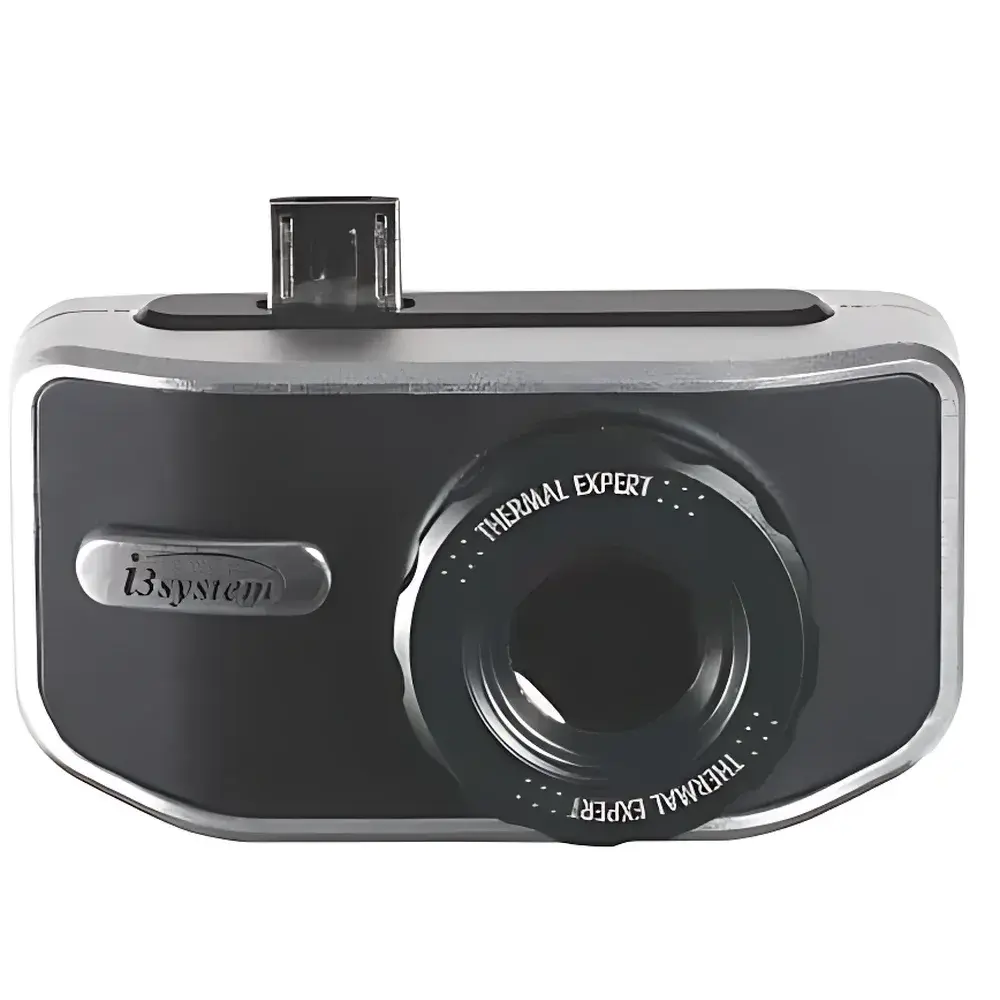
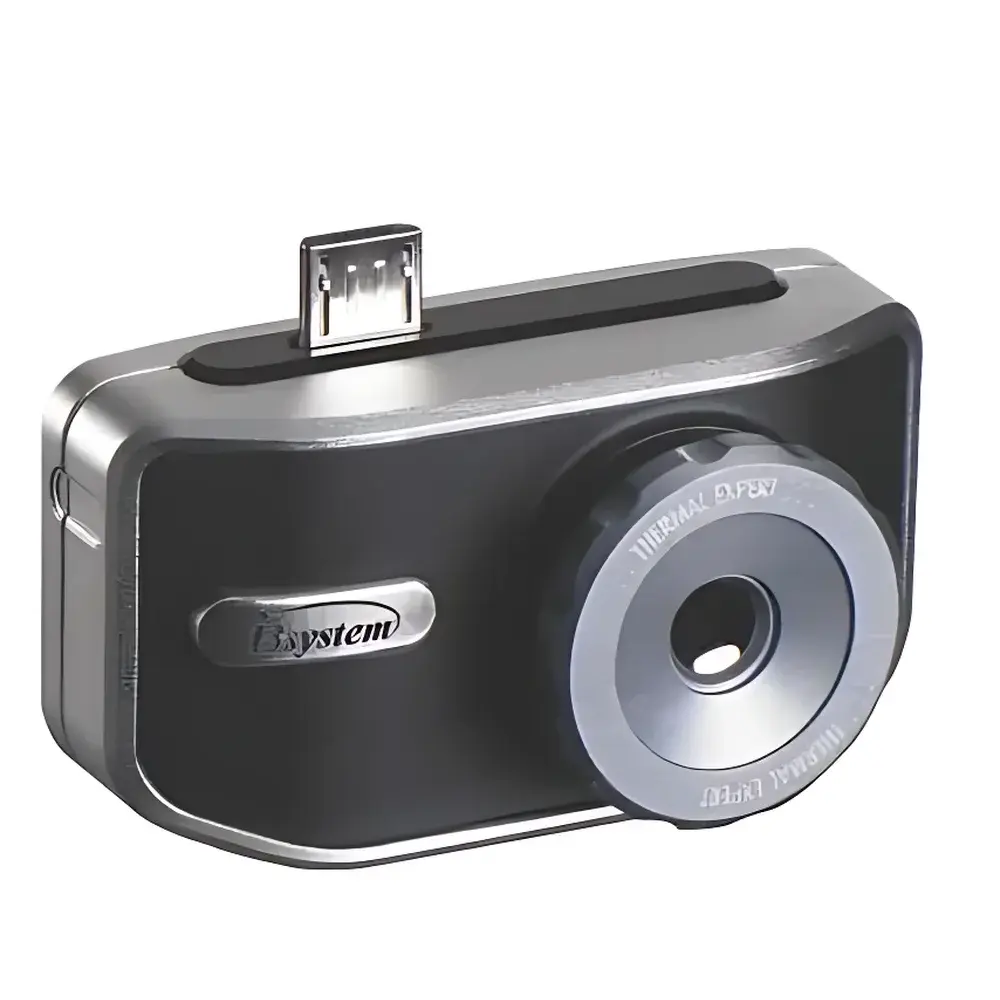
TE-Q1 Micro Infrared Thermal Imaging Camera
| Origin | South Korea |
|---|---|
| Manufacturer Type | Authorized Distributor |
| Origin Category | Imported |
| Model | TE-Q1 |
| Pricing | Available Upon Request |
| Sensor Resolution | 384 × 288 pixels |
| Pixel Pitch | 17 µm |
| Spectral Band | 8–14 µm (LWIR) |
| Thermal Sensitivity (NETD) | 0.05 °C @ f/1.0 |
| Frame Rate | < 9 Hz |
| Temperature Measurement Range | −10 °C to +150 °C |
| Operating Ambient Temperature | −10 °C to +50 °C |
| Power Consumption | ~500 mW |
| Weight | < 27 g (with Lens 1) |
| Dimensions (W × H × D, no lens) | 47 mm × 25 mm × 16 mm |
| Interface | USB OTG / Micro-USB |
| Platform Support | Android OS |
| Standard Lens | Wide FOV, 6.8 mm / f/1.3 (56.3° H × 41.8° V) |
| Optional Lens | Narrow FOV, 13 mm / f/1.0 (28.7° H × 21.7° V) |
| Focus Range | Wide FOV — 0.2 m to ∞ (0.19 mm refocus step) |
Overview
The TE-Q1 Micro Infrared Thermal Imaging Camera is a compact, high-performance uncooled microbolometer-based thermal imaging system engineered for integration into portable and embedded applications. Operating in the longwave infrared (LWIR) spectrum (8–14 µm), it leverages a 384 × 288 pixel vanadium oxide (VOx) microbolometer focal plane array with a 17 µm pixel pitch to deliver spatially resolved surface temperature mapping without active cooling. Its core measurement principle relies on radiometric calibration of infrared photon flux emitted by objects in accordance with Planck’s law and Stefan-Boltzmann theory, enabling non-contact, passive thermal quantification across a dynamic range from −10 °C to +150 °C. Designed for low-power edge deployment, the TE-Q1 maintains thermal sensitivity (NETD) as low as 0.05 °C at f/1.0 — a specification critical for detecting subtle thermal gradients in electronics diagnostics, predictive maintenance inspections, and biomedical prototyping. Its sub-27 g mass and sub-50 mm footprint make it suitable for UAV-mounted thermography, handheld diagnostic tools, and OEM integration into Android-based field instruments.
Key Features
- Ultra-compact form factor: 47 mm × 25 mm × 16 mm (body only), weight < 27 g with standard lens — among the smallest LWIR imagers commercially available for Android platform integration.
- Uncooled VOx microbolometer sensor with factory-calibrated radiometric output, supporting real-time temperature measurement per pixel with linear response across the full operating range.
- Dual-lens compatibility: Standard wide-angle 6.8 mm / f/1.3 lens (56.3° horizontal FOV) optimized for close-range inspection; optional narrow-field 13 mm / f/1.0 lens (28.7° horizontal FOV) for extended working distance and improved spatial resolution.
- Refocus-capable optics: Motorized focus mechanism enables precise manual or software-triggered refocusing — 0.19 mm step size for wide FOV lens; 0.39 mm for narrow FOV — ensuring optimal modulation transfer function (MTF) across variable target distances.
- Low-power architecture: Typical power draw of ~500 mW enables sustained operation from USB-powered mobile batteries or embedded power rails without thermal throttling or fan-assisted cooling.
- Native Android support via USB OTG interface: Direct plug-and-play connectivity with Android 8.0+ devices; compatible with standard UVC-compliant video streaming and vendor-specific SDKs for radiometric data extraction and custom UI development.
Sample Compatibility & Compliance
The TE-Q1 is designed for non-destructive, non-contact surface temperature analysis of solid, opaque, and semi-opaque materials including printed circuit boards (PCBs), metal enclosures, polymer housings, and biological tissue simulants. It does not require emissivity correction for qualitative hotspot identification but supports user-configurable emissivity input (0.01–1.00 in 0.01 increments) for quantitative radiometric accuracy. The device complies with IEC 62471 (Photobiological Safety of Lamps and Lamp Systems) for infrared emission classification and meets RoHS 3 and REACH regulatory requirements. While not certified for medical diagnostic use under FDA 21 CFR Part 820 or ISO 13485, its radiometric stability and repeatability support GLP-aligned lab documentation workflows when used in R&D and failure analysis environments.
Software & Data Management
The TE-Q1 interfaces with Android applications via standard UVC protocol for live preview and snapshot capture. For advanced functionality, the manufacturer provides an Android SDK supporting raw thermal frame access (16-bit radiometric data), spot temperature measurement, area min/max/avg calculation, isotherm overlay, and emissivity-compensated export in CSV or TIFF format. All thermal metadata — including ambient temperature, lens ID, integration time, and calibration timestamp — are embedded in EXIF-compatible headers. Software logs include audit-trail timestamps and can be configured to generate PDF reports compliant with internal QA documentation standards. No cloud dependency is required; all processing occurs locally on-device or host system, satisfying data sovereignty requirements common in industrial and defense applications.
Applications
- Electronics thermal validation: Real-time hotspot detection during PCB functional testing, IC junction temperature estimation, and heatsink performance evaluation.
- Predictive maintenance: Early-stage identification of abnormal resistance heating in motor windings, relay contacts, and busbar connections within confined enclosures.
- Academic and prototyping labs: Integration into student-built drones, robotics platforms, and IoT sensor nodes for thermal behavior modeling and algorithm validation.
- Building diagnostics: Moisture-induced thermal bridging assessment in insulation layers and window framing systems during on-site surveys.
- Biomimetic and wearable research: Surface temperature monitoring of soft robotics actuators, flexible heater arrays, and thermal-responsive hydrogels under controlled environmental conditions.
FAQ
Is the TE-Q1 calibrated for absolute temperature measurement?
Yes — each unit undergoes two-point blackbody calibration (at 25 °C and 70 °C) during manufacturing. Radiometric accuracy is ±2 °C or ±2% of reading (whichever is greater) within the specified operating range.
Can the TE-Q1 operate continuously for extended periods?
Yes — thermal design ensures stable performance up to 4 hours of continuous acquisition at ambient temperatures ≤35 °C. At higher ambient temperatures, duty cycling is recommended to maintain NETD consistency.
Does the SDK support PC-based development environments?
The primary SDK targets Android NDK/JNI integration. However, Linux users may access raw frames via libusb and v4l2 interfaces using open-source drivers provided in the developer portal.
What is the minimum resolvable temperature difference at 1 meter distance?
At 1 m with the standard wide FOV lens, spatial resolution is ~1.1 mm/pixel. Combined with NETD ≤0.08 °C at f/1.3, the system reliably resolves ΔT ≥0.15 °C over areas ≥3×3 pixels under typical indoor lighting conditions.
Is firmware update capability supported?
Yes — field-upgradable firmware is delivered via signed .bin files through the Android companion app, with rollback protection and CRC-verified installation sequences.



