
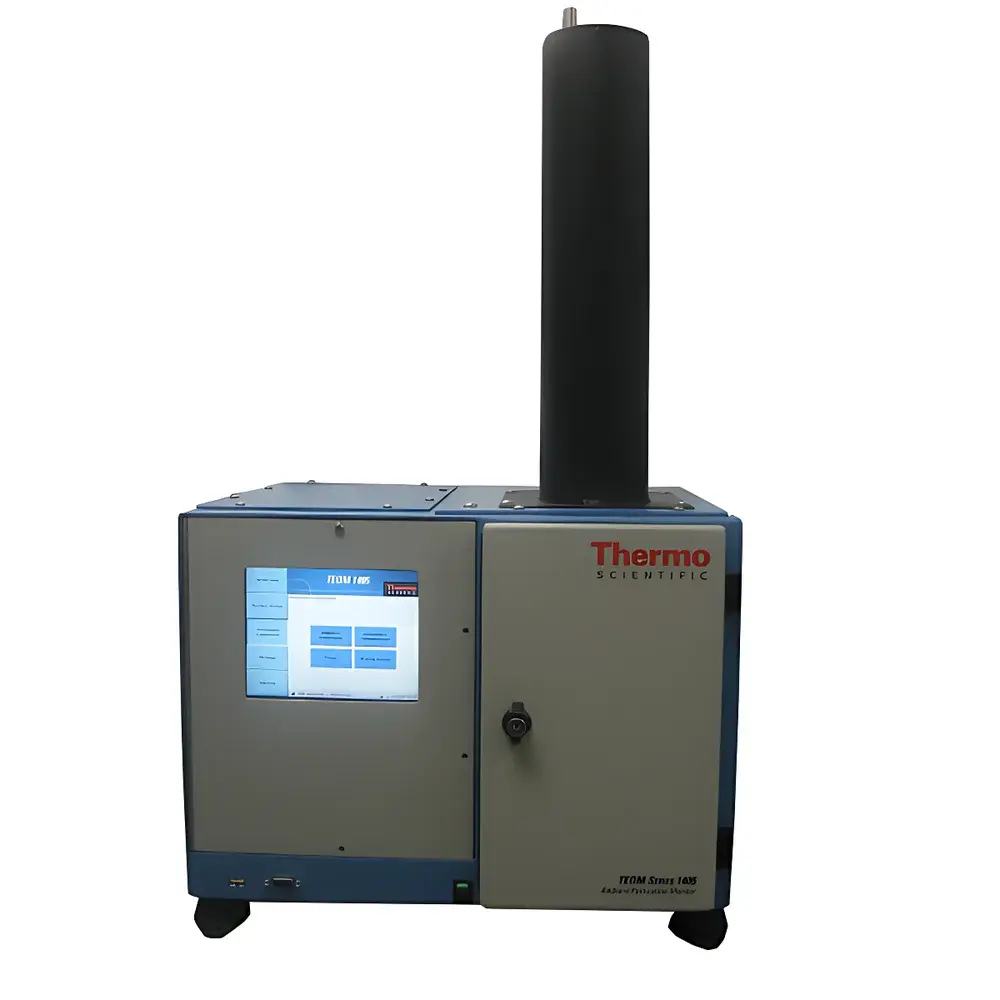
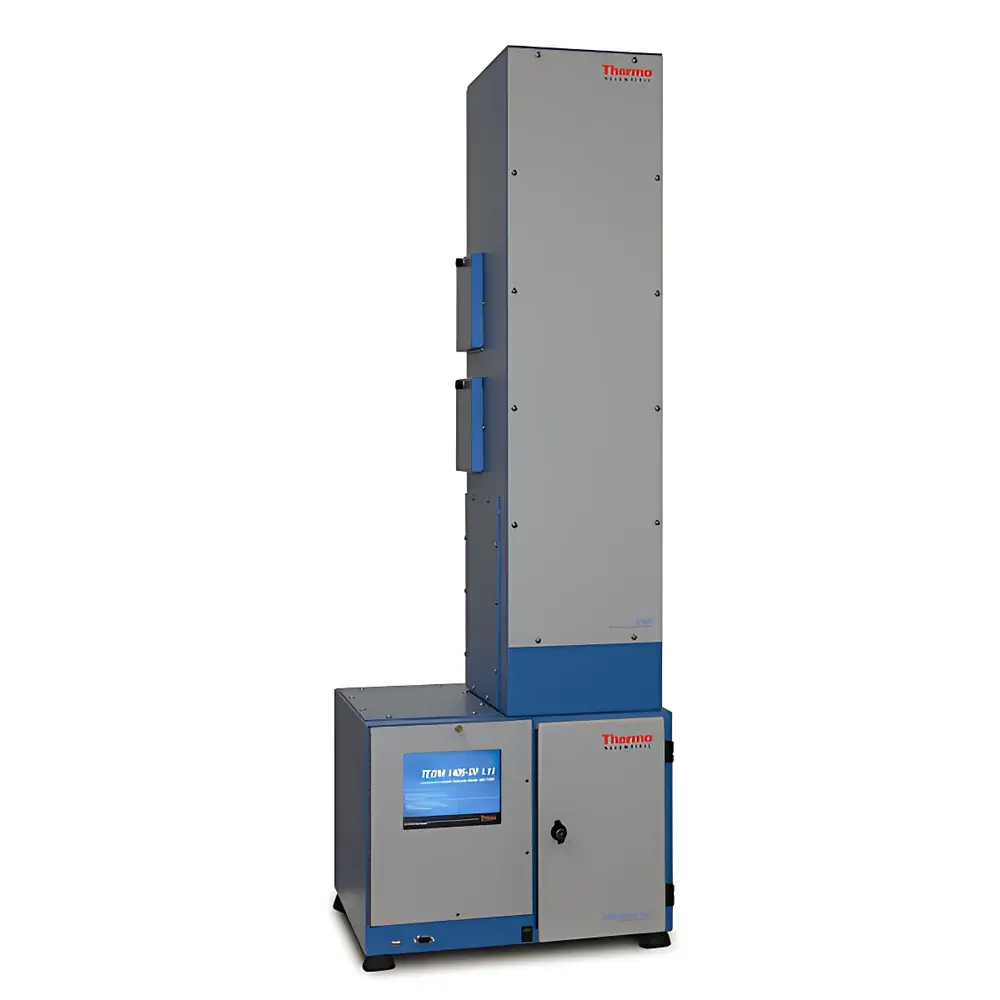
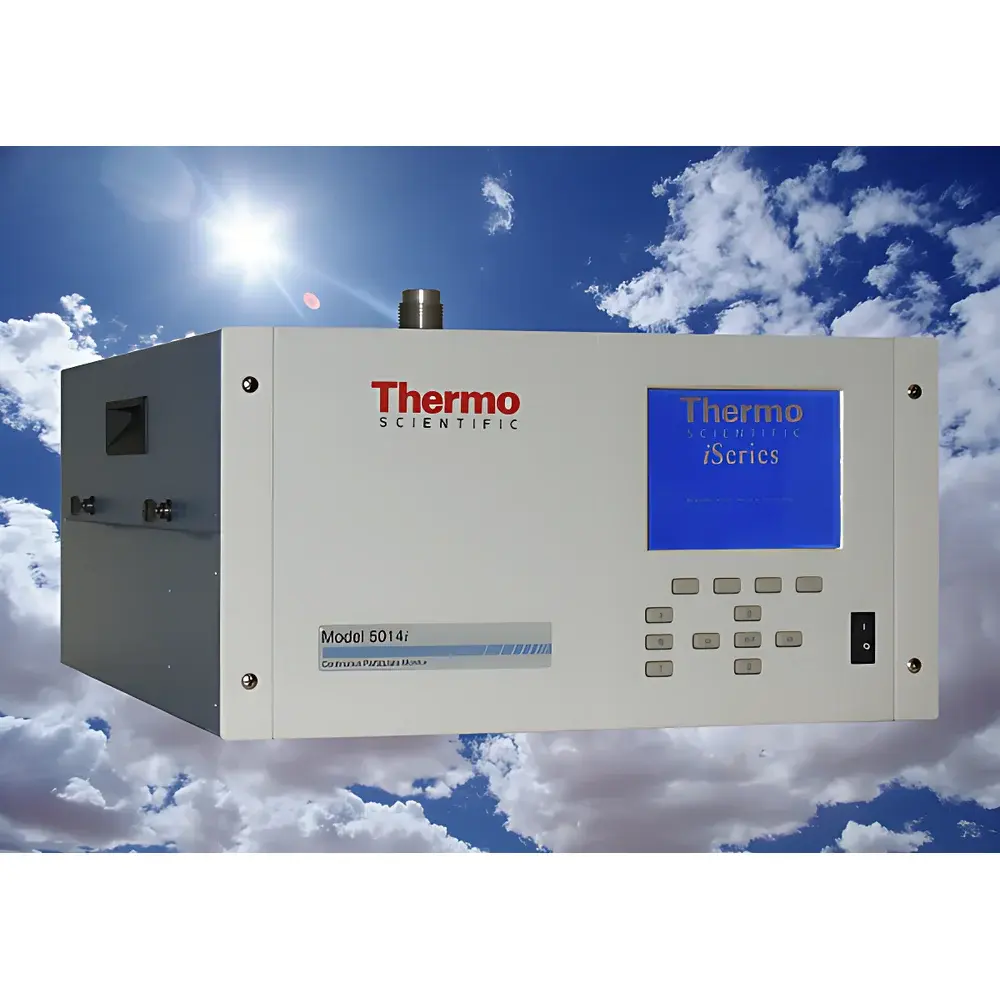
Thermo Scientific TEOM 1405-F Continuous Ambient Particulate Monitor for PM2.5
| Brand | Thermo Fisher |
|---|---|
| Origin | USA |
| Manufacturer | Thermo Fisher Scientific |
| Product Category | Imported |
| Model | TEOM 1405-F |
| Measurement Principle | Tapered Element Oscillating Microbalance (TEOM) |
| Regulatory Designation | U.S. EPA Equivalent Method for PM2.5 (EQPM-0609-181) |
| Particle Size Fractions | PM2.5, PM10, PM1, TSP |
| Data Interfaces | Ethernet, USB, RS232, RS485, FTP Server |
| User Interface | Touchscreen LCD |
| Flow Control | Activol™ Dynamic Mass Flow Control |
| Integrated System | Filter Dynamic Measurement System (FDMS), Sensor Module, and Control Unit in Single Enclosure |
| Environmental Compensation | Heated Sample Inlet with Relative Humidity and Temperature Regulation |
Overview
The Thermo Scientific TEOM 1405-F Continuous Ambient Particulate Monitor is a NIST-traceable, regulatory-compliant instrument engineered for real-time, gravimetric measurement of ambient particulate mass concentration—specifically optimized for PM2.5 monitoring in compliance with U.S. Environmental Protection Agency (EPA) Equivalent Method designation EQPM-0609-181. Unlike optical or beta-attenuation techniques that infer mass from light absorption or scattering, the TEOM 1405-F employs the Tapered Element Oscillating Microbalance principle: a precision oscillating quartz tapered element serves as both sample collector and microbalance. As particles deposit on the filter-coated element, its resonant frequency decreases proportionally to accumulated mass—enabling direct, continuous, and calibration-free mass measurement traceable to SI units. This fundamental gravimetric approach eliminates reliance on empirical correction factors for particle density, hygroscopicity, or composition, thereby delivering metrologically robust data required for regulatory reporting, trend analysis, and health-related exposure assessment.
Key Features
- True gravimetric measurement via NIST-traceable tapered element oscillating microbalance technology
- Integrated Filter Dynamic Measurement System (FDMS) enabling simultaneous quantification of volatile and non-volatile aerosol components through real-time thermal desorption compensation
- Activol™ dynamic mass flow control ensuring constant volumetric sampling rate across variable ambient pressure and temperature conditions
- Heated inlet system with programmable temperature setpoint and relative humidity threshold to minimize water vapor interference and suppress semi-volatile artifact losses
- Single-enclosure architecture housing control electronics, sensor module, FDMS, and data acquisition hardware—reducing inter-unit variability and simplifying field maintenance
- Comprehensive communication suite including Ethernet (TCP/IP), USB host/device, RS232/RS485 serial interfaces, and embedded FTP server for automated data retrieval and remote diagnostics
- Intuitive 7-inch capacitive touchscreen interface supporting multilingual operation, real-time trend visualization, and configurable alarm thresholds
Sample Compatibility & Compliance
The TEOM 1405-F is validated for continuous ambient air monitoring of PM2.5, PM10, PM1, and total suspended particulates (TSP) under diverse environmental conditions—including urban, rural, roadside, and industrial fence-line settings. Its FDMS configuration meets U.S. EPA requirements for volatile-compensated PM2.5 measurement (40 CFR Part 53, Appendix L), and the instrument is certified as an Equivalent Method (EQPM-0609-181) for regulatory PM2.5 monitoring networks. The system adheres to ISO 12103-1 (test dust standards), ASTM D6245 (indoor air quality sampling), and supports GLP/GMP-aligned data integrity practices through time-stamped audit logs, user-access controls, and electronic signature capability. All firmware and data handling protocols are designed to support future alignment with FDA 21 CFR Part 11 requirements for electronic records and signatures in regulated environments.
Software & Data Management
Instrument operation and data management are handled by Thermo Scientific’s proprietary EnviroPro™ software platform, which provides local and remote configuration, real-time diagnostics, and automated report generation. Raw frequency shift data, temperature/humidity-corrected mass concentrations, FDMS-derived volatile fraction metrics, and system health parameters are stored internally with timestamp resolution ≤1 second. Data export formats include CSV, XML, and EPA-compatible AQS-14 format. Secure HTTPS-based web interface enables role-based access (administrator, operator, viewer), firmware updates over-the-air, and integration with third-party SCADA or air quality management systems (AQMIS) via MODBUS TCP or RESTful API extensions. Internal storage retains ≥30 days of high-resolution data; external NAS or cloud archive synchronization is supported via scheduled FTP/SFTP push.
Applications
The TEOM 1405-F serves as a primary reference-grade monitor in national ambient air quality surveillance networks (e.g., U.S. EPA AirNow, EU Air Quality Directive reporting), source apportionment studies requiring chemically unaltered mass inputs for receptor modeling, and long-term epidemiological cohort investigations where measurement uncertainty directly impacts risk estimation. It is routinely deployed in regulatory compliance monitoring at power plants, cement facilities, and waste incinerators; in research laboratories studying secondary organic aerosol formation kinetics; and in mobile platforms for spatially resolved exposure mapping. Its ability to resolve sub-hourly mass dynamics—without stepwise filter changes or post-sampling conditioning—makes it uniquely suited for investigating diurnal patterns, episodic pollution events, and co-location validation of optical or beta-attenuation instruments.
FAQ
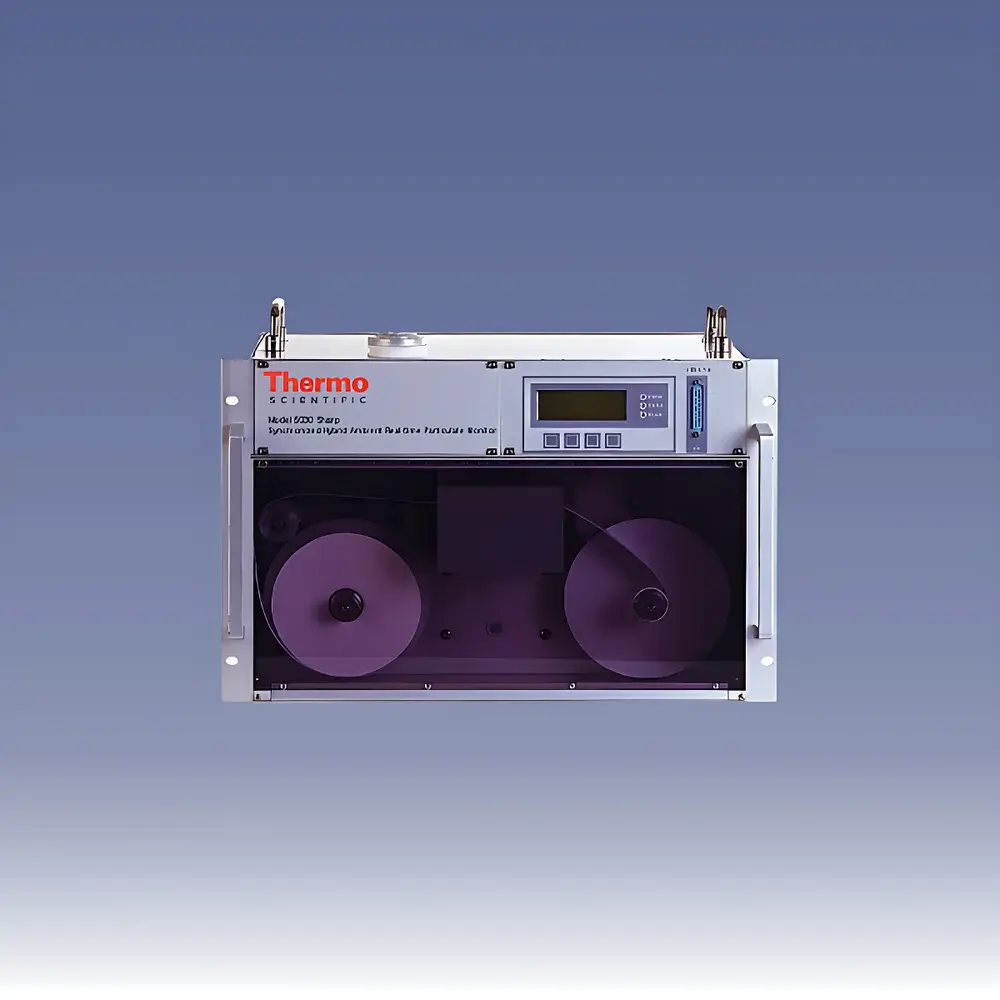
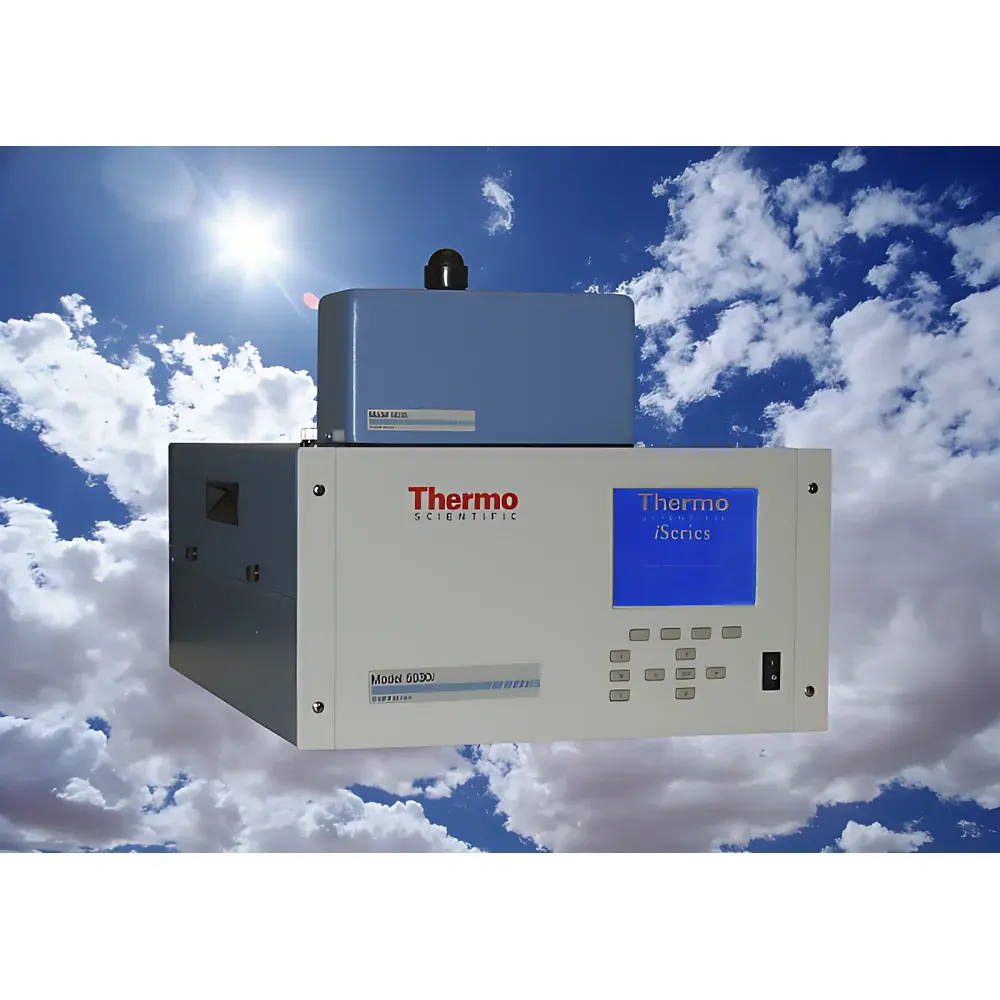
How does the TEOM 1405-F differ from beta-attenuation monitors like the 5030i or 5014i?
The TEOM 1405-F performs direct gravimetric measurement using resonant frequency shift of a microbalance, whereas beta-attenuation instruments estimate mass indirectly from radiation absorption—requiring site-specific calibration and correction for volatility and moisture effects.
Is FDMS functionality standard or optional on the TEOM 1405-F?
FDMS is fully integrated and operational by default; no field retrofitting or software license activation is required to measure volatile-corrected PM2.5.
What ambient conditions can compromise TEOM accuracy, and how are they mitigated?
High relative humidity (>80% RH) and low temperatures (<0°C) may promote condensation or freezing on the filter; the heated inlet and humidity-controlled sampling mitigate these effects per EPA guidance in Appendix L.
Can the TEOM 1405-F be used for PM1 or TSP monitoring without hardware modification?
Yes—by installing appropriate size-selective inlets (e.g., PM1 cyclone or TSP impactor), the same core instrument measures PM1, PM2.5, PM10, or TSP without altering the microbalance or electronics.
Does the instrument support remote calibration verification or drift checks?
Yes—built-in zero/span verification routines use internal clean-air purge and certified test aerosols; results are logged with full traceability and can be triggered remotely via command protocol.
Related Products







