
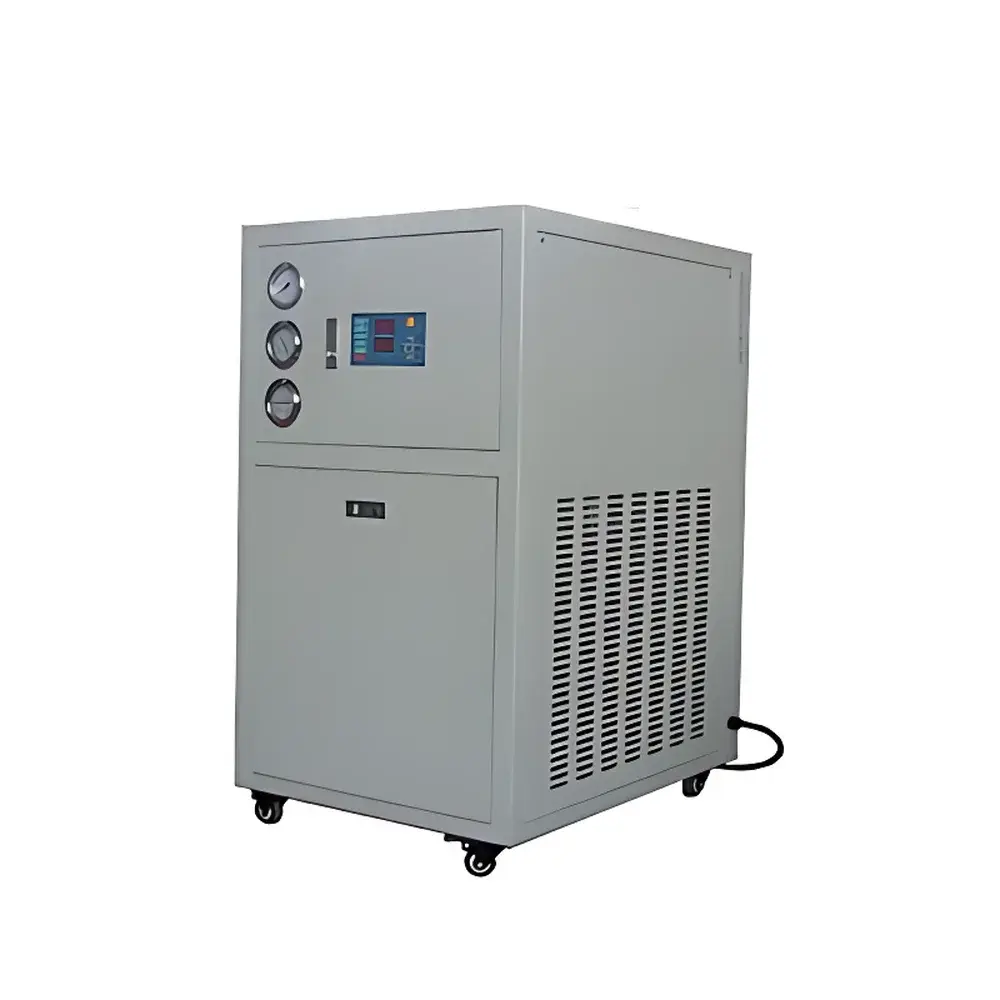
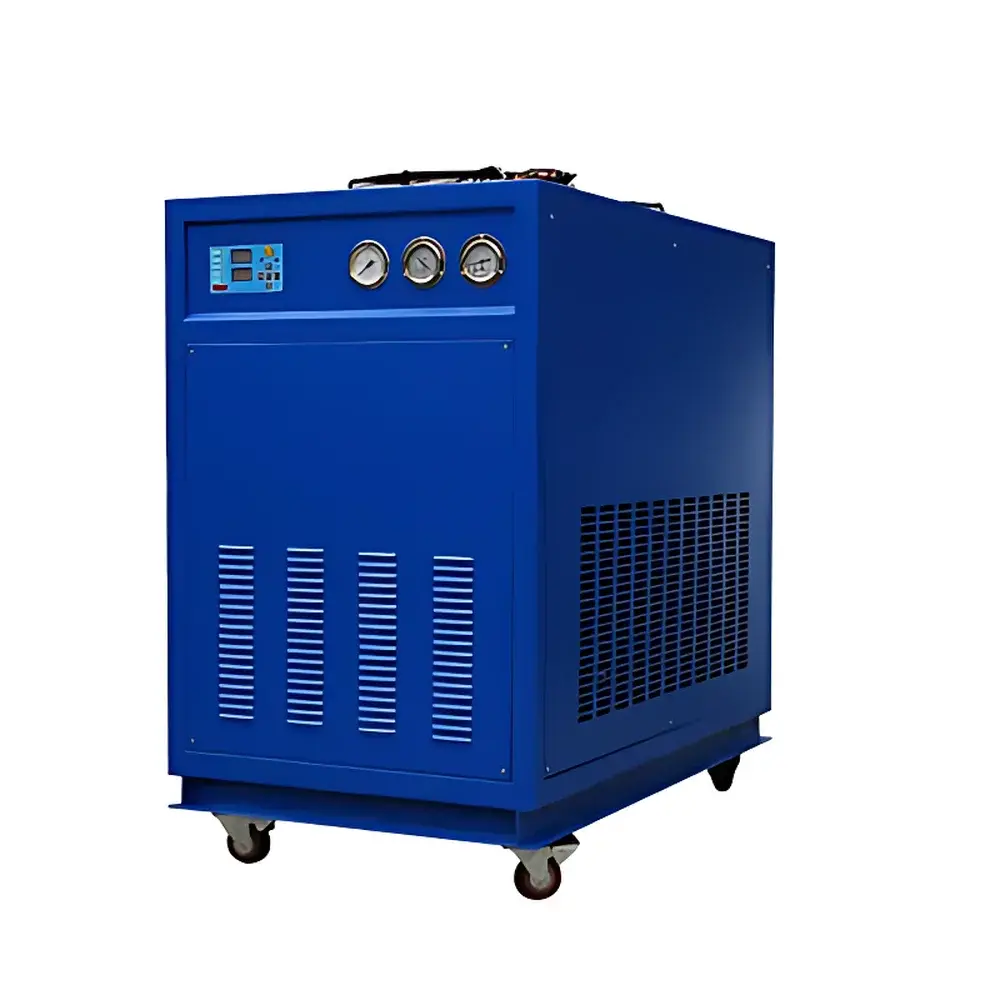
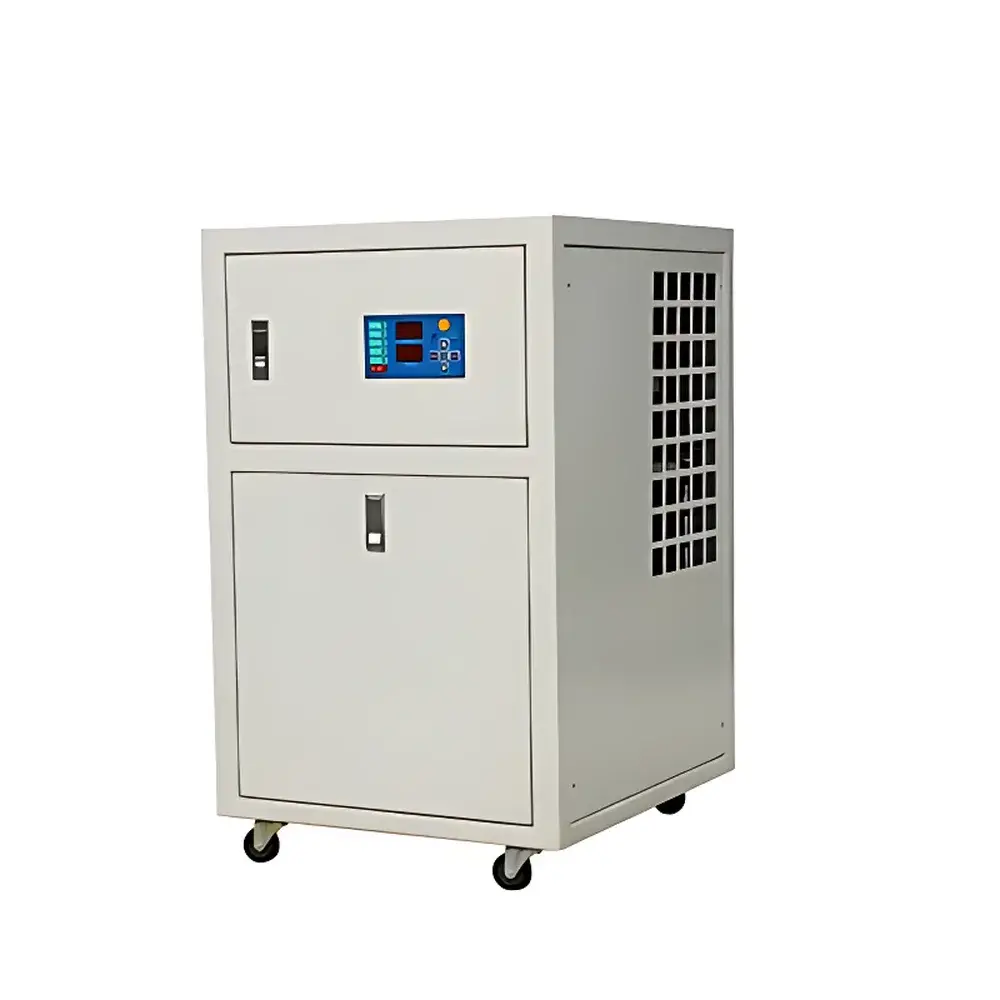
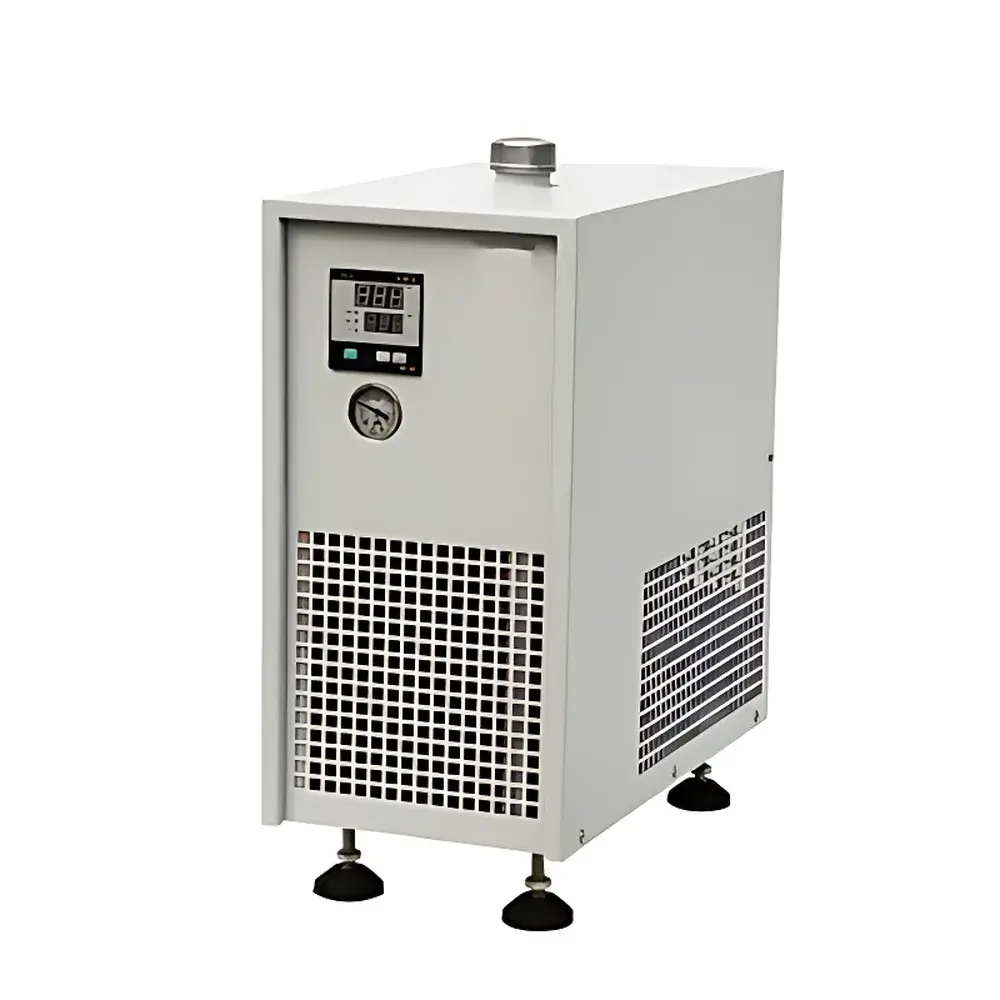
Tianfeng LS-2000W Air-Cooled Circulating Chiller
| Brand | Tianfeng |
|---|---|
| Origin | Shanghai, China |
| Manufacturer Type | Direct Manufacturer |
| Equipment Type | Integrated Circulating Chiller |
| Cooling Method | Air-Cooled |
| Temperature Control Range | 0–10 °C |
| Refrigeration Capacity | 2.0 kW |
| Temperature Stability | ±0.1 °C |
| Circulating Pump Pressure | 2.0 bar |
| Circulating Flow Rate | 2 L/min |
| Reservoir Volume | 27 L |
| Duty Cycle | Continuous Operation |
| Power Supply | 220 V, 50 Hz |
| Compressor Type | Scroll Compressor |
| Safety Protections | Compressor Overheat Protection, Overcurrent Protection, High/Low Pressure Switches, Overtemperature Cut-off |
| Construction | Stainless Steel Reservoir & Pump |
| Dimensions (L×W×H) | 650 × 550 × 915 mm |
| Noise Level | Low-Noise Design |
| Controller | Digital PID Temperature Controller (Optional RKC Japan Unit) |
| Compliance | ISO 9001:2000 Certified Manufacturing Process |
Overview
The Tianfeng LS-2000W Air-Cooled Circulating Chiller is a precision-engineered thermal management system designed for stable, continuous cooling of heat-sensitive laboratory and industrial instrumentation. Unlike water-cooled chillers requiring external cooling towers or facility water loops, this unit employs an air-cooled condenser with high-efficiency scroll compressor technology—enabling standalone deployment in laboratories, cleanrooms, and compact production environments without dependency on plant water infrastructure. It operates on the vapor-compression refrigeration cycle, utilizing R410A or R134a refrigerant (model-dependent) to absorb heat from circulating coolant (typically deionized water or 30% ethylene glycol/water mixture) and reject it via forced-air convection across a finned condenser coil. The chiller maintains setpoint temperature within ±0.1 °C under dynamic load conditions—a critical requirement for analytical instruments where thermal drift directly impacts signal stability, detector sensitivity, and measurement reproducibility.
Key Features
- Integrated air-cooled architecture with compact footprint (650 × 550 × 915 mm), suitable for benchtop or floor-mounted installation in space-constrained labs
- High-stability PID digital temperature controller with real-time display of outlet fluid temperature; optional upgrade to RKC (Japan) controller for enhanced resolution and programmable ramp/soak profiles
- Stainless steel reservoir (27 L capacity) and corrosion-resistant centrifugal pump rated for continuous operation at 2 L/min flow and 2.0 bar pressure
- Dual-mode operation: fixed-setpoint constant-temperature mode and adaptive intelligent temperature modulation that dynamically adjusts coolant output in response to real-time thermal load fluctuations
- Comprehensive safety suite including compressor overheat protection, high/low refrigerant pressure cut-offs, overcurrent interruption, and outlet fluid overtemperature shutdown
- Low-noise scroll compressor and optimized fan acoustics ensure ambient noise levels ≤62 dB(A) at 1 m—compatible with quiet-zone laboratory environments
- Electrical components sourced from Siemens, Schneider Electric, and Omron to meet IEC 61000-6-2/6-4 EMC and safety standards
Sample Compatibility & Compliance
The LS-2000W is engineered for seamless integration with a broad spectrum of laboratory instrumentation requiring precise, vibration-minimized coolant delivery. It is routinely deployed with graphite furnace atomic absorption spectrometers (GFAAS), inductively coupled plasma optical emission spectrometers (ICP-OES), inductively coupled plasma mass spectrometers (ICP-MS), X-ray fluorescence (XRF) analyzers, X-ray diffractometers (XRD), scanning electron microscopes (SEM), and transmission electron microscopes (TEM). Its stable 0–10 °C operating range aligns with manufacturer-specified coolant inlet requirements for high-power RF generators, CCD detectors, and electron gun assemblies. All units are manufactured under ISO 9001:2000 certified quality management systems. While not intrinsically certified to UL/CSA or CE for North American/EU markets, the design adheres to fundamental principles of IEC 61010-1 (Safety Requirements for Electrical Equipment for Measurement, Control, and Laboratory Use) and supports GLP/GMP-aligned operational documentation when paired with validated temperature logging protocols.
Software & Data Management
The standard configuration includes local digital interface only—no embedded Ethernet, USB, or analog output ports. For laboratories requiring audit-trail-capable thermal monitoring, the chiller may be integrated into facility-wide data acquisition networks via optional third-party temperature transmitters (e.g., Omega iSeries or Vaisala HMT360) installed inline with the outlet circuit. When used in regulated environments (e.g., pharmaceutical QC labs), users implement external 21 CFR Part 11-compliant data loggers to record time-stamped coolant temperature, flow rate, and system fault events. The unit’s mechanical reliability and consistent thermal performance reduce the frequency of calibration interventions—typical recalibration interval is 12 months per ASTM E74-22 guidelines for temperature-controlled auxiliary equipment supporting analytical instrumentation.
Applications
Beyond laboratory instrumentation cooling, the LS-2000W serves critical thermal regulation functions in multiple industrial domains. In materials science, it stabilizes mold temperatures during polymer characterization experiments, minimizing thermal-induced crystallinity variations in DSC and TMA measurements. In semiconductor metrology, it cools laser interferometers and wafer stage actuators to suppress thermally induced positional drift. In vacuum systems, it maintains cryopump compressor oil temperature below 40 °C—preventing viscosity degradation and extending service life. Its 2.0 kW cooling capacity and 27 L reservoir provide sufficient thermal inertia for transient-load applications such as pulsed laser ablation or rapid-cycle thermal cycling stages. The unit is also widely adopted in medical device manufacturing for cooling high-frequency surgical generators and MRI gradient coil power supplies.
FAQ
What is the maximum allowable return coolant temperature?
The recommended maximum inlet (return) coolant temperature is 40 °C. Sustained inlet temperatures above this threshold increase condensing pressure, accelerate compressor wear, and may trigger high-pressure safety cutouts.
Can this chiller operate continuously for 24/7 laboratory use?
Yes—the LS-2000W is rated for indefinite continuous duty (IEC 60034-1 S1 rating) with scheduled maintenance intervals aligned to ISO 13374 condition monitoring standards.
Is the reservoir compatible with glycol-based coolants?
Yes—stainless steel construction ensures full compatibility with aqueous solutions containing up to 35% ethylene or propylene glycol for sub-zero applications.
Does the unit include flow monitoring or low-flow alarm capability?
No—flow rate is fixed at 2 L/min under nominal pressure; external flow sensors must be added for alarm-enabled flow verification.
What is the typical service life of the scroll compressor?
Under proper ambient conditions (<35 °C ambient, unobstructed airflow) and routine filter maintenance, the compressor exhibits mean time between failures (MTBF) exceeding 35,000 hours per ISO 13372.



