
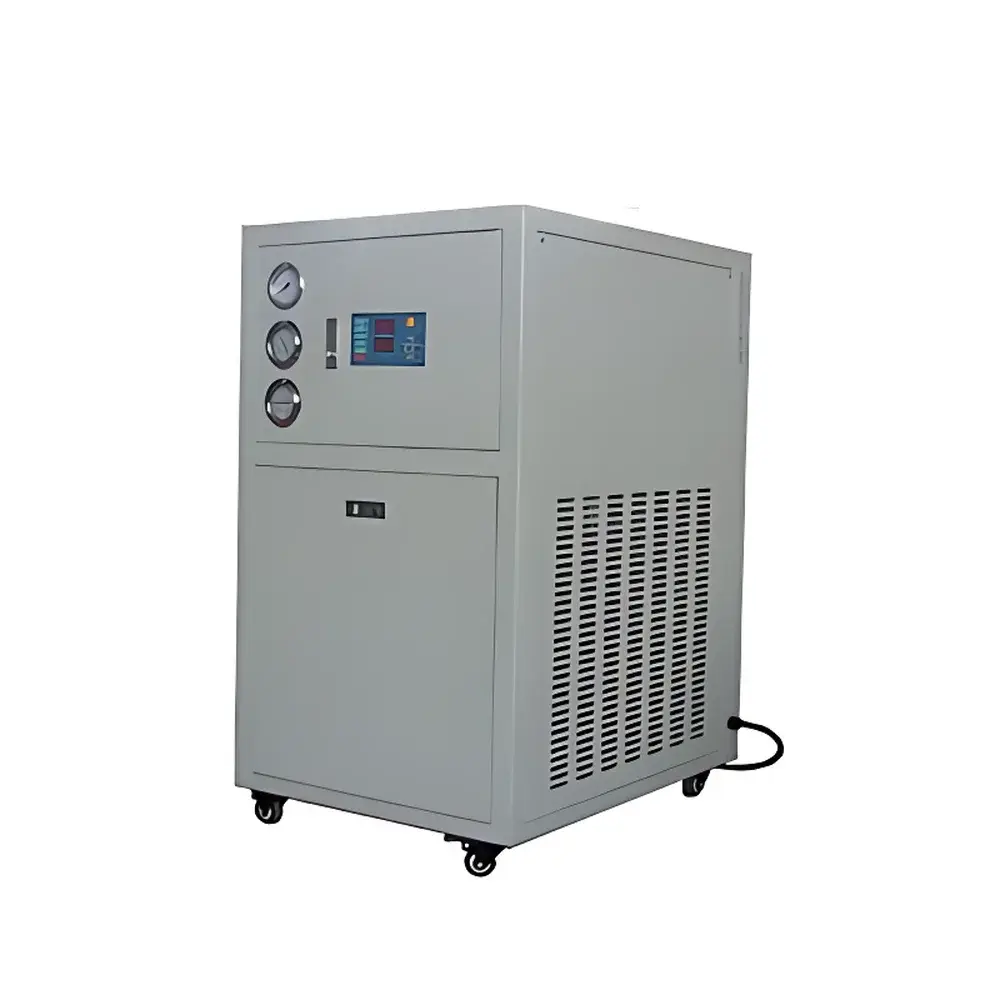
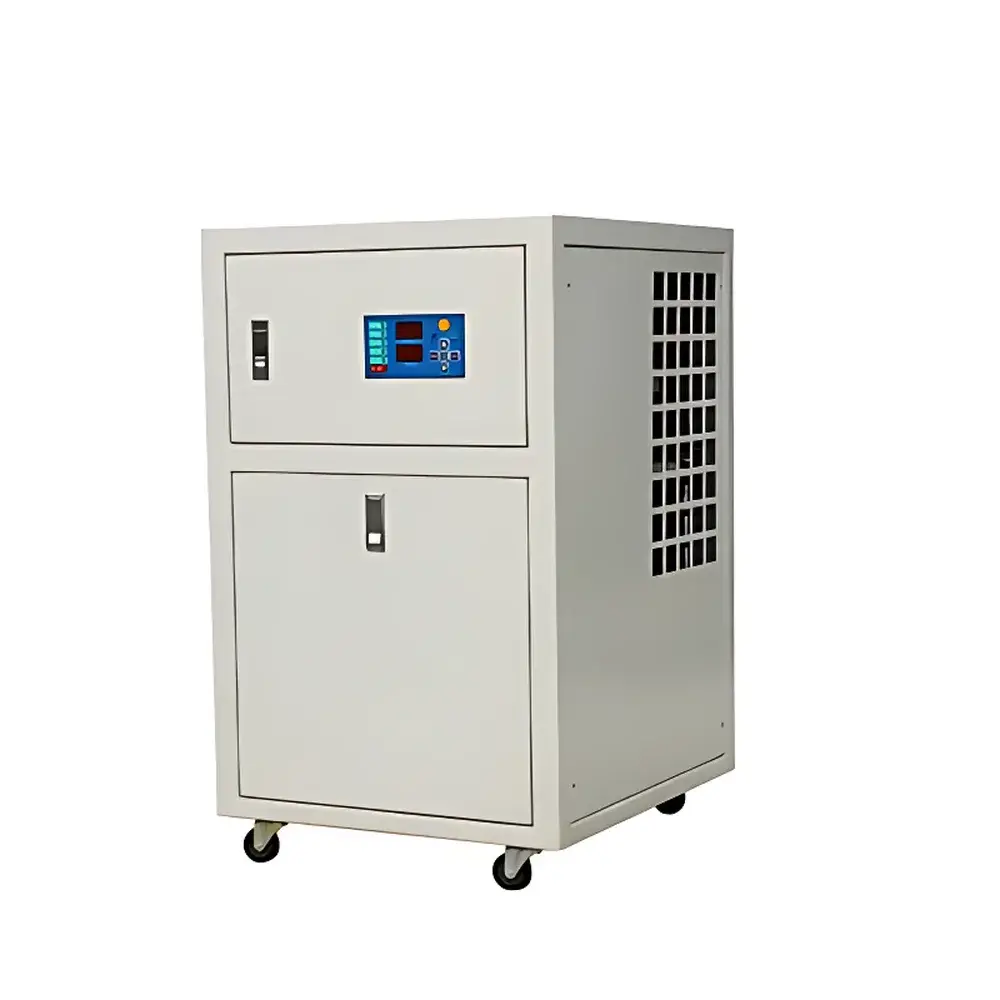
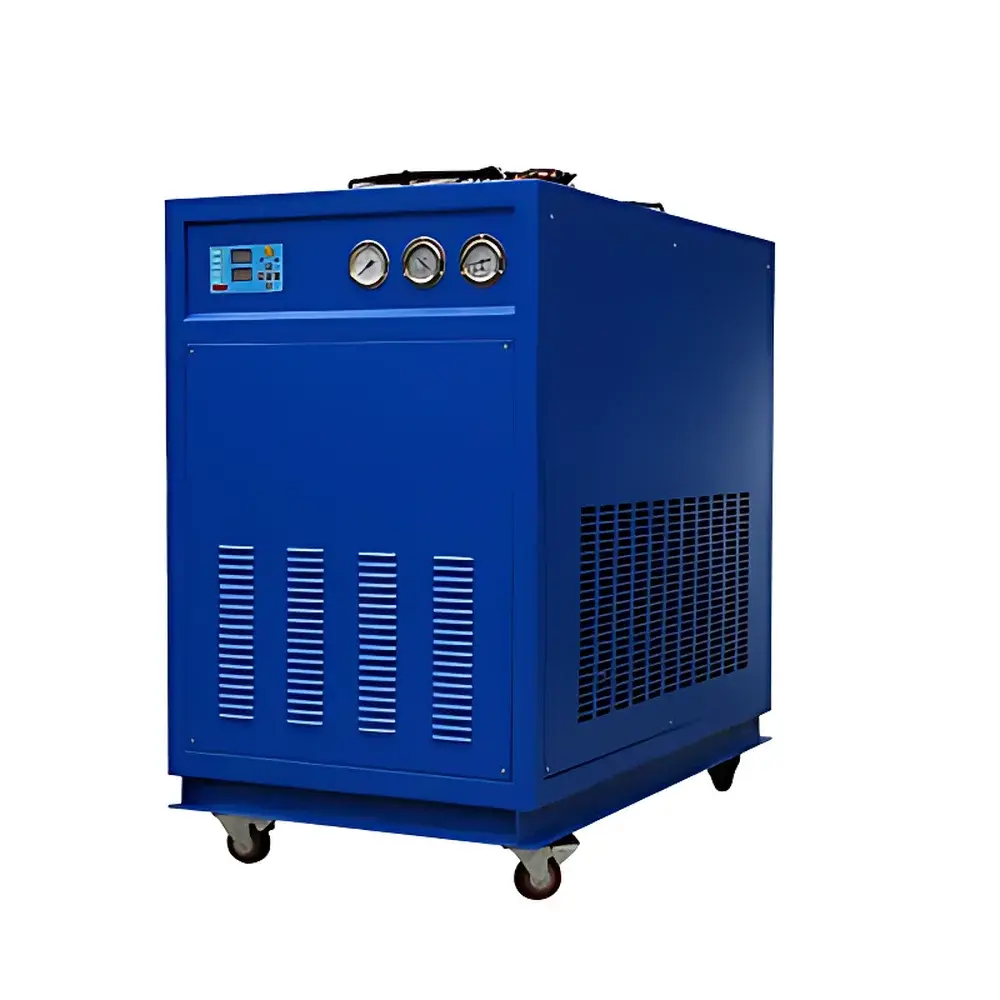
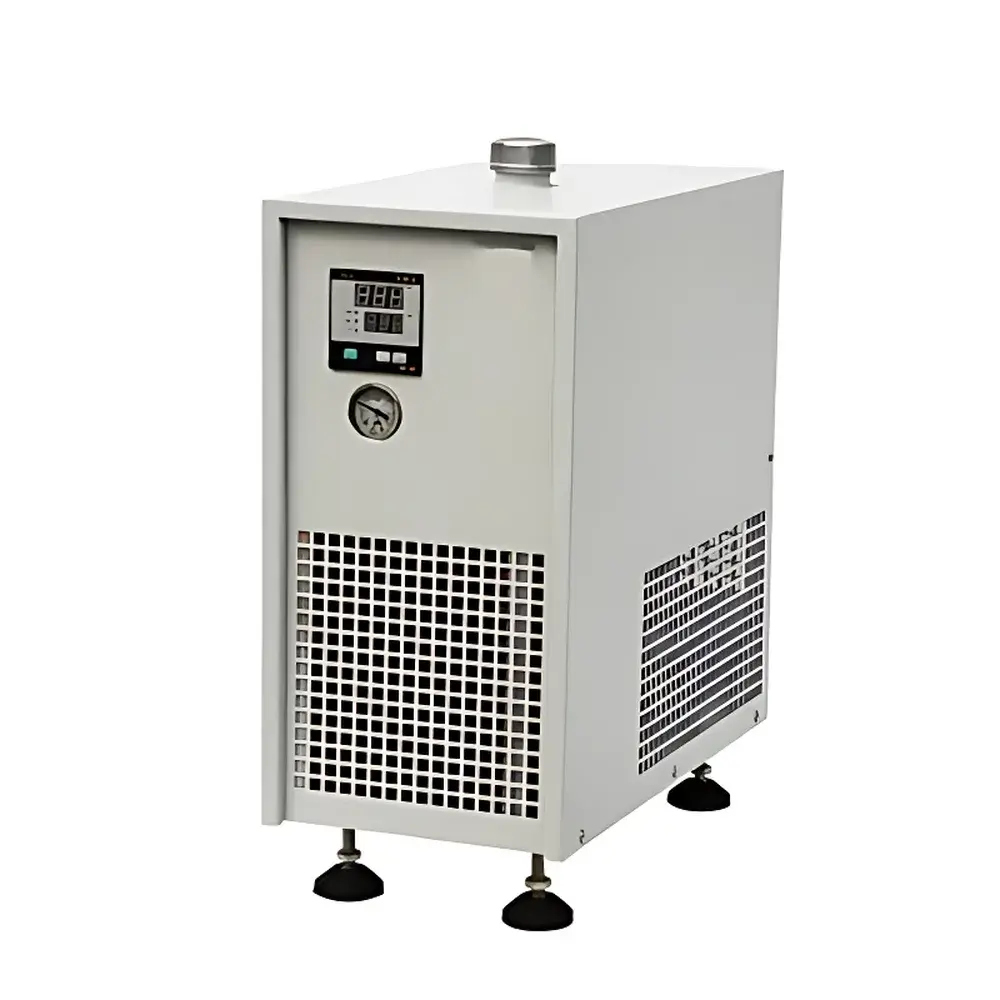
Tianfeng LS-2500W Compact Water-Cooled Circulating Chiller
| Brand | Tianfeng |
|---|---|
| Origin | Shanghai, China |
| Manufacturer Type | Direct Manufacturer |
| Instrument Type | Integrated Unit |
| Cooling Method | Water-Cooled |
| Temperature Control Range | 0–10 °C |
| Cooling Capacity | 2.5 kW |
| Temperature Stability | ±0.1 °C |
| Circulation Pump Pressure | 2.0 bar |
| Circulation Flow Rate | 2 L/min |
| Reservoir Volume | 27 L |
| Operating Mode | Continuous Duty |
| Power Supply | 220 V, 50 Hz |
| Compressor Type | Scroll Compressor |
| Safety Protections | High/Low Pressure Switch, Overcurrent Protection, Compressor Overheat Protection, Overtemperature Alarm |
| Construction | Stainless Steel Reservoir & Pump |
| Noise Level | Low |
| Controller | Digital PID Temperature Controller (Optional RKC Japan Unit) |
| Electrical Components | Siemens / Schneider / Omron |
| Refrigeration Components | Italian/German Expansion Valves, Solenoid Valves |
| Dimensions (L×W×H) | 650 × 550 × 915 mm |
| Weight | Approx. 85 kg |
Overview
The Tianfeng LS-2500W Compact Water-Cooled Circulating Chiller is an engineered thermal management solution designed for precision temperature stabilization of heat-generating laboratory and industrial equipment. It operates on a closed-loop refrigeration cycle using R410A or R134a refrigerant (model-dependent), integrated with a high-efficiency scroll compressor, copper-aluminum finned condenser, and thermostatically controlled expansion valve. The unit delivers consistent cooling capacity of 2.5 kW at standard operating conditions (chilled water inlet 12 °C, outlet 7 °C; ambient cooling water inlet ≤30 °C, outlet ≤40 °C). Its primary function is to remove waste heat from sensitive instrumentation—such as graphite furnace atomic absorption spectrometers (GFAAS), inductively coupled plasma optical emission spectrometers (ICP-OES), ICP-mass spectrometers (ICP-MS), X-ray fluorescence (XRF) and X-ray diffraction (XRD) systems, scanning electron microscopes (SEM), and transmission electron microscopes (TEM)—thereby maintaining operational thermal equilibrium and preventing thermal drift in optical paths, detectors, and vacuum systems.
Key Features
- Integrated compact design (650 × 550 × 915 mm) optimized for limited laboratory floor space and benchtop integration.
- Precision temperature control within ±0.1 °C stability over the 0–10 °C range, enabled by digital PID controller with real-time feedback from Pt100 sensor.
- Stainless steel reservoir (27 L) and circulation pump resistant to corrosion and compatible with deionized water, glycol-water mixtures (up to 30% v/v), and other non-aggressive coolants.
- Adjustable flow rate (0–2 L/min nominal, up to 6 L/min max) and pressure (0–2.0 bar) via calibrated bypass and impeller regulation—ensuring compatibility with variable hydraulic resistance across instrument manifolds.
- Continuous-duty operation rated for 24/7 unattended use, supported by redundant safety interlocks including high/low refrigerant pressure cutoff, compressor winding overtemperature detection, and reservoir-level monitoring.
- Low-noise operation (<62 dB(A) at 1 m), achieved through vibration-damped compressor mounting, acoustic insulation, and laminar-flow condenser airflow design.
- Modular electrical architecture compliant with IEC 61000-6-3 (EMC emission limits) and IEC 61000-6-2 (immunity), incorporating Siemens or Schneider contactors, Omron relays, and UL-listed wiring harnesses.
Sample Compatibility & Compliance
The LS-2500W chiller interfaces with instruments requiring stable coolant supply at low-to-moderate thermal loads, including but not limited to laser sources (CO₂, fiber, diode), RF generators, high-power detectors, and vacuum system cold traps. It supports ASTM E2912-21 (Standard Practice for Calibration of Laboratory Chillers) traceable verification protocols. While not intrinsically certified for hazardous locations, its construction meets IP20 enclosure rating per IEC 60529 and conforms to CE marking requirements under the EU Machinery Directive 2006/42/EC and Low Voltage Directive 2014/35/EU. For GLP/GMP-regulated environments, optional audit-trail-enabled controllers (e.g., RKC CD series with RS485 Modbus RTU output) support 21 CFR Part 11-compliant data logging when paired with validated SCADA software.
Software & Data Management
The base unit features local digital interface only—no embedded firmware or network connectivity. However, analog 0–10 V or 4–20 mA output signals (optional) enable integration into centralized building management systems (BMS) or laboratory information management systems (LIMS). For advanced monitoring, third-party DAQ platforms (e.g., National Instruments CompactDAQ, Advantech ADAM modules) may acquire temperature, flow, and fault status via isolated dry-contact relay outputs. All safety-critical alarms—including high discharge temperature, low flow detection, and reservoir low-level—are hardwired to external PLCs or emergency shutdown circuits per ISO 13850 requirements.
Applications
- Atomic Spectroscopy: Stabilizes graphite furnace temperature during atomization cycles in GFAAS; prevents thermal lensing in ICP torch injectors and maintains detector housing temperature in XRF/XRD detectors.
- Electron Microscopy: Cools SEM/TEM column components—including tungsten or field-emission gun assemblies and CCD/CMOS imaging sensors—to suppress thermally induced resolution loss and dark current noise.
- Laser Systems: Maintains diode-pumped solid-state (DPSS) and fiber laser head temperatures within ±0.2 °C to ensure wavelength stability and mode-locking integrity.
- Vacuum & Thin-Film Equipment: Regulates cryopump compressor oil temperature and cools sputtering target backsides in PVD/CVD tools to prevent arcing and film stress accumulation.
- Material Testing: Supplies regulated coolant to environmental test chambers, rheometers, and differential scanning calorimeters (DSC) requiring sub-ambient bath stability.
FAQ
What is the maximum allowable return water temperature to the chiller?
The recommended maximum return water temperature is 40 °C. Exceeding this threshold increases condensing pressure, reduces compressor efficiency, and accelerates refrigerant oil degradation—potentially triggering high-pressure cutout protection.
Can the chiller operate with ethylene glycol solutions?
Yes—up to 30% (v/v) ethylene glycol/water mixture is permissible for freeze protection down to –15 °C; however, viscosity increase must be accounted for in system pressure drop calculations.
Is remote monitoring capability available?
Standard configuration includes local display only; RS485 Modbus RTU or 4–20 mA analog output options are factory-installable for integration with facility-wide control networks.
What maintenance intervals are recommended?
Condenser cleaning every 3 months (more frequently in dusty environments); refrigerant charge verification annually; reservoir descaling biannually if using tap water; full system performance validation per ASTM E2912 every 24 months.
Does the unit comply with energy efficiency standards?
It meets China’s GB 19577-2015 minimum energy efficiency ratio (EER) requirements for small chillers (≥2.6 at rated conditions) and exceeds EU ErP Lot 21 Tier 1 seasonal energy efficiency class D thresholds.



