
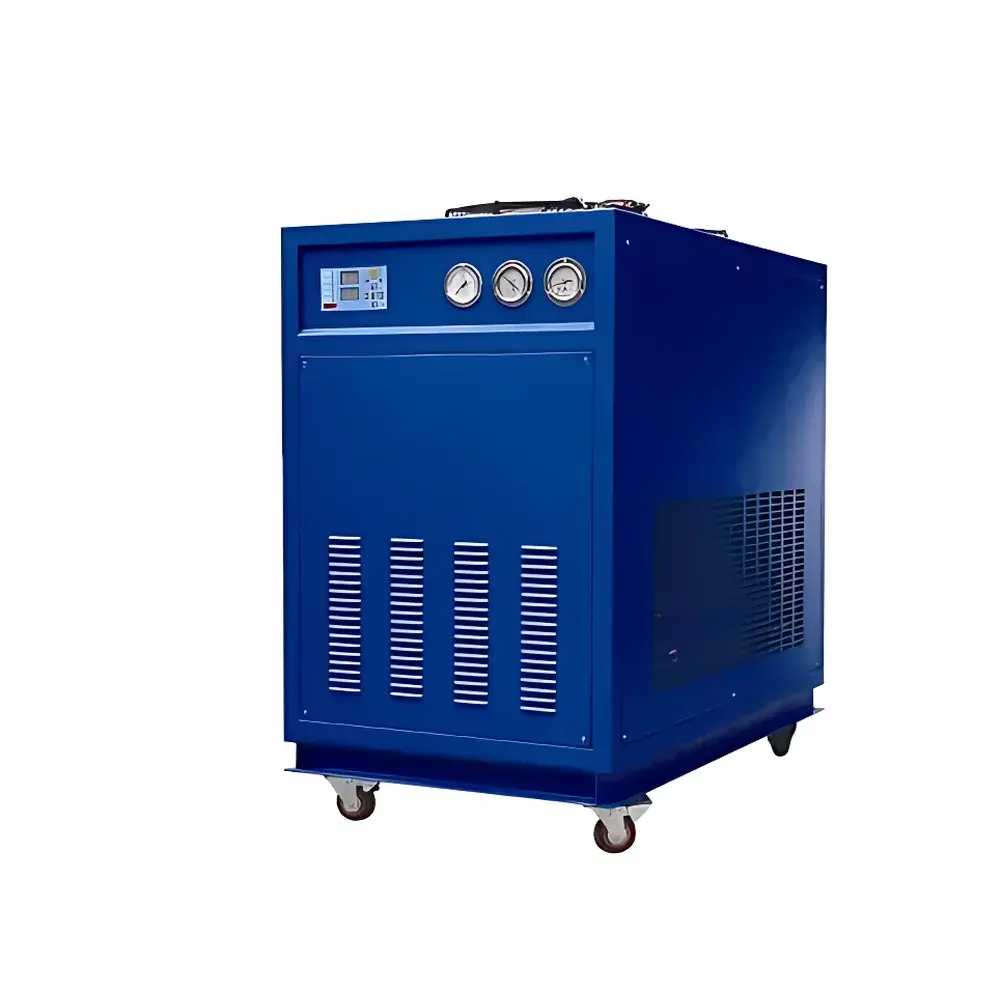
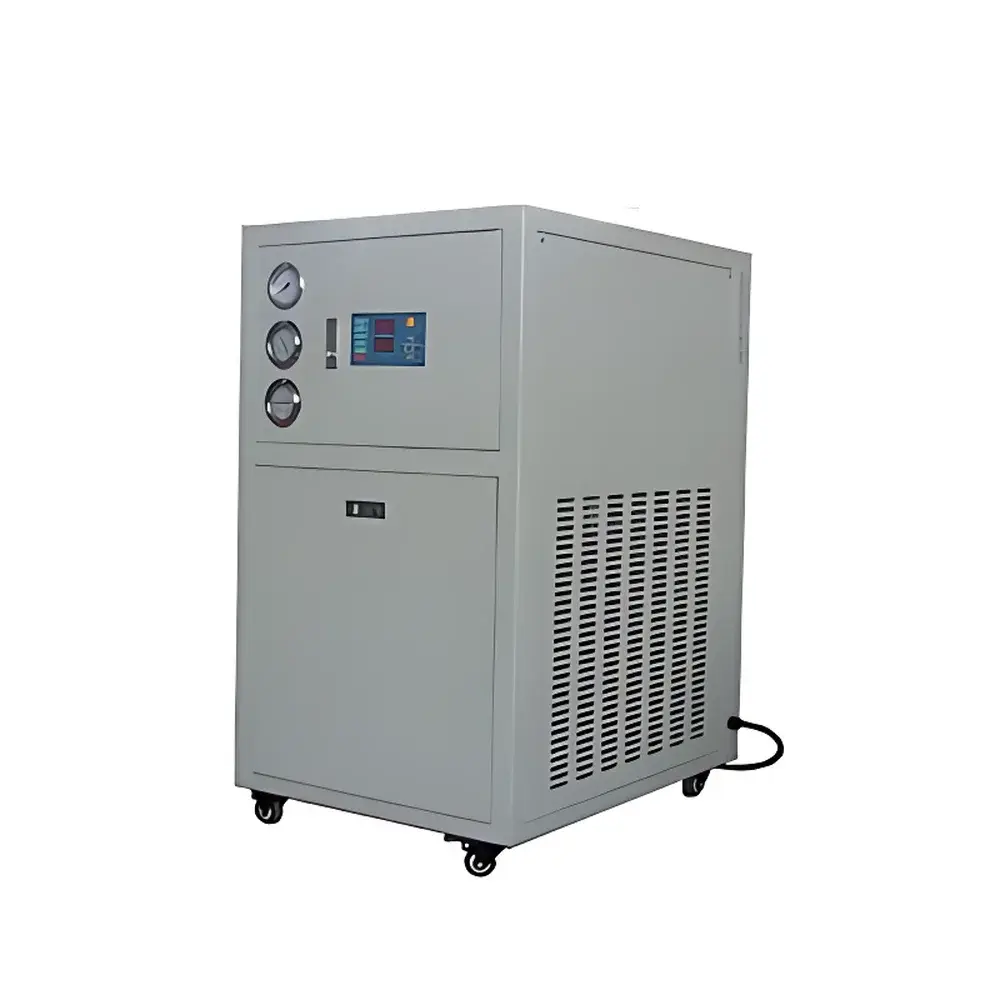
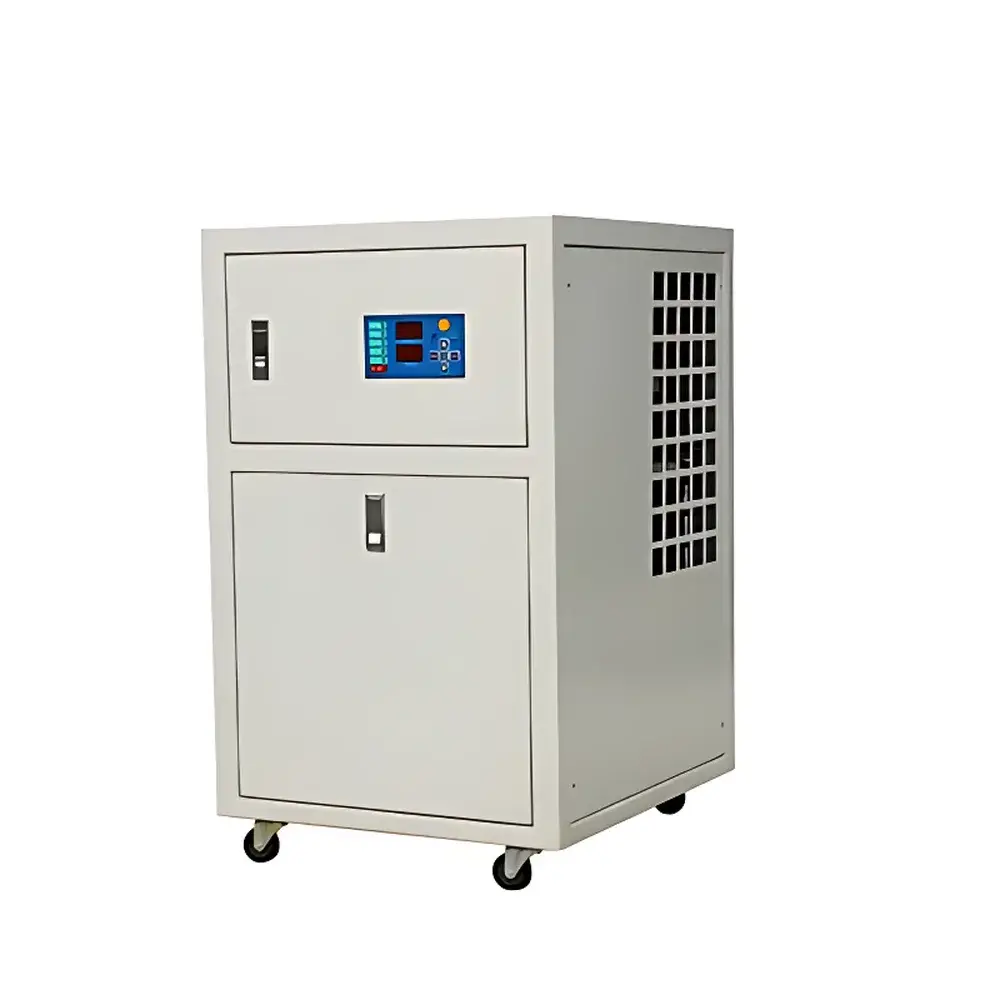
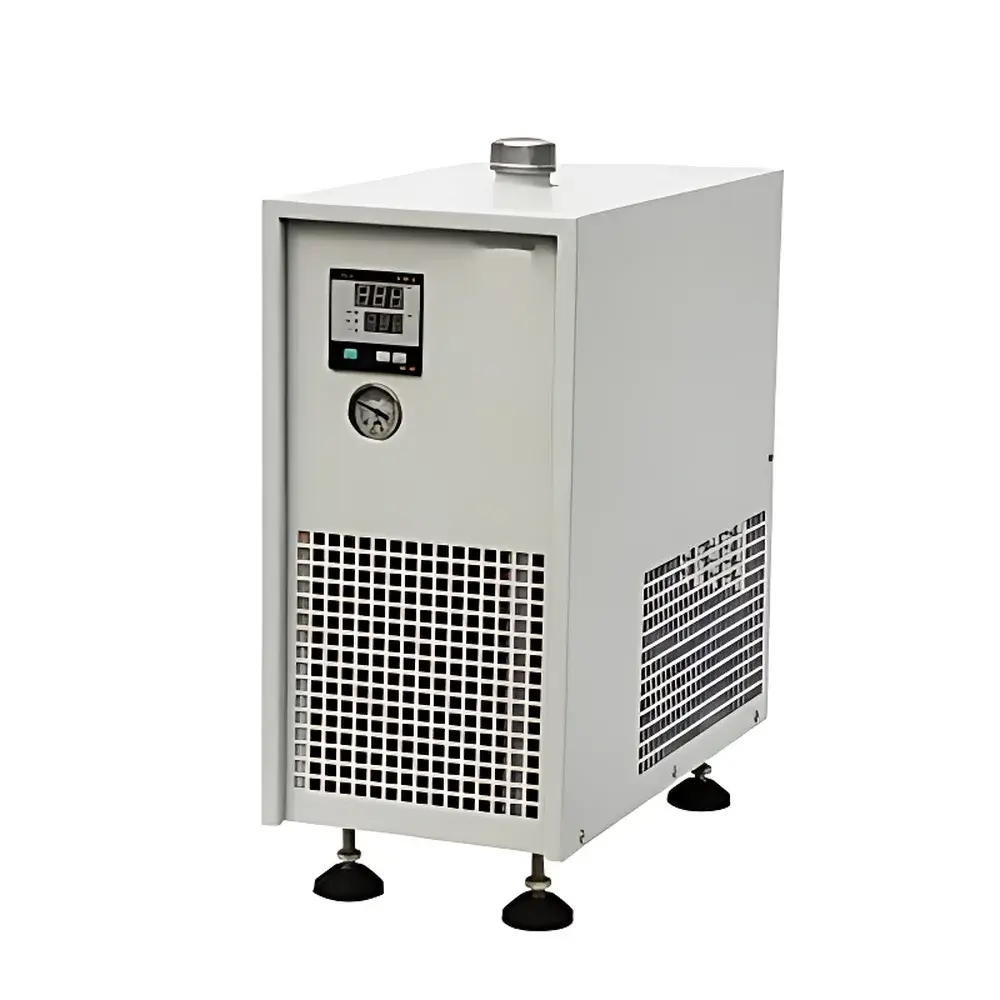
Tianfeng LS-8KW Integrated Water-Cooled Circulating Chiller
| Brand | Tianfeng |
|---|---|
| Origin | Shanghai, China |
| Manufacturer Type | Direct Manufacturer |
| Instrument Type | Integrated Circulating Chiller |
| Cooling Method | Water-Cooled |
| Temperature Control Range | 0–10 °C |
| Refrigeration Capacity | 8 kW (at 12 °C inlet / 7 °C outlet water, 30 °C ambient inlet / 40 °C outlet cooling water) |
| Temperature Stability | ±0.1 °C |
| Circulating Pump Pressure | 0–2.0 bar |
| Circulating Flow Rate | 0–60 L/min |
| Reservoir Volume | 60 L |
| Power Consumption | 3.3 kW |
| Electrical Supply | 220 V, 50 Hz |
| Dimensions (L×W×H) | 550 × 880 × 1160 mm |
| Safety Protections | Compressor overheat protection, high/low pressure cutoff, overcurrent protection, and overtemperature alarm |
| Construction | Stainless steel reservoir and pump, vortex compressor, imported expansion valve (Italy/Germany), RKC temperature controller optional, Siemens/Schneider/Omron electrical components |
| Operating Mode | Continuous duty |
Overview
The Tianfeng LS-8KW Integrated Water-Cooled Circulating Chiller is an engineered thermal management system designed for precision temperature stabilization of heat-generating laboratory and industrial equipment. It operates on a closed-loop refrigeration cycle using R410A or R134a refrigerant (model-dependent), with primary heat rejection achieved via an external water-cooled condenser—enabling stable operation in environments where ambient air cooling is impractical or insufficient. Unlike air-cooled units, this chiller minimizes acoustic emissions and avoids heat load accumulation within conditioned lab spaces, making it especially suitable for noise-sensitive and space-constrained installations such as analytical instrument rooms, cleanrooms, and multi-user core facilities. Its control architecture integrates PID-based digital temperature regulation with real-time feedback from platinum resistance thermometers (PT100), ensuring consistent thermal setpoint adherence across variable thermal loads. The unit is rated for continuous-duty operation at full capacity under specified inlet/outlet conditions (7 °C chilled water outlet, 12 °C inlet; 30 °C cooling water inlet, 40 °C outlet), complying with ISO 5149-2:2014 safety requirements for refrigerating systems.
Key Features
- High-efficiency scroll compressor with low-vibration operation and extended service life under sustained load
- Stainless steel reservoir (60 L) and circulation pump resistant to corrosion from deionized water, glycol-water mixtures, and common laboratory coolants
- Digital PT100 temperature display with ±0.1 °C stability and programmable setpoint range (0–10 °C standard; optional extension to –10 °C or +30 °C upon specification)
- Adjustable flow rate (0–60 L/min) and pressure (0–2.0 bar) via integrated bypass and calibrated flow metering
- Comprehensive safety suite: high/low refrigerant pressure switches, compressor winding overtemperature sensor, phase-loss detection, and emergency shutdown output relay
- Modular electrical cabinet with CE-compliant components (Siemens contactors, Schneider circuit breakers, Omron PLC interface modules)
- Optional RKC digital temperature controller with RS485 Modbus RTU communication for integration into centralized building management or LIMS environments
Sample Compatibility & Compliance
This chiller is compatible with a broad spectrum of heat-dissipating instrumentation requiring stable coolant supply, including but not limited to graphite furnace atomic absorption spectrometers (GFAAS), inductively coupled plasma optical emission spectrometers (ICP-OES), ICP-mass spectrometers (ICP-MS), X-ray fluorescence (XRF) and X-ray diffraction (XRD) systems, scanning and transmission electron microscopes (SEM/TEM), and laser-based analytical platforms. It meets ISO 9001:2015 quality management system requirements and incorporates design elements aligned with IEC 61000-6-3 (EMC emission limits) and IEC 61000-6-2 (immunity). For regulated laboratory environments, the optional RKC controller supports audit-trail-capable logging and configurable alarm thresholds compliant with FDA 21 CFR Part 11 data integrity principles when deployed with validated software infrastructure.
Software & Data Management
While the base unit operates via front-panel controls, the optional RKC PG9 series controller provides USB and RS485 interfaces for remote monitoring and parameter adjustment. Logged data—including setpoint, actual temperature, flow status, and fault codes—can be exported in CSV format for traceability. When integrated into networked lab infrastructures, the chiller supports Modbus RTU protocol for bidirectional communication with SCADA systems or laboratory information management systems (LIMS). All firmware updates are performed via secure offline methods; no cloud connectivity or remote vendor access is enabled by default—ensuring data sovereignty and alignment with institutional IT security policies.
Applications
- Laboratory instrumentation cooling: Maintains thermal equilibrium in high-power detectors, RF generators, vacuum pumps, and plasma sources to prevent signal drift and component degradation
- Materials characterization: Stabilizes sample stage temperatures during XRD and SEM analysis to minimize thermal expansion artifacts
- Elemental analysis: Ensures consistent nebulizer and torch cooling in ICP systems, reducing polyatomic interferences and improving long-term calibration stability
- Electron microscopy: Provides precise thermal control for electron gun filaments and detector assemblies, directly influencing beam coherence and image resolution
- Pharmaceutical QC labs: Supports controlled-temperature operation of dissolution testers and stability chambers per USP and ICH Q5C guidelines
- Research-scale laser systems: Manages thermal lensing in solid-state and fiber lasers used in spectroscopy and ablation studies
FAQ
What is the maximum allowable return water temperature for safe operation?
The chiller is rated for continuous operation with cooling water inlet temperature ≤40 °C. Exceeding this threshold risks premature compressor wear and reduced refrigeration efficiency due to elevated condensing pressure.
Can this unit be integrated into a central cooling water loop?
Yes—it is designed for connection to facility-supplied chilled water or tower water circuits with pressure-regulated supply (0.2–0.6 MPa) and particulate filtration (<50 µm). A dedicated isolation valve and Y-strainer are recommended upstream.
Is glycol mixture compatibility supported?
The stainless steel fluid path and EPDM seals support up to 30% propylene glycol/water mixtures for sub-zero applications; however, refrigeration capacity must be derated per ASHRAE Handbook Fundamentals Chapter 32 guidance.
Does the unit include flow monitoring and low-flow shutdown?
Standard configuration includes mechanical flow switch feedback; optional electronic flowmeter with analog output (4–20 mA) and programmable low-flow alarm threshold is available upon request.
What maintenance intervals are recommended for laboratory-grade reliability?
Compressor oil and refrigerant filter driers should be replaced every 24 months under continuous operation; condenser water-side scaling inspection is advised quarterly in hard-water regions. Full service documentation and OEM spare parts are provided with each unit.



