
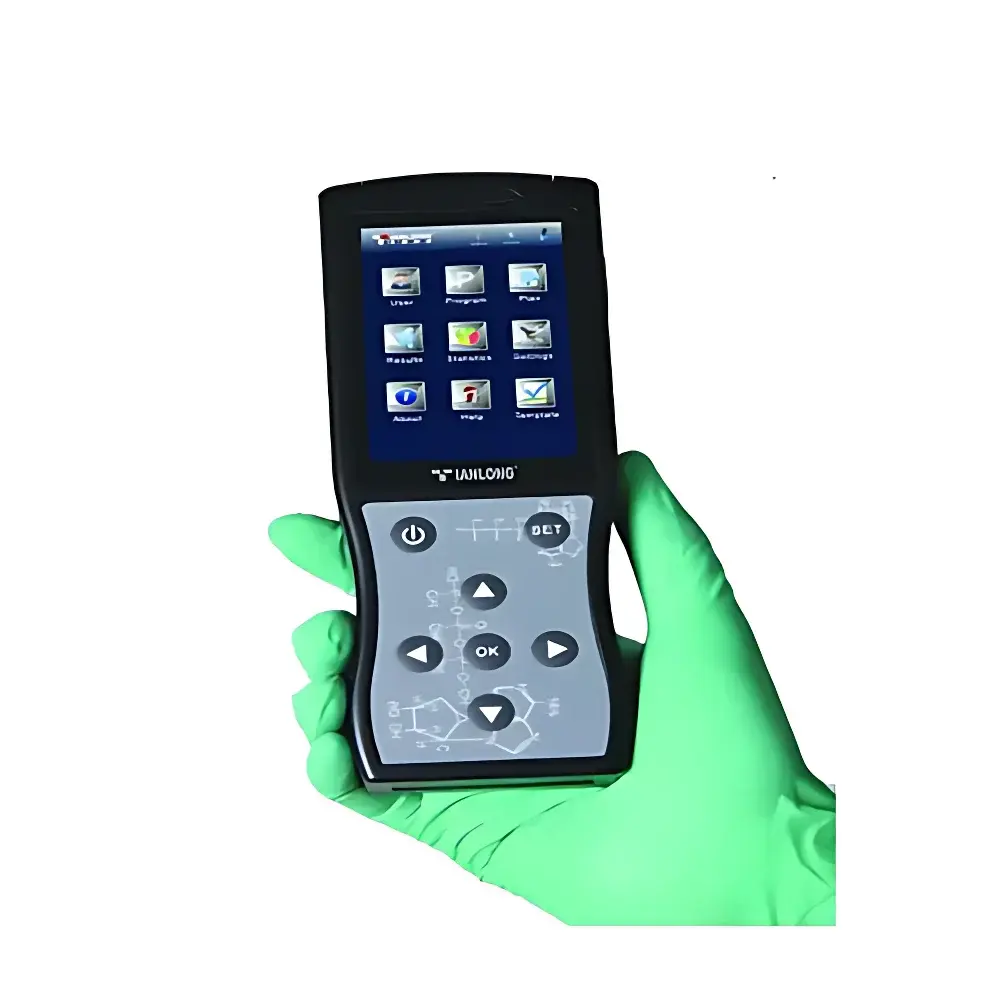
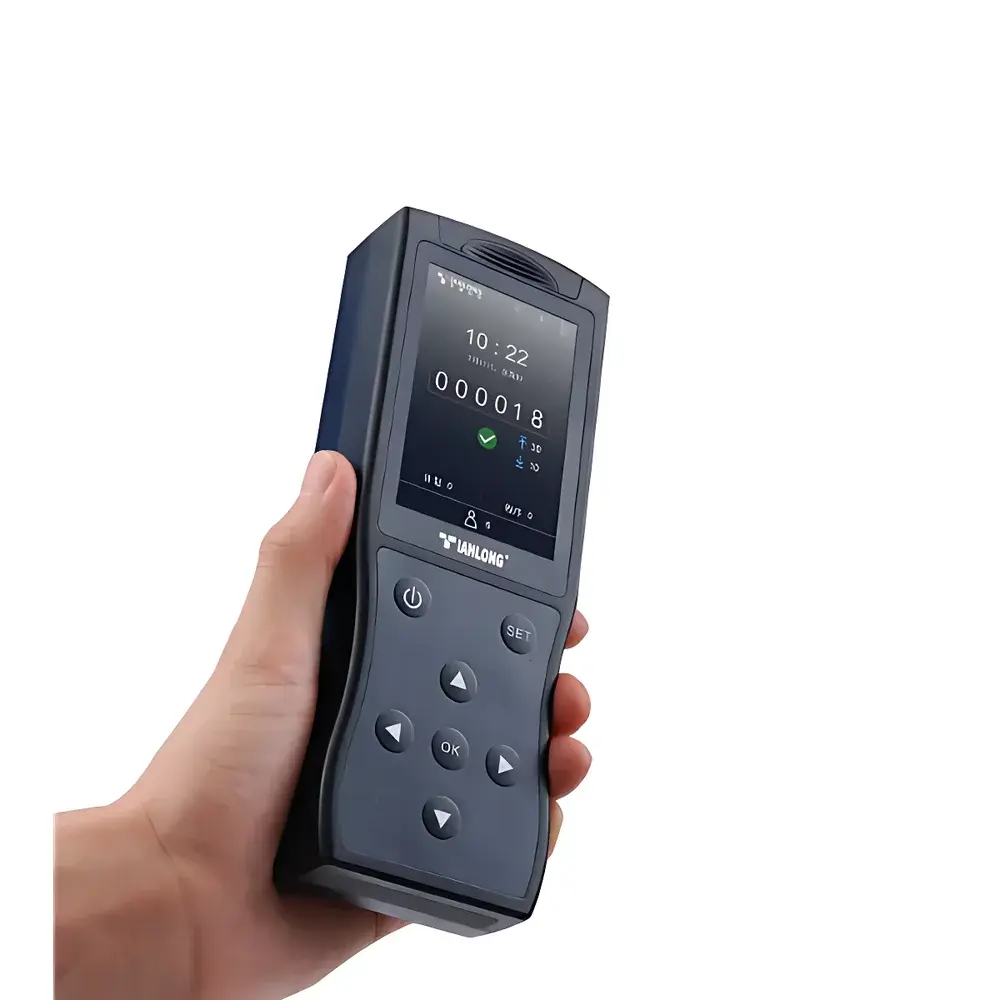
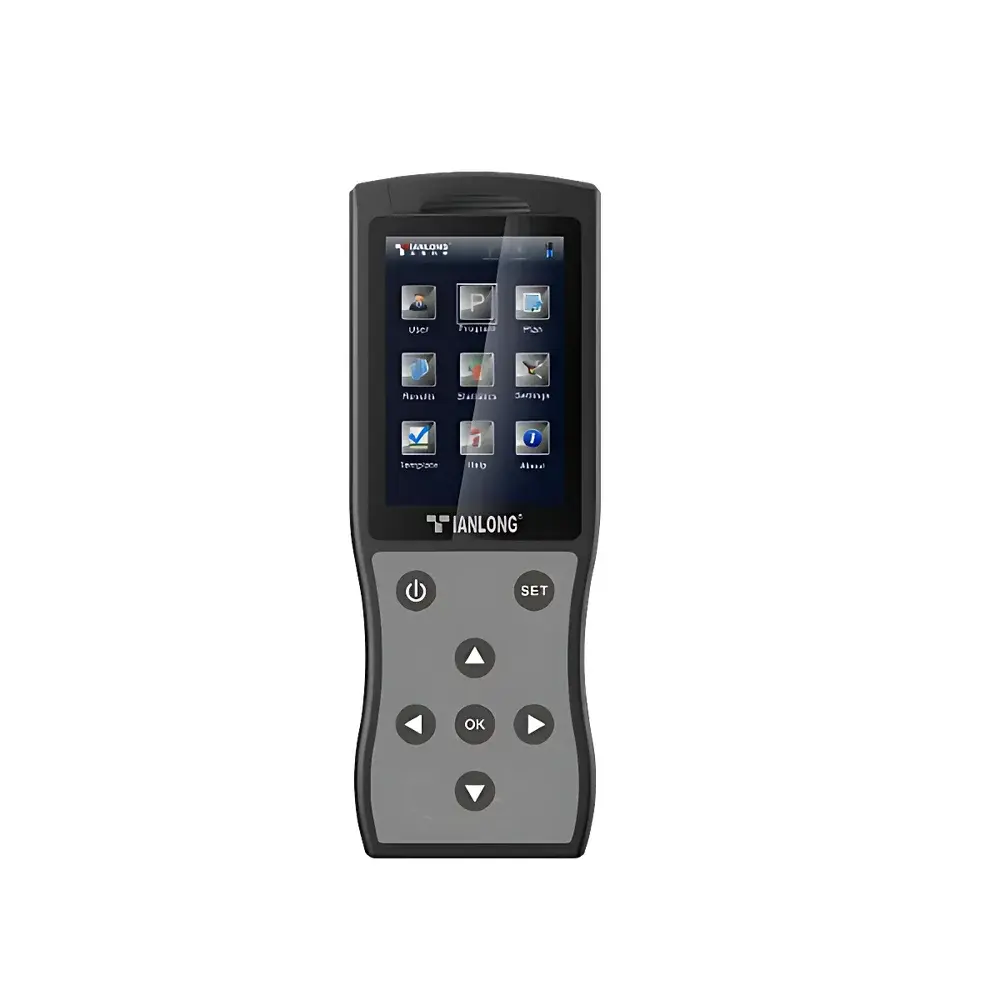
TIANLONG Biolum Handheld ATP Bioluminescence Detector
| Brand | TIANLONG |
|---|---|
| Origin | Shaanxi, China |
| Manufacturer | TIANLONG |
| Country of Origin | China |
| Model | Biolum |
| Detection Range | 0–999,999 RLU |
| Limit of Detection | 1.0 CFU/mL |
| Detection Sensitivity | 1×10⁻¹⁶ mol ATP |
| Display | 3.5-inch color LCD |
| Dimensions (W×D×H) | 70 × 35 × 189 mm |
| Weight | ≤300 g (with battery) |
| Detection Time | 10 s per sample |
| Accuracy | ±5% or ±5 RLU |
| Data Storage | 999 records |
| Battery Life | >10 h continuous operation, >500 h standby |
| Operating Environment | 5–40 °C, 20–85% RH |
| Connectivity | USB 2.0, Bluetooth 4.0 |
| Power | Rechargeable Li-ion battery (Mini-USB charging), optional solar/car charger |
| Swab Compatibility | TIANLONG ATP QuickSwab (liquid-stable, single-use) |
Overview
The TIANLONG Biolum Handheld ATP Bioluminescence Detector is a portable, field-deployable instrument engineered for rapid, quantitative assessment of surface hygiene and microbial contamination based on adenosine triphosphate (ATP) bioluminescence assay principles. ATP—present in all viable cells including bacteria, yeasts, molds, and residual organic matter—is quantified through an enzymatic reaction between luciferase and luciferin under aerobic conditions, producing light proportional to ATP concentration. The Biolum detector measures emitted photons in relative light units (RLU), enabling objective, real-time evaluation of cleaning efficacy across food contact surfaces, medical equipment, environmental sampling points, and sanitation-critical zones. Designed for compliance with international hygiene verification frameworks—including ISO 22000, HACCP, and FDA Food Code Annex 2—the Biolum delivers trace-level sensitivity (1×10⁻¹⁶ mol ATP) and supports audit-ready documentation for GLP/GMP-aligned operations.
Key Features
- Ultra-rapid detection: Full measurement cycle completed in ≤10 seconds per sample when used with TIANLONG ATP QuickSwab liquid-stable swabs—eliminating reconstitution steps and minimizing operator variability.
- High-precision optical system: Integrated photomultiplier tube (PMT) sensor with auto-gain calibration ensures linear response across the full dynamic range (0–999,999 RLU) and maintains accuracy within ±5% or ±5 RLU.
- Robust ergonomic design: Compact form factor (70 × 35 × 189 mm), weight ≤300 g, and one-handed operability support extended field use; built-in tilt sensor halts measurement if orientation deviates beyond ±15°, preserving assay integrity.
- Intelligent user interface: 3.5-inch high-contrast color LCD with intuitive icon-based navigation; no complex menus—key functions accessible via three dedicated hardware buttons.
- Configurable data governance: Supports 256 unique user IDs, 256 customizable inspection plans, and 2,000 programmable test protocols—including site-specific RLU thresholds and pass/fail logic.
- Dual-mode connectivity: Real-time data streaming via USB 2.0 to Windows/macOS systems; wireless transmission enabled via Bluetooth 4.0 (compatible with standard HCI adapters).
Sample Compatibility & Compliance
The Biolum is validated for use with TIANLONG’s CE-marked, sterile, liquid-stable ATP QuickSwab kits—each containing optimized lysis buffer and lyophilized luciferase-luciferin reagent. Swabs meet ASTM E2871-22 requirements for surface sampling efficiency and demonstrate ≥92% ATP recovery from stainless steel, polypropylene, and ceramic substrates. Instrument firmware adheres to IEC 61326-1 (EMC) and IEC 61010-1 (safety) standards. Data acquisition and storage comply with ALCOA+ principles (Attributable, Legible, Contemporaneous, Original, Accurate, Complete, Consistent, Enduring, Available); audit trails, electronic signatures, and time-stamped metadata are retained locally and exportable for regulatory review under FDA 21 CFR Part 11 and EU Annex 11 requirements.
Software & Data Management
TIANLONG Biolum Analysis Software (v3.2+) provides centralized data aggregation, statistical visualization, and trend monitoring. Raw RLU values are automatically converted into actionable hygiene grades using configurable algorithms (e.g., log₁₀(RLU) thresholds or industry-specific scoring models). Reports include histogram distributions, temporal heatmaps, location-based RLU clustering, and comparative benchmarking against historical baselines. All exported datasets retain embedded metadata (operator ID, timestamp, GPS coordinates if enabled via paired mobile device, swab lot number), supporting root-cause analysis during non-conformance investigations. Data exports conform to CSV, PDF, and XML formats compatible with LIMS integration.
Applications
- Food manufacturing: Verification of CIP/SIP effectiveness, post-clean validation of conveyors, slicers, fillers, and packaging lines.
- Hospitality & retail food service: Routine inspection of prep tables, cutting boards, refrigeration units, and dishwashing equipment.
- Healthcare facilities: Monitoring disinfection outcomes on bed rails, IV poles, endoscopes, and OR surfaces per CDC Guideline for Disinfection and Sterilization.
- Environmental health departments: Field-based sanitary inspections of food trucks, school kitchens, daycare centers, and public restrooms.
- Pharmaceutical cleanrooms: Non-viable surface monitoring in Grade C/D areas where ATP serves as a surrogate for total bioburden.
FAQ
What is the minimum detectable ATP concentration?
The Biolum achieves a theoretical limit of detection of 1×10⁻¹⁶ mol ATP per swab—equivalent to approximately 1.0 CFU/mL for common mesophilic bacteria under standardized swabbing conditions (100 cm² area, 50 mL rinse volume).
Does the instrument require daily calibration?
No routine calibration is required; the system performs automatic photometric self-check during startup (15–60 s) and validates sensor linearity before each measurement sequence.
Can data be exported directly to a Laboratory Information Management System (LIMS)?
Yes—via CSV/XML export or direct USB/Bluetooth transfer; API documentation and HL7/FHIR mapping guides are available upon request for enterprise integration.
Is the swab chemistry compatible with ISO 17516:2014?
TIANLONG ATP QuickSwab kits are validated per ISO 17516:2014 Annex A for repeatability (RSD ≤15%) and reproducibility (RSD ≤25%) across inter-laboratory trials.
How is instrument performance verified during routine use?
Each unit includes a certified ATP reference standard (10⁴ RLU) for daily functional checks; optional NIST-traceable calibration services are offered annually through TIANLONG’s ISO/IEC 17025-accredited service center.






