
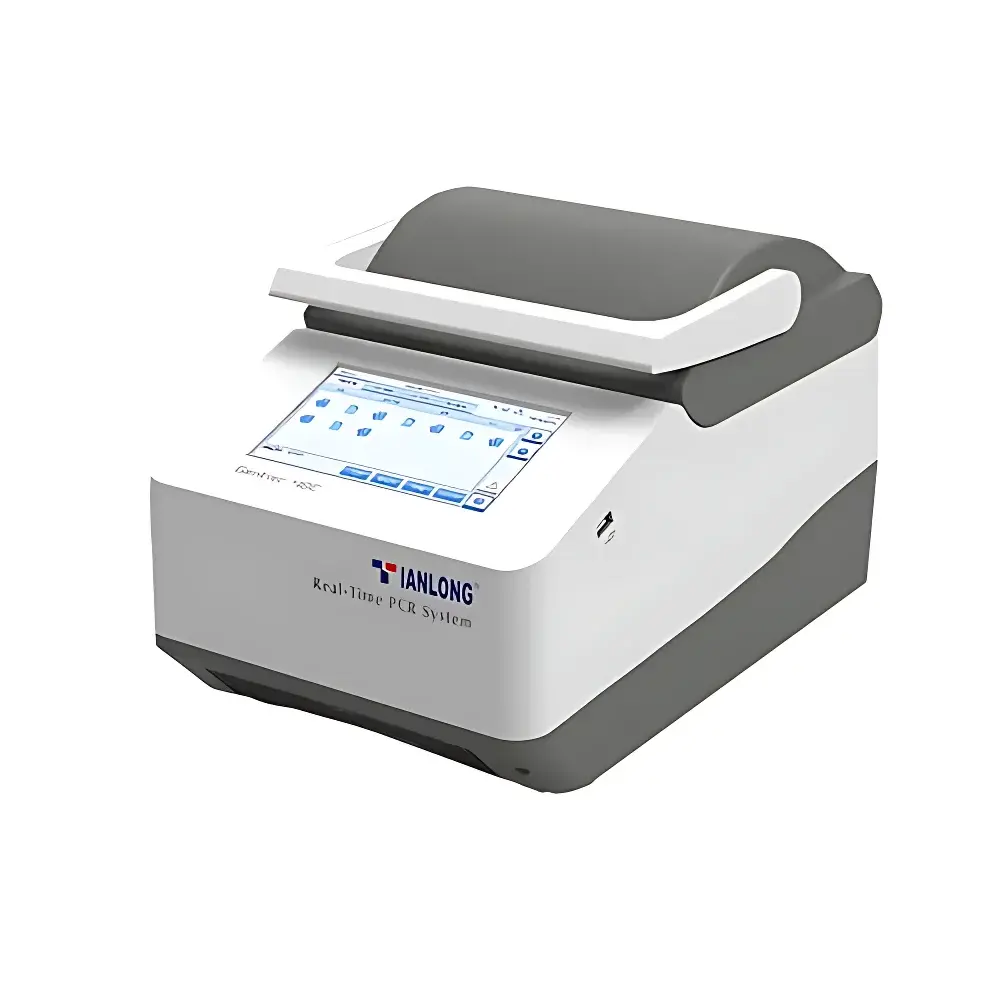
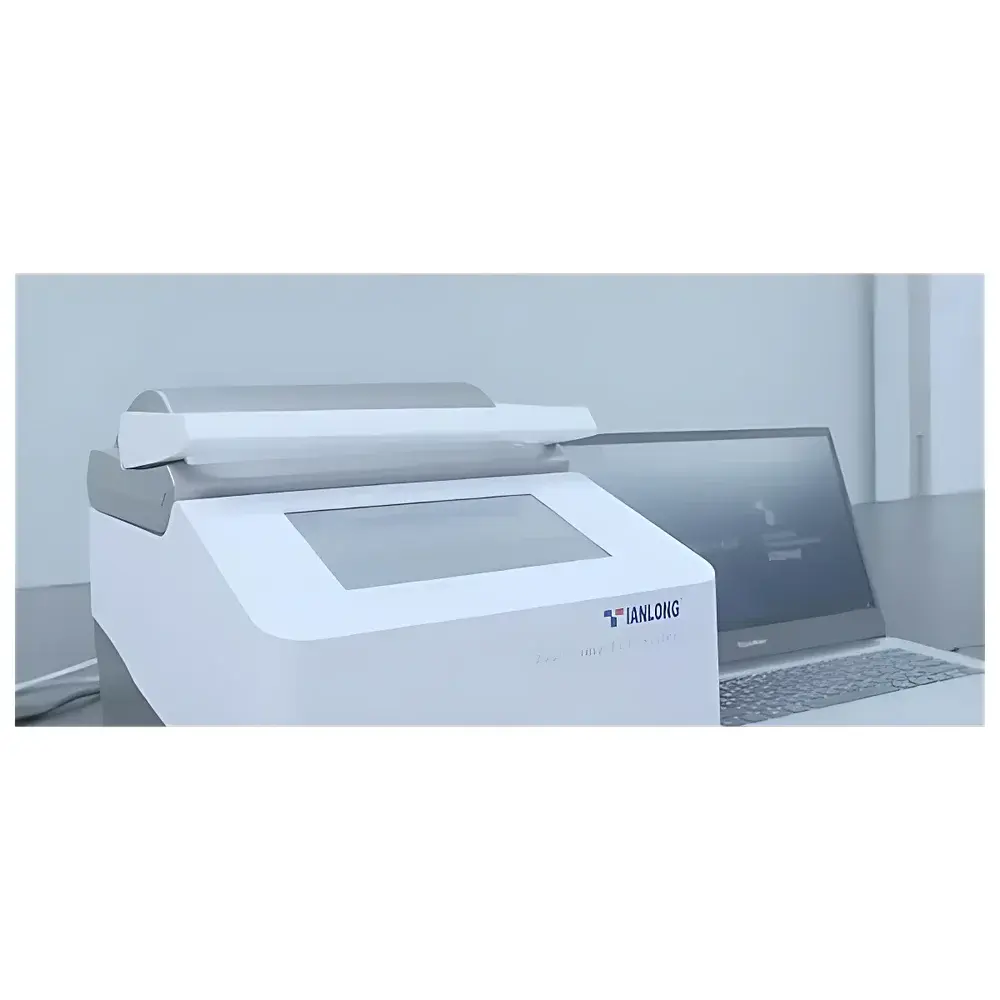
TIANLONG Gentier 48E/48R Real-Time Fluorescence Quantitative PCR System
| Brand | TIANLONG |
|---|---|
| Origin | Shaanxi, China |
| Manufacturer Type | Manufacturer |
| Model | Gentier 48E / 48R |
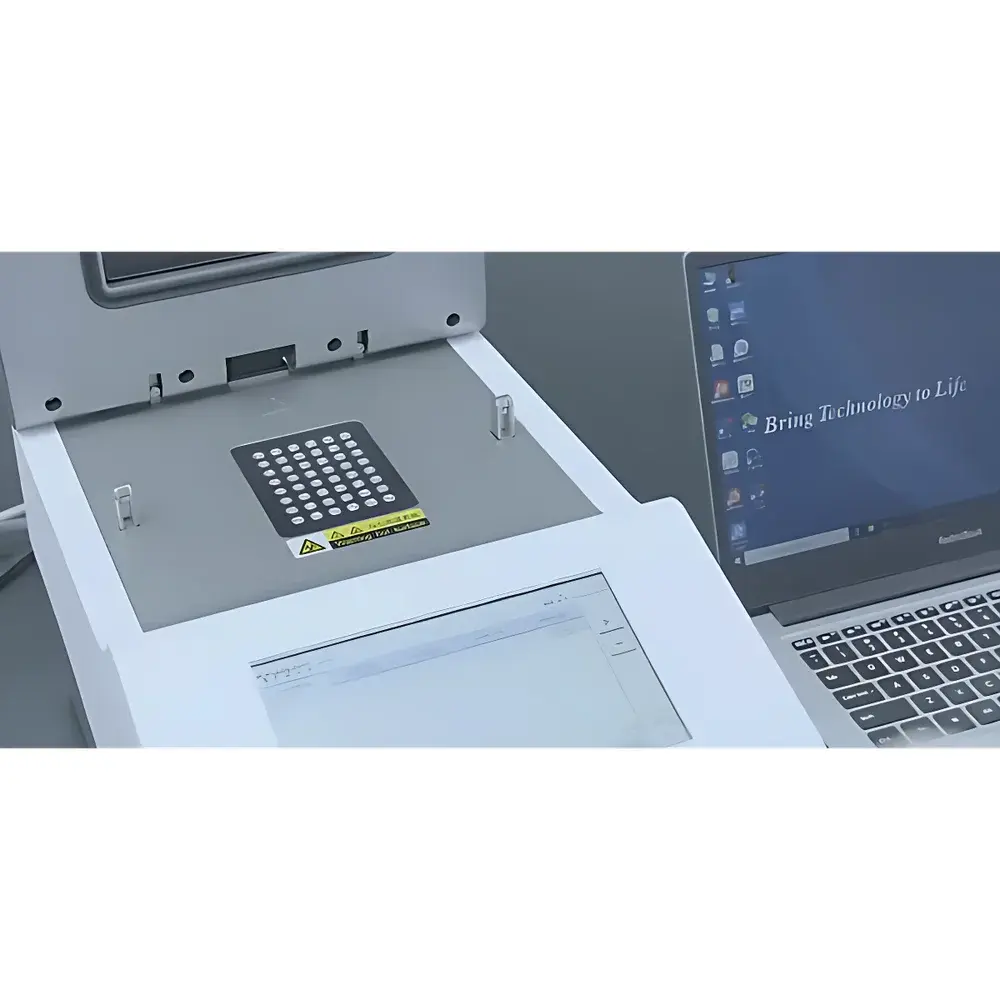
| Sample Throughput | 48 wells |
| Interchangeable Modules | No |
| Effective Reaction Volume Range | 0–100 µL |
| Max Heating Rate | ≥8.0 °C/s |
| Max Cooling Rate | ≥6.2 °C/s |
| Temperature Accuracy | ≤±0.1 °C |
| Well-to-Well Temperature Uniformity | ≤±0.1 °C |
| Detection Channels | 4-channel (Gentier 48E) / 2-channel (Gentier 48R) |
| Excitation Source | High-intensity LED |
| Emission Detection | Photodiode-based fluorescence detection |
| Fluorescence Scan Time | ≤2 s for full 48-well scan (4-color or 2-color) |
| Excitation Wavelengths | Ch1: 465 nm, Ch2: 527 nm, Ch3: 580 nm, Ch4: 632 nm (48E) |
| Emission Wavelengths | Ch1: 510 nm, Ch2: 563 nm, Ch3: 616 nm, Ch4: 664 nm (48E) |
| Linearity (R²) | ≥0.990 |
| Ct Value Reproducibility (CV%) | ≤0.5% |
| Ct Linearity (r) | ≥0.999 |
| Thermal Gradient Support | 35–100 °C, span 1–40 °C |
| Thermal Cycling Range | 0.0–100.0 °C |
| Hot Lid Temperature Range | 40–110 °C |
| Power Supply | AC 220 V (±10%), 50 Hz, 600 VA |
| Dimensions (W×L×H) | 260 × 400 × 260 mm |
| Weight | 11 kg |
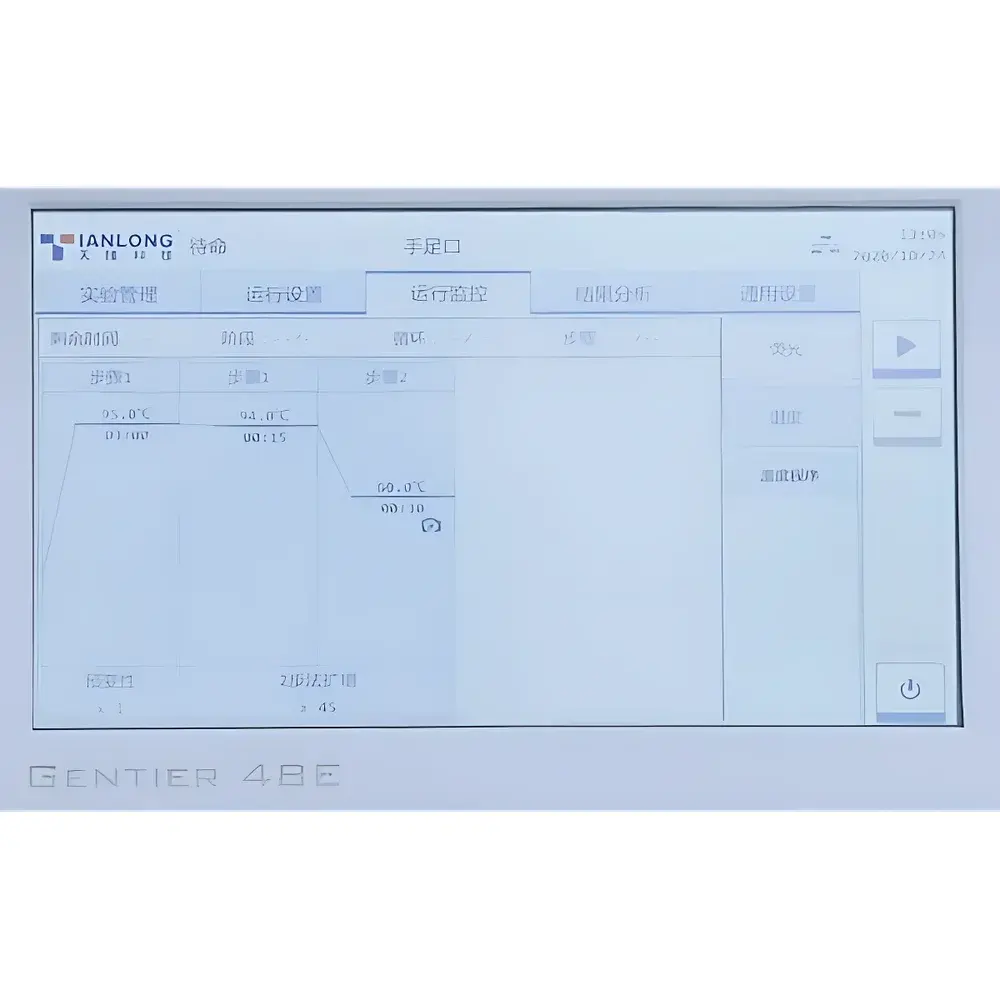
| Display | 7-inch full-color capacitive touchscreen |
| Data Storage Capacity | ≤1000 experiment files |
| Software Functions | Absolute quantification, relative quantification, melting curve analysis, high-resolution melting (HRM), SNP genotyping, endpoint fluorescence, isothermal amplification fluorescence analysis |
| Compliance Features | Audit trail support, user access levels, electronic signature readiness (aligned with FDA 21 CFR Part 11 principles), GLP/GMP-compatible data handling protocols |
Overview
The TIANLONG Gentier 48E/48R Real-Time Fluorescence Quantitative PCR System is an engineered platform designed for precision nucleic acid quantification in resource-constrained or mobile laboratory environments. It employs solid-state Peltier-based thermal cycling combined with a four-channel (Gentier 48E) or dual-channel (Gentier 48R) LED excitation and photodiode detection architecture to deliver rapid, reproducible real-time PCR performance. The system operates on the principle of sequence-specific fluorescent probe hydrolysis (e.g., TaqMan) or intercalating dye binding (e.g., SYBR Green I), enabling kinetic monitoring of amplicon accumulation across 48 reaction wells per run. Its compact footprint (260 × 400 × 260 mm), low mass (11 kg), and integrated battery-independent operation allow seamless deployment in field laboratories, point-of-care testing units, biosafety level-2 mobile vans, and teaching facilities where infrastructure stability may be variable. Temperature control is achieved via closed-loop feedback using high-resolution thermistors embedded within the aluminum heating block, ensuring ≤±0.1 °C accuracy and uniformity—critical for assay reproducibility across clinical, environmental, and food safety applications.
Key Features
- Rapid thermal cycling: Maximum heating rate ≥8.0 °C/s and cooling rate ≥6.2 °C/s enable completion of standard 40-cycle qPCR protocols in under 40 minutes without compromising specificity or yield.
- Optimized optical architecture: Four independently calibrated LED sources (465, 527, 580, 632 nm) and matched emission filters (510, 563, 616, 664 nm) provide spectral separation compatible with FAM, VIC/HEX/TET/JOE, ROX/Texas Red, and Cy5 dyes—ensuring minimal crosstalk and high signal-to-noise ratios.
- Robust mechanical design: Patented vibration-dampened optical path and factory-aligned detector array eliminate need for recalibration after transport; no transport lock or post-movement optical re-alignment required.
- Autonomous operation: Integrated 7-inch capacitive touchscreen supports standalone method setup, run execution, real-time amplification plot visualization, and Ct value calculation—without external computing resources.
- Dual operational modes: Fully functional as a stand-alone instrument or networked device; supports up to 10 units controlled simultaneously via Ethernet (RJ45) from a central workstation.
- Power resilience: Built-in instantaneous power-loss recovery preserves thermal ramping state and resumes interrupted runs upon AC restoration—eliminating data loss during transient outages.
Sample Compatibility & Compliance
The Gentier 48E/48R accepts standard 0.2 mL thin-wall transparent 8-tube strips or individual PCR tubes, accommodating reaction volumes from 0 to 100 µL. Its thermal gradient functionality (35–100 °C, adjustable span 1–40 °C) facilitates robust assay optimization—including touchdown PCR, long-fragment amplification (>10 kb), and multiplexed primer validation. The system complies with core requirements for regulated environments: audit trail logging (user ID, timestamp, parameter changes), role-based access control (administrator/operator/guest), and exportable raw fluorescence data (FAM, VIC, etc.) in CSV and RDML formats. While not pre-certified to ISO 13485 or CE-IVD, its software architecture aligns with FDA 21 CFR Part 11 principles for electronic records and signatures, supporting GLP and GMP-aligned workflows when deployed with documented SOPs and periodic verification.
Software & Data Management
Instrument control and analysis are executed through Gentier Analysis Software v4.x, offering validated modules for absolute quantification (standard curve), comparative ΔΔCt analysis, melting curve profiling (including HRM for SNP discrimination), endpoint fluorescence readout, and isothermal amplification kinetics (e.g., LAMP, RPA). A separate Gentier Data Manager application enables centralized archiving, metadata tagging, cross-experiment statistical comparison (ANOVA, correlation matrices), and automated report generation compliant with internal QA standards. All experimental parameters—including thermal profiles, optical settings, and analysis thresholds—are stored with immutable timestamps. USB export supports encrypted data transfer; no cloud connectivity is implemented by default, preserving data sovereignty.
Applications
This platform serves diagnostic, research, and quality control laboratories requiring reliable, portable qPCR capability. Key use cases include: pathogen detection (SARS-CoV-2, influenza A/B, HPV genotyping), GMO screening in agricultural commodities, microbial load quantification in pharmaceutical water systems, expression profiling of biomarker genes in limited clinical samples, and validation of CRISPR editing efficiency. Its high well-to-well temperature uniformity (10,000 cycles in manufacturer durability testing.
FAQ
Does the Gentier 48E/48R require routine optical recalibration after transportation?
No. Its patented optical stabilization mechanism maintains alignment integrity during transit; users may initiate runs immediately upon power-up.
Can the system perform high-resolution melting (HRM) analysis?
Yes. Both models support continuous fluorescence acquisition during slow ramping (0.02–0.2 °C/s) between 60–95 °C, enabling discrimination of single-base variants with appropriate dye chemistry.
Is raw fluorescence data export supported in standardized formats?
Yes. Amplification curves and raw RFU values can be exported as CSV or RDML 1.2-compliant files for third-party analysis (e.g., qbase+, LinRegPCR).
What is the maximum number of experiments stored internally?
The onboard flash memory retains up to 1,000 experiment files—including protocols, raw data, and analysis results—with automatic overwrite protection for flagged critical runs.
Does the software support FDA 21 CFR Part 11 compliance?
The system provides foundational elements (audit trails, electronic signatures, user authentication), but formal validation must be performed by the end-user per their internal regulatory framework.
Related Products



