
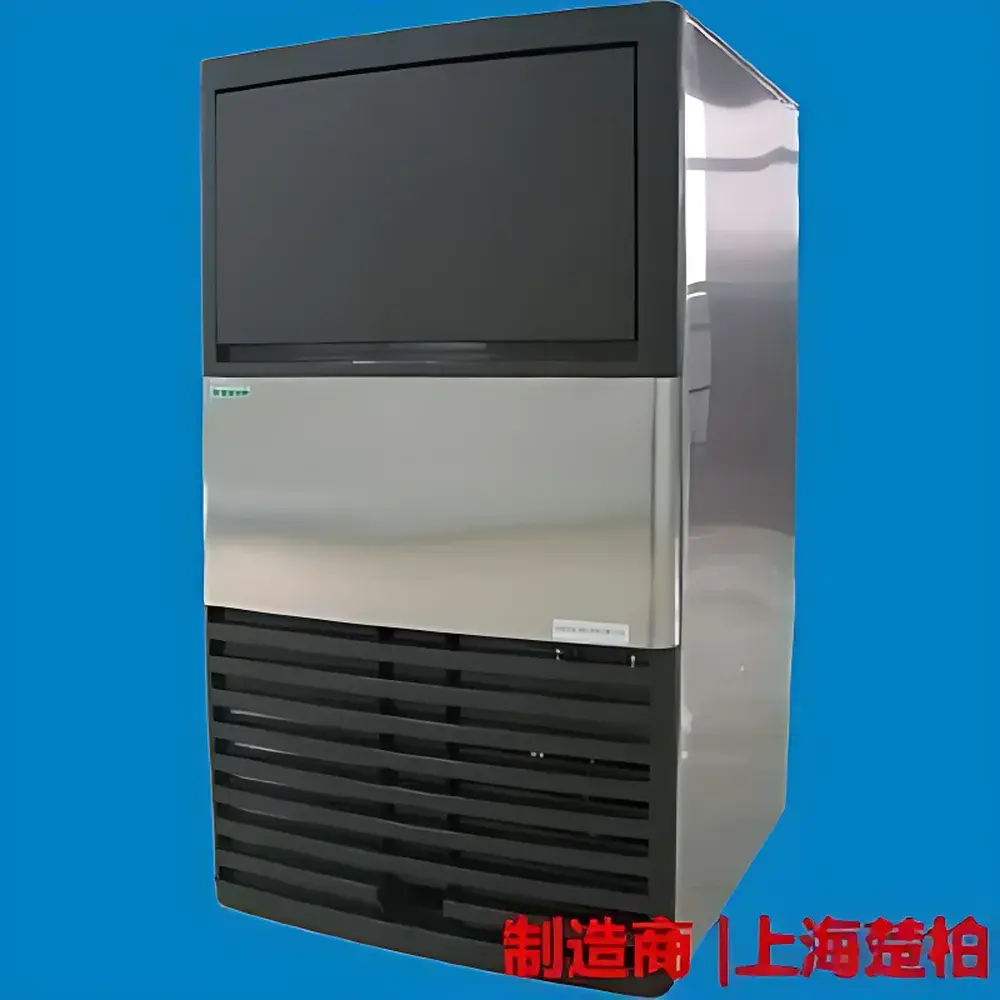
Truelab IM50 Laboratory Flake Ice Maker
| Brand | Truelab |
|---|---|
| Model | IM50 |
| Type | Flake Ice Machine |
| Ice Production Capacity | 50 kg/24 h |
| Storage Capacity | 30 kg |
| Cooling Method | Air-Cooled |
| Ice Making Principle | Dual-Spiral Extrusion |
| Water Consumption | 100 kg per cycle |
| Power Input | 275 W |
| Voltage/Frequency | 220 V / 50 Hz |
| Protection Class | IPX1 (Class I) |
| Dimensions (W×D×H) | 520 × 600 × 890 mm |
| Cabinet Material | Stainless Steel 304 + ABS Engineering Plastic |
| Insulation | Rigid Polyurethane Foam (≥35 mm thickness) |
| Compressor | High-Efficiency Imported Hermetic Scroll Compressor |
| Control System | Microprocessor-Based Fully Automatic Controller with Self-Diagnostic Functions |
| Safety Features | Auto Shut-off for Low Water, Full Ice Bin, High Condensing Temperature, Refrigerant Leak Detection, and Power Recovery Memory |
Overview
The Truelab IM50 Laboratory Flake Ice Maker is an air-cooled, microprocessor-controlled flake ice generation system engineered specifically for demanding laboratory environments where consistent, high-purity, low-temperature thermal management is critical. Unlike cubed or nugget ice machines, the IM50 employs a dual-spiral extrusion principle—where refrigerated evaporator surfaces freeze a thin water film, and two counter-rotating stainless steel augers mechanically shear and compress the frozen layer into fine, irregularly shaped flakes (typically 1–3 mm in diameter and <1 mm thick). This morphology ensures rapid thermal transfer, minimal surface contact resistance, and superior conformity to irregular sample geometries during cold baths, enzymatic reactions, tissue homogenization, or chromatography column pre-chilling. Designed in compliance with IEC 61000-6-3 (EMC emissions) and IEC 60335-1 (safety of household and similar electrical appliances), the unit meets baseline requirements for integration into GLP-compliant laboratory infrastructure.
Key Features
- Stainless steel 304 inner cabinet and ABS engineering plastic outer housing—resistant to corrosion, impact, and routine disinfectants including 70% ethanol and 0.5% sodium hypochlorite.
- Rigid polyurethane foam insulation (≥35 mm thickness) minimizes thermal bridging and reduces energy consumption by up to 22% compared to standard foamed cabinets.
- Imported hermetic scroll compressor with optimized refrigerant charge (R134a) and enhanced condenser fin geometry ensures stable operation under ambient temperatures up to 32°C.
- Dual-spiral extrusion mechanism with hardened alloy ice-cutting blades delivers uniform flake size distribution and eliminates manual ice breaking or post-processing.
- Integrated ice–water separation system prevents recirculation of meltwater into the freezing chamber, maintaining ice purity and preventing microbial stagnation.
- Microprocessor controller with real-time monitoring of condensing temperature, evaporator superheat, water level, ice bin fullness, and motor current draw—enabling predictive diagnostics and fault logging.
- Auto-recovery function resumes operation after power or water interruption without user intervention; retains last operational state for continuity in time-sensitive protocols.
Sample Compatibility & Compliance
The IM50 produces non-crystalline, low-density flake ice suitable for direct contact with biological samples, reagent vials, centrifuge tubes, and electrophoresis apparatus. Its ice output meets ASTM D4178-22 specifications for “flake ice used in laboratory cooling applications” with respect to particle size distribution, melting rate consistency (<12% mass loss over 30 min at 25°C), and absence of visible particulates or oil residue. The unit complies with CE marking requirements (2014/35/EU Low Voltage Directive and 2014/30/EU EMC Directive), and its electrical safety architecture conforms to IEC 61010-1:2010 for laboratory equipment. While not certified for ISO 13485 or FDA 21 CFR Part 11 out-of-the-box, audit-ready event logs—including timestamped alarms for low water, full bin, or compressor overload—are retained for 30 days and exportable via USB interface for internal quality documentation.
Software & Data Management
The embedded controller features a 4-digit LED display with dedicated status icons for ice full, water low, motor fault, high condensing temperature, and refrigerant deficiency. All operational events—including start/stop cycles, alarm triggers, and duration of each fault condition—are stored in non-volatile memory with UTC timestamps. A USB port enables periodic export of CSV-formatted logs for integration into LIMS or internal QA databases. No cloud connectivity or remote access is implemented, preserving data sovereignty and aligning with institutional IT security policies for standalone lab instrumentation. Firmware updates are performed locally via encrypted USB stick following documented change control procedures.
Applications
- Cold chain maintenance during sample transport between analytical instruments (e.g., LC-MS, NMR, PCR prep).
- Temperature-sensitive enzyme assays requiring sustained sub-10°C bath conditions without condensation-induced dilution.
- Pre-chilling of HPLC mobile phase reservoirs and autosampler trays to suppress analyte degradation.
- Cryopreservation support for primary cell isolation workflows where rapid, non-sharp thermal gradients are essential.
- Pharmaceutical stability testing per ICH Q1A(R2), particularly for accelerated degradation studies involving light- and temperature-sensitive APIs.
- Electronics manufacturing QA labs for thermal shock simulation of PCB components using controlled ice-water slurry immersion.
FAQ
What is the typical flake thickness and particle size distribution?
Flakes average 0.8–1.2 mm in thickness and 1–3 mm in lateral dimension, with a bulk density of 380–420 kg/m³.
Can this unit operate continuously in a 30°C ambient environment?
Yes—the air-cooled condenser and scroll compressor are rated for continuous duty at ambient temperatures ≤32°C and relative humidity ≤80% RH.
Is potable water required for operation?
Yes. Feed water must comply with WHO Guidelines for Drinking-water Quality (2022), with total dissolved solids <200 ppm and chlorine <0.5 mg/L to prevent scaling and corrosion.
Does the unit include a water filtration system?
No. An external 5-micron sediment filter and activated carbon pre-filter are strongly recommended for inlet water conditioning.
How is ice purity verified for sensitive biological applications?
Truelab provides a Certificate of Conformance stating that all wetted components (evaporator drum, augers, chute, and storage bin) are constructed from FDA-compliant 304 stainless steel and undergo passivation per ASTM A967 prior to shipment.



