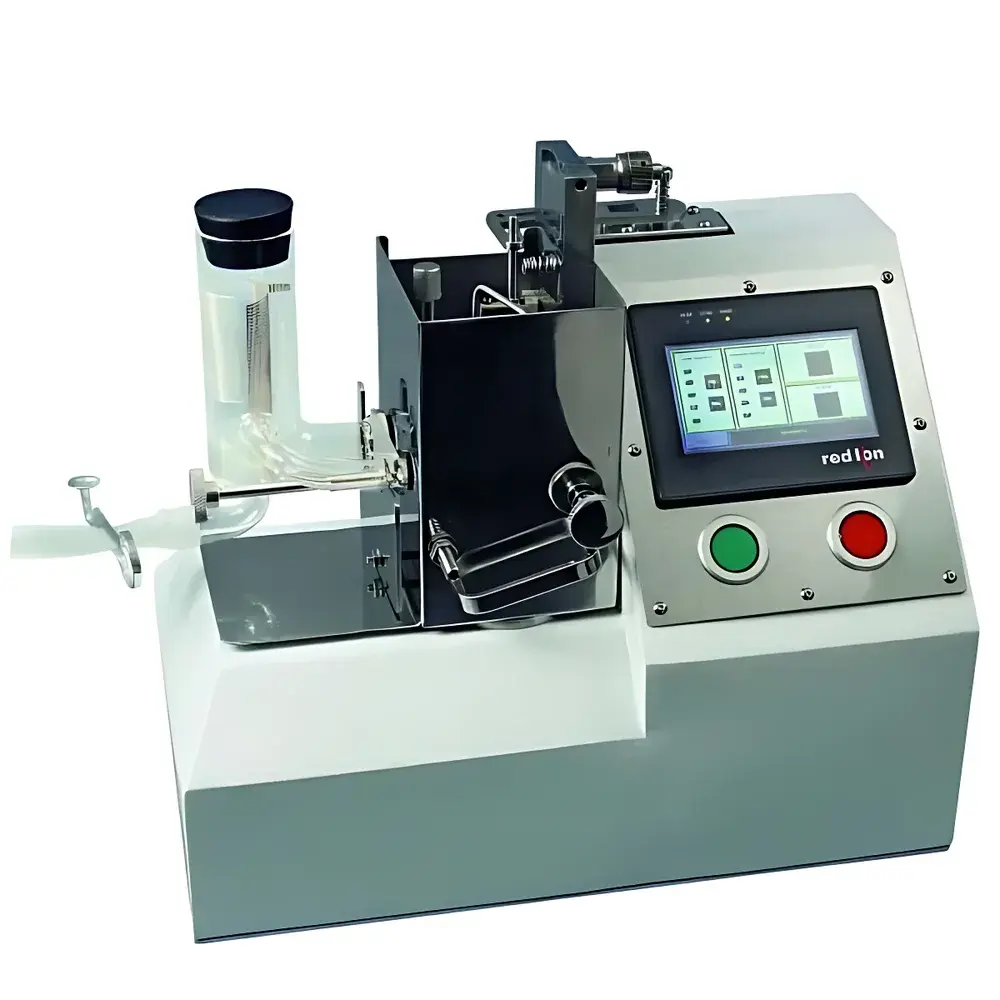
TSE Systems Krumdieck MD6000 Vibrating Tissue Slicer
| Brand | TSE Systems |
|---|---|
| Origin | USA |
| Distributor Type | Authorized Distributor |
| Origin Category | Imported |
| Model | MD 6000 |
| Pricing | Available Upon Request |
| Cutting Thickness Range | 60–1000 µm |
| Maximum Throughput | 15–20 slices/min |
| Slice Interval | ~3–4 s per slice (100–500 µm thickness) |
| Sterilization Compatibility | Autoclavable glass trap reservoir, ethanol- and plasma-compatible components |
| Control Interface | Footswitch-operated for aseptic handling |
| Operating Environment | Submerged in physiologically buffered solution (temperature-, pH-, O₂-, osmolarity- and lubricity-controlled) |
Overview
The TSE Systems Krumdieck MD6000 Vibrating Tissue Slicer is an advanced, precision-engineered instrument designed specifically for the preparation of viable, ultra-thin tissue sections from fresh or minimally processed biological specimens. Unlike cryostat-based or rotary microtomes, the MD6000 employs high-frequency vertical blade oscillation—typically in the range of 50–100 Hz—to achieve clean, low-shear sectioning under fully submerged, physiologically relevant conditions. This principle, grounded in controlled vibrational kinematics and hydrodynamic stabilization, preserves cellular integrity, metabolic activity, and native extracellular matrix architecture during slicing. The system is widely adopted in ex vivo organotypic studies where functional viability must be maintained post-sectioning—particularly in hepatic, renal, neural, and pulmonary tissue models used for pharmacokinetic profiling, toxicological screening, and mechanistic electrophysiology.
Key Features
- Submerged operation within temperature- and gas-controlled buffer solutions (e.g., oxygenated Krebs-Henseleit or artificial cerebrospinal fluid), enabling real-time maintenance of tissue viability during sectioning.
- Adjustable vibration amplitude and frequency to optimize cut quality across heterogeneous tissue types—including fibrous liver parenchyma, delicate hippocampal slices, and dense renal cortex.
- Modular sterile architecture: All wetted components—including the glass trap reservoir, specimen holder, and blade assembly—are autoclavable or compatible with vaporized hydrogen peroxide (VHP) and ethylene oxide sterilization protocols.
- Footswitch-actuated slicing control ensures uninterrupted aseptic technique; operators maintain gloved-hand sterility without manual interface contact.
- Precision micrometer-driven advancement mechanism delivers reproducible slice thickness from 60 µm to 1000 µm in 1 µm increments, validated per ISO 13485-compliant calibration procedures.
- Integrated blade alignment verification system and self-centering specimen embedding stage reduce operator-induced variability and improve inter-laboratory reproducibility.
Sample Compatibility & Compliance
The MD6000 accommodates intact tissue cores (e.g., 3–8 mm diameter biopsy punches), explanted organs (liver lobes, kidney cortices, brain hemispheres), and engineered tissue constructs. It supports both acute slice preparation and long-term organotypic culture initiation—validated for use with primary hepatocytes, cortical neurons, and isolated intestinal mucosa. The system complies with GLP-relevant documentation standards and supports audit-ready operation when integrated with electronic lab notebooks (ELNs). While not FDA-cleared as a diagnostic device, its design aligns with ASTM E2927-21 (Standard Guide for Characterization of Tissue Slicing Instruments) and ISO/IEC 17025 requirements for measurement traceability in preclinical research environments.
Software & Data Management
The MD6000 operates as a stand-alone electromechanical platform without embedded firmware or proprietary software. All operational parameters—including vibration frequency, slice interval, bath temperature, and advance step size—are set manually via calibrated dials and digital displays. However, the system is fully compatible with third-party data acquisition platforms (e.g., LabChart, Spike2, or custom Python-based DAQ systems) via TTL-triggered output signals synchronized to each slice event. Optional timestamped logging of footswitch actuation and motor status enables retrospective correlation with physiological recordings or perfusion metrics—critical for regulatory submissions requiring full experimental traceability under 21 CFR Part 11 guidelines.
Applications
- Ex vivo metabolic stability assays in precision-cut liver slices (PCLS), including CYP450 induction/inhibition profiling per OECD TG 497.
- Neurophysiological recording from acute brain or spinal cord slices, preserving synaptic architecture and network-level functionality.
- Toxicity assessment in renal proximal tubule slices exposed to nephrotoxicants, with concurrent ATP quantification and LDH release monitoring.
- Immunohistochemical and spatial transcriptomic sample prep where antigenicity and RNA integrity must be preserved—avoiding freeze-artifact introduction inherent in cryosectioning.
- Dynamic organ culture setup: sliced tissues remain viable for >72 h in bioreactor-compatible reservoirs, supporting longitudinal drug response modeling.
FAQ
Is the MD6000 suitable for frozen or paraffin-embedded tissues?
No. The MD6000 is engineered exclusively for fresh, unfixed, and non-frozen specimens. It does not support hard-tissue or decalcified samples.
Can the instrument be validated for GMP-compliant manufacturing environments?
While primarily deployed in R&D and preclinical labs, the MD6000’s modular sterilization pathways and mechanical traceability support IQ/OQ protocols required for early-phase bioprocess development.
What blade types are compatible with the MD6000?
The system accepts standard disposable stainless-steel vibrating blades (e.g., Leica VT1200S-compatible) and custom tungsten-carbide variants for high-density tissue applications.
Does TSE Systems provide application support for protocol optimization?
Yes. TSE offers documented SOPs for PCLS, hippocampal slice preparation, and multi-organ co-culture setups, along with on-site technical training for new installations.
How is calibration verified and maintained?
Users perform daily visual verification using NIST-traceable stage micrometers; annual recalibration services are available through TSE-certified service centers in North America and Europe.