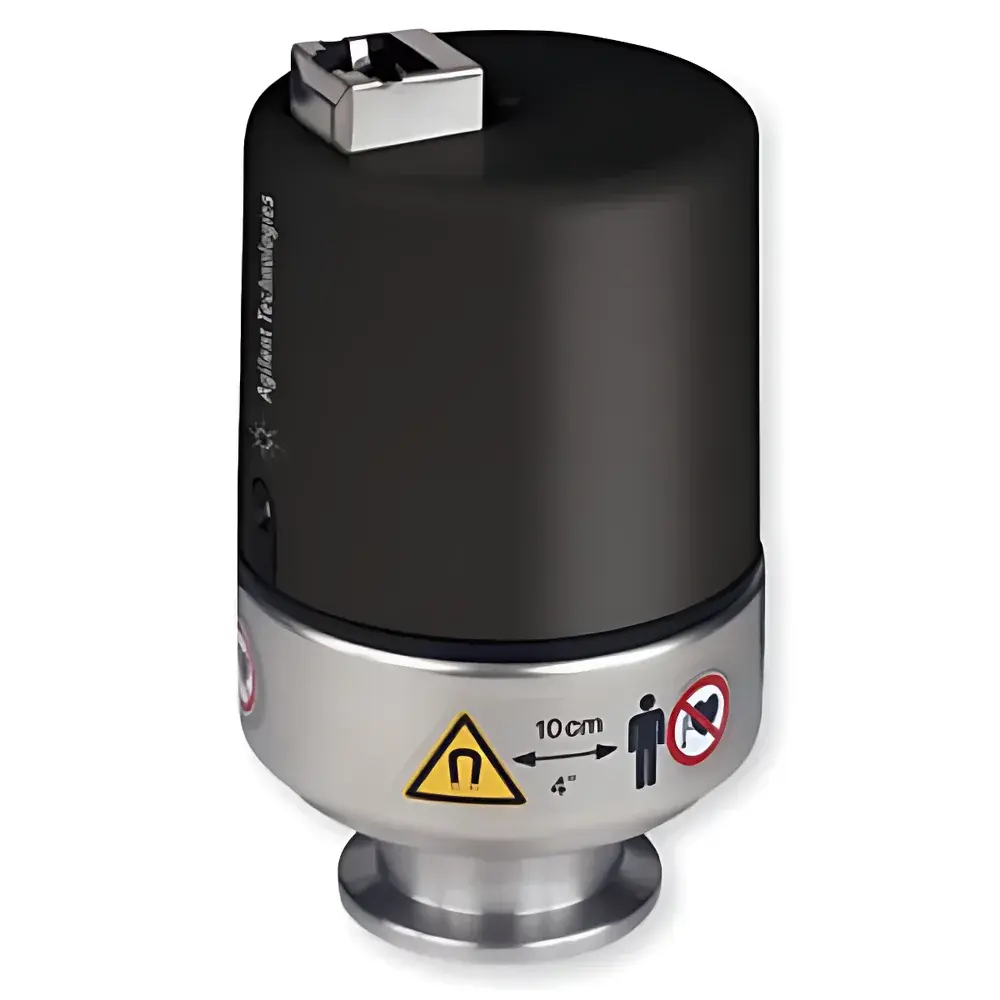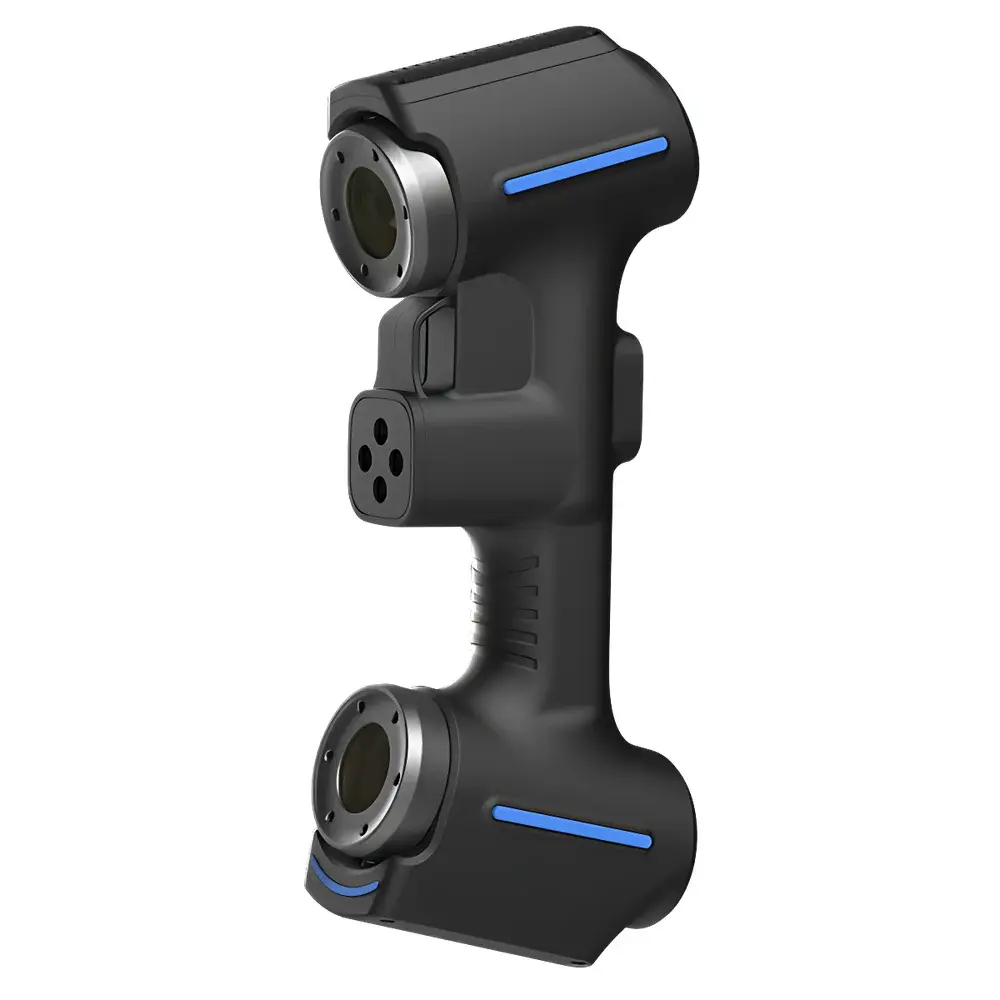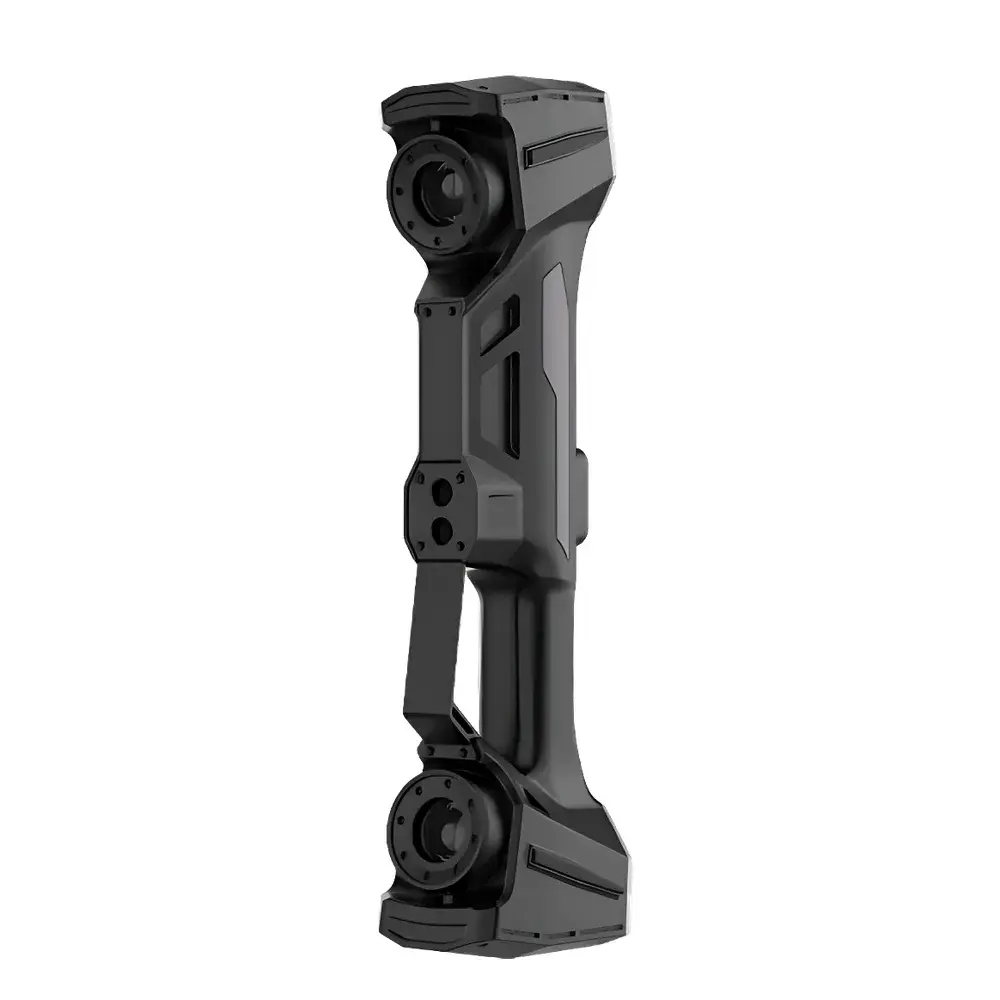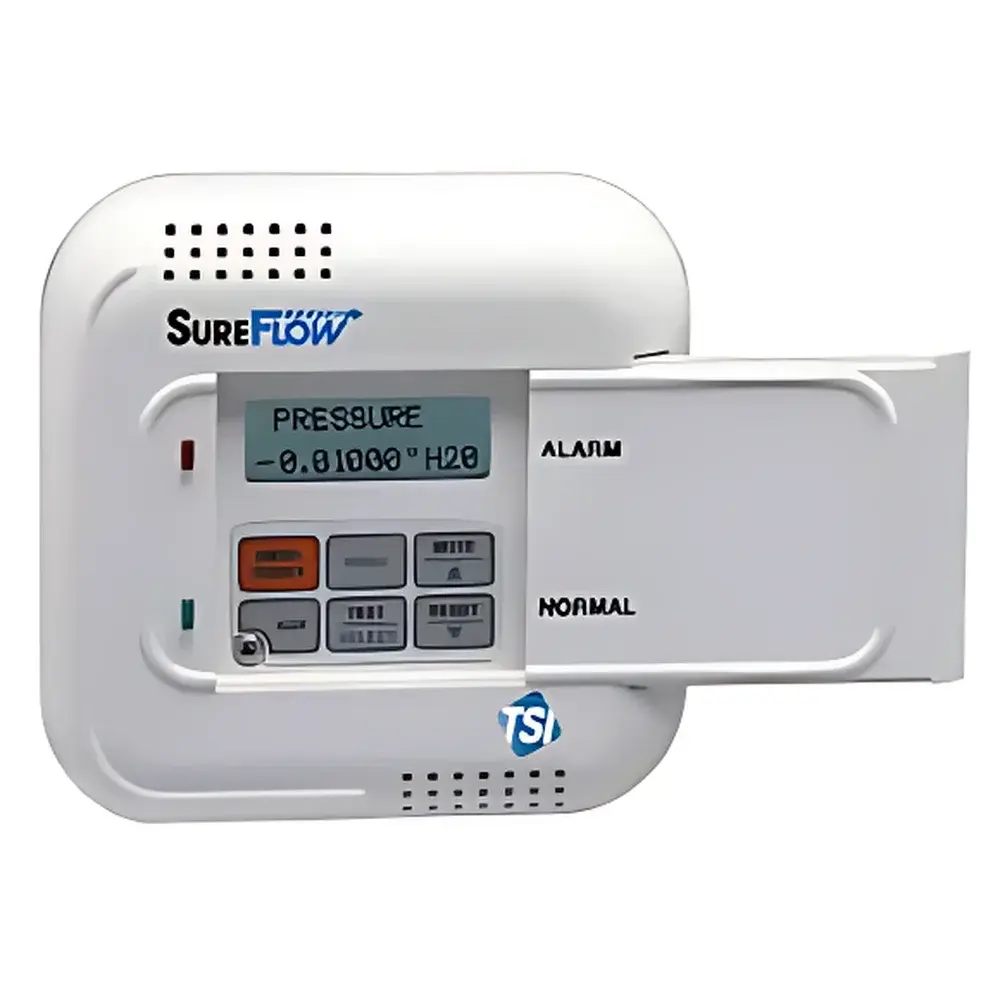
TSI SureFlow™ 8681 Adaptive Compensation Controller
| Brand | TSI |
|---|---|
| Origin | USA |
| Model | 8681 |
| Control Principle | Differential Pressure-Based Closed-Loop Airflow Balancing |
| Compliance | NFPA 45-2000, ANSI Z9.5-2003 |
| Communication Protocol | MODBUS RTU (Open Standard) |
| Power Input | 120 VAC → 24 VAC (included transformer) |
| Sensor Interface | Dedicated wall-mount differential pressure transducer (included) |
| Alarm Output | Relay + visual/audible indicators |
| Temperature Control Capability | Integrated supply air heating & volume modulation |
| Enclosure Type | Standalone DIN-rail or surface-mount controller |
| Software Integration | BMS-ready via RS-485 serial interface |
Overview
The TSI SureFlow™ 8681 Adaptive Compensation Controller is an engineered solution for precise, stable, and standards-compliant pressure and thermal management in laboratory environments with variable-air-volume (VAV) ventilation systems—particularly those housing fume hoods. Operating on a differential pressure feedback principle, the 8681 continuously monitors the static pressure difference between supply and exhaust airstreams using a dedicated TSI wall-mounted differential pressure sensor. It dynamically adjusts damper positions or fan speeds to maintain a user-defined pressure offset—ensuring negative pressure in hazardous containment zones (e.g., chemical labs) and positive pressure where required (e.g., cleanrooms or sterile preparation areas). Unlike open-loop setpoint controllers, the 8681 implements adaptive compensation: it detects and corrects for long-term drift caused by filter loading, duct leakage, or building envelope shifts, thereby sustaining airflow balance without manual recalibration. Its architecture supports both standalone operation and seamless integration into facility-wide Building Management Systems (BMS), meeting functional requirements outlined in NFPA 45-2000 (Standard on Fire Protection for Laboratories Using Chemicals) and ANSI Z9.5-2003 (Laboratory Ventilation).
Key Features
- True closed-loop differential pressure control via integrated TSI wall-mount pressure transducer (included)
- Adaptive bias correction algorithm that compensates for system aging effects—including filter degradation, duct leakage, and seasonal HVAC load variations
- Simultaneous room temperature regulation through coordinated modulation of heating coil output and supply air volume
- Dual-mode pressure setpoint logic: configurable for either negative-pressure containment (exhaust > supply) or positive-pressure isolation (supply > exhaust)
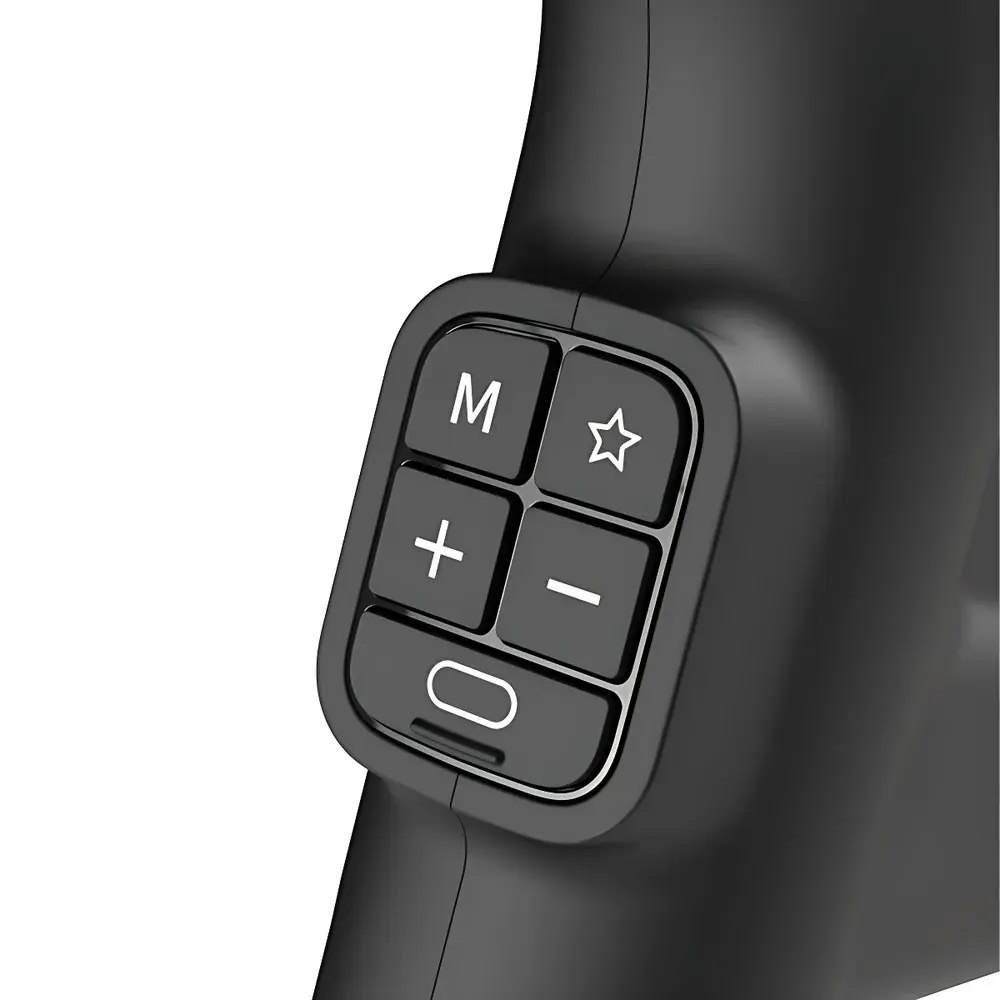
- Local HMI with backlit LCD display and membrane keypad—enabling full configuration, real-time diagnostics, and alarm acknowledgment without external software
- Configurable audible and visual alarm outputs for out-of-tolerance conditions, including loss of pressure differential, sensor fault, or communication timeout
- Secure access control with programmable password protection for critical parameters and system overrides
- RS-485 serial interface supporting MODBUS RTU protocol for interoperability with third-party BMS platforms (e.g., Siemens Desigo, Honeywell Enterprise Buildings Integrator)
Sample Compatibility & Compliance
The SureFlow 8681 is designed exclusively for low-velocity, low-differential-pressure applications typical of laboratory HVAC systems—operating reliably across typical lab pressure differentials ranging from –0.01 to +0.05 in. w.c. (–2.5 to +12.5 Pa). It interfaces directly with standard VAV box actuators, EC fans, and electric heating coils compliant with ASHRAE Guideline 1–2021 and ISO 14644-1 for cleanroom classification support. The controller’s firmware and hardware design adhere to electromagnetic compatibility (EMC) requirements per IEC 61000-6-2 and IEC 61000-6-4, ensuring stable operation in electromagnetically noisy laboratory infrastructure. Its operational logic satisfies the mandatory airflow safety margins defined in NFPA 45-2000 Section 7.4.2 and ANSI Z9.5-2003 Section 5.2.1 for fume hood face velocity stability and room pressure cascade integrity. While not a medical device, its audit trail capabilities—including time-stamped parameter changes and alarm events—support GLP-aligned documentation practices in regulated research settings.
Software & Data Management
The 8681 operates autonomously without host software; all configuration, calibration, and alarm logging occur locally via its onboard interface. However, when connected to a BMS, it exports real-time process variables—including measured ΔP, supply/exhaust airflow estimates (derived from damper position and static pressure), setpoint deviation, and system status flags—via MODBUS register mapping. No proprietary drivers or middleware are required. Event logs (e.g., alarm activation, setpoint modification, sensor zeroing) are retained in non-volatile memory for up to 30 days and can be retrieved remotely via MODBUS function code 03 (Read Holding Registers). The controller does not store historical trend data internally but enables external SCADA or historian systems to poll and archive values at user-defined intervals (minimum 1-second polling supported). All configuration changes are timestamped and attributed to local or remote access—supporting basic traceability under FDA 21 CFR Part 11 Annex 11 principles when deployed in GxP-aligned facilities.
Applications
- Chemical and pharmaceutical research laboratories requiring NFPA 45-compliant fume hood containment and room pressure cascades
- University teaching labs where student-accessible ventilation systems must maintain fail-safe negative pressure during hood sash movement
- Biosafety Level 2 (BSL-2) containment suites needing verified pressure differentials between anterooms, labs, and corridors
- Core facility labs with mixed-use spaces—where dynamic reconfiguration between positive- and negative-pressure modes is required
- Renovated legacy buildings where duct static pressure instability necessitates adaptive compensation rather than fixed-offset control
- Multi-tenant research buildings integrating disparate HVAC subsystems into a unified BMS via standardized MODBUS communication
FAQ
Does the SureFlow 8681 require a separate pressure sensor?
Yes—the system includes a TSI-certified wall-mount differential pressure transducer optimized for low-range, high-stability measurement across the lab pressure range.
Can the 8681 control both supply and exhaust dampers simultaneously?
It provides independent analog outputs (0–10 VDC or 4–20 mA) for supply and exhaust actuators, enabling coordinated dual-damper control based on real-time ΔP feedback.
Is the MODBUS implementation certified by the Modbus Organization?
The 8681 implements MODBUS RTU over RS-485 in full compliance with Modbus Application Protocol v1.1b; no formal conformance certification is held, but interoperability has been validated with major BMS vendors.
How does adaptive compensation differ from traditional PID-based pressure control?
Rather than reacting only to instantaneous error, the 8681 periodically recalculates baseline offsets using long-term trend analysis—correcting for slow-drift phenomena that conventional PID loops cannot detect or eliminate.
What happens during a power outage or communication failure?
The controller retains all configuration and last-known setpoints in non-volatile memory; upon restart, it resumes operation within <5 seconds and triggers a “system recovery” alarm if pressure deviation exceeds thresholds.