
Turner Designs Trilogy Laboratory Fluorometer
| Brand | Turner Designs |
|---|---|
| Origin | USA |
| Model | Trilogy |
| Application | Laboratory-based chlorophyll a and algae analysis |
| Measurement Principles | Fluorescence (excitation/emission), Absorbance (UV-Vis), Turbidity (860 nm IR LED, ISO 7027 compliant) |
| Detection Limits | 0.02 µg/L Chl a, 0.02 ppb Rhodamine WT, 0.05 NTU turbidity |
| Range | 0–1,000 ppb Rhodamine WT |
| Linearity | R² ≥ 0.99 (fluorescence & turbidity) |
| Accuracy | ±0.7% absorbance |
| Precision | <0.5% at 1 A |
| Calibration Storage | 18 named calibration curves |
| Software | Spreadsheet Interface Software (real-time display, Excel export) |
| Regulatory Alignment | EPA Method 445.0 compliant for extracted chlorophyll a quantification |
| Compliance | ISO 7027 (turbidity), GLP-ready data handling |
Overview
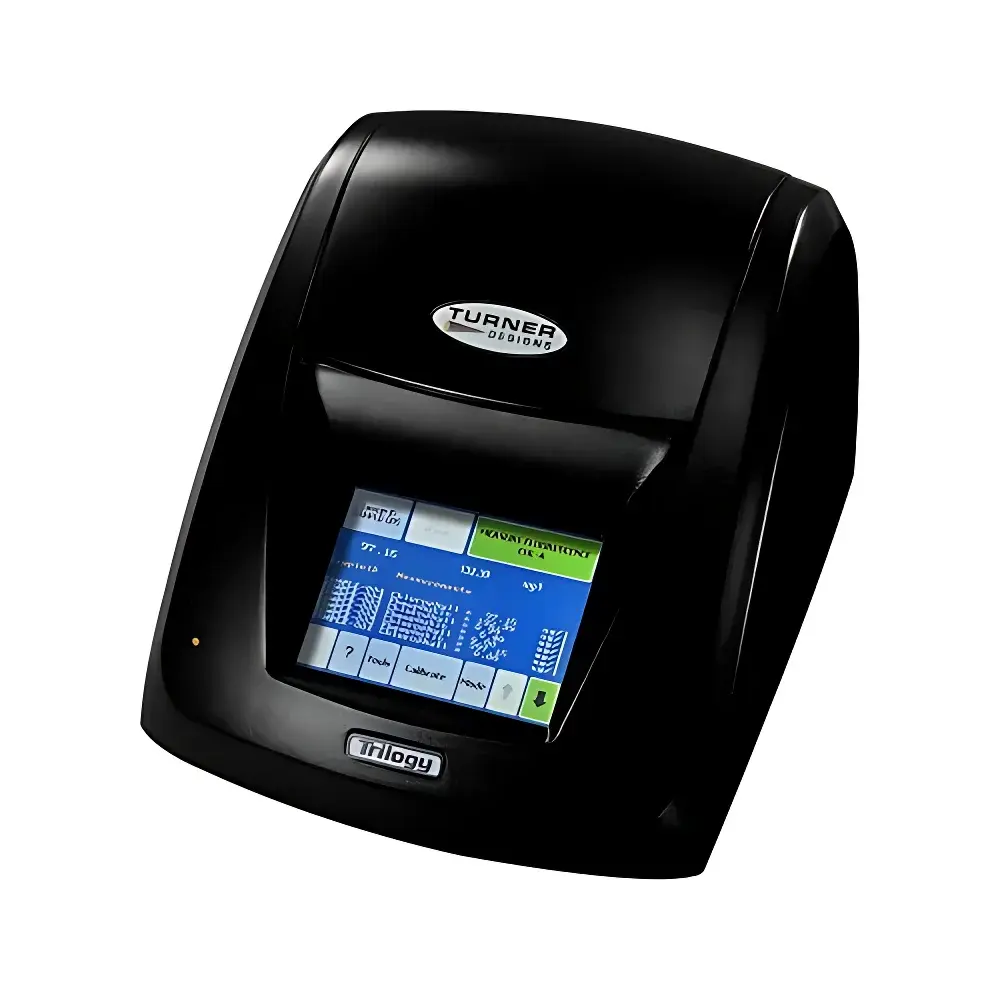
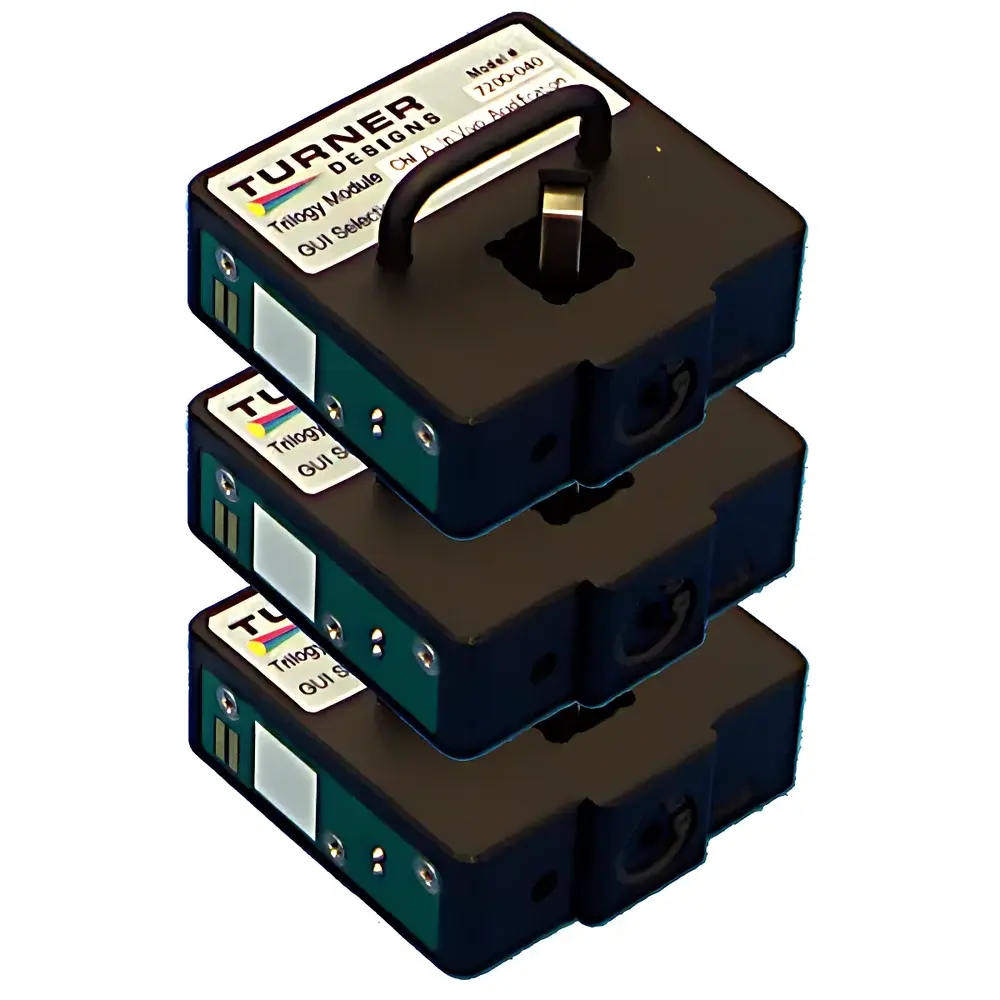
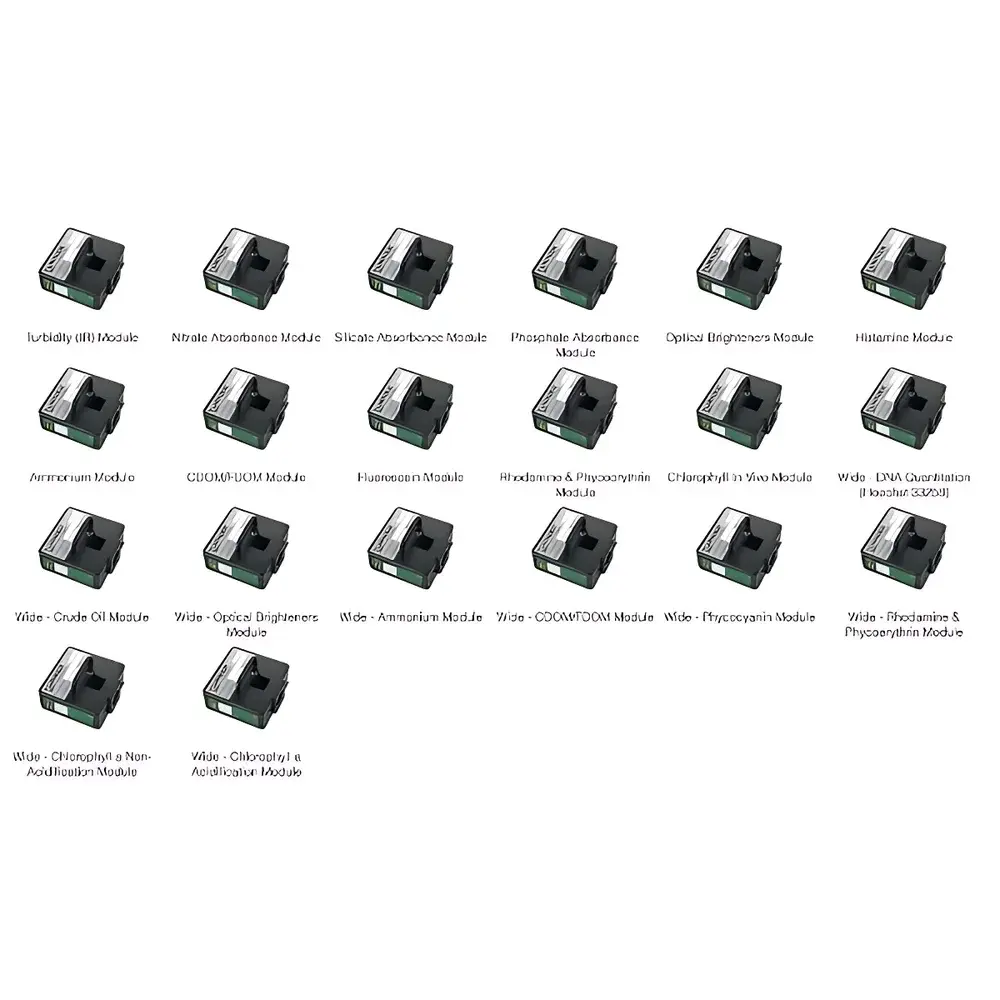
The Turner Designs Trilogy Laboratory Fluorometer is an integrated, benchtop optical analyzer engineered for precise, multi-parameter water quality assessment in regulated laboratory environments. It operates on three complementary photometric principles: fluorescence spectroscopy (with configurable excitation/emission optics), UV-Vis absorbance spectrophotometry, and infrared turbidimetry—each implemented via field-replaceable, snap-in modular cartridges. The instrument’s core architecture supports quantitative analysis of phytoplankton biomass (chlorophyll a in extracted, acidified, non-acidified, and in vivo forms), cyanobacterial pigments (phycoerythrin and phycocyanin), dissolved organic matter (CDOM), ammonium (via fluorogenic derivatization), and synthetic tracers such as rhodamine WT and fluorescein. Its fluorescence detection system achieves a validated limit of detection of 0.02 µg/L for chlorophyll a, meeting the sensitivity requirements of U.S. EPA Method 445.0 for regulatory reporting of algal biomass in surface waters, wastewater effluents, and drinking water source monitoring.
Key Features
- Modular snap-in design enabling rapid reconfiguration between fluorescence, absorbance, and turbidity measurement modes without recalibration or optical realignment
- High-resolution color touchscreen interface with intuitive icon-driven navigation and context-sensitive help prompts for GLP-compliant operation
- Onboard storage of up to 18 user-named calibration curves—including EPA 445.0-compliant chlorophyll a curves with automatic volumetric concentration calculation based on extraction volume input
- Turbidity module compliant with ISO 7027, utilizing an 860 nm infrared LED to minimize color interference and ensure robust performance in colored or tannin-rich waters
- Fluorescence module optimized for dual-wavelength excitation and emission detection to resolve overlapping signals from phycoerythrin (545/575 nm) and phycocyanin (615/650 nm) in mixed algal blooms
- Thermally stabilized optical path and drift-compensated detector electronics ensuring long-term signal reproducibility across daily operational cycles
Sample Compatibility & Compliance
The Trilogy fluorometer accepts standard 10 mm square cuvettes (glass or quartz) and accommodates both liquid-phase extracts and intact cell suspensions. It supports EPA Method 445.0 for acetone-extracted chlorophyll a, ASTM D3852 for rhodamine WT tracer studies, and ISO 7027 for turbidity validation. All measurement protocols are documented per GLP requirements, with full audit trail capability when paired with Spreadsheet Interface Software. Data integrity conforms to FDA 21 CFR Part 11 expectations for electronic records—supporting user authentication, electronic signatures, and immutable timestamped event logs. The system is routinely deployed in laboratories accredited to ISO/IEC 17025 for environmental testing, particularly in municipal water utilities, academic limnology programs, and regulatory compliance labs.
Software & Data Management
Turner Designs’ Spreadsheet Interface Software provides native USB connectivity for real-time parameter visualization, live graphing of kinetic fluorescence decay, and direct export of raw and processed datasets into Microsoft Excel (.xlsx) format. Each exported file includes embedded metadata: instrument serial number, operator ID, date/time stamp, calibration curve name, sample ID, and measurement mode. The software enables batch processing of multiple samples, automatic application of correction factors (e.g., blank subtraction, pathlength normalization), and generation of QC reports aligned with internal SOPs. All data files are stored in open, non-proprietary formats to ensure long-term archival accessibility and third-party analytical interoperability.
Applications
- Quantification of chlorophyll a in phytoplankton community assessments for eutrophication monitoring and TMDL compliance
- Detection and speciation of cyanobacterial toxins via surrogate pigment analysis (phycocyanin/phycoerythrin ratios)
- Tracer studies using rhodamine WT or fluorescein for hydraulic residence time and mixing zone characterization
- CDOM quantification as a proxy for terrestrial organic loading in estuarine and coastal systems
- Ammonium determination in nutrient-limited waters via o-phthalaldehyde (OPA) derivatization and fluorescence detection
- Simultaneous turbidity correction during fluorescence measurements to improve accuracy in suspended-solids-rich samples
FAQ
Does the Trilogy support EPA Method 445.0 for chlorophyll a without manual concentration calculations?
Yes—the instrument automatically computes final chlorophyll a concentration (µg/L) by applying user-input extraction volume and dilution factors directly to the measured fluorescence intensity.
Can the same cuvette be used across all three modules (fluorescence, absorbance, turbidity)?
Yes—standard 10 mm square cuvettes are compatible across all snap-in modules; no adapter or alignment fixture is required.
Is the turbidity module certified to ISO 7027?
Yes—the 860 nm IR LED source and detector geometry meet the spectral and geometric specifications defined in ISO 7027:2016 for formazin-equivalent turbidity measurement.
How many calibration curves can be stored onboard?
Up to 18 named calibration curves may be saved internally, each with editable parameters including slope, intercept, units, and expiration date.
Does the Spreadsheet Interface Software comply with 21 CFR Part 11 requirements?
The software supports electronic signatures, audit trails, and role-based access control—enabling laboratories to configure it for full 21 CFR Part 11 compliance when deployed within validated IT infrastructure.
Related Products







