
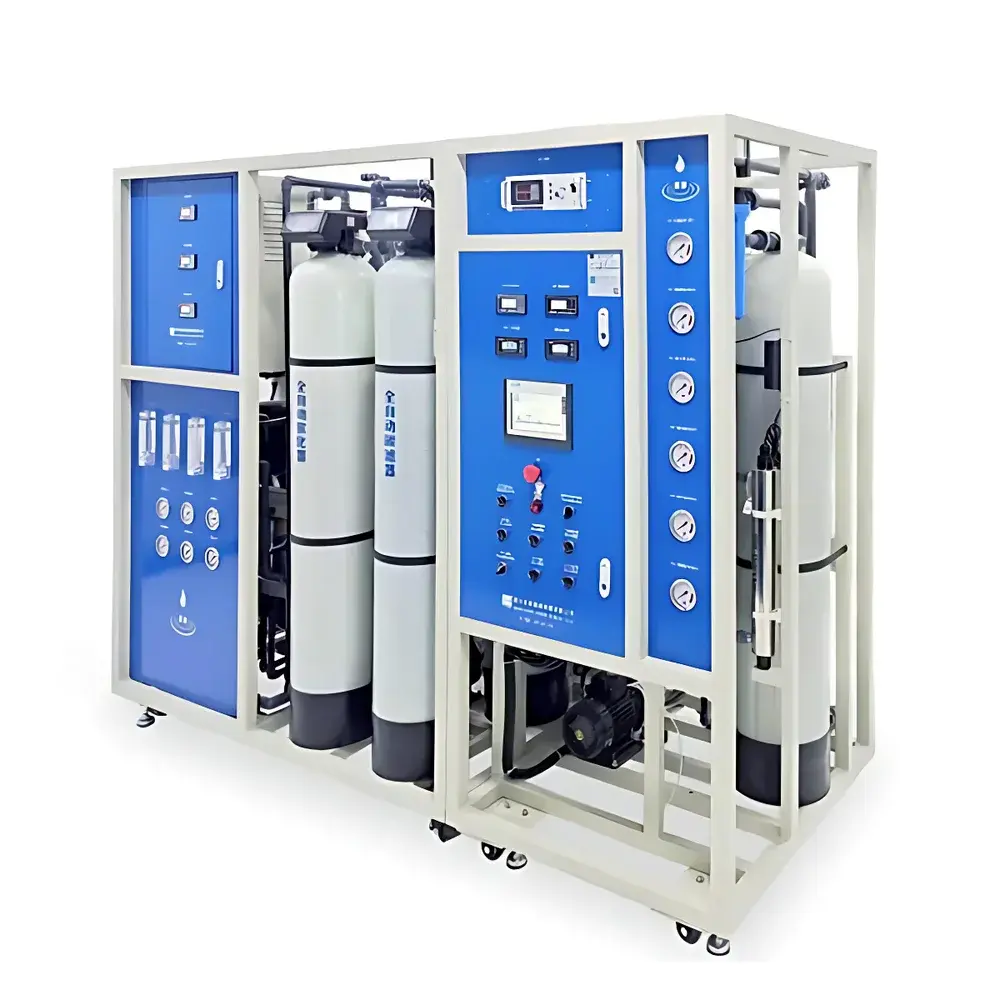
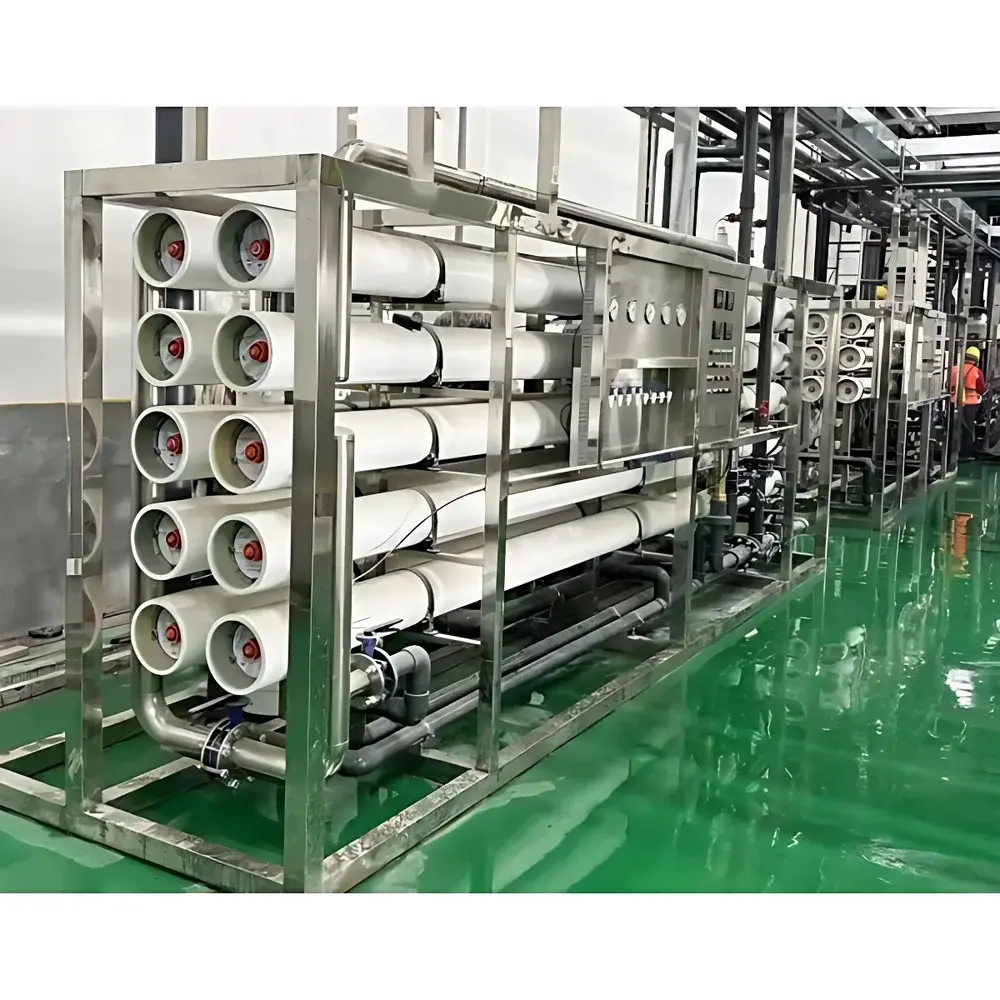
ULUPURE UPT-L Series Ultra-Pure Water System
| Brand | ULUPURE |
|---|---|
| Origin | Sichuan, China |
| Manufacturer Type | Direct Manufacturer |
| Product Category | Domestic |
| Model | UPT-L |
| Pricing | Upon Request |
| Feedwater Quality | Municipal Tap Water (TDS < 200 ppm, Residual Chlorine ≤ 0.05 mg/L, Pressure 1.5–5 bar, Temp 5–45 °C) |
| Purification Stages | Single-Stage RO + Ultra-Purification Module |
| Resistivity | ≥17.00 MΩ·cm @ 25 °C (Online Monitoring) |
| Conductivity | ≤0.059 µS/cm @ 25 °C (Calculated Equivalent) |
| Flow Rate Options | 150–1000 L/h |
| Standard Tank Capacity | 250–1000 L (Configurable) |
| Power Supply | AC 220 V / 380 V, 50 Hz |
| Rated Power | ≥2.5 kW (Configuration-Dependent) |
Overview
The ULUPURE UPT-L Series Ultra-Pure Water System is an engineered laboratory and industrial water purification platform designed to deliver consistent Type I ultrapure water per ISO 3696:1987, ASTM D1193-20, and CLSI EP21-A guidelines. It employs a dual-stage purification architecture—starting with single-pass reverse osmosis (RO) followed by integrated ultra-purification—including mixed-bed ion exchange, activated carbon adsorption, and optional 185/254 nm UV oxidation—to achieve resistivity ≥17.00 MΩ·cm at 25 °C, total organic carbon (TOC) < 5 ppb, and bacterial count < 1 CFU/mL. The system operates on a closed-loop, pressure-stabilized distribution principle with real-time online monitoring of key parameters including resistivity, flow rate, inlet/outlet pressure, and UV lamp status. Its modular design supports scalable deployment across R&D labs, QC environments, and production-floor applications where feedwater variability and long-term microbial control are critical constraints.
Key Features
- Automated process control via PLC-based logic with HMI touchscreen interface (optional upgrade), enabling configurable setpoints for standby mode, scheduled flush cycles, and multi-stage pump sequencing.
- RO membrane anti-scaling protocol: automatic pre- and post-cycle flushing with timed duration and pressure-controlled backwash to extend membrane life and maintain flux stability.
- Integrated safety architecture including overpressure cut-off, low-flow alarm, dry-run protection, phase-loss detection, and auto-restart after power interruption with fault logging.
- Continuous self-diagnostic capability: real-time validation of conductivity/resistivity sensors, flow meters, pressure transducers, and UV intensity output with event-triggered visual and relay-based alerts.
- Long-idle maintenance mode: programmable periodic recirculation and tank sanitization to suppress biofilm formation without chemical intervention.
- Modular expandability: field-upgradable options include EDI integration (UPT-L-E), full 304 stainless steel wetted parts (UPT-L-B), leak detection sensors, remote telemetry via Modbus TCP, and terminal polishing units (e.g., ULPHW series) for 18.2 MΩ·cm output compliance with USP , EP 2.2.44, and JP 17 standards.
Sample Compatibility & Compliance
The UPT-L system is validated for continuous operation with municipal tap water meeting standard utility specifications (TDS < 200 ppm, free chlorine ≤ 0.05 mg/L, pH 6.5–8.5). It complies with international regulatory frameworks governing analytical water quality, including ISO 3696 Class 1, ASTM D1193 Type I, and CLSI EP21-A performance thresholds. When configured with optional UV oxidation and 0.22 µm final filtration, it satisfies the stringent requirements for HPLC mobile phase preparation, ICP-MS calibration, cell culture media formulation, and molecular biology applications such as PCR and DNA sequencing. All electrical components conform to IEC 61000-6-2 (immunity) and IEC 61000-6-4 (emission) standards; mechanical enclosures meet IP54 ingress protection rating when specified with stainless steel housing.
Software & Data Management
Standard firmware provides timestamped audit trails for all operational events—including system start/stop, alarm triggers, parameter modifications, and sensor calibration history—structured in CSV-exportable format for GLP/GMP documentation. Optional firmware packages support 21 CFR Part 11-compliant user access control (role-based permissions), electronic signatures, and immutable log archiving. Data can be exported locally via USB or transmitted remotely using Ethernet-enabled protocols (Modbus TCP, HTTP API) for integration into centralized facility monitoring systems (BMS/SCADA). Calibration certificates for inline resistivity and flow sensors are traceable to NIST-certified reference standards.
Applications
- Electronics manufacturing: wafer cleaning, photomask rinsing, and semiconductor etching baths requiring particle-free, low-metal-content water.
- Pharmaceutical QC: dissolution testing, buffer preparation, and clean-in-place (CIP) rinse validation per FDA guidance.
- Power generation: boiler feedwater pretreatment for subcritical and supercritical steam cycles.
- Research laboratories: GC-MS solvent preparation, electrophoresis buffer formulation, and nanoparticle synthesis where ionic contamination must remain below detection limits.
- Biotechnology: monoclonal antibody purification, viral vector production, and stem cell expansion media conditioning.
- Chemical synthesis: catalyst activation, high-purity reagent dilution, and electroplating bath replenishment.
FAQ
What is the minimum feedwater pressure required for stable UPT-L operation?
The system requires a sustained inlet pressure between 1.5 and 5 bar (21.8–72.5 psi); pressure below 1.5 bar necessitates auxiliary feedwater storage with booster pumping.
Can the UPT-L be integrated with existing building automation systems?
Yes—via optional Modbus TCP or analog 4–20 mA outputs for resistivity, flow, and pressure signals; digital I/O points support remote start/stop and alarm annunciation.
Is the system compliant with Good Manufacturing Practice (GMP) documentation requirements?
When equipped with the Part 11 firmware module and calibrated sensors, it meets ALCOA+ data integrity principles and supports full audit trail generation for regulatory inspections.
How frequently should the RO membrane be replaced under typical municipal feed conditions?
Under nominal TDS 95% rejection efficiency for 24–36 months; replacement intervals are tracked automatically via cumulative runtime and differential pressure monitoring.
Does the UPT-L support TOC reduction verification per pharmacopeial methods?
With integrated 185/254 nm UV oxidation and optional post-UV 0.22 µm filtration, it achieves TOC < 5 ppb—verified using ASTM D5542 or USP online TOC analyzers.



