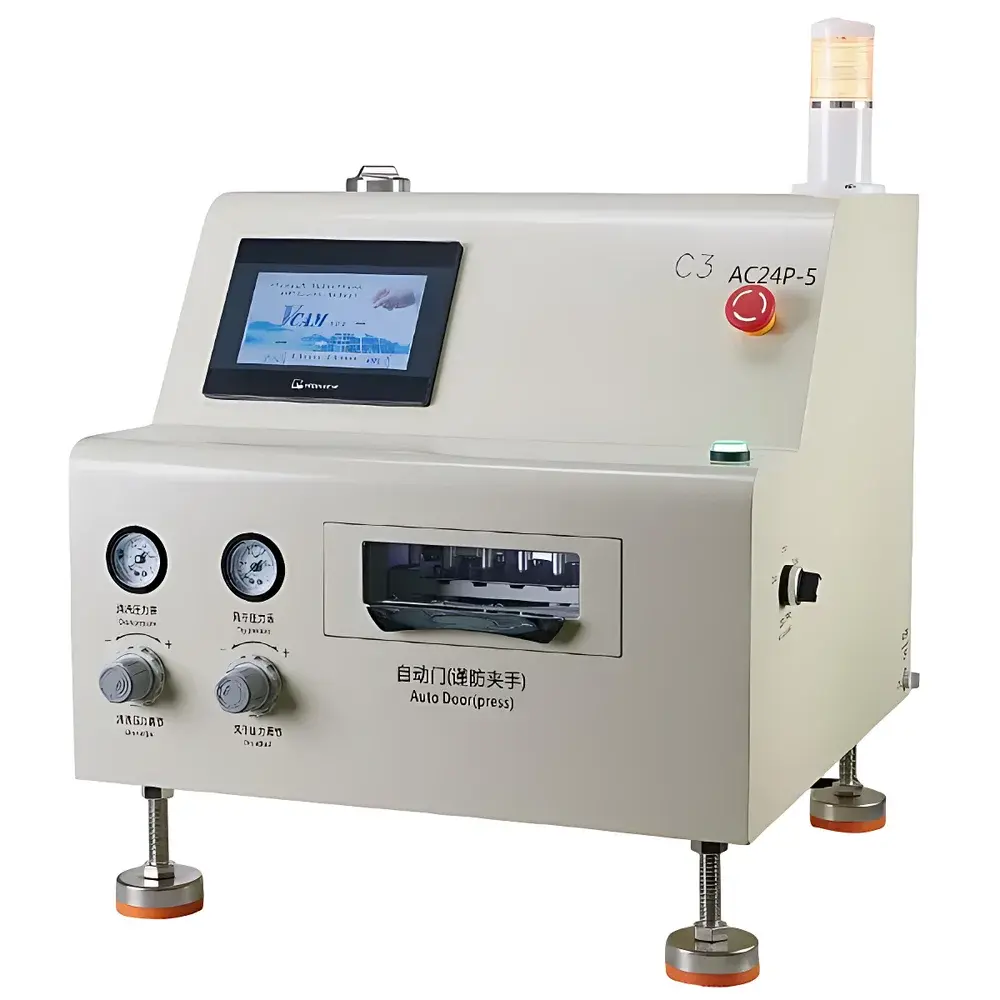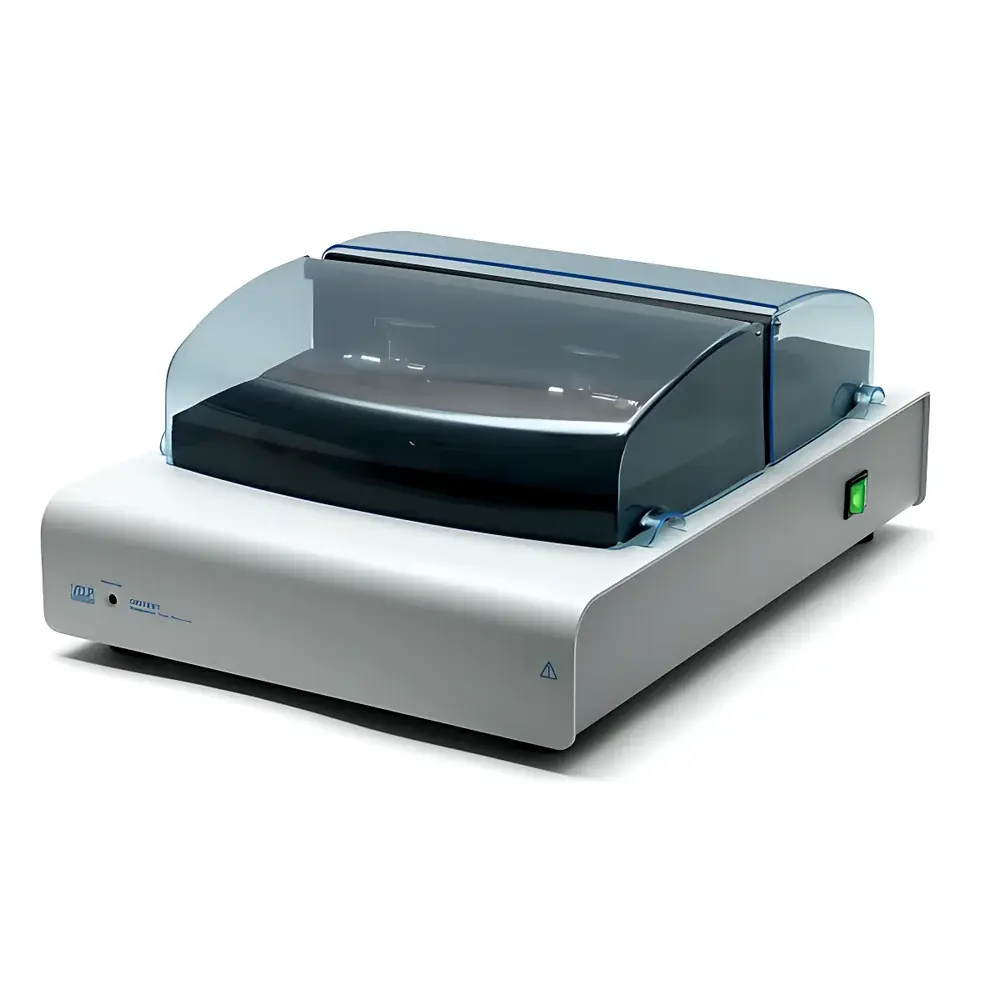
VELP OXITEST Oil Oxidation Stability Analyzer
| Brand | VELP |
|---|---|
| Origin | Italy |
| Manufacturer Type | Authorized Distributor |
| Origin Category | Imported |
| Model | OXITEST |
| Pricing | Upon Request |
Overview
The VELP OXITEST Oil Oxidation Stability Analyzer is an internationally recognized, accelerated oxidation testing instrument engineered for precise evaluation of oxidative stability in lipid-containing food matrices. It operates on the principle of pressure differential monitoring during controlled thermal-oxidative stress: under elevated temperature and pure oxygen atmosphere (up to 8 bar), the instrument continuously measures the decline in headspace oxygen partial pressure within sealed reaction vessels. This real-time oxygen consumption profile directly correlates with the rate of lipid peroxidation—enabling quantification of induction time (IT), a robust kinetic indicator of oxidative resistance. Unlike conventional Rancimat or Schaal Oven methods, the OXITEST eliminates pre-extraction steps and preserves native food microstructure, making it uniquely suitable for heterogeneous, complex matrices such as meat tissues, nuts, dairy powders, fried snacks, and plant-based oils-in-emulsion systems.
Key Features
- Dual independent reaction chambers—enabling simultaneous parallel analysis of identical samples (for statistical reproducibility) or comparative testing of two distinct formulations under identical temperature and oxygen pressure conditions.
- Integrated high-precision pressure transducers and PT100 temperature sensors calibrated traceably to NIST standards, ensuring measurement repeatability ≤ ±0.5% full scale for pressure and ±0.1 °C for temperature.
- Programmable thermal ramping and isothermal hold functionality across a validated operating range of ambient temperature to 110 °C, with thermal uniformity ±0.3 °C across all six sample positions.
- 6-position sample carousel with three dedicated slots per reaction chamber, accommodating standard 35 mL stainless-steel reaction vessels equipped with integrated septa and pressure-tight sealing mechanisms.
- Robust industrial-grade architecture compliant with IEC 61000-6-3 (EMC) and IEC 61010-1 (safety), designed for continuous operation in QC laboratories under GLP/GMP-aligned workflows.
Sample Compatibility & Compliance
The OXITEST accepts intact, unprocessed food specimens—including solid, semi-solid, and liquid formats—without requiring solvent extraction, saponification, or lipid isolation. Validated applications span raw and cooked animal tissues (e.g., pork loin, salmon fillet), roasted seeds (almonds, sunflower), baked goods with shortening, infant formula powders, and functional food emulsions. The methodology aligns with AOCS Cd 12b-92 (Oxidative Stability Index) and is referenced in ISO 6886:2016 (Animal and vegetable fats and oils — Determination of oxidative stability — Accelerated oxidation test). Data integrity meets FDA 21 CFR Part 11 requirements when operated with VELP’s certified software suite, supporting electronic signatures, audit trails, and user access control.
Software & Data Management
Controlled via VELP’s proprietary OXITEST Software v4.x (Windows-based), the system provides real-time visualization of oxygen pressure decay curves, automatic induction time calculation using first-derivative inflection point detection, and customizable report generation (PDF/CSV/XLSX). All raw sensor data—including timestamped pressure, temperature, and chamber status—is stored with immutable metadata (operator ID, method file hash, calibration certificate reference). Audit trail logs record every parameter modification, run initiation, and result export event—fully compliant with laboratory quality management systems requiring ALCOA+ data governance principles.
Applications
- Formulation development: Screening antioxidant efficacy (e.g., rosemary extract, tocopherols, synthetic BHA/BHT) in bakery shortenings and confectionery fillings.
- Shelf-life prediction: Correlating OXITEST induction times with real-time storage trials at 25 °C/60% RH for dried dairy ingredients.
- Raw material qualification: Assessing oxidative variability across batches of cold-pressed olive oil or fish oil concentrates prior to encapsulation.
- Process validation: Monitoring impact of roasting temperature and duration on almond oil stability; evaluating vacuum-degassing efficiency in soy lecithin production.
- Regulatory support: Generating stability dossiers for EFSA health claim substantiation or USFDA GRAS notifications involving lipid-rich novel foods.
FAQ
Does the OXITEST require lipid extraction prior to analysis?
No. The instrument analyzes whole-food samples directly, preserving endogenous antioxidants, pro-oxidants, and matrix interactions critical to authentic oxidative behavior.
Can the two reaction chambers operate at different temperatures or oxygen pressures?
No. Both chambers share a common thermal block and pressurized oxygen manifold, ensuring strict equivalence of test conditions—essential for method reproducibility and inter-laboratory comparability.
What is the minimum and maximum sample mass recommended for solid foods?
For optimal gas-phase equilibration and signal-to-noise ratio, VELP recommends 5–25 g for solids and 10–30 mL for liquids, adjusted based on fat content and physical homogeneity.
Is calibration verification required before each analytical run?
While daily system checks (leak test, zero-pressure drift, temperature uniformity scan) are advised, full calibration against certified pressure and temperature standards is performed annually by accredited service engineers per ISO/IEC 17025 requirements.
How does OXITEST data correlate with sensory shelf-life endpoints?
Induction time exhibits strong linear correlation (R² > 0.89) with peroxide value (PV) onset and hexanal concentration thresholds linked to consumer-perceived rancidity in multiple peer-reviewed studies across cereal, nut, and meat product categories.