
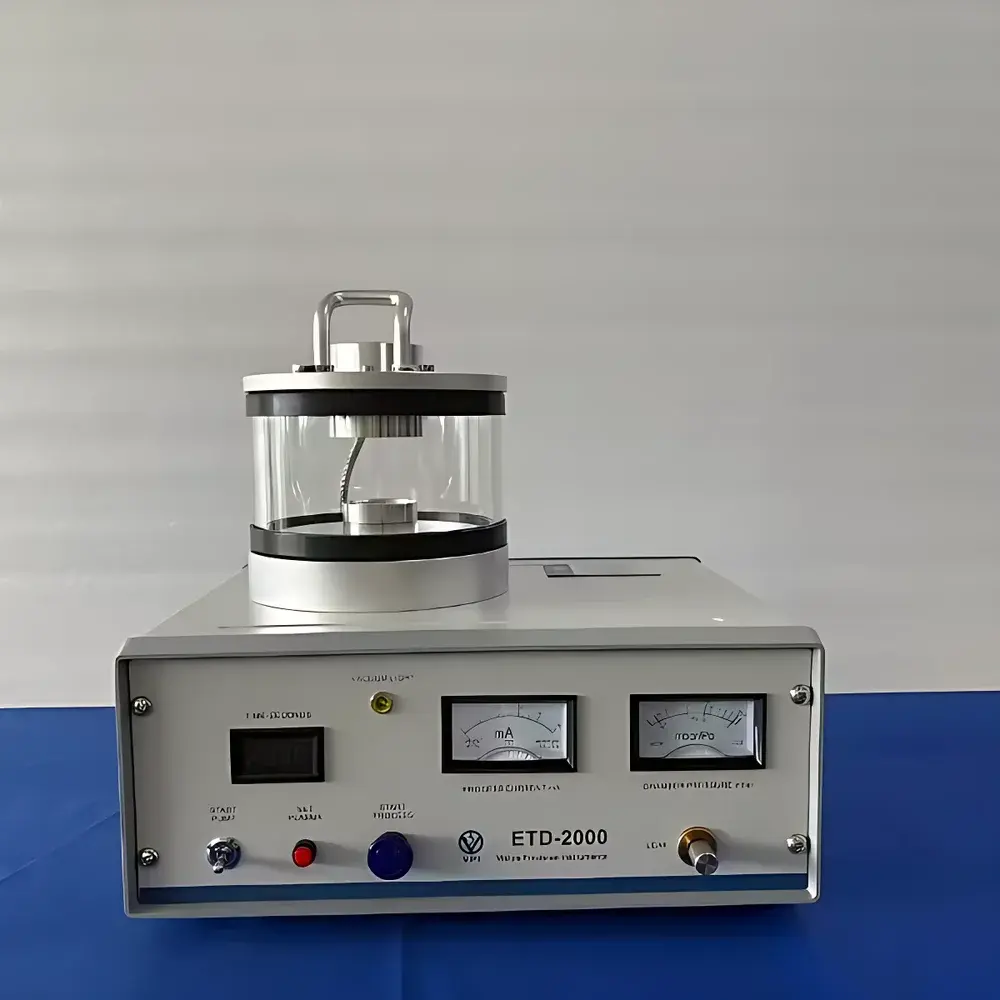
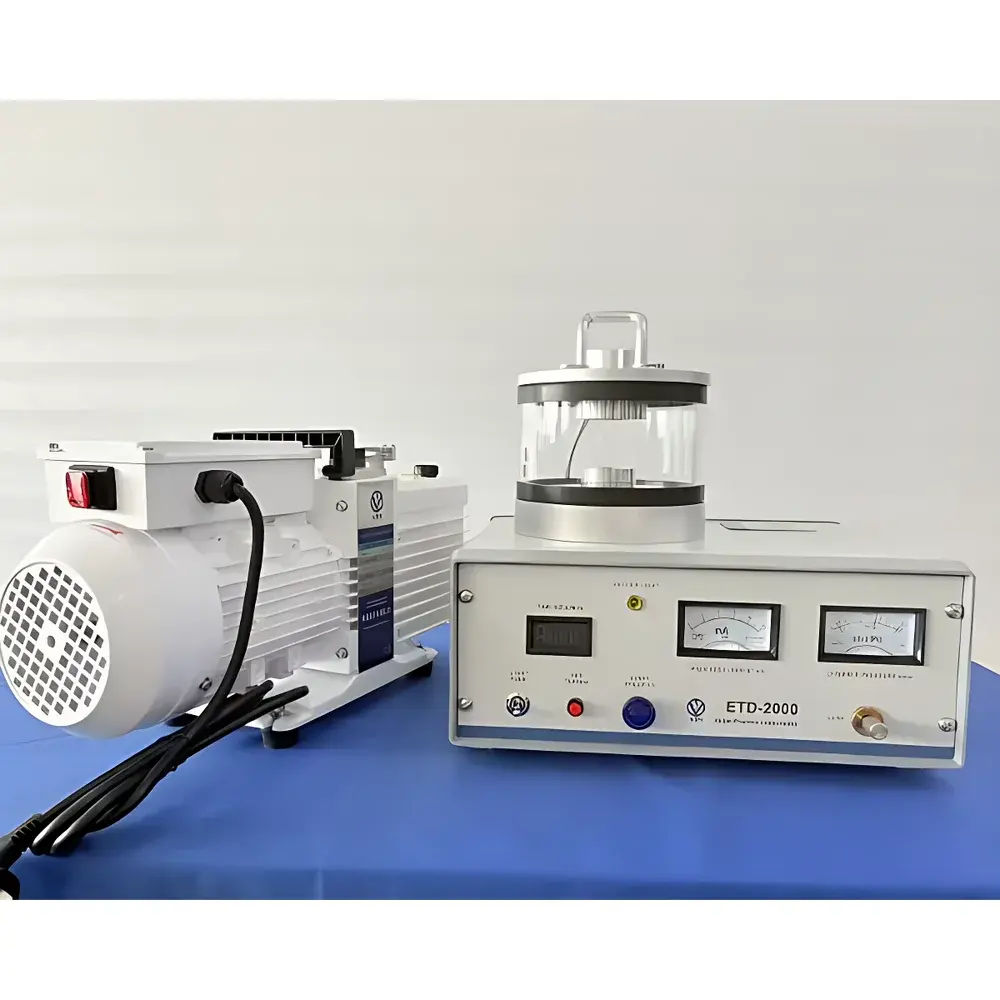
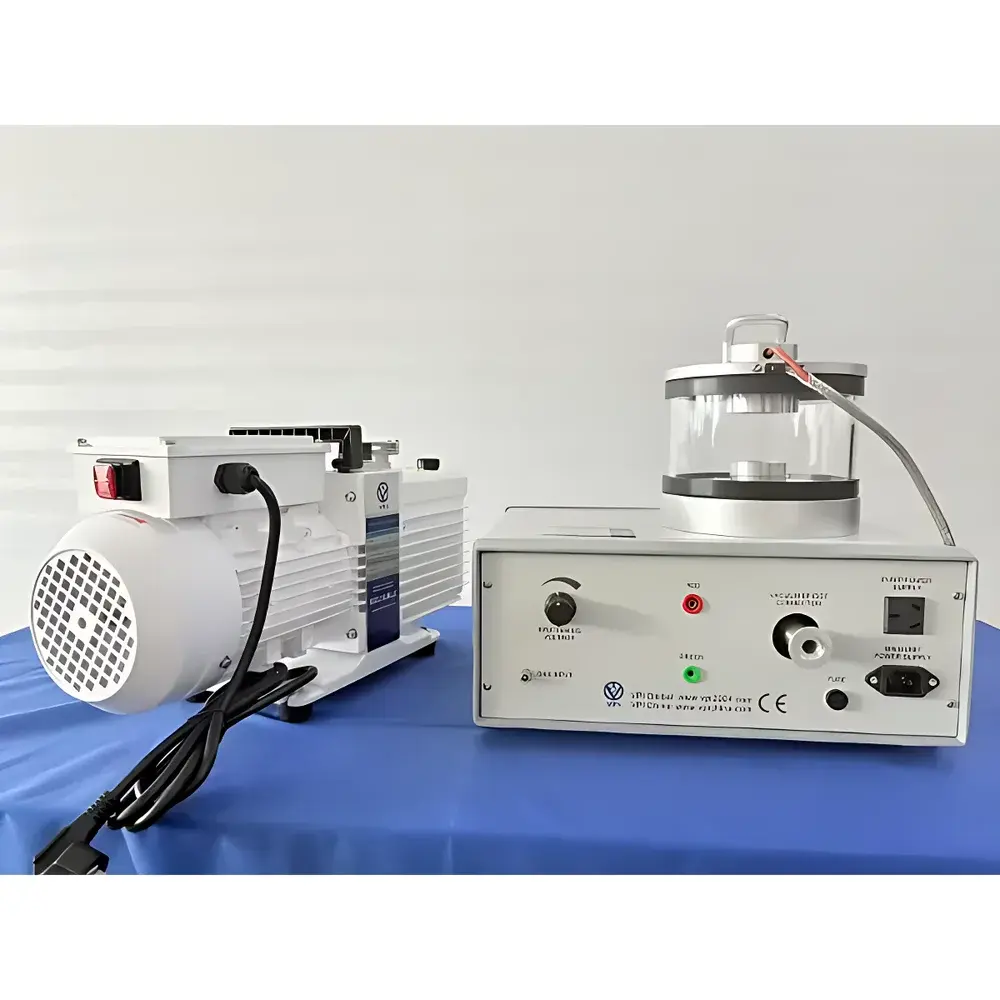
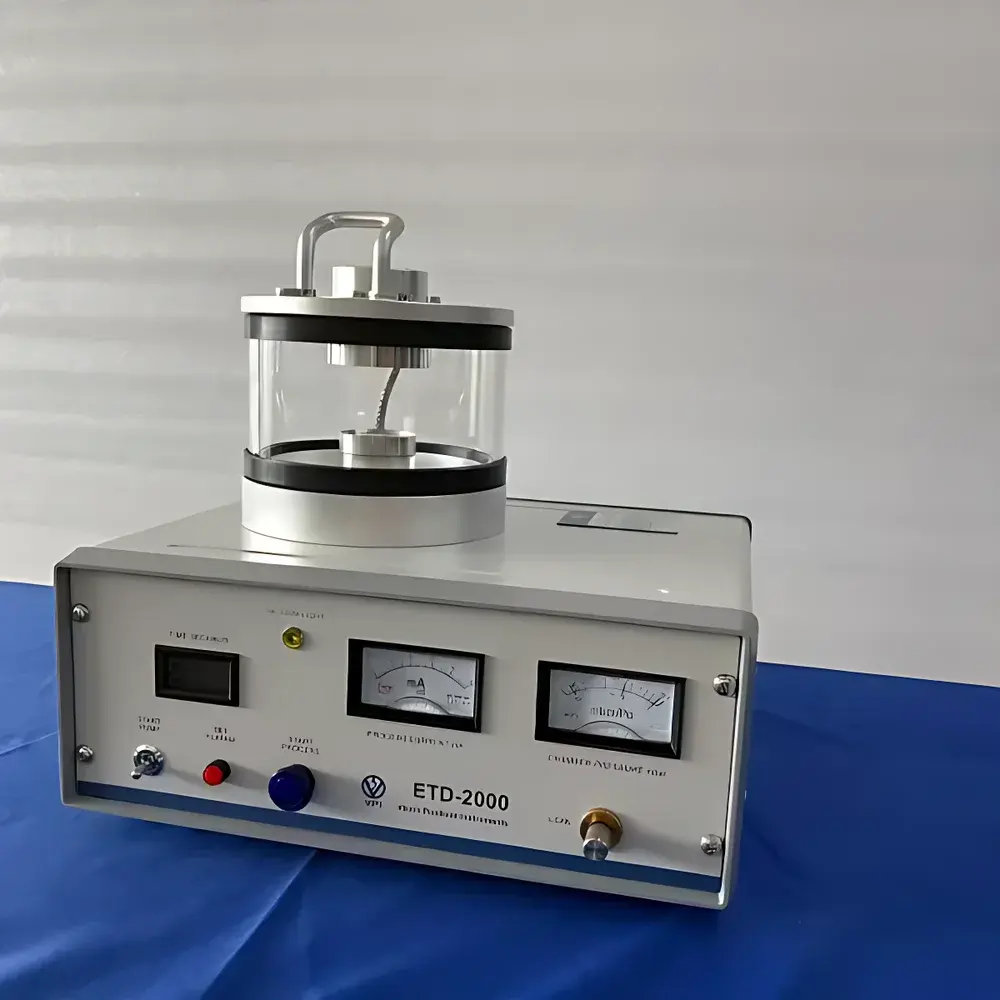
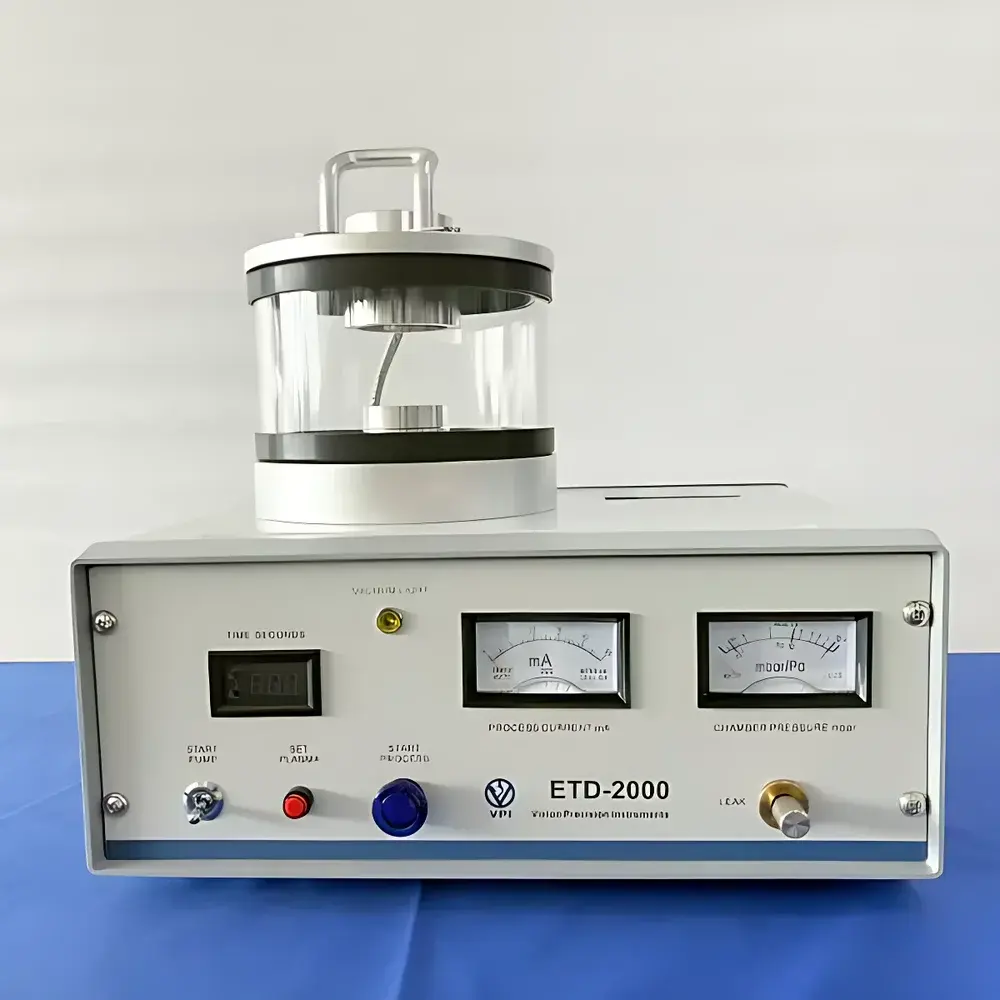
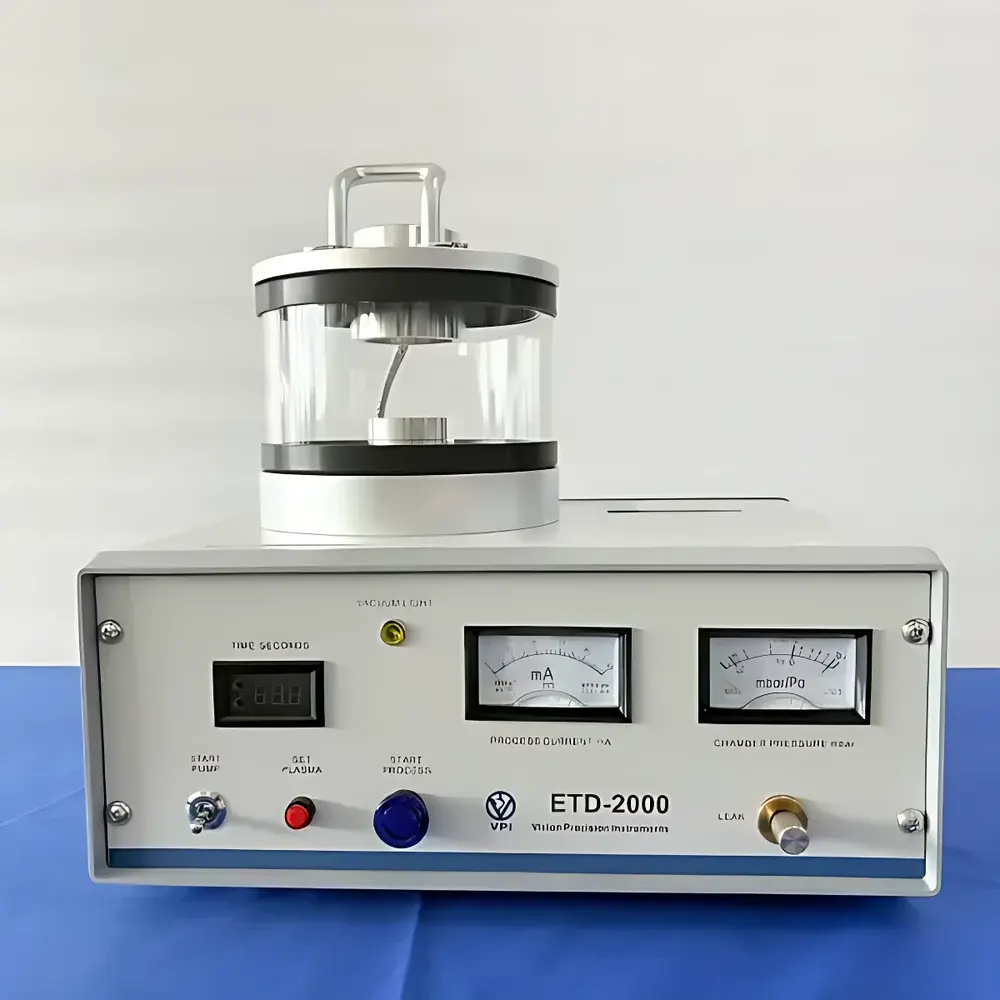
VPI ETD-2000 Ion Sputter Coater
| Brand | VPI (Vision Precision Instruments) |
|---|---|
| Model | ETD-2000 |
| Type | DC Magnetron Sputtering System |
| Target Configuration | Single removable sputter target head |
| Chamber Vacuum Range | 1 × 10⁻³ to 5 × 10⁻¹ mbar |
| Operating Current Range | 0–40 mA (adjustable) |
| Process Timer | 0–300 seconds (digital display) |
| Chamber Material | Borosilicate glass viewport + aluminum alloy main body |
| Pumping System | Integrated two-stage rotary vane pump (pump-down time < 90 s to 1 × 10⁻² mbar) |
| Power Supply | DC, stabilized, current-limited |
| Leak Rate Compliance | ≤5 × 10⁻⁷ mbar·L/s (as verified per ISO 20483) |
Overview
The VPI ETD-2000 Ion Sputter Coater is a compact, benchtop DC magnetron sputtering system engineered for high-reproducibility conductive metal coating of non-conductive specimens prior to scanning electron microscopy (SEM) analysis. It operates on the principle of physical vapor deposition (PVD), where argon plasma generated under low-pressure conditions bombards a metallic target (e.g., gold, platinum, or chromium), ejecting atoms that condense uniformly onto the sample surface. This process yields ultra-thin (1–10 nm), continuous, and grain-fine conductive films—critical for minimizing charging artifacts, enhancing secondary electron yield, and preserving topographic fidelity during high-resolution SEM imaging. Designed for routine laboratory use, the ETD-2000 integrates vacuum generation, plasma ignition, current regulation, and timed deposition into a single ergonomic platform with intuitive manual controls and real-time parameter feedback.
Key Features
- DC magnetron sputtering architecture with permanent magnet array beneath the target head—ensuring stable plasma confinement and improved sputter efficiency at low operating pressures.
- Digital process timer (0–300 s) with second-level resolution, enabling precise control over film thickness via empirical calibration (e.g., ~0.3 nm/s for Au at 30 mA).
- Integrated two-stage rotary vane pump delivering rapid pump-down (<90 s to 1 × 10⁻² mbar) and stable base pressure (≤1 × 10⁻³ mbar), verified using a calibrated Pirani gauge.
- Transparent borosilicate glass chamber with 120° viewing angle—facilitating real-time visual monitoring of plasma glow and target erosion without interrupting vacuum.
- Current-limited DC power supply (0–40 mA, ±0.5 mA repeatability) with short-circuit protection, ensuring consistent ion flux and eliminating arcing-induced target damage.
- Modular target head design—compatible with standard 50 mm diameter targets; tool-free replacement supports multi-material workflows (Au, Pt, Cr, Pd, Ir) without cross-contamination.
Sample Compatibility & Compliance
The ETD-2000 accommodates standard SEM stubs (up to 32 mm diameter), TEM grids, and irregularly shaped specimens up to 25 mm in height. Its chamber geometry ensures uniform coating across flat and moderately topographic surfaces. The system complies with IEC 61000-6-3 (EMC emission standards) and meets mechanical safety requirements per ISO 13857. While not certified for cleanroom Class 100 operation, its sealed pumping path and absence of oil mist backstreaming make it suitable for ISO Class 5–7 laboratory environments. All vacuum components conform to ASTM F2781 for elastomer compatibility with argon, and the chamber leak rate is validated per ISO 20483 using helium mass spectrometry.
Software & Data Management
The ETD-2000 operates via a dedicated front-panel interface with no external software dependency—ideal for GLP-compliant labs requiring audit-trail simplicity and minimal validation overhead. All operational parameters (process time, current setpoint, chamber pressure reading at start/end) are manually recorded in lab notebooks per internal SOPs. For laboratories implementing electronic records, the device supports integration with LIMS via optional RS-232 output (available as add-on module), enabling timestamped export of run logs. Data integrity aligns with FDA 21 CFR Part 11 principles when paired with appropriate access controls and electronic signature protocols within the host LIMS environment.
Applications
- Routine SEM sample preparation for biological tissues, polymers, ceramics, and geological sections.
- Thin-film calibration standards for EDS quantification—where controlled Au/Pt layer thickness enables k-factor refinement.
- Preparation of insulating samples for low-voltage SEM (1–5 kV) and environmental SEM (ESEM) imaging.
- Prototyping of conductive seed layers in microfabrication education labs (e.g., before electroplating or lift-off processes).
- Surface modification studies requiring sub-5 nm metallic overlayers for XPS charge referencing or Auger depth profiling.
FAQ
What target materials are compatible with the ETD-2000?
Standard 50 mm diameter targets including Au, Au/Pd (80/20), Pt, Cr, Pd, and Ir are mechanically and electrically compatible. Target purity ≥99.99% is recommended for optimal film conductivity and grain structure.
Can the system be used for reactive sputtering (e.g., with O₂ or N₂)?
No—the ETD-2000 is configured exclusively for inert-gas (Ar) DC sputtering. Reactive gas introduction is not supported due to lack of mass flow control, corrosion-resistant internal components, or plasma stabilization circuitry.
Is maintenance training provided with purchase?
Yes—VPI provides on-site or virtual commissioning support, including vacuum system checks, target installation protocol, and preventive maintenance guidelines aligned with ISO/IEC 17025 Annex A.3 documentation practices.
How is film thickness estimated without in-situ monitoring?
Thickness is inferred empirically using calibrated time–current–material relationships (e.g., 30 s at 30 mA ≈ 8–10 nm Au on Si). Users are advised to validate via TEM cross-section or stylus profilometry for critical applications.
Does the system meet electromagnetic compatibility requirements for shared lab spaces?
Yes—it conforms to IEC 61000-6-3 for radiated and conducted emissions and has been tested in multi-instrument SEM suites without interference to adjacent instrumentation.
Related Products



