
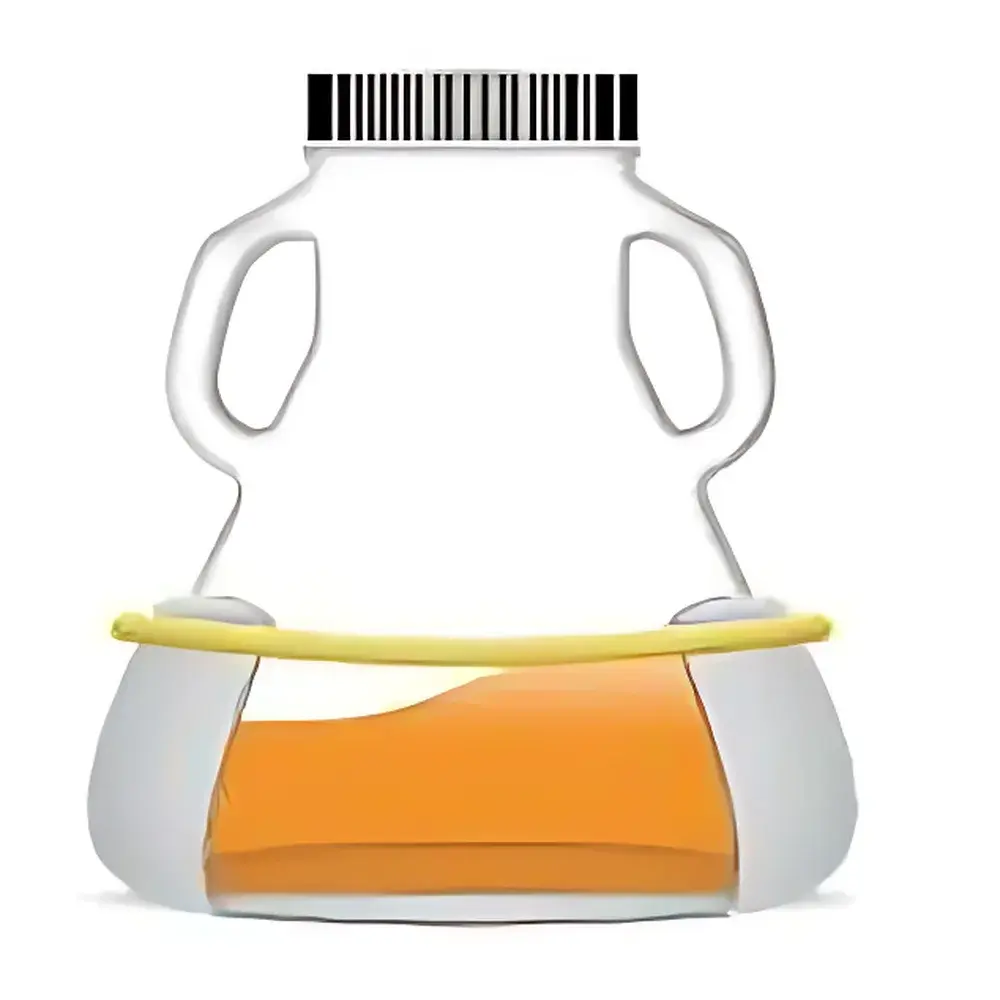
WIGGENS Thomson Optimum Growth™ High-Efficiency Cell Culture Roller Bottles
| Brand | WIGGENS |
|---|---|
| Origin | Germany |
| Model | Thomson |
| Max Fill Volume | Up to 60% of Total Bottle Capacity |
| Compliance | ISO 13485–Certified Manufacturing Environment, Suitable for GLP/GMP-Traceable Processes |
Overview
The WIGGENS Thomson Optimum Growth™ High-Efficiency Cell Culture Roller Bottles are precision-engineered rotating culture vessels designed specifically for scalable suspension and adherent cell cultivation under controlled orbital or rolling motion. Unlike conventional spinner flasks or standard roller bottles, the Thomson system operates on a validated low-shear hydrodynamic principle: its patented internal baffle geometry induces gentle, laminar fluid recirculation—maximizing gas exchange (O₂ transfer and CO₂ removal) while minimizing turbulent stress on sensitive mammalian, insect, and hybridoma cells. This architecture enables sustained high-density growth and enhanced recombinant protein productivity without compromising viability. The bottles are manufactured in Germany under stringent quality control protocols aligned with ISO 13485 standards, ensuring batch-to-batch consistency essential for process development, upstream bioprocessing, and clinical-grade material production.
Key Features
- Low-shear baffle design optimized for uniform oxygenation and minimal hydrodynamic stress—validated for CHO, HEK293, Sf9, and hybridoma cultures
- 2 µm hydrophobic vent cap providing sterile filtration and moisture retention during prolonged incubation
- Compatible with standard roller drum platforms operating at variable amplitudes (25 mm / 50 mm) and rotational speeds (70–250 rpm), supporting both small-scale screening and pilot-scale expansion
- Quick-connect or heat-seal tubing interface enables seamless integration with Wave Bioreactor systems and single-use bag-based bioreactors
- Sterile, individually packaged units—ready for immediate use in Class A/B cleanroom environments
- Fill volume flexibility: supports up to 60% total capacity loading (e.g., 900 mL in 1.6 L bottle), significantly exceeding the 30% limit of conventional roller bottles
Sample Compatibility & Compliance
The Thomson bottles demonstrate broad compatibility across major suspension and microcarrier-adapted cell lines. Empirical data confirm improved viability (>95% at harvest) and elevated specific productivity in CHO-K1, CHO-S, HEK293F, Sf9, and NS0 hybridoma cultures. For microbial applications—including E. coli BL21(DE3) and related strains—the bottles support high-aeration growth under elevated agitation (up to 250 rpm at 50 mm amplitude). All units comply with ISO 13485 manufacturing requirements. While not pre-certified for FDA 21 CFR Part 11 compliance, the system is fully compatible with electronic lab notebook (ELN) and LIMS-integrated workflows where audit trails, user access controls, and metadata capture are implemented at the facility level.
Software & Data Management
As a hardware-only consumable platform, the Thomson bottles do not incorporate embedded sensors or firmware. However, they are fully interoperable with industry-standard roller drum controllers—including those from Infors HT, Kuhner, and Applikon—that support programmable speed/amplitude profiles, temperature logging, and event-triggered data export (CSV/Excel). When deployed within validated bioprocess environments, usage records—including lot numbers, sterilization dates, fill volumes, and run parameters—can be captured in accordance with ALCOA+ principles (Attributable, Legible, Contemporaneous, Original, Accurate, Complete, Consistent, Enduring, Available) for regulatory submissions.
Applications
- Transient and stable transfection expression screening in HEK293 and CHO lines
- Scalable production of monoclonal antibodies, Fc-fusion proteins, and viral vectors (AAV, lentivirus)
- Insect cell-based baculovirus expression system (BEVS) optimization for structural biology targets
- Hybridoma expansion and early-stage mAb purification feedstock generation
- Microbial seed train development for recombinant protein fermentation
- Bridging studies between shake flask, roller bottle, and wave bioreactor platforms
FAQ
What cell types are validated for use with Thomson bottles?
CHO-S, CHO-K1, HEK293F, Sf9, Hi5, NS0, SP2/0, and E. coli BL21(DE3) strains have been experimentally validated across multiple independent laboratories.
Can Thomson bottles be autoclaved?
No—Thomson bottles are supplied as sterile, single-use, gamma-irradiated consumables. Reuse or autoclaving invalidates sterility and may compromise baffle integrity.
Are custom volumes or labeling options available?
WIGGENS offers OEM/private-label configurations for qualified biopharma partners under minimum order quantity agreements; contact technical sales for feasibility assessment.
How does the 60% fill volume claim compare to ISO 20387 or USP <1043> guidance?
While ISO 20387 addresses biobanking infrastructure and USP <1043> defines general requirements for ancillary materials, the 60% operational fill limit reflects empirical performance validation—not a regulatory threshold—but aligns with ICH Q5D recommendations for consistent culture environment control.
Is residual extractables testing data available?
Yes—certificates of analysis (CoA) including USP <661.1> compliant extractables profiling (via GC-MS and ICP-MS) are provided per lot upon request.





