
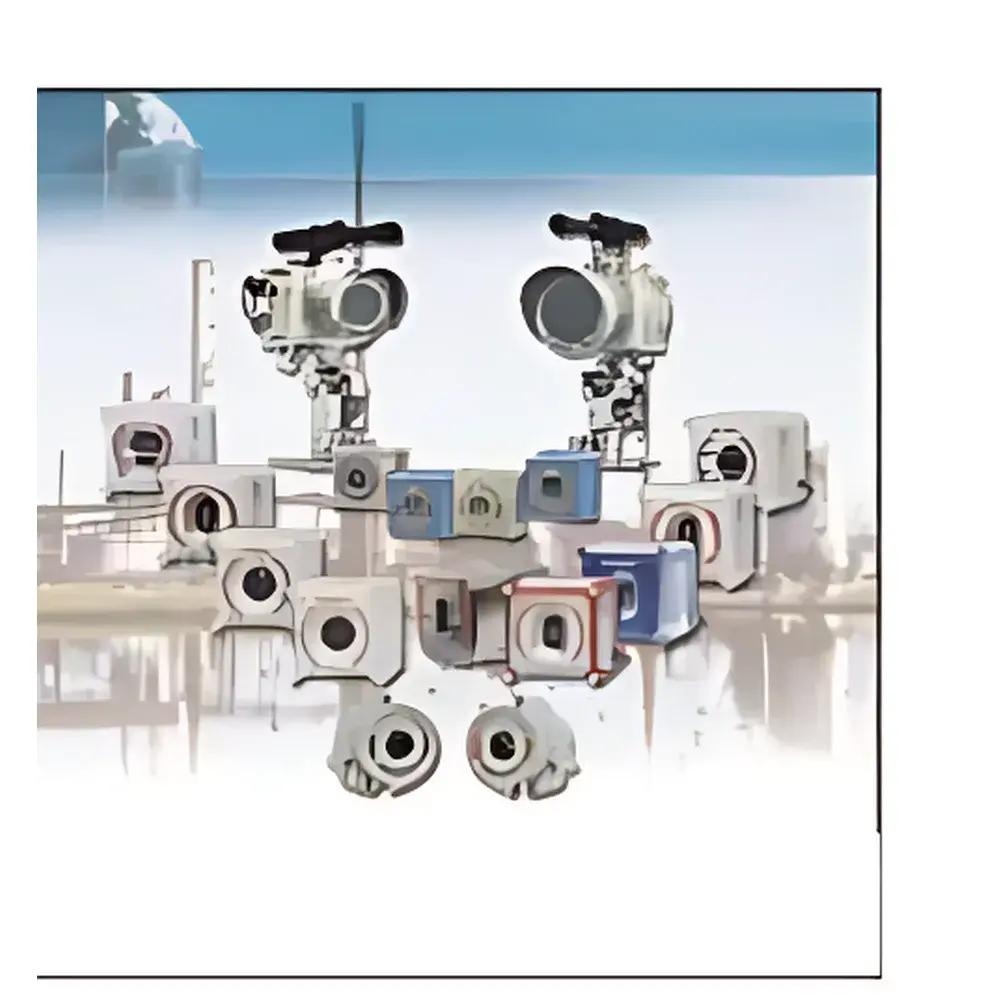
York Instrument FGS Fire and Gas Detection System
| Brand | York Instrument |
|---|---|
| Origin | USA |
| Manufacturer | York Instrument |
| Product Type | Import |
| Model | FGS |
| Pricing | Upon Request |
Overview
The York Instrument FGS Fire and Gas Detection System is a certified safety-critical control system engineered for continuous, real-time monitoring of fire hazards and hazardous gas releases in high-risk industrial environments—including oil & gas production facilities, chemical processing plants, offshore platforms, and petrochemical refineries. Unlike standalone flame photometers or spectroscopic analyzers, the FGS is not a laboratory-based analytical instrument; it is an integrated, field-deployable safety instrumented system (SIS) designed to meet SIL 2 compliance per IEC 61508 and functional safety requirements per IEC 61511. Its core architecture relies on multi-sensor fusion—combining infrared (IR), ultraviolet (UV), and multi-band IR flame detection; catalytic bead, electrochemical, and infrared gas sensing; smoke and temperature measurement—and integrates them into a unified alarm and mitigation decision logic framework. The system operates under continuous diagnostics, with dual-channel redundancy at controller, network, and power levels to ensure fail-safe operation in Zone 1 and Zone 2 hazardous areas.
Key Features
- Multi-protocol fieldbus integration: Supports loop-based (4–20 mA HART, Foundation Fieldbus), point-to-point (discrete relay, 4–20 mA analog), and digital communication (Modbus RTU over RS-485, HART-IP, and proprietary HA-Bus)
- Configurable logic solver: Programmable via IEC 61131-3 languages (Ladder Diagram, Function Block Diagram, Structured Text) for custom alarm thresholds, time-delayed suppression triggers, and interlock sequences
- Redundant architecture: Dual-redundant controllers with hot-standby switchover (<50 ms), dual-network topology (loop + star), and dual AC/DC power supplies with battery backup
- Scalable hardware platform: Modular DA (Data Acquisition) and OP (Operator Panel) units supporting 2-, 4-, 8-, or 16-loop configurations; expandable up to 512 addressable devices per system
- Comprehensive device compatibility: Native support for third-party detectors including IR/UV flame detectors, catalytic bead LEL sensors, electrochemical toxic gas transmitters, optical smoke detectors, and fixed-temperature heat sensors
- Real-time HMI visualization: Graphical operator interface with dynamic mimic diagrams, event logging (ISO 17025-compliant timestamping), alarm shelving, and audit-trail-enabled configuration changes
Sample Compatibility & Compliance
The FGS does not perform sample analysis in the laboratory sense; rather, it interfaces with field-mounted detection devices that respond to physical and photochemical signatures of combustion and gas release. Compatible sensor types include triple-band IR flame detectors (3.9 µm, 4.3 µm, and reference band), UV/IR hybrid detectors (185–260 nm UV + 4.3 µm CO₂ emission band), and NDIR-based hydrocarbon gas analyzers (C1–C4 range). All field components comply with explosion protection standards: GB 3836.1–2010 (equivalent to IEC 60079-0), GB 3836.2–2010 (flameproof “d”), and GB 3836.4–2010 (intrinsic safety “i”). System-level certification aligns with ANSI/NFPA 72 (2022 edition), IEC 60079-29-1 (gas detection performance), and EN 54-2 (fire alarm control units). Documentation supports FDA 21 CFR Part 11 compliance for electronic records and signatures where applicable in regulated process environments.
Software & Data Management
YorkControl is the native engineering and operational software suite for the FGS platform. It provides full lifecycle management—from initial system configuration and loop calibration to runtime diagnostics and forensic incident review. Configuration modules include Device Indexing (with auto-discovery of HART and Modbus devices), Control Strategy Editor (supporting discrete and sequential logic), Process Visualization (customizable mimic screens with animated status indicators), Alarm & Event Historian (SQL-based storage with configurable retention policies), and Engineering Change Management (version-controlled project archives with user access logs). Diagnostics cover channel-level health (e.g., detector drift compensation, signal-to-noise ratio trends), network latency mapping, controller uptime statistics, and predictive fault alerts based on historical failure mode analysis. All configuration actions are logged with user ID, timestamp, and pre/post-change parameter values to satisfy GLP/GMP traceability requirements.
Applications
- Offshore drilling rigs and FPSOs requiring Class I Division 1 / Zone 1 certified fire and gas supervision
- Refinery process units (e.g., sulfur recovery, hydrotreating, FCC) where hydrogen sulfide, hydrocarbons, and combustible vapors pose simultaneous hazards
- Gas compression stations with distributed methane leak monitoring and rapid flame response requirements
- Chemical manufacturing facilities handling chlorine, ammonia, or phosgene—requiring toxic gas detection with fail-safe shutdown interlocks
- Power generation turbine halls with hydrogen-cooled generators demanding early-stage flame detection before flashover
- Pharmaceutical cleanroom utilities where clean-agent suppression systems must integrate with fire initiation signals without false actuation
FAQ
Is the FGS certified for SIL 2 applications?
Yes—the FGS logic solver and associated input/output modules are certified by TÜV Rheinland to SIL 2 per IEC 61508:2010, with documented PFDavg < 0.01 for standard configurations.
Can YorkControl import/export configuration data in industry-standard formats?
Yes—it supports CSV-based device list import/export, XML-based control strategy backups, and OPC UA server integration for real-time data exchange with DCS/SCADA systems.
Does the system support remote diagnostics over secure industrial networks?
Yes—via encrypted TLS 1.2 tunnels, with role-based access control (RBAC) and two-factor authentication (2FA) for engineering-level remote sessions.
What is the maximum allowable loop length for 4–20 mA detector connections?
Up to 2,000 meters using 1.5 mm² shielded twisted-pair cable with ≤40 Ω/km loop resistance, as validated per IEC 60079-29-1 Annex B.
How does the FGS handle detector drift or contamination-induced false alarms?
It employs adaptive baseline correction algorithms, dual-wavelength ratio validation for flame detection, and configurable alarm hysteresis plus time-weighted averaging to suppress transient interference while maintaining response time < 5 seconds for Class A fires.




