
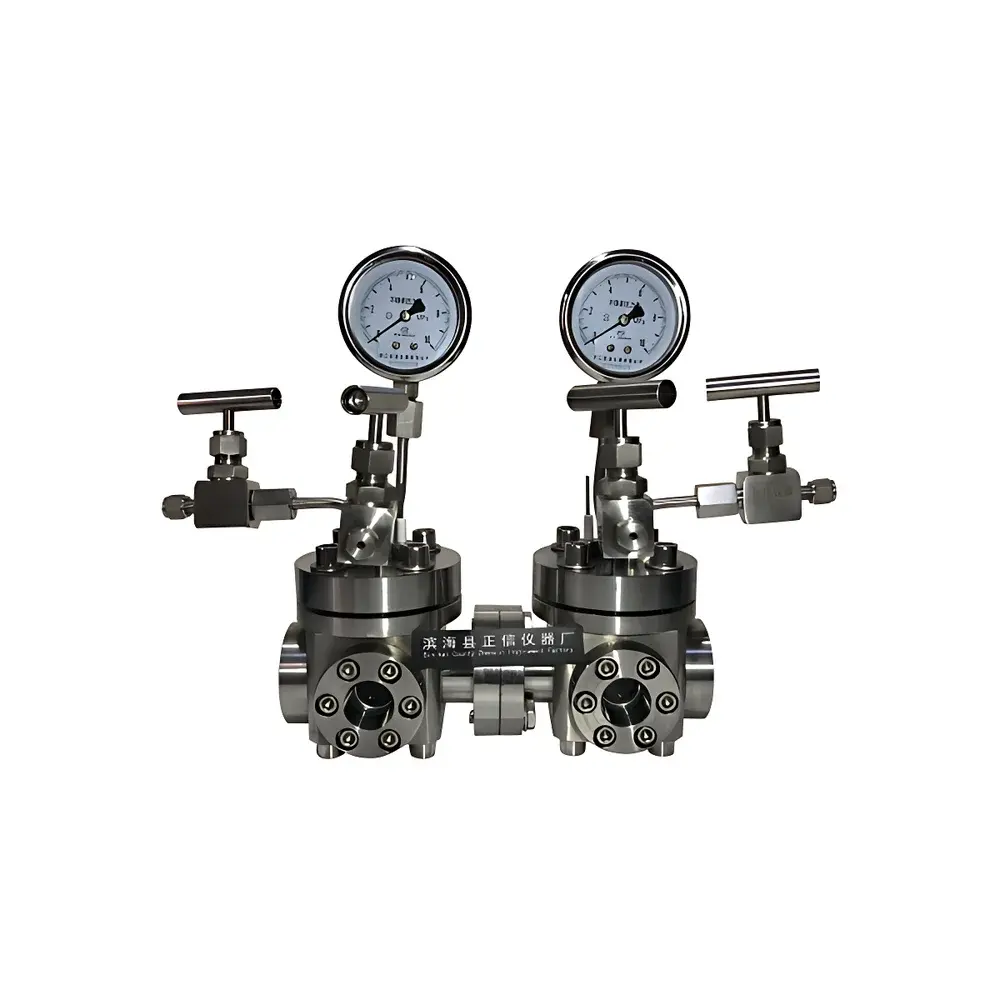
Zhengxin WEP-100ML Dual-Window Electrochemical Pressure Reactor
| Brand | Zhengxin Instrument Factory |
|---|---|
| Origin | Jiangsu, China |
| Manufacturer Type | Authorized Distributor |
| Country of Origin | China |
| Model | WEP-100ML |
| Capacity | 100 mL |
| Construction Material | 304/316L Stainless Steel (customizable to Hastelloy, Titanium, Zirconium) |
| Operating Pressure Range | –0.1 to 70 MPa |
| Temperature Range | 0–1000 °C |
| Heating Method | Integrated Modular Electric Heater (400–1500 W) |
| Temperature Control | LCD PID Controller with Auto-Tuning (AT), ±1 °C or ±0.1 °C accuracy, ramp rate ≤10 °C/min (adjustable) |
| Electrode Configuration | 1–4 electrodes (Pt, Ag, or custom material) |
| Viewports | Dual quartz or sapphire sight glasses |
| Vacuum Level | –0.1 MPa (absolute) |
| Safety Features | Pressure Relief Valve, Explosion-Proof Housing, Finned Heat Dissipation System |
| Optional Accessories | High-Pressure Inlet/Outlet Needle Valves (1/8″ & 1/4″ VCR fittings), Thermocouple (Type K), Sampling Tube, Internal Quartz Liner |
Overview
The Zhengxin WEP-100ML Dual-Window Electrochemical Pressure Reactor is a precision-engineered benchtop reactor system designed for controlled electrochemical synthesis, catalytic reaction monitoring, and in-situ spectroscopic observation under variable temperature and pressure conditions. Its core architecture integrates two optically transparent viewports—fabricated from high-purity quartz or sapphire—enabling real-time visual inspection and compatibility with external optical diagnostics (e.g., Raman spectroscopy, UV-Vis transmission, or laser Doppler velocimetry). The reactor operates on a sealed, modular pressure vessel principle, utilizing Couette-type mechanical integrity with dual O-ring sealing and flanged clamping to ensure leak-tight performance across its full operating envelope (–0.1 to 70 MPa, 0–1000 °C). Designed for laboratory-scale process development, it supports both galvanostatic and potentiostatic configurations via configurable electrode feedthroughs and standardized electrical connectors compliant with IEC 61000-4 electromagnetic immunity standards.
Key Features
- Modular thermal design: Removable electric heating module allows rapid disassembly for cleaning, electrode servicing, or liner replacement without compromising structural calibration.
- Dual viewport geometry: Symmetrically opposed 25–40 mm diameter windows support coaxial optical alignment and minimize parallax distortion during in-situ imaging or spectroscopy.
- Electrode flexibility: Four standardized M6 threaded feedthroughs accommodate Pt, Ag, graphite, or custom alloy electrodes; each includes hermetic ceramic insulation (≥500 V DC dielectric strength) and low-noise shielded cabling.
- PID-controlled thermal management: LCD interface with auto-tuning (AT) algorithm ensures stable setpoint maintenance (±0.1 °C typical) and programmable ramp/soak profiles traceable to NIST-traceable RTD references.
- Pressure safety architecture: ASME BPVC Section VIII-compliant rupture disc, redundant mechanical pressure gauge (0–100 MPa range, Class 1.6 accuracy), and passive finned heat sink for sustained exotherm mitigation.
- Gas handling integration: Dual high-pressure needle valves (1/8″ and 1/4″ VCR-compatible) enable precise inert gas purging, vacuum evacuation (≤10⁻² mbar base), and controlled repressurization sequences.
Sample Compatibility & Compliance
The WEP-100ML accommodates heterogeneous, homogeneous, and electrocatalytic systems—including aqueous electrolytes, molten salts, supercritical CO₂ media, and corrosive halide-based solutions. Vessel liners (quartz, PTFE-lined stainless steel, or Hastelloy C-276) are available to prevent cross-contamination and extend service life in aggressive chemistries. All wetted components meet ASTM A240/A276 material certification requirements. The system supports GLP-compliant operation when paired with optional audit-trail-enabled data loggers (IEC 62304 Class B software architecture) and satisfies key clauses of ISO 17025:2017 for method validation in reaction kinetics studies.
Software & Data Management
While the base unit operates via standalone PID controller, optional RS485/Modbus RTU or Ethernet TCP/IP interfaces enable integration with LabVIEW™, MATLAB® Data Acquisition Toolbox, or third-party SCADA platforms. Logged parameters—including real-time pressure, temperature, electrode potential/current, and valve position status—are timestamped with UTC synchronization and stored in CSV/SQLite formats. Firmware complies with FDA 21 CFR Part 11 requirements for electronic records when configured with user authentication, digital signature, and immutable audit trail modules.
Applications
- Electrochemical CO₂ reduction studies under elevated pCO₂ and temperature
- In-situ XRD/Raman monitoring of solid-electrolyte interphase (SEI) formation in battery anode materials
- Heterogeneous hydrogenation kinetics in continuous-flow microreactor screening
- Hydrothermal synthesis of metal–organic frameworks (MOFs) with real-time turbidity feedback
- Catalyst deactivation profiling under cyclic redox and thermal stress conditions
- Supercritical water oxidation (SCWO) of organic waste streams with online pH and conductivity tracking
FAQ
What electrode materials are supported, and how are they electrically isolated?
Standard options include platinum wire (99.95%), silver rod (99.99%), and glassy carbon; custom alloys (e.g., Ni-Mo, IrO₂) are available. Each electrode uses alumina ceramic feedthroughs rated to 500 V DC and features individual shielded twisted-pair cabling with SMA or LEMO connectors.
Can the reactor be used under vacuum and high-pressure simultaneously?
Yes—the vessel is rated for full-cycle operation from –0.1 MPa (vacuum) to +70 MPa (gauge), with validated leak rates <1×10⁻⁹ mbar·L/s (He) per ISO 15848-1.
Is the quartz viewport compatible with UV irradiation down to 190 nm?
Fused silica viewports (Grade UV) transmit ≥85% at 190 nm; sapphire alternatives offer superior mechanical strength but cut off below 155 nm.
How is temperature uniformity verified across the reaction zone?
Calibration reports include axial/radial thermocouple mapping per ASTM E220, confirming ≤±1.5 °C gradient over the central 60% volume at 500 °C steady state.
Does the system support automated gas dosing and composition control?
When equipped with optional mass flow controllers (MFCs) and gas chromatography (GC) coupling, the platform enables closed-loop stoichiometric control per ISO 8573-1 Class 2 purity standards.



