
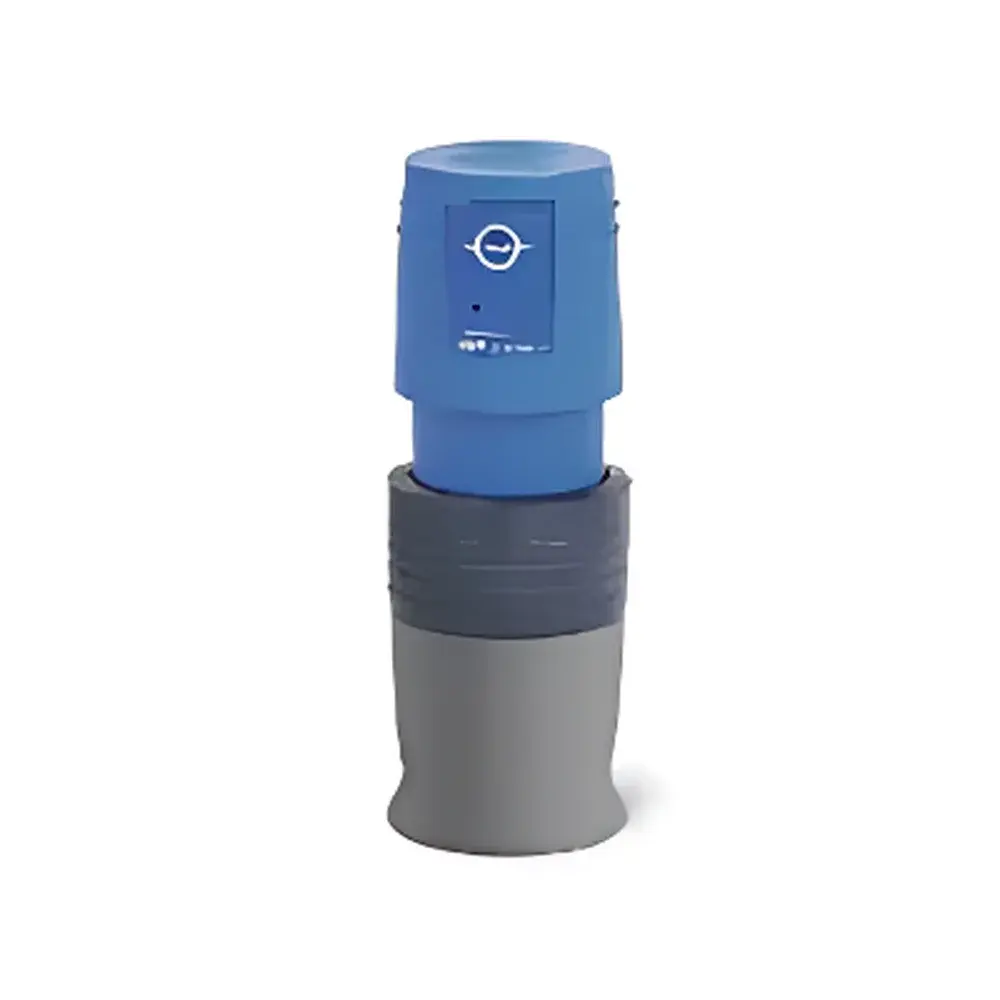
IKA A 11 basic Analytical Mill
| Brand | IKA |
|---|---|
| Origin | Germany |
| Model | A 11 basic Analytical Mill |
| Motor Input Power | 160 W |
| Motor Output Power | 100 W |
| Max. Speed | 28,000 rpm |
| Max. Peripheral Speed | 53 m/s |
| Max. Feed Particle Size | 10 mm |
| Max. Feed Hardness | 6 Mohs |
| Max. Sample Volume | 80 mL |
| Grinding Chamber Material | Stainless Steel 1.4571 |
| Impact/Shear Rotor Material | Stainless Steel 1.4034 |
| Cooling Options | Dry Ice or Liquid Nitrogen in Chamber |
| Duty Cycle | 1 min ON / 10 min OFF |
| Dimensions (W × H × D) | 85 × 240 × 85 mm |
| Weight | 1.5 kg |
| Ambient Temperature Range | 5–40 °C |
| Relative Humidity Limit | ≤80 % |
| Ingress Protection | IP 43 |
| Voltage | 220–230 V, 50/60 Hz |
| Optional Accessories | A 11.4 250 mL Grinding Cup, A 11.5 80 mL PTFE-Reinforced Grinding Cup |
Overview
The IKA A 11 basic Analytical Mill is a compact, high-speed batch-type laboratory grinder engineered for reproducible, controlled size reduction of solid samples prior to analytical testing. It operates on dual mechanical principles—impact and shear—enabling versatile sample preparation across diverse material classes. The mill utilizes a high-precision rotor-stator system driven by a brushless motor delivering 100 W of mechanical output power at speeds up to 28,000 rpm, generating a peripheral velocity of 53 m/s. This kinetic energy facilitates efficient particle comminution via inertial impact against the chamber wall and/or shearing between rotating and stationary elements. Designed for analytical laboratories requiring trace-level homogeneity and minimal cross-contamination, the A 11 basic supports cryogenic grinding protocols using dry ice or liquid nitrogen directly within the sealed grinding chamber—critical for thermolabile, polymeric, or elastic materials that undergo thermal degradation or plastic deformation under ambient conditions.
Key Features
- Two-mode grinding architecture: factory-installed impact rotor for brittle, hard, or inorganic materials (up to 6 Mohs hardness); optional shear rotor (sold separately) for fibrous, elastic, or viscoelastic substances including plant tissues, polymers, and hydrated gels.
- Cryogenic compatibility: integrated chamber design permits direct introduction of dry ice or liquid nitrogen during operation—enabling sub-zero grinding without external cooling jackets or auxiliary systems.
- Material-compliant construction: grinding chamber fabricated from acid-resistant stainless steel 1.4571 (X2CrNiMo17-12-2); impact rotor from martensitic stainless steel 1.4034 (X46Cr13), optimized for wear resistance and dimensional stability.
- Standardized sample containment: supplied with A 11.5 80 mL grinding cup composed of glass-fiber-reinforced polytetrafluoroethylene (PTFE), offering chemical inertness, low adhesion, and cryo-mechanical integrity; optional A 11.4 250 mL cup available for larger batch processing.
- Thermal and electrical safety compliance: IP 43-rated enclosure protects against splashing water and solid ingress; thermal cut-off and duty-cycle control (1 min ON / 10 min OFF) prevent motor overheating during extended use.
Sample Compatibility & Compliance
The A 11 basic accommodates heterogeneous solids ranging from minerals and pharmaceutical tablets to biological tissues and synthetic resins. Its 10 mm maximum feed size and 6 Mohs hardness limit align with ASTM D297–19 (rubber compounding) and ISO 13320:2020 (laser diffraction particle sizing) pre-treatment guidelines. Cryogenic operation ensures compliance with USP (Disintegration) and EP 2.9.12 (Particle Size Distribution) requirements where thermal artifact suppression is mandatory. All wetted surfaces meet FDA-compliant material specifications per 21 CFR 177.1550 (PTFE) and 21 CFR 178.3570 (stainless steels). Device conformity includes EN 61000-6-3 (EMC emission), EN 61000-6-1 (immunity), and EN 61010-1:2010+A1:2013 (safety for laboratory equipment).
Software & Data Management
As a manually operated benchtop instrument, the A 11 basic does not incorporate embedded software or digital interfaces. Operational parameters—including runtime, rest intervals, and cooling agent volume—are recorded manually in laboratory notebooks or LIMS-integrated electronic lab notebooks (ELNs) compliant with 21 CFR Part 11. For auditability, users are advised to document batch-specific grinding conditions (e.g., ambient temperature, pre-cooling duration, rotor type, and post-grinding sieve analysis) as part of GLP/GMP-aligned SOPs. IKA provides traceable calibration certificates for rotational speed verification upon request, supporting metrological traceability to national standards (e.g., PTB, NIST).
Applications
- Pharmaceutical QA/QC: reduction of API tablets and excipient blends prior to HPLC, dissolution testing, or content uniformity analysis.
- Environmental testing: homogenization of soil, sediment, and sludge samples for heavy metal extraction (EPA Method 3050B) and organic contaminant analysis (EPA 8270).
- Food & agriculture: preparation of cereal grains, spices, and feedstuffs for proximate analysis (AOAC 985.29), mycotoxin screening, and DNA extraction.
- Materials science: cryo-milling of thermoplastics and elastomers for SEM sample mounting, DSC preconditioning, or rheological masterbatch formulation.
- Forensic toxicology: disruption of seized drug matrices and botanical evidence under controlled low-temperature conditions to preserve volatile alkaloids and cannabinoids.
FAQ
Can the A 11 basic be used for wet grinding?
Yes—when equipped with the optional shear rotor and compatible grinding cups, aqueous or viscous suspensions may be processed with controlled addition of water or solvent to facilitate dispersion and heat dissipation.
Is the PTFE grinding cup autoclavable?
No—the glass-fiber-reinforced PTFE cup (A 11.5) is not rated for steam sterilization; repeated exposure to >121 °C compromises structural integrity and dimensional accuracy.
What maintenance is required for long-term reliability?
Routine cleaning with ethanol or isopropanol; visual inspection of rotor balance and chamber sealing surfaces before each use; annual verification of rotational speed accuracy using a certified tachometer.
Does IKA provide validation documentation for GMP environments?
Yes—upon request, IKA supplies IQ/OQ templates, material certifications (EN 10204 3.1), and test reports supporting installation and operational qualification in regulated laboratories.
Can the mill handle abrasive ceramics or carbides?
No—materials exceeding 6 Mohs hardness (e.g., alumina, silicon carbide) will rapidly erode the stainless steel rotor and chamber; alternative milling systems (e.g., planetary ball mills with tungsten carbide media) are recommended.



