
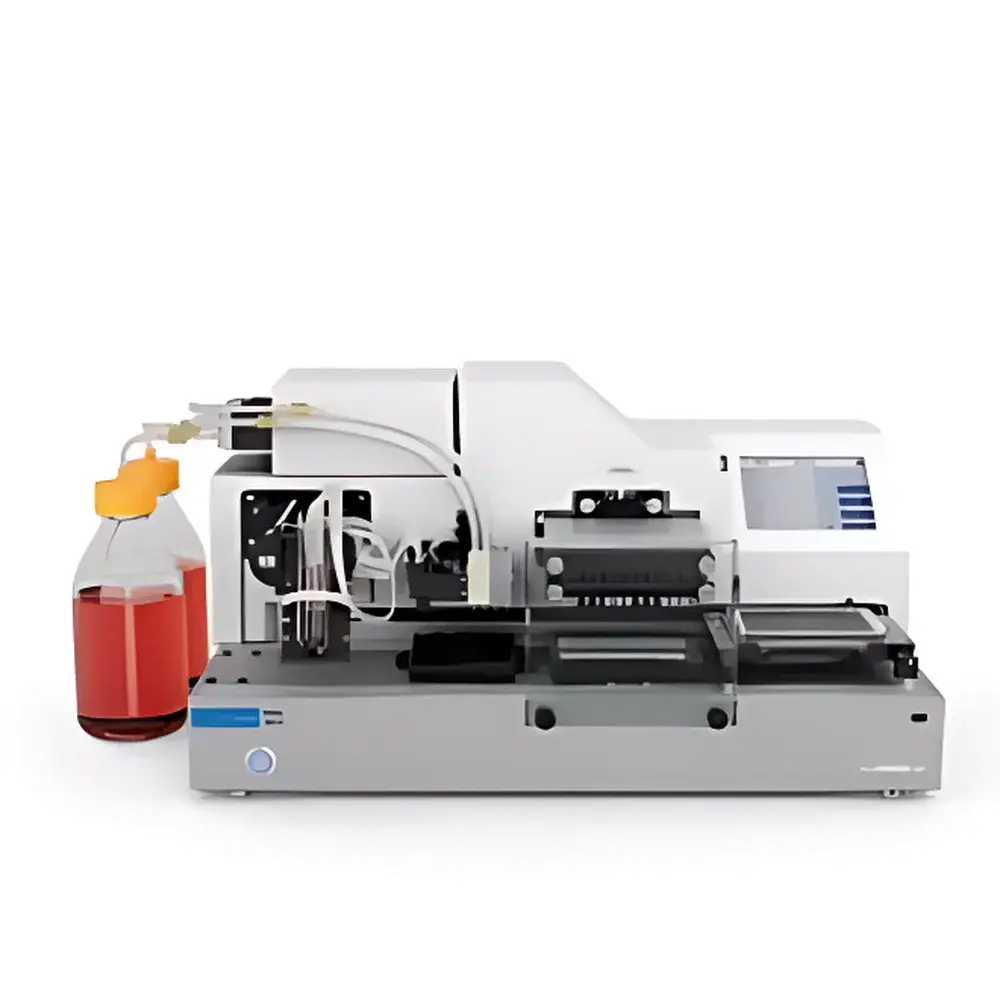

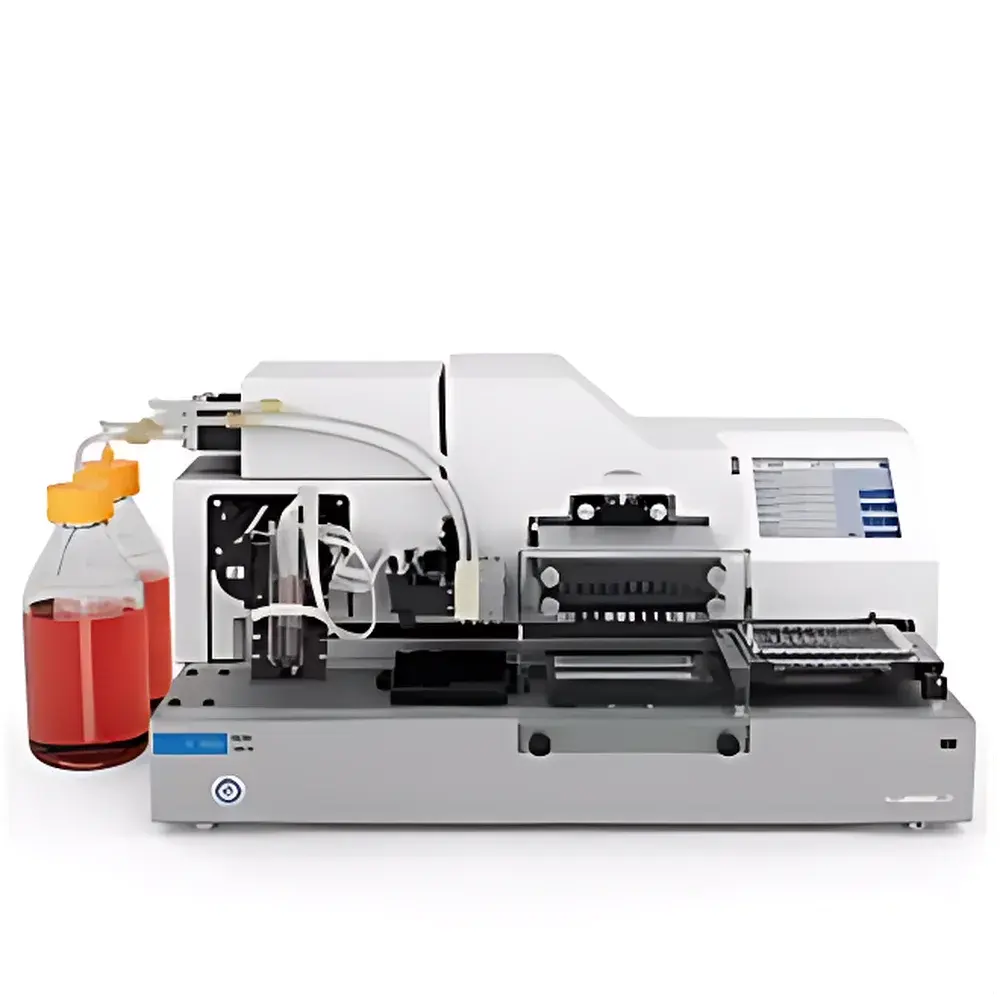
Agilent BioTek 406 FX Plate Washer and Dispenser
| Brand | Agilent Technologies |
|---|---|
| Origin | USA |
| Manufacturer Type | Original Equipment Manufacturer (OEM) |
| Origin Category | Imported |
| Model | BioTek 406 FX |
| Instrument Type | Multi-Function Plate Washer and Dispenser |
| Sample Format Compatibility | 96-well to 1536-well microplates |
| Dispensing Technology | Non-contact positive displacement (4 syringe pumps) and peristaltic pumping (2 channels) |
| Wash Head | Dual-Action™ with adjustable aspiration/dispense height, X/Y positioning, and angled dispensing nozzles |
| Waste Disposal | Direct drain waste system |
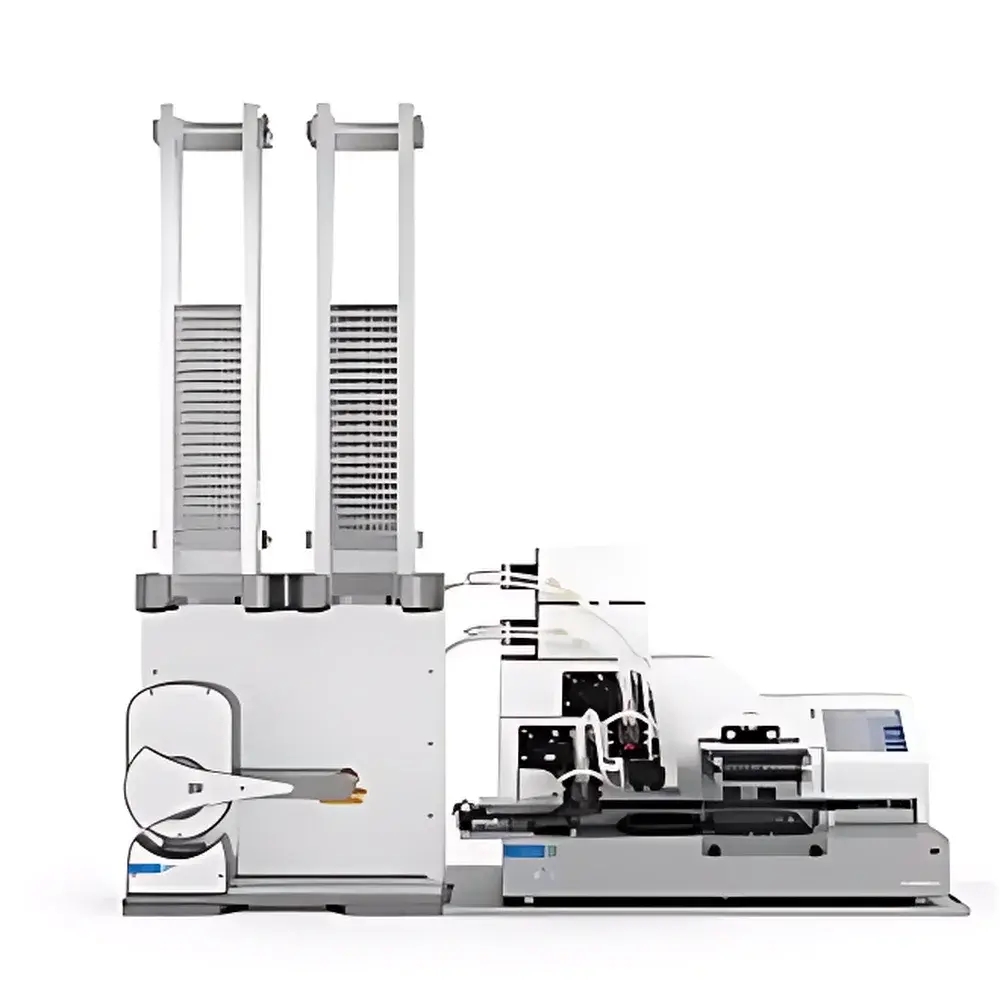
| Automation Interface | Left- and right-side robotic arm access |
| Software Options | LHC Control Software and LHC Secure Software (21 CFR Part 11 compliant) |
| Magnetic Separation Support | Optional magnetic plate adapter |
Overview
The Agilent BioTek 406 FX Plate Washer and Dispenser is an integrated, benchtop liquid handling platform engineered for precision, reproducibility, and workflow consolidation in high-throughput life science laboratories. Designed around a dual-function architecture, it combines full-plate washing and multi-reagent non-contact dispensing in a single instrument—eliminating manual plate transfers between discrete washers and dispensers. Its core operation relies on positive-displacement syringe pumping (four independent channels) and peristaltic fluid delivery (dual-channel), enabling simultaneous handling of up to six distinct reagents within one protocol. The system employs a Dual-Action™ wash head optimized for both conventional aspiration/wash cycles and magnetic bead-based separation workflows across 96-, 384-, and 1536-well formats. Critical mechanical features—including programmable Z-axis height adjustment, X/Y nozzle positioning, and angled dispensing tips—minimize shear stress during cell monolayer processing and ensure consistent reagent delivery across high-density plates. All operations are governed by an onboard touchscreen interface or optionally via LHC Secure software, supporting audit trails, electronic signatures, and role-based access control aligned with FDA 21 CFR Part 11 requirements.
Key Features
- Dual-Action™ wash head with configurable aspiration/dispense profiles for gentle yet effective removal of unbound reagents from adherent cells, suspension cultures, and magnetic bead suspensions
- Non-contact dispensing architecture with four independently controlled syringe pumps (500 nL–3000 µL range) and two peristaltic pump channels—enabling low dead-volume, high-accuracy delivery of sensitive biologicals including primary cells, antibodies, and enzymatic reagents
- Ultrasonic Advantage™ self-cleaning system that automatically decontaminates wash head channels using ultrasonic energy, reducing carryover risk and extending service intervals
- Direct-drain waste management eliminates manual waste bottle emptying and supports continuous operation during extended assay runs
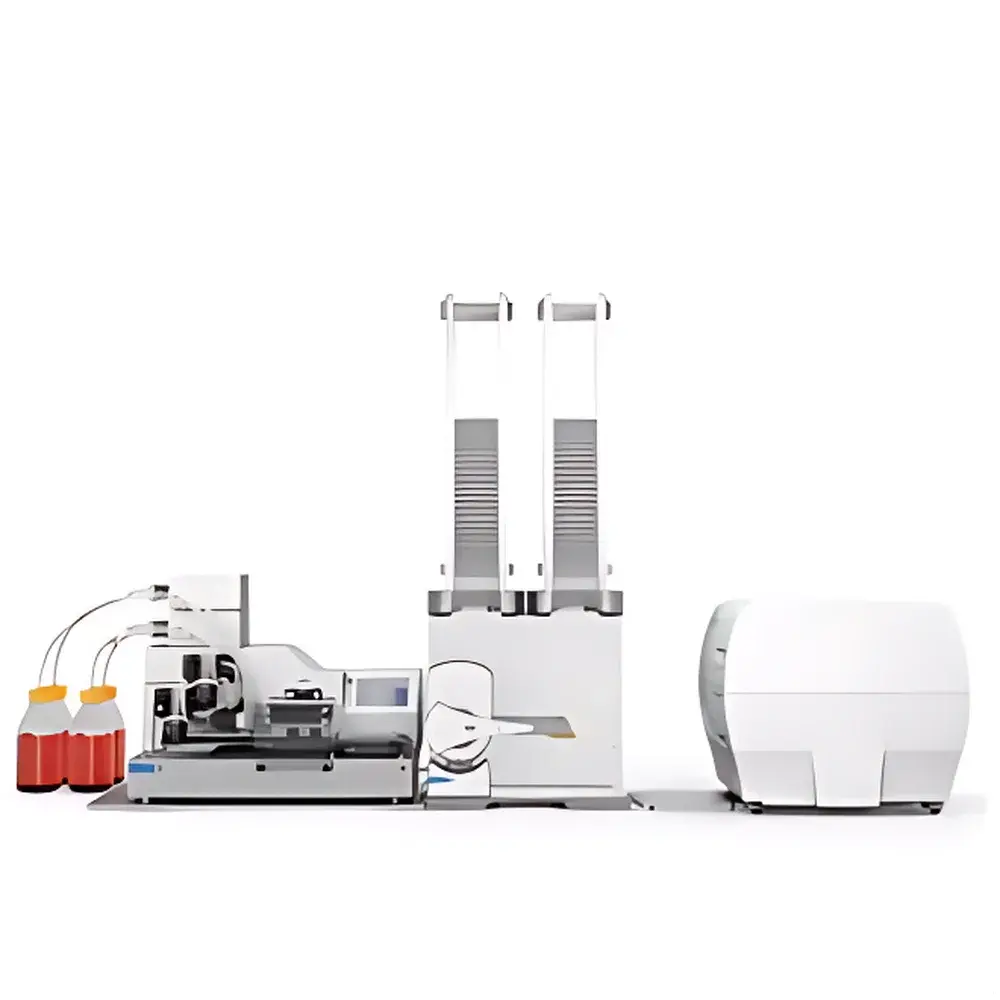
- Bi-directional robotic integration ports (left- and right-side access) compatible with Agilent BioStack and BenchCel stackers, as well as third-party automation platforms meeting ANSI/SLAS footprint standards
- Touchscreen-based protocol builder with drag-and-drop step sequencing, real-time parameter validation, and built-in error detection for rapid method development
Sample Compatibility & Compliance
The 406 FX accommodates standard ANSI/SLAS-compliant microplates ranging from 96-well to 1536-well formats, including flat-bottom, U-bottom, V-bottom, and tissue-culture-treated plates. It supports magnetic separation workflows via optional magnetic plate adapters rated for 0.5–4.5 mm bead diameters and field strengths up to 1.2 T. All fluidic pathways are constructed from chemically resistant materials (e.g., PTFE, silicone, and medical-grade elastomers) suitable for aqueous buffers, organic solvents (≤10% v/v acetonitrile or methanol), and protein-containing media. The system complies with IEC 61000-6-2 (immunity) and IEC 61000-6-3 (emissions) electromagnetic compatibility standards. When operated with LHC Secure software, the instrument meets GLP/GMP data integrity requirements—including electronic record retention, user authentication, change control logging, and tamper-evident audit trails—as defined under FDA 21 CFR Part 11 and ISO/IEC 17025 Annex A.2.
Software & Data Management
Instrument control is supported by two software tiers: LHC Control Software for standalone protocol execution and LHC Secure Software for regulated environments. LHC Secure provides full 21 CFR Part 11 compliance through digital signature capture, hierarchical user permissions (administrator, operator, reviewer), and immutable audit logs tracking all configuration changes, run executions, and calibration events. Protocols are stored in encrypted XML format with version history and timestamped metadata. Data export options include CSV, Excel-compatible .xlsx, and structured JSON for integration into LIMS or ELN systems. Remote monitoring is enabled via Ethernet-connected network deployment, allowing centralized fleet management across multi-instrument laboratories.
Applications
The 406 FX is routinely deployed in ELISA, cell-based assays (e.g., calcium flux, cytotoxicity, proliferation), immunoassays, nucleic acid hybridization, and magnetic bead-based purification workflows. Its ability to perform sequential wash–dispense–incubate–wash cycles without plate movement makes it ideal for sandwich immunoassays requiring multiple antibody binding steps. In stem cell and primary neuron culture applications, the low-shear aspiration profile and precise Z-height control preserve monolayer integrity during media exchange. For HTS screening, its capacity to dispense four different compounds in parallel—while simultaneously washing adjacent columns—reduces cycle time by up to 40% compared to serial instrumentation setups. The system also serves as a modular component in end-to-end automated assay lines integrating with plate readers, incubators, and liquid handlers.
FAQ
What microplate formats does the 406 FX support?
The instrument accepts ANSI/SLAS-standard 96-, 384-, and 1536-well plates, including skirted, semi-skirted, and unskirted configurations.
Can the 406 FX perform magnetic bead separations?
Yes—when equipped with the optional magnetic plate adapter, it automates bead capture, wash, and resuspension steps for immunoprecipitation, nucleic acid isolation, and cell sorting workflows.
Is the Ultrasonic Advantage™ function programmable?
Yes—ultrasonic cleaning can be scheduled before or after any wash cycle, or triggered manually via the touchscreen interface.
How many reagents can be dispensed in a single protocol?
Up to six distinct reagents may be loaded and dispensed sequentially or in parallel using the combination of four syringe pumps and two peristaltic channels.
Does the 406 FX require external PC connectivity for routine operation?
No—the onboard touchscreen computer enables full method creation, execution, and result review without external hardware; PC connectivity is optional for advanced data management or regulatory compliance.




