
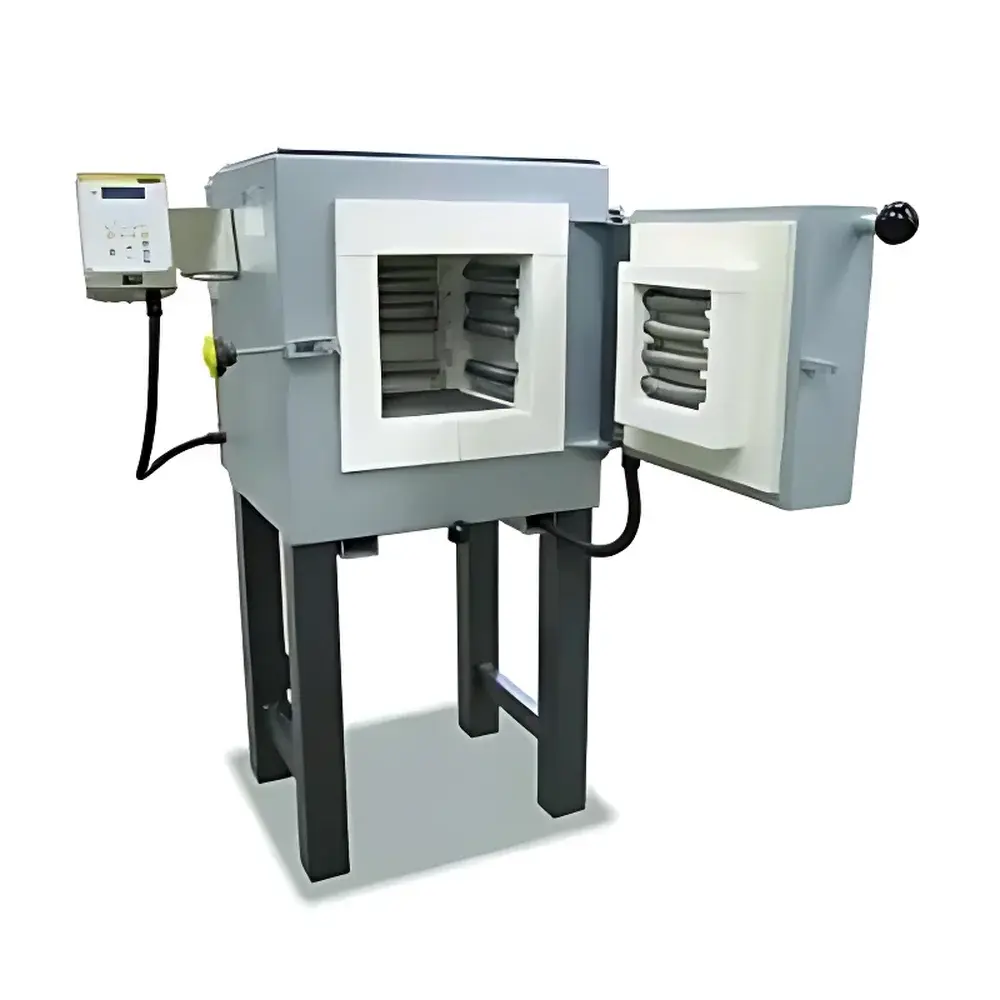
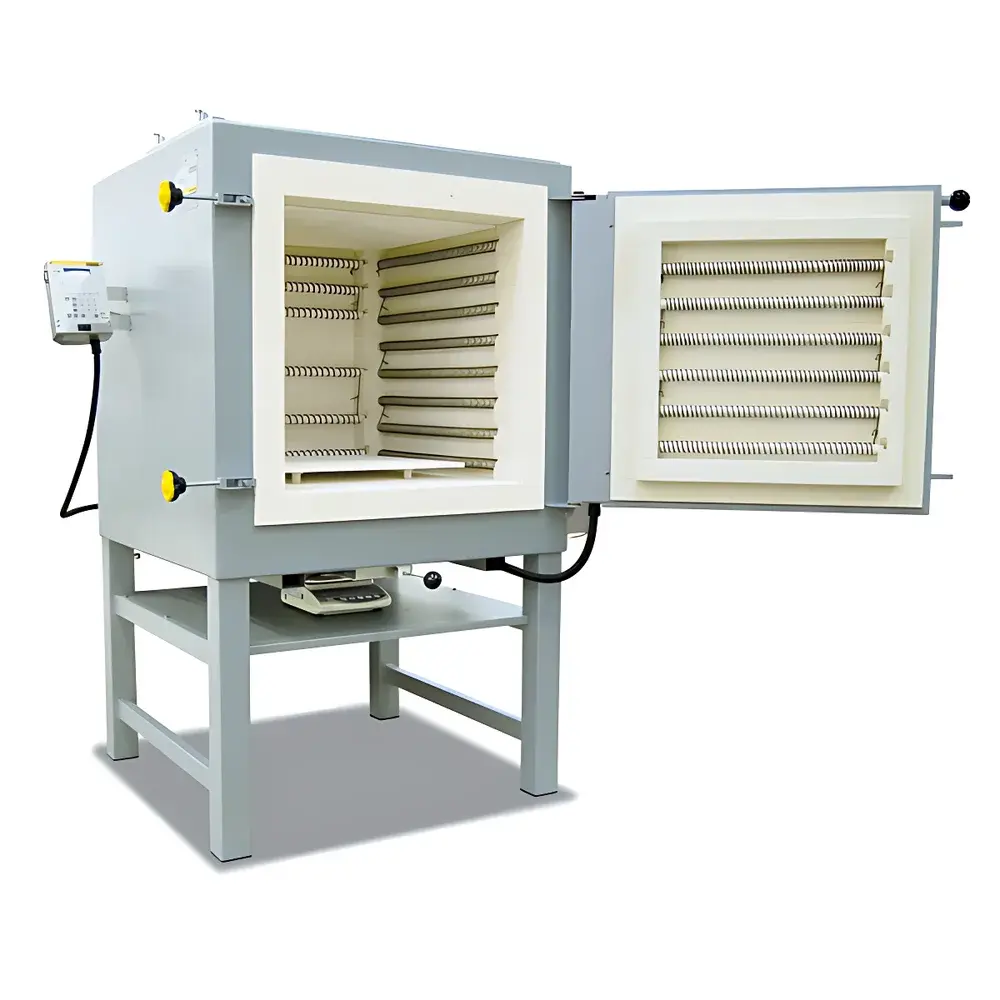
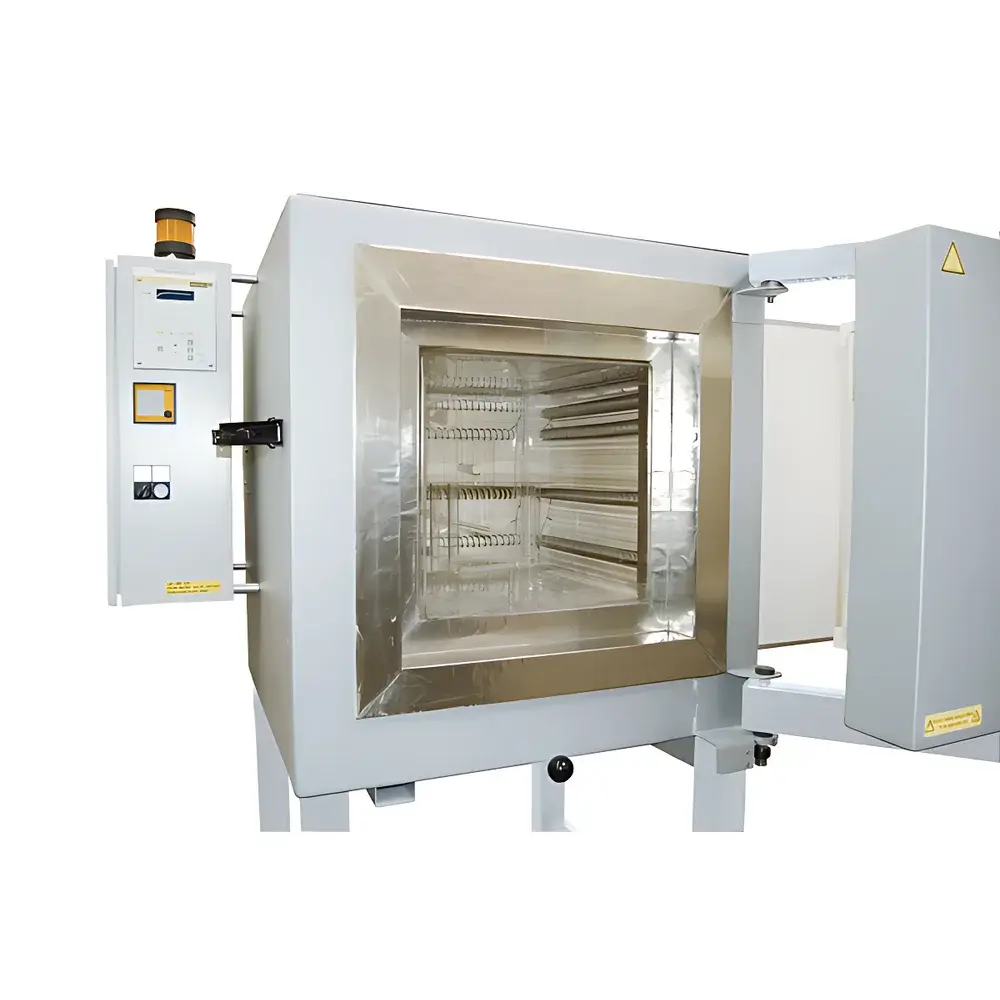
Nabertherm LH 15/12 and LF 120/14 High-Temperature Box Furnaces with Refractory Brick (LH) or Composite Fiber-Brick Insulation (LF)
| Brand | Nabertherm |
|---|---|
| Origin | Germany |
| Model Series | LH 15/12 – LF 120/14 |
| Maximum Temperature | 1400 °C |
| Temperature Uniformity | ±1 °C |
| Heating Method | Resistance Wire (FeCrAl Alloy) |
| Internal Dimensions | 250 × 250 × 250 mm to 600 × 600 × 600 mm |
| Power Input | 5–26 kW (3-phase) |
| Ramp Time to Max Temp | ≤150 min |
| Insulation Architecture | LH — Multi-layer fiber-free lightweight refractory brick |
| Chamber Volume | 15–120 L |
| Cooling Options | Integrated cooling fan, automatic exhaust flap, optional inert gas purging |
| Compliance | CE, EN 61000-6-3, EN 61000-6-4, EN 60519-2 |
Overview
The Nabertherm LH and LF series represent a benchmark in high-precision laboratory box furnaces engineered for reproducible thermal processing across materials science, metallurgy, ceramics, and analytical chemistry. These furnaces operate on the principle of resistive heating via FeCrAl alloy heating elements mounted on support tubes, enabling radiant heat transfer from five sides—top, bottom, and three walls—to ensure exceptional temperature homogeneity within the working chamber. The core distinction lies in their insulation architecture: the LH models employ a fully fiber-free, multi-layer refractory brick system designed for long-term stability and chemical inertness at extreme temperatures up to 1400 °C; the LF models integrate low-thermal-mass ceramic fiber insulation with strategically placed refractory bricks at corners and door seals, achieving significantly reduced thermal inertia—thereby shortening both heating and cooling cycles without compromising structural integrity or temperature uniformity. Both variants comply with EN 60519-2 (safety requirements for industrial electroheating equipment) and are constructed to withstand repeated thermal cycling under GLP and GMP-aligned laboratory workflows.
Key Features
- Five-sided radiant heating configuration ensures ±1 °C temperature uniformity across the entire chamber volume, validated per ASTM E220 and ISO/IEC 17025 calibration protocols.
- Self-supporting arched roof design minimizes dust ingress and enhances mechanical rigidity during thermal expansion cycles.
- Hand-finished brick-to-brick door seal with precision-ground contact surfaces guarantees leak-tight operation and stable atmosphere control.
- SiC floor plate provides mechanical protection for bottom heating elements and serves as a thermally stable, flat loading surface for crucibles and sample holders.
- Parallel-guided furnace doors rated for safe opening at temperatures up to 1300 °C—standard on LF 30/14 and above, optional on smaller models.
- Modular auxiliary interfaces include purge gas inlets (with stainless-steel fittings), exhaust bypass ports for fume extraction, and optional quartz-glass sealed viewing windows compatible with inert or reducing atmospheres.
- Integrated cooling fan and motorized exhaust flap reduce cool-down time by up to 40% compared to passive cooling, supporting high-throughput batch processing.
- Adjustable primary air inlet at furnace base enables fine-tuned oxidative or semi-oxidative ambient control during thermal treatments.
Sample Compatibility & Compliance
The LH/LF series accommodates standard crucibles (alumina, silicon carbide, platinum, graphite), sintering boats, and custom fixtures up to 600 × 600 × 600 mm internal dimensions. All models meet CE marking requirements and conform to electromagnetic compatibility standards EN 61000-6-3 (emission) and EN 61000-6-4 (immunity). For regulated environments—including pharmaceutical stability testing (ICH Q1), ash content analysis (AOAC 923.03), and residue-on-ignition procedures (USP )—the furnaces support integration with Nabertherm’s THERMCONTROL® controllers featuring 21 CFR Part 11-compliant audit trails, electronic signatures, and password-protected parameter locking. Optional gravimetric modules (e.g., integrated thermogravimetric balance interface) enable real-time combustion loss monitoring per ASTM E1131 and ISO 11358.
Software & Data Management
Nabertherm furnaces are compatible with THERMCONTROL® software (v5.0+), which provides full recipe-based programming, multi-step ramp-soak profiles, and real-time data logging at user-defined intervals (down to 1-second resolution). Data export is supported in CSV, XML, and PDF formats—with timestamped metadata including operator ID, furnace ID, and environmental conditions. When paired with Nabertherm’s Ethernet-enabled controllers (e.g., TQ600), the system supports remote monitoring via secure HTTPS interface and integrates into enterprise LIMS or MES platforms through OPC UA or Modbus TCP protocols. All controller firmware updates undergo IEC 62443-3-3 security validation, and data storage adheres to GDPR-compliant encryption-at-rest policies.
Applications
- Thermal treatment of advanced ceramics (sintering, annealing, debinding)
- Ash content determination in food, feed, and environmental samples (EPA Method 1695, ISO 2171)
- Calcination of catalysts and battery electrode precursors
- Heat treatment of metal alloys and powder metallurgy compacts
- Residue-on-ignition assays in pharmacopeial quality control (USP , Ph. Eur. 2.2.15)
- Thermogravimetric analysis (TGA) support via optional load-cell integration
- Controlled oxidation studies under synthetic air or nitrogen atmospheres
- Preparation of reference materials requiring trace-metal-clean thermal environments
FAQ
What is the difference between LH and LF insulation configurations?
The LH series uses exclusively refractory brick insulation—fiber-free, chemically inert, and optimized for long-term thermal stability above 1200 °C. The LF series combines low-thermal-mass ceramic fiber with localized refractory brick reinforcement at stress points (corners, door frame), delivering faster ramp/cool cycles while maintaining structural integrity and minimizing outgassing.
Can these furnaces be used under inert or reducing atmospheres?
Yes—optional quartz-glass sealed doors, gas-tight flanges, and dual-purge gas inlets (N₂, Ar, H₂/N₂ mixtures) enable operation under controlled atmospheres. All LF models include standard O-ring grooves and vacuum-rated door gaskets (up to 10⁻² mbar base pressure with auxiliary pump).
Is remote monitoring and automated reporting supported?
Fully supported via THERMCONTROL® software with OPC UA, Modbus TCP, and REST API endpoints. Audit-trail functionality complies with FDA 21 CFR Part 11 and EU Annex 11 for electronic records in regulated labs.
What maintenance is required for long-term reliability?
Annual verification of thermocouple calibration (Type S or B), visual inspection of heating element tension and support tube integrity, and cleaning of exhaust pathways and air inlets. No routine replacement of insulation is needed—brick systems exceed 10,000 operating hours; fiber systems retain performance beyond 5,000 cycles when operated within specified thermal limits.
Are custom chamber geometries or specialized mounting options available?
Yes—Nabertherm offers engineering consultation for OEM integrations, including vertical lift doors, conveyor-fed chambers, and wall-mounted control cabinets. Custom internal linings (e.g., molybdenum disilicide elements for >1600 °C applications) are available upon technical review.



