
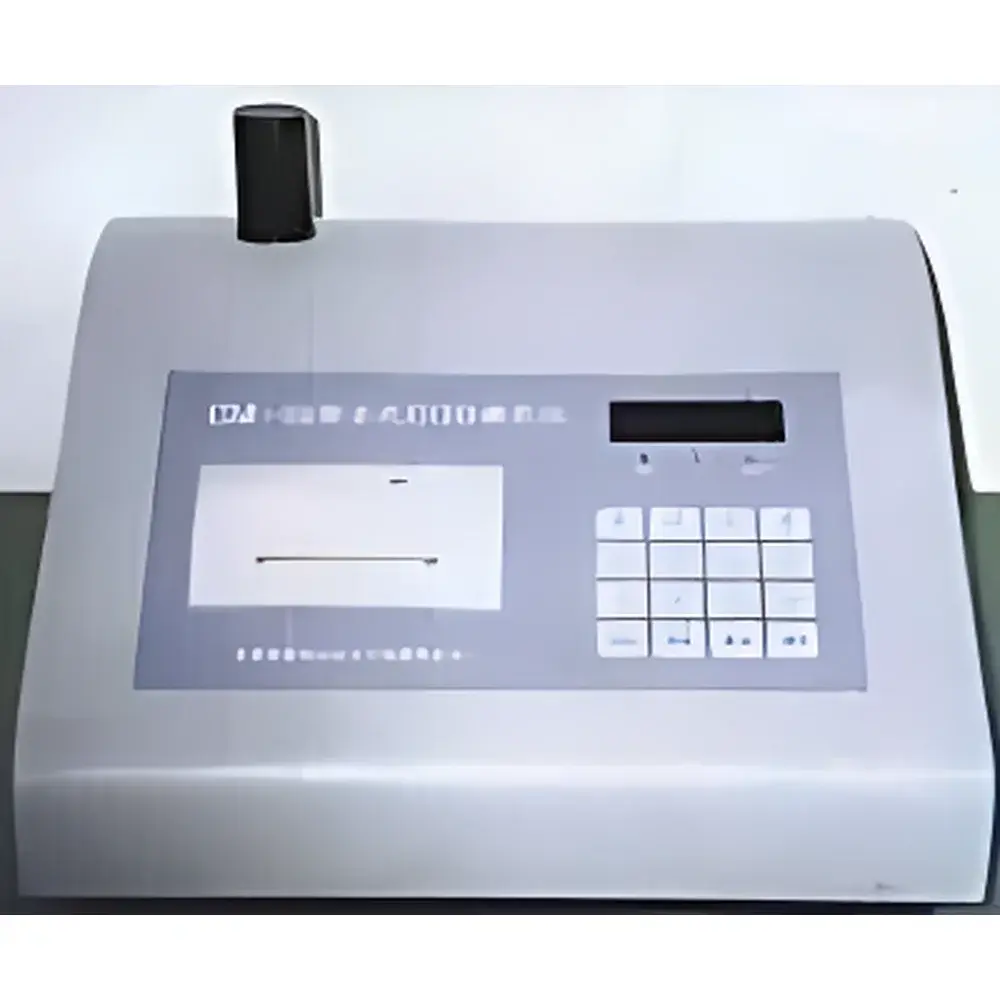
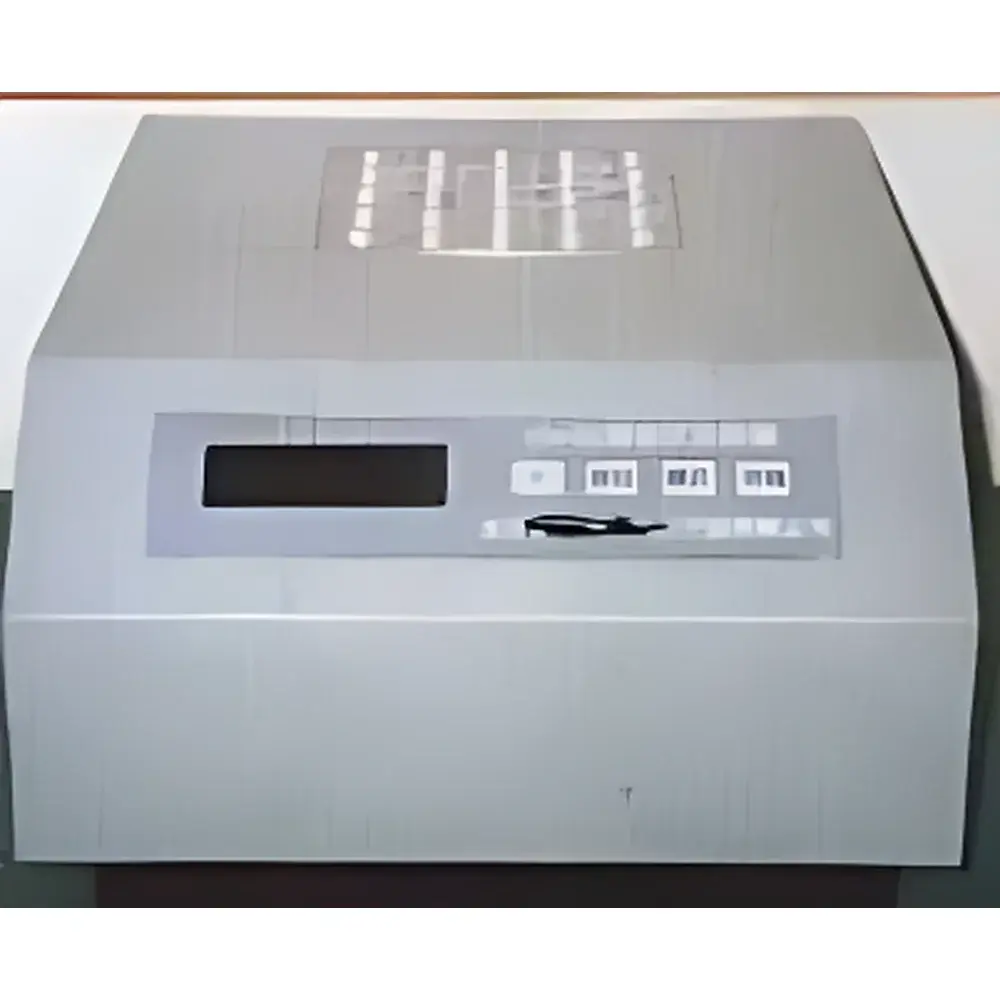
CM-02 Desktop Rapid COD Analyzer
| Origin | Beijing, China |
|---|---|
| Manufacturer Type | Authorized Distributor |
| Origin Category | Domestic (China) |
| Model | CM-02 |
| Price | Upon Request |
| Detection Range | 10–200 mg/L (low range), 50–2500 mg/L (high range) |
| LOD | 3 mg/L |
| Wavelength | 610 nm |
| Accuracy | ±5% (low range), ±4% (high range) |
| Chloride Interference Tolerance | 1000 mg/L (low), 2500 mg/L (high) |
| Measurement Time | 10–15 min |
| Heating Capacity | 25 tubes, 0–180 °C, timer 10–199 min |
| Optical Stability | ±0.003/5 min (blank) |
| Display Resolution | 0.001 |
| Operating Temperature | 5–35 °C |
| Storage Temperature | −10–45 °C |
| Power Consumption | ≤30 W (heater), ≤10 W (analyzer) |
| Weight | 3.0 kg (analyzer), 3.5 kg (full system) |
| Dimensions | 330 × 320 × 170 mm |
| Compliance | HJ/T 399–2007, EPA Method 410.4 (adapted), Standard Methods 5220D (COD by Closed Reflux Colorimetric) |
Overview
The CM-02 Desktop Rapid COD Analyzer is a benchtop spectrophotometric instrument engineered for precise, high-throughput chemical oxygen demand (COD) determination in municipal, industrial, and environmental laboratories. It implements the closed-reflux catalytic digestion method—fully aligned with China’s HJ/T 399–2007 standard and technically compatible with U.S. EPA Method 410.4 and Standard Methods for the Examination of Water and Wastewater 5220D. The system employs potassium dichromate (K₂Cr₂O₇) as the oxidant under acidic, thermally accelerated conditions, followed by photometric quantification at 610 nm. This wavelength selectively detects the reduction of Cr(VI) to Cr(III), enabling direct correlation between absorbance and COD concentration. Unlike conventional open-reflux systems, the CM-02 integrates digestion and measurement within disposable quartz reaction tubes—eliminating cross-contamination, minimizing reagent transfer steps, and enhancing analytical reproducibility. Its semiconductor-based light source and precision-stabilized optical circuit ensure long-term photometric integrity (<±0.003 absorbance units over 5 minutes on blank), supporting routine QC/QA workflows under GLP-compliant laboratory environments.
Key Features
- Integrated dual-function design: simultaneous heating and photometric analysis within the same quartz reaction tube—reducing handling errors and improving measurement repeatability.
- High-capacity digestion block accommodating 25 tubes per batch, with programmable temperature control (ambient to 180 °C) and timer (10–199 min), suitable not only for COD but also for total nitrogen (TN), total phosphorus (TP), and total chromium (Cr) digestions.
- Microprocessor-controlled operation with automated zero calibration, self-diagnostic routines, adaptive digital filtering, and real-time error detection—ensuring robust performance across variable ambient conditions (5–35 °C).
- Front-panel thermal printer for immediate hardcopy output of results, including sample ID, date/time stamp, COD value (mg/L), and measurement range used.
- RS-232 serial interface compliant with standard PC COM port protocols, enabling full data export—including raw absorbance, calibration coefficients, and digestion parameters—for traceable recordkeeping and LIMS integration.
- Low reagent consumption: 10 mL in classical open-reflux methods), reducing hazardous waste generation by >90% annually versus conventional protocols.
Sample Compatibility & Compliance
The CM-02 accepts liquid aqueous samples from diverse matrices—including domestic wastewater, industrial effluents, surface water, and treated discharge streams—provided chloride interference remains within specified limits (≤1000 mg/L for low-range mode; ≤2500 mg/L for high-range mode). Sample pretreatment (e.g., dilution or chloride masking with mercuric sulfate, if required) follows HJ/T 399–2007 guidance. All digestion chemistry conforms to nationally recognized safety thresholds: reagents contain no explosive components and exhibit low acute toxicity (LD₅₀ > 2000 mg/kg), though standard acid-handling PPE (gloves, goggles, fume hood) is mandatory. Instrument design meets IEC 61010-1:2010 safety requirements for electrical equipment used in laboratory settings. Data integrity aligns with basic ALCOA+ principles (Attributable, Legible, Contemporaneous, Original, Accurate), and audit trails can be maintained via external computer logging.
Software & Data Management
While the CM-02 operates autonomously without embedded software, its RS-232 interface supports bidirectional ASCII communication using simple command-response protocols. A dedicated terminal application (Windows-compatible, provided upon request) captures time-stamped datasets—including absorbance values, calculated COD concentrations, digestion temperature profiles, and operator-defined sample IDs. Export formats include CSV and TXT for downstream processing in Excel, MATLAB, or validated LIMS platforms. All transmitted records retain metadata essential for regulatory review: instrument serial number, firmware version, calibration date, and user login identifier (if configured externally). Though not natively 21 CFR Part 11 compliant, the system is deployable in environments where electronic records are supplemented by printed reports signed and dated by authorized personnel—meeting minimum GLP documentation requirements for routine environmental monitoring.
Applications
- Routine compliance monitoring of effluent COD against national discharge standards (e.g., GB 8978–1996, local municipal permits).
- Process control in wastewater treatment plants—tracking influent/effluent loadings, evaluating biological treatment efficiency, and optimizing aeration cycles.
- Environmental impact assessments (EIAs) requiring rapid field-lab turnaround for surface water baseline studies.
- Research applications involving oxidation kinetics, inhibitor screening, or biodegradability testing of novel organic compounds.
- Multi-analyte digestion platform: validated use cases include persulfate digestion for total phosphorus (GB/T 11893–1989) and alkaline persulfate UV digestion for total nitrogen (HJ 636–2012).
FAQ
What digestion method does the CM-02 employ?
It uses the closed-reflux catalytic digestion method per HJ/T 399–2007, with potassium dichromate in sulfuric acid medium, accelerated by silver sulfate catalyst and molybdenum/tungsten co-catalysts.
Can the CM-02 measure samples with high chloride content?
Yes—up to 1000 mg/L (low range) or 2500 mg/L (high range) without correction; beyond these levels, chloride masking with HgSO₄ is recommended per standard protocols.
Is the instrument suitable for ISO/IEC 17025-accredited labs?
It supports key technical requirements (traceable calibration, documented uncertainty estimation, environmental monitoring), though full accreditation requires lab-specific validation per ISO/IEC 17025:2017 Clause 7.2–7.8.
How often must the optical system be recalibrated?
Factory calibration remains stable for ≥12 months under normal use; verification with NIST-traceable COD standards (e.g., potassium hydrogen phthalate solution) is recommended before each analytical batch.
Does the CM-02 support remote diagnostics or firmware updates?
No—firmware is fixed at time of manufacture; diagnostic status is displayed via LED indicators and printable error codes during self-test sequences.
Related Products







