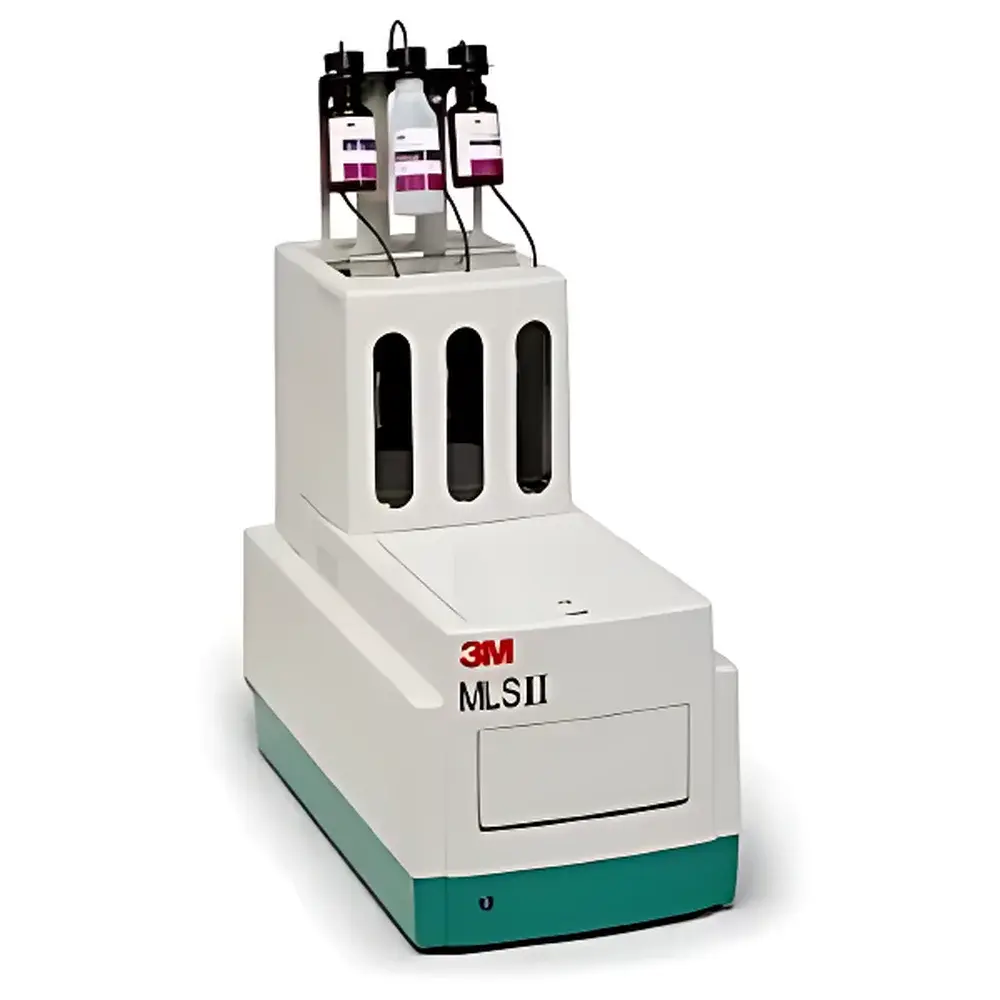
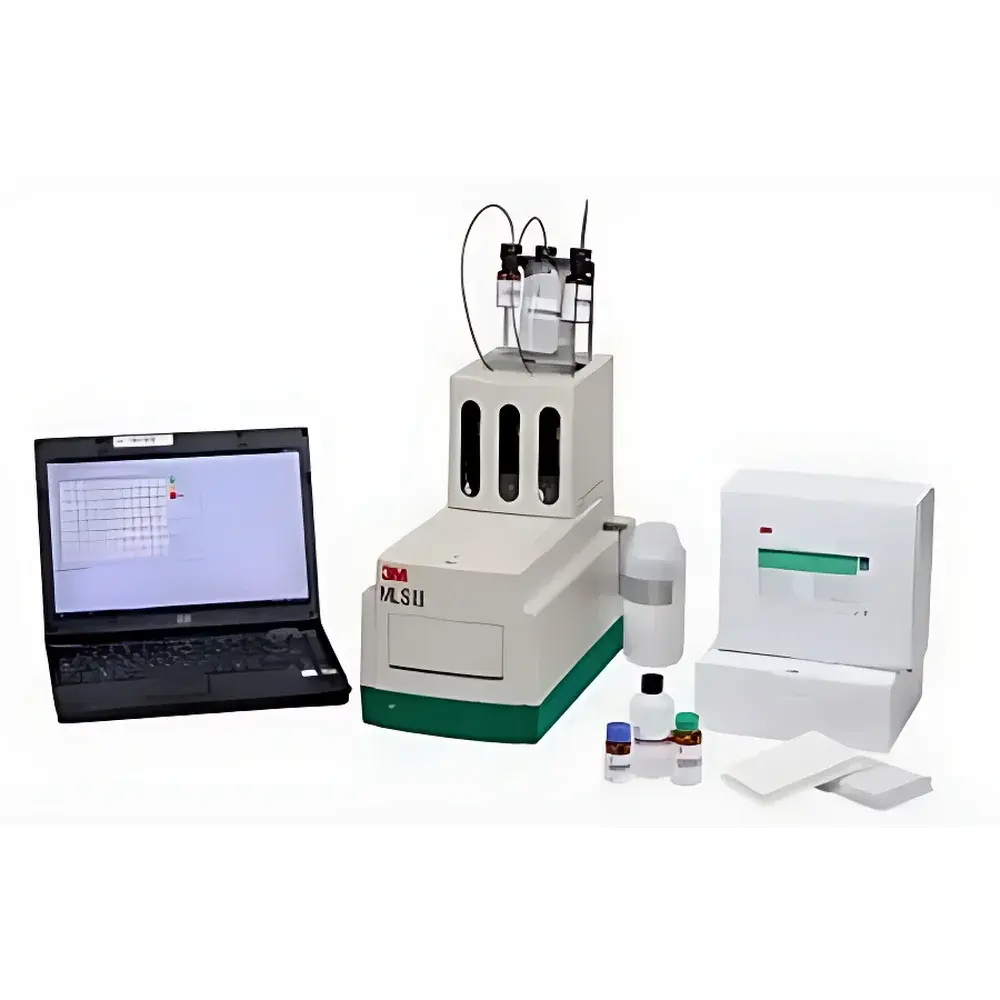
3M MLSII Microbial Luminescence Detection System
| Brand | 3M |
|---|---|
| Origin | USA |
| Manufacturer Type | Authorized Distributor |
| Import Status | Imported |
| Model | MLSII |
| Pricing | Available Upon Request |
Overview
The 3M™ MLSII Microbial Luminescence Detection System is a fully automated, ATP-based bioluminescence platform engineered for rapid commercial sterility verification in low-acid, heat-treated beverages. It leverages the universal presence of adenosine triphosphate (ATP) — an essential energy metabolite found in all viable microbial cells — as a quantitative biomarker of microbial contamination. Unlike traditional culture-based methods requiring prolonged incubation and subjective colony enumeration, the MLSII system couples ATP extraction with highly sensitive luciferase-mediated luminescence detection in a standardized 96-well microplate format. This enables objective, instrument-based quantification of microbial load within minutes post-incubation, significantly reducing time-to-result while maintaining analytical rigor aligned with ISO 11133, AOAC Official Method 2010.04, and FDA Bacteriological Analytical Manual (BAM) Chapter 3 guidelines.
Key Features
- Fully automated operation: Integrated microplate handler, reagent dispenser, and luminometer eliminate manual pipetting and minimize operator variability.
- Rapid turnaround: Total assay time reduced to ≤3 days incubation + 15–27 minutes instrument analysis — versus ≥10 days required by GB/T 4789.26 and ISO 7885 for conventional commercial sterility testing.
- High-throughput capacity: Simultaneous processing of up to 96 samples per run, supporting high-volume QC laboratories with strict batch release timelines.
- Robust detection sensitivity: Demonstrated ≥99.99% detection rate for non-sterile beverage samples across diverse matrices including UHT milk, shelf-stable soy protein drinks, and sterilized fruit nectars.
- Regulatory-ready software: Compliant with 21 CFR Part 11 requirements for electronic records and signatures, featuring audit trail, user access control, and data integrity safeguards.
Sample Compatibility & Compliance
The MLSII system is validated for use with commercially sterile, low-acid liquid foods requiring extended ambient storage — specifically targeting UHT-treated dairy products, plant-based beverages, and acidified ready-to-drink formulations. All assay protocols adhere to Good Manufacturing Practice (GMP) and Good Laboratory Practice (GLP) frameworks. Reagent kits are manufactured under ISO 13485-certified conditions and include lot-specific traceability documentation. The system supports full compliance with international standards including ISO/IEC 17025 for testing laboratory competence and aligns with risk-based validation approaches outlined in ICH Q5C and USP <1223>.
Software & Data Management
The MLSII Control Software provides intuitive workflow navigation, real-time result visualization, and automated pass/fail classification based on pre-defined ATP threshold criteria. Raw luminescence values (RLU), calculated microbial equivalents, and incubation metadata are stored in a relational database with immutable timestamps and user attribution. Export functions support CSV, PDF, and XML formats for integration into LIMS environments. Audit trails record all critical events — method edits, result overrides, calibration actions — ensuring full traceability during regulatory inspections or internal quality audits.
Applications
- Commercial sterility verification of UHT milk and extended-shelf-life dairy alternatives
- Release testing for aseptically filled plant protein beverages (e.g., almond, oat, soy)
- Process validation and environmental monitoring in beverage filling lines
- Root cause analysis of spoilage incidents in low-acid, heat-treated products
- Accelerated stability studies requiring frequent microbial endpoint assessment
FAQ
What sample types are compatible with the MLSII system?
The system is validated for liquid, low-acid, heat-processed beverages with pH >4.6 and water activity (aw) >0.85, including UHT milk, sterilized soy drinks, coconut water, and shelf-stable nutritional beverages.
Does the MLSII require method validation for new product matrices?
Yes — users must perform matrix-specific performance qualification per ISO 16140-2, verifying recovery, repeatability, and detection limit prior to routine implementation.
How is instrument calibration maintained?
Calibration is performed using NIST-traceable ATP standards supplied with each reagent kit; daily system suitability checks are automated via built-in positive/negative controls.
Can raw RLU data be exported for secondary statistical analysis?
Yes — the software exports unprocessed luminescence readings, incubation duration, and sample identifiers in comma-separated format for external analysis in JMP, Minitab, or Python-based QA pipelines.
Is the MLSII suitable for environmental swab testing?
No — the system is designed exclusively for liquid beverage samples; environmental surface testing requires dedicated ATP hygiene monitoring platforms with validated swab extraction protocols.