
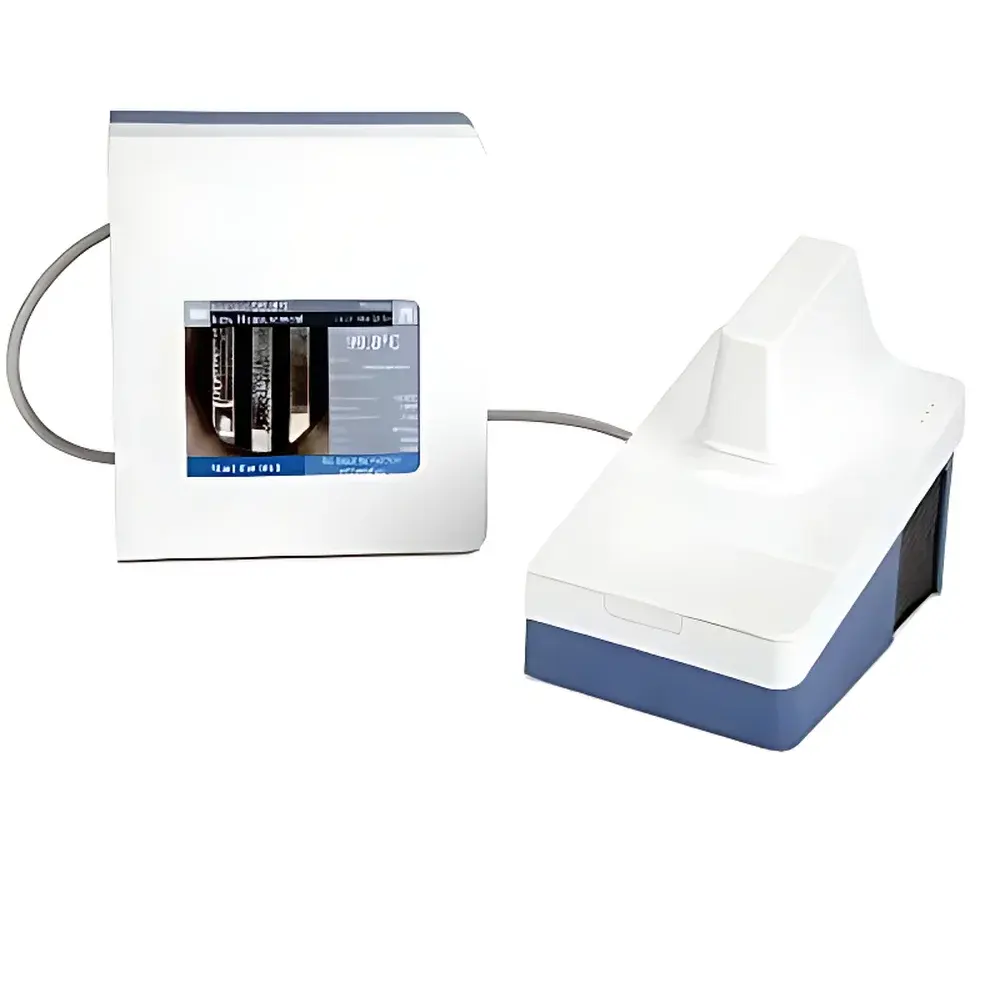
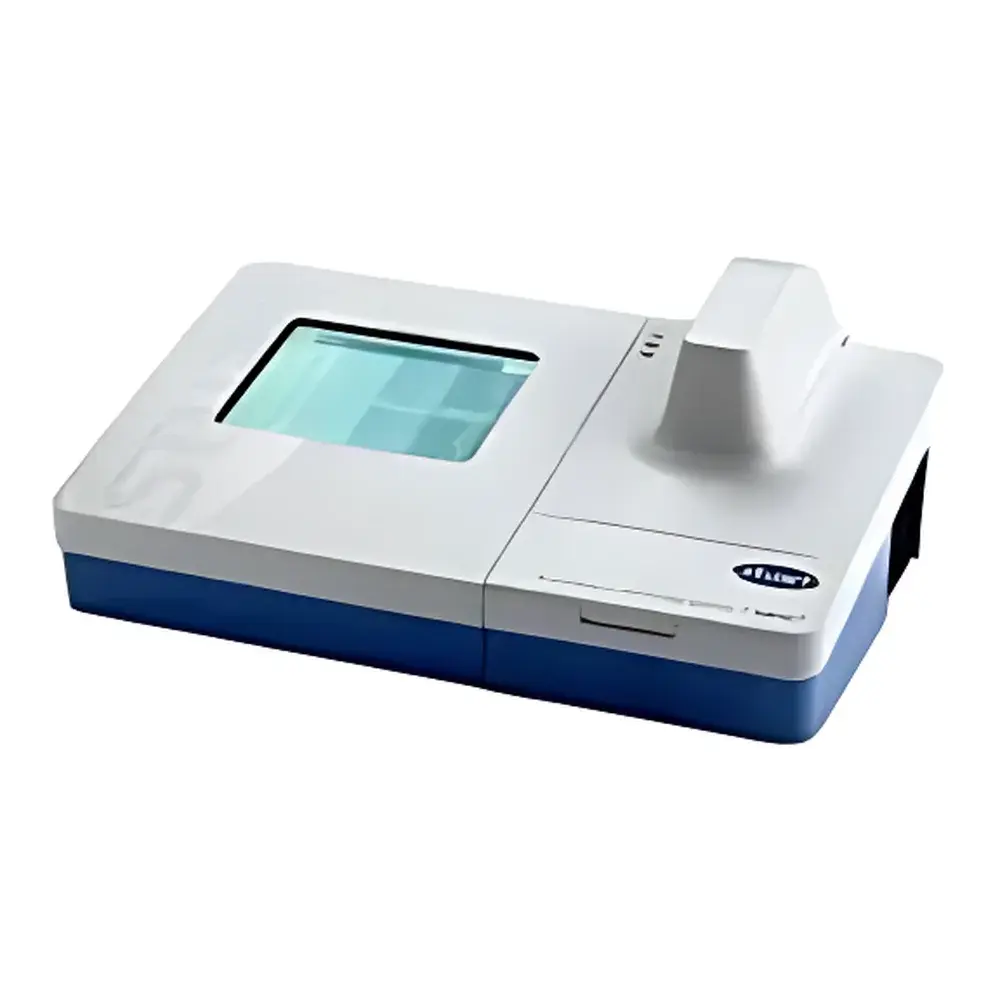
Stuart SMP40 Automated Melting Point Apparatus
| Origin | UK |
|---|---|
| Manufacturer Type | Authorized Distributor |
| Origin Category | Imported |
| Model | SMP40 |
| Price Range | USD 4,200–7,000 (est.) |
| Temperature Range | Ambient to 400 °C |
| Heating Rate | 0.1–10.0 °C/min (adjustable in 0.1 °C increments) |
| Temperature Repeatability | ±0.1 °C |
| Temperature Accuracy | ±0.1 °C |
| Capillary Length | 100 mm |
| Sample Capacity | 3 samples simultaneously |
| Temperature Resolution | 0.1 °C |
| Cooling Time (350 °C → 50 °C) | ≤10 min |
| Heating Time (50 °C → 350 °C) | ≤6 min |
| Display | 5.7″ color VGA touchscreen |
| Sensor | PT100 platinum resistance thermometer |
| Data Storage | 200+ test records with full AVI video capture |
| Power Supply | 230 V / 50 Hz, 60 W |
| Dimensions (W×D×H) | 175 × 210 × 328 mm |
| Net Weight | 3.2 kg |
Overview
The Stuart SMP40 Automated Melting Point Apparatus is a precision thermal analysis instrument engineered for regulatory-compliant determination of solid-phase transition temperatures in pharmaceutical, chemical, and academic laboratories. It operates on the principle of real-time digital image analysis of capillary-contained samples under controlled linear heating, enabling objective, operator-independent endpoint detection based on morphological changes—specifically, the onset and completion of sample liquefaction. Unlike manual or semi-automated systems reliant on visual interpretation, the SMP40 employs high-resolution VGA imaging synchronized with calibrated PT100 temperature sensing to deliver traceable, auditable melting point data aligned with pharmacopoeial standards including USP <741>, EP 2.2.17, and JP 2.60. Its ambient-to-400 °C operational range supports characterization of both low-melting organics and high-temperature polymers, while its 0.1 °C temperature resolution and repeatability meet stringent method validation requirements for QC release testing.
Key Features
- Triple-sample capacity with independent thermal profiling per capillary—enabling parallel analysis without cross-contamination or thermal lag interference.
- 5.7″ color VGA touchscreen interface with auto-orienting display logic—supports both landscape and portrait operation modes for ergonomic use in fume hoods or benchtop workflows.
- Integrated AVI video capture functionality: records full-resolution thermal progression videos synchronized with temperature/time stamps; stored internally (200+ sessions) and exportable via USB to PC using Stuart’s free ActiveSync-compatible software.
- Modular split-body architecture: physically isolates the temperature-controlled sample chamber from the control electronics module—reducing thermal drift, improving long-term stability, and facilitating installation within confined or ventilated enclosures.
- Biocote® antimicrobial coating applied to all external housing surfaces—validated per ISO 22196 for >99.9% reduction of common environmental microbes, supporting cleanroom-adjacent handling protocols.
- Dedicated capillary and glassware storage drawer with segregated compartments—holds 100 standard 100-mm capillaries (SMP2/1, SMP10/1, SMP1/4 formats) plus cutting tools, minimizing workflow interruption.
- Patented safety guard on the right-hand side of the sample chamber—mechanically shields internal LED illumination and prevents accidental impact during capillary loading.
Sample Compatibility & Compliance
The SMP40 accepts standard 100-mm outer-diameter capillaries (1.0–1.2 mm ID), compatible with both single- and double-end sealed configurations. It supports crystalline solids, hydrates, solvates, and thermally stable APIs without requiring derivatization or matrix dilution. All instruments ship with an accredited calibration certificate traceable to NPL (UK National Physical Laboratory), listing serial number, verification date, and as-tested deviations at three reference points (50 °C, 150 °C, 300 °C). The system conforms to Good Laboratory Practice (GLP) and Good Manufacturing Practice (GMP) documentation requirements, including audit-trail-capable data logging, user-access controls, and electronic signature readiness. While not inherently 21 CFR Part 11 compliant out-of-the-box, it supports integration into validated environments when deployed with Stuart’s optional IQ/OQ documentation package and networked time-server synchronization.
Software & Data Management
Data acquisition and playback are managed through the embedded firmware and complementary desktop software. Each test record includes: timestamped temperature/time curve, annotated melting onset/offset points, raw AVI video file (MPEG-4 encoded, playable natively on Windows/macOS), and metadata (user ID, sample ID, method name, calibration status). Export options include CSV (for LIMS ingestion), PDF reports (with embedded thumbnails and summary statistics), and AVI archives. The USB port supports direct connection to flash drives or host PCs—no proprietary drivers required. Firmware updates are delivered via downloadable .bin files and installed through the touchscreen interface, maintaining version control across multi-unit deployments.
Applications
- Pharmaceutical QC: Identity confirmation and purity assessment of active pharmaceutical ingredients (APIs) per ICH Q5 and Q6A guidelines.
- Polymorph screening: Differentiation of solid-state forms (e.g., Form I vs. Form II) where subtle melting point depressions or ranges indicate phase heterogeneity.
- Chemical synthesis validation: Endpoint monitoring in purification steps such as recrystallization or freeze-drying.
- Academic research: Teaching fundamental thermal behavior concepts in organic chemistry labs with reproducible, digitally archived results.
- Regulatory submissions: Generation of GLP-compliant datasets for ANDA, NDA, or CMC sections requiring documented thermal characterization.
FAQ
Does the SMP40 require annual recalibration?
Yes—Stuart recommends annual verification against certified reference materials (e.g., NIST SRM 721, 150p, 340) to maintain traceability. A full recalibration service is available through authorized service centers.
Can the instrument be integrated into a LIMS environment?
Direct LIMS connectivity is not built-in, but CSV exports and standardized timestamps enable seamless import into most laboratory information management systems via scheduled batch transfers.
What capillary types are supported?
Standard 100-mm glass capillaries with 1.0–1.2 mm inner diameter—available in double-sealed (SMP2/1), single-sealed (SMP10/1), and open-ended (SMP1/4) variants. Quartz capillaries are not supported due to differential thermal expansion characteristics.
Is cooling performance affected by ambient temperature?
The Peltier-assisted cooling system maintains specified 350 °C → 50 °C cycle times only within 18–28 °C ambient conditions. Operation above 30 °C may extend cooling duration by up to 25%.
How is user access controlled?
The firmware supports three permission levels (Operator, Supervisor, Administrator) with password protection. Audit logs record all method modifications, calibration events, and data deletions—including user ID and timestamp.



