
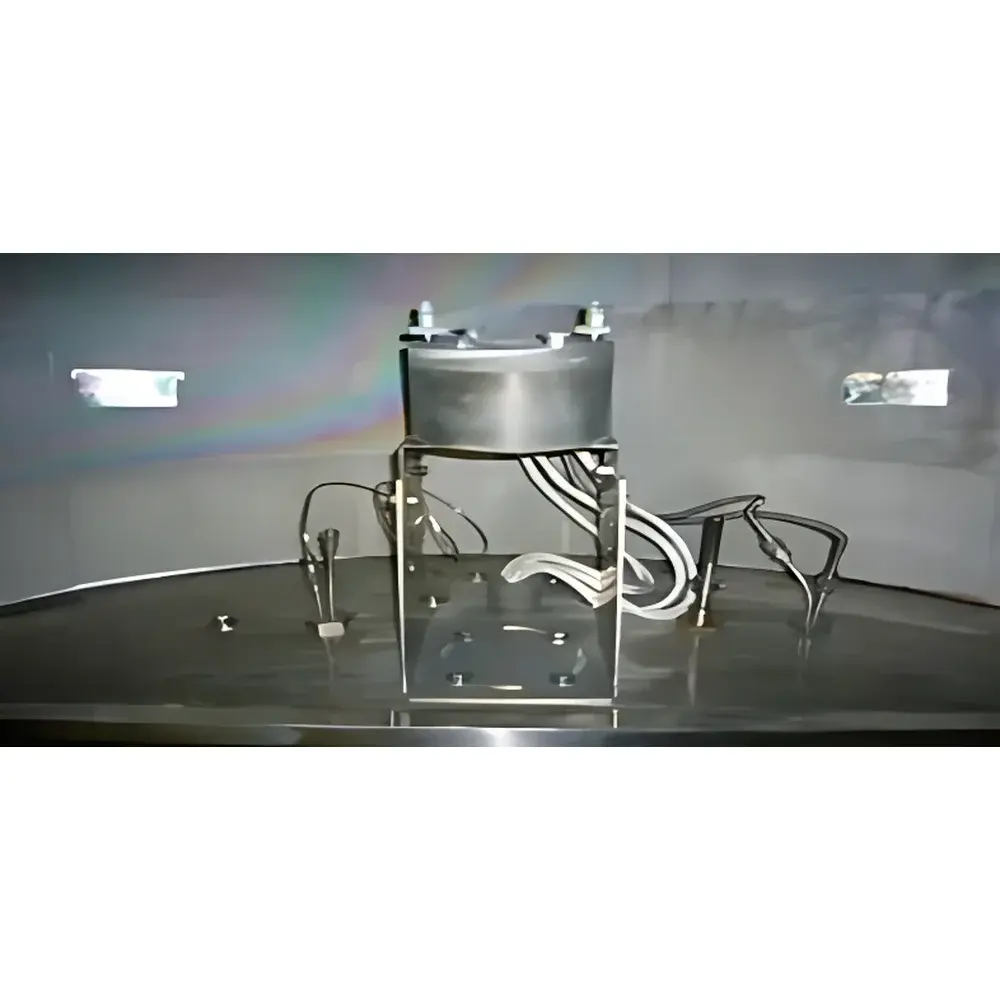
KRI Ion Beam Source by Kaufman & Robinson, Inc. (KRI) – Grid and Gridless Ion Sources for Thin-Film Processing
| Brand | Kaufman & Robinson, Inc. (KRI) |
|---|---|
| Origin | Germany |
| Manufacturer Type | Authorized Distributor |
| Origin Category | Imported |
| Model | KRI Ion Beam Source Series |
| Pricing | Upon Request |
Overview
The KRI Ion Beam Source series—engineered by Kaufman & Robinson, Inc. (KRI), USA—is a family of high-reliability, vacuum-compatible ion sources designed for precision thin-film engineering in ultra-high vacuum (UHV) and high-vacuum (HV) environments. Rooted in the foundational work of Dr. Harold R. Kaufman, who pioneered gridded ion beam technology at NASA Lewis Research Center in the 1960s, KRI sources implement two distinct physical principles: (1) thermionic or hollow-cathode–driven gridded ion optics (Kaufman-type), enabling tightly collimated, energy-controlled beams with energies up to 2 keV; and (2) magnetically confined, gridless Hall-effect discharge (eH-series), generating broad-area, low-energy ion fluxes ideal for ion-assisted deposition (IBAD) and surface activation. These sources operate on inert gases (Ar, Xe, Kr) or reactive species (O₂, N₂, O₂/Ar mixtures) and are fully compatible with standard UHV flange interfaces (CF, ISO-K, ISO-F). All models are rated for continuous operation at base pressures ≤5 × 10⁻⁷ mbar and feature integrated filament protection, thermal management, and gas flow regulation.
Key Features
- Two architecture families: Gridded (KDC, RFICP) and gridless Hall-effect (eH) ion sources—each optimized for distinct process requirements (etching vs. assisted deposition)
- Gridded sources deliver high-energy, low-divergence ion beams (40–300 eV typical acceleration, up to 2 keV optional) with excellent energy resolution and long-term stability
- Hall-effect sources provide uniform, wide-area ion flux (beam diameters up to 500 mm) at lower energies (10–150 eV), minimizing substrate damage while enhancing film density and adhesion
- All units incorporate modular anode/cathode assemblies, replaceable grids (for gridded variants), and standardized electrical feedthroughs compliant with IEEE 1187 and SEMI E172
- Integrated gas inlet ports support mass-flow controller (MFC)-based delivery of single or mixed gases with leak-tight metal-sealed connections
- Designed for seamless integration into OEM vacuum platforms—including Pfeiffer Classic coaters, 4Wave etch systems, and custom IBSD/IBAD chambers—via standardized CF-63/CF-100 mounting configurations
Sample Compatibility & Compliance
KRI ion sources are qualified for use with substrates ranging from fused silica and CaF₂ optical blanks to silicon wafers, metallic alloys (Inconel, Ti-6Al-4V), and polymer films (PET, PI). No sample size limitation is imposed by the source itself—the beam footprint and uniformity are determined by source-to-substrate distance and chamber geometry. All KRI models meet ISO 14644-1 Class 5 cleanroom assembly standards and are constructed using oxygen-free high-conductivity (OFHC) copper, 316L stainless steel, and alumina ceramics. Electrical safety complies with UL 61010-1 and IEC 61000-6-4 (EMC immunity). For regulated manufacturing environments, KRI sources support audit-ready documentation packages aligned with ISO 9001:2015 and FDA 21 CFR Part 11–compliant control system integration (when paired with certified PLC or SCADA interfaces).
Software & Data Management
While KRI ion sources operate as hardware-integrated subsystems (not standalone instruments), they interface with industry-standard vacuum control platforms via analog (0–10 V, 4–20 mA) and digital (RS-485 Modbus RTU, Ethernet/IP) protocols. Full operational parameters—including discharge current, anode voltage, cathode heater power, and gas flow setpoints—are accessible through OEM control software (e.g., Pfeiffer Vacuum ProcessControl, 4Wave ControlSuite) or third-party LabVIEW™ or Python-based automation frameworks. Optional KRI-supplied monitoring modules provide real-time arc detection, filament resistance trending, and beam current logging—data exportable in CSV or HDF5 format for GLP/GMP traceability. Firmware updates follow secure signed-package protocols compliant with NIST SP 800-193 guidelines.
Applications
- Optical Coating (OC): eH-series Hall sources (eH 200, eH 400, eH 1000, eH 5000F) enable high-uniformity, low-stress dielectric stacks (TiO₂/SiO₂, Ta₂O₅/SiO₂) with improved refractive index control and reduced scatter
- Ion Beam Assisted Deposition (IBAD): eH 1010F/eH 1020F deliver controlled pre- and co-deposition bombardment for enhanced adhesion and densification of Al, Cr, and Zr coatings on aerospace components
- Ion Beam Sputter Deposition (IBSD): RFICP and KDC gridded sources (RFICP 40/100/300; KDC 10/40/75) serve as primary sputter guns for stoichiometric compound targets (ITO, YBCO, MgF₂), achieving sub-Å thickness repeatability
- Ion Beam Etching (IBE): High-energy RFICP sources (RFICP 40–300) perform anisotropic, maskless etching of Si, GaAs, and quartz with <1 nm/min rate control and <0.5° sidewall angle tolerance
- Surface Modification: Low-energy Hall beams facilitate polymer surface activation (e.g., PET, PC) prior to metallization or adhesive bonding—validated per ASTM D257 and ISO 4582
FAQ
What distinguishes a gridded (Kaufman-type) ion source from a gridless (Hall-effect) source?
Gridded sources use electrostatic acceleration through multiple mesh electrodes to produce monoenergetic, collimated beams—ideal for etching and high-resolution sputtering. Gridless Hall sources rely on crossed electric and magnetic fields to sustain plasma and extract diffuse, low-energy ions over large areas—optimized for gentle surface treatment and IBAD.
Are KRI ion sources compatible with reactive gas chemistries (e.g., O₂, N₂)?
Yes—KRI sources support reactive gas operation with appropriate cathode material selection (e.g., LaB₆ or BaO-coated tungsten filaments) and oxidation-resistant anode coatings. Reactive mode performance data (e.g., oxide etch rates, nitride film stress) is available upon request under NDA.
Do KRI ion sources require water cooling?
Standard eH-series Hall sources operate air-cooled up to 1.5 kW discharge power. Gridded RFICP and KDC models rated above 800 W include integrated water-cooling channels with 3/8″ NPT inlet/outlet ports and pressure-sensor interlocks.
Can KRI sources be retrofitted into existing vacuum systems?
Yes—KRI offers flange adapters (CF-63 to ISO-K, CF-100 to DN200), custom-length beam tubes, and electrical harness kits for field retrofitting. Mechanical and electrical integration drawings are provided with each quotation.
What documentation is included with each shipment?
Each unit ships with EU Declaration of Conformity (CE), RoHS/REACH compliance statement, full mechanical drawing package (STEP/IGES), operational manual (EN/DE/JP), and traceable calibration report for discharge voltage/current linearity (NIST-traceable multimeter verification).






