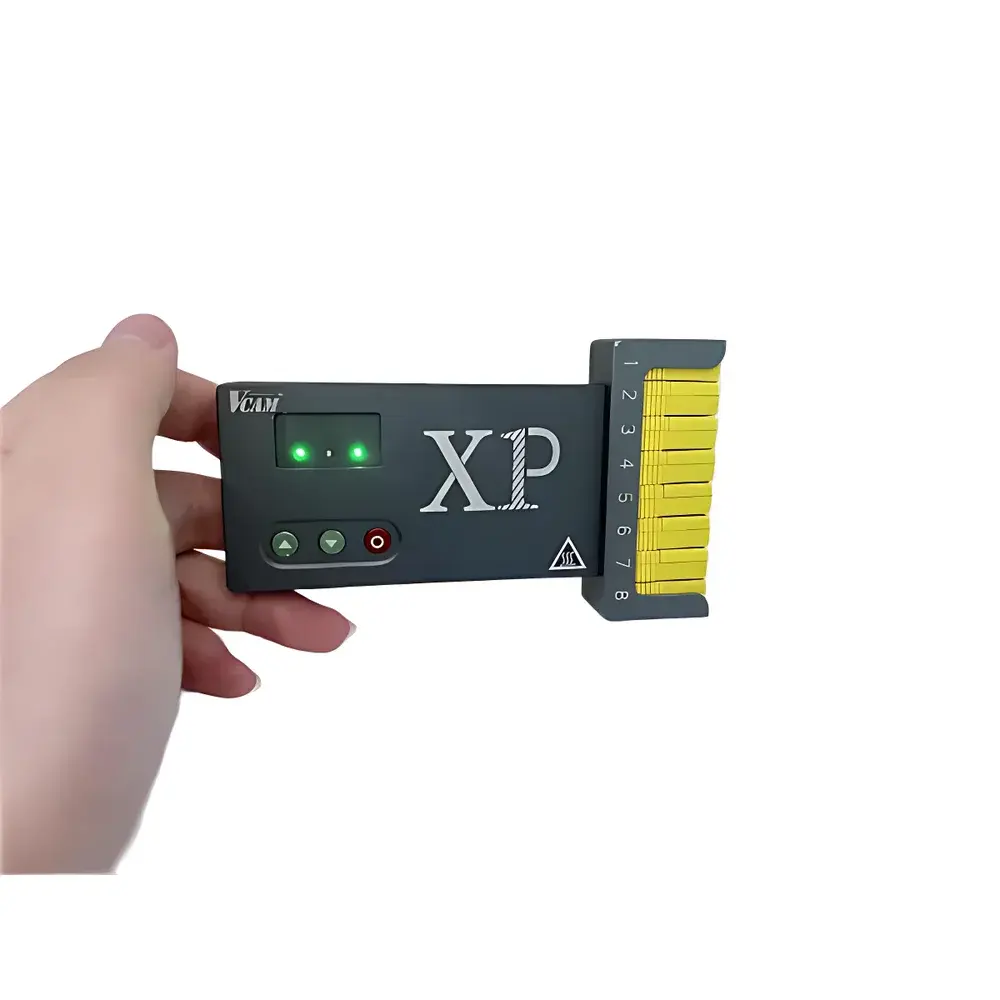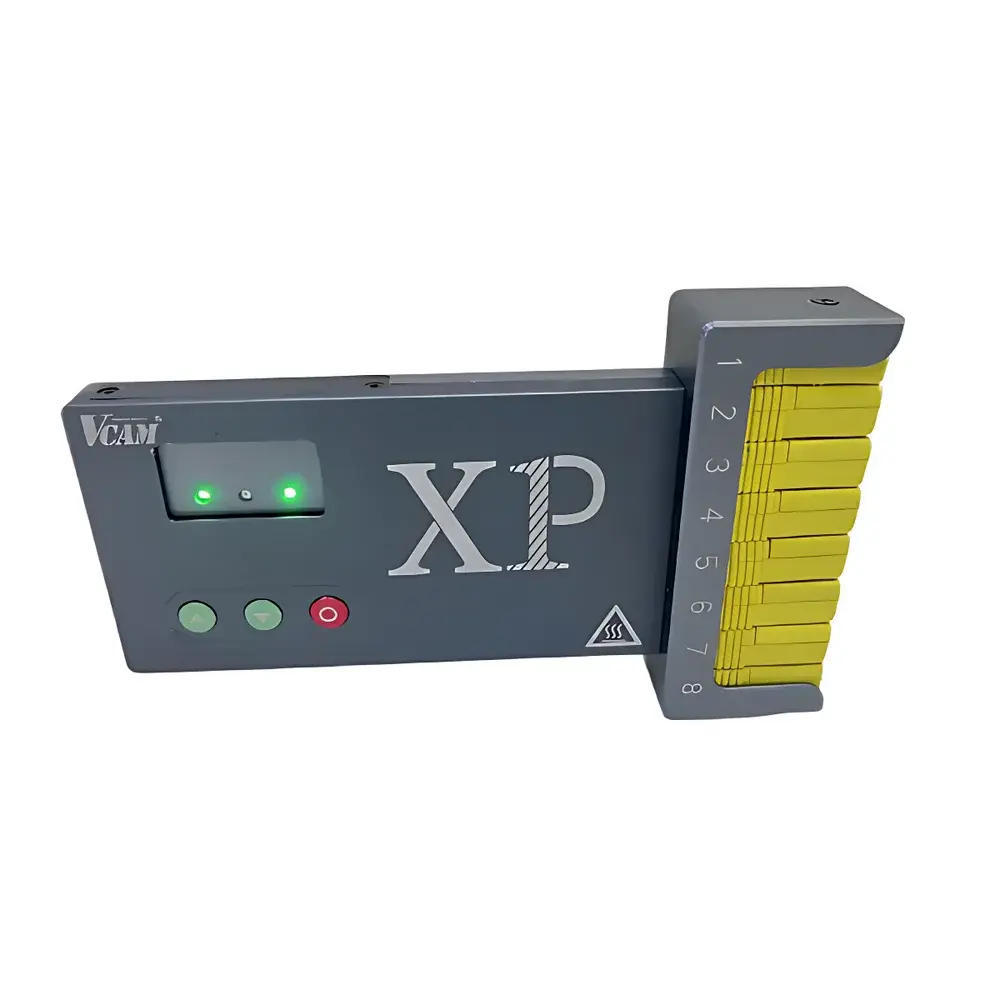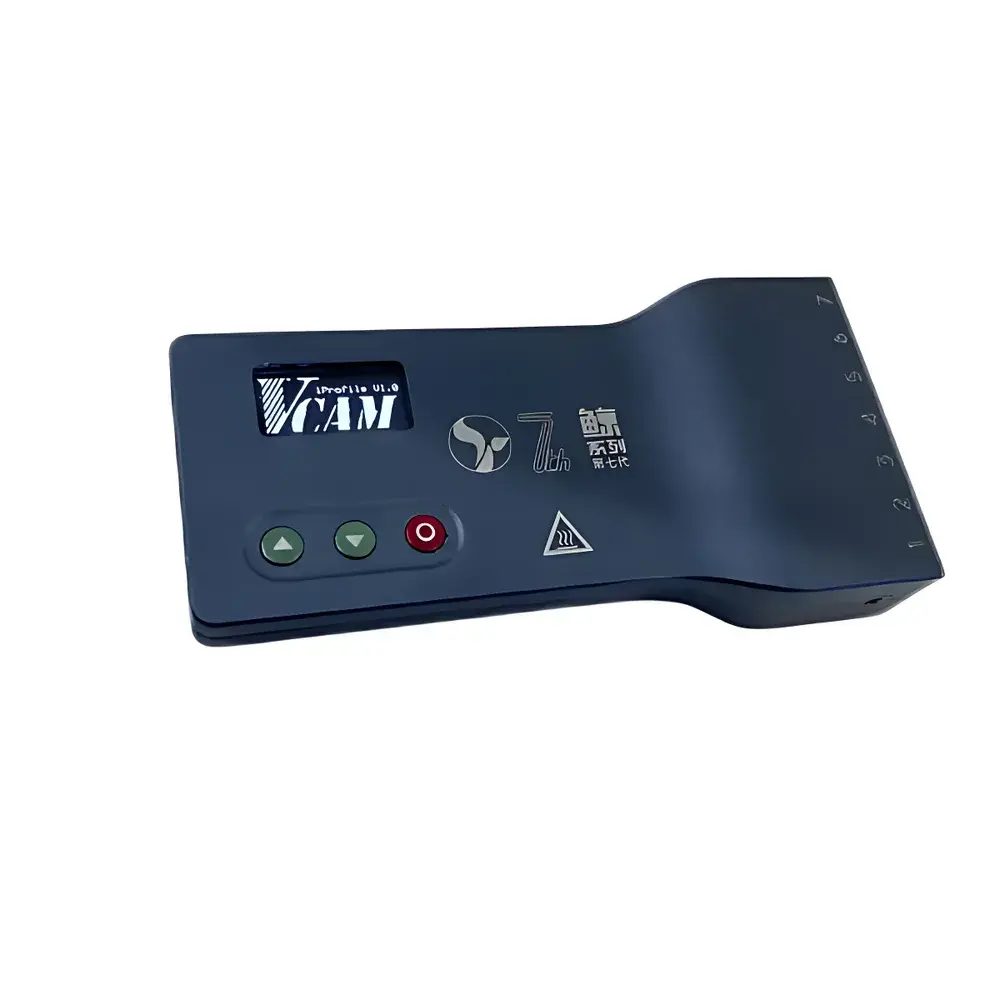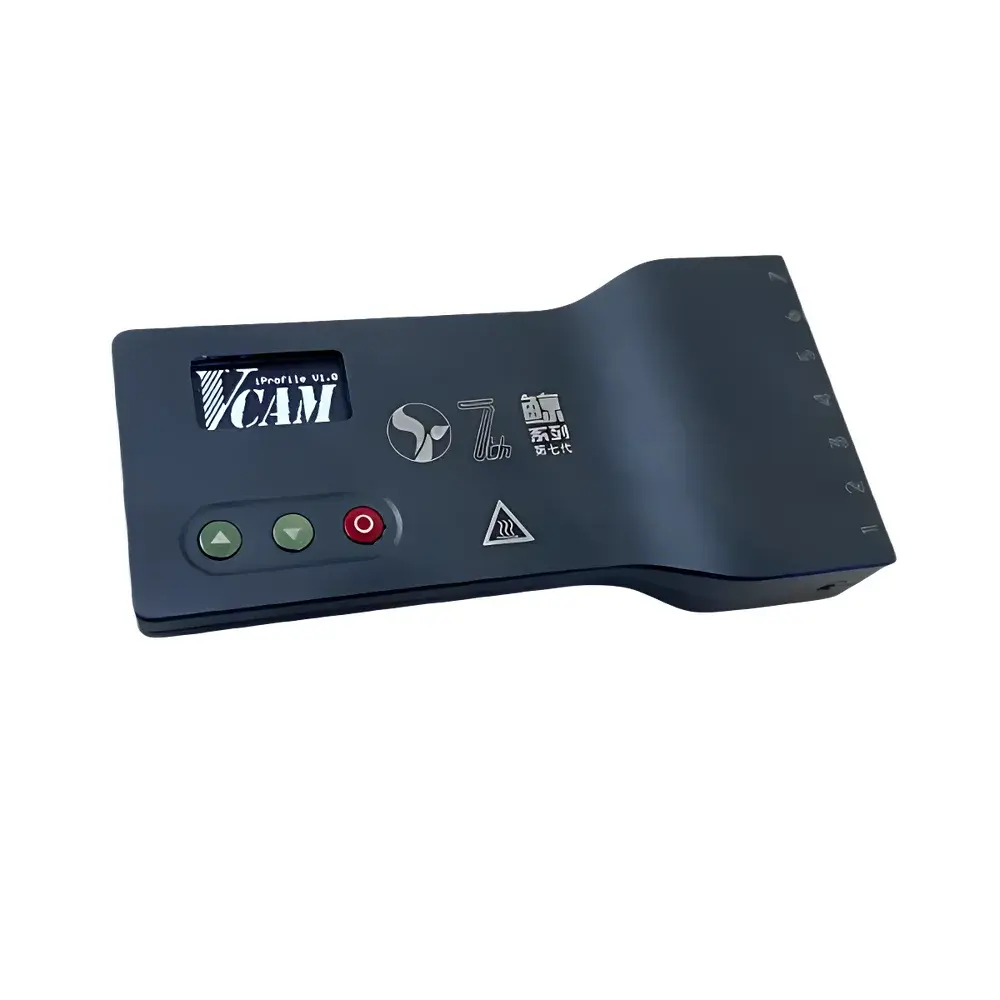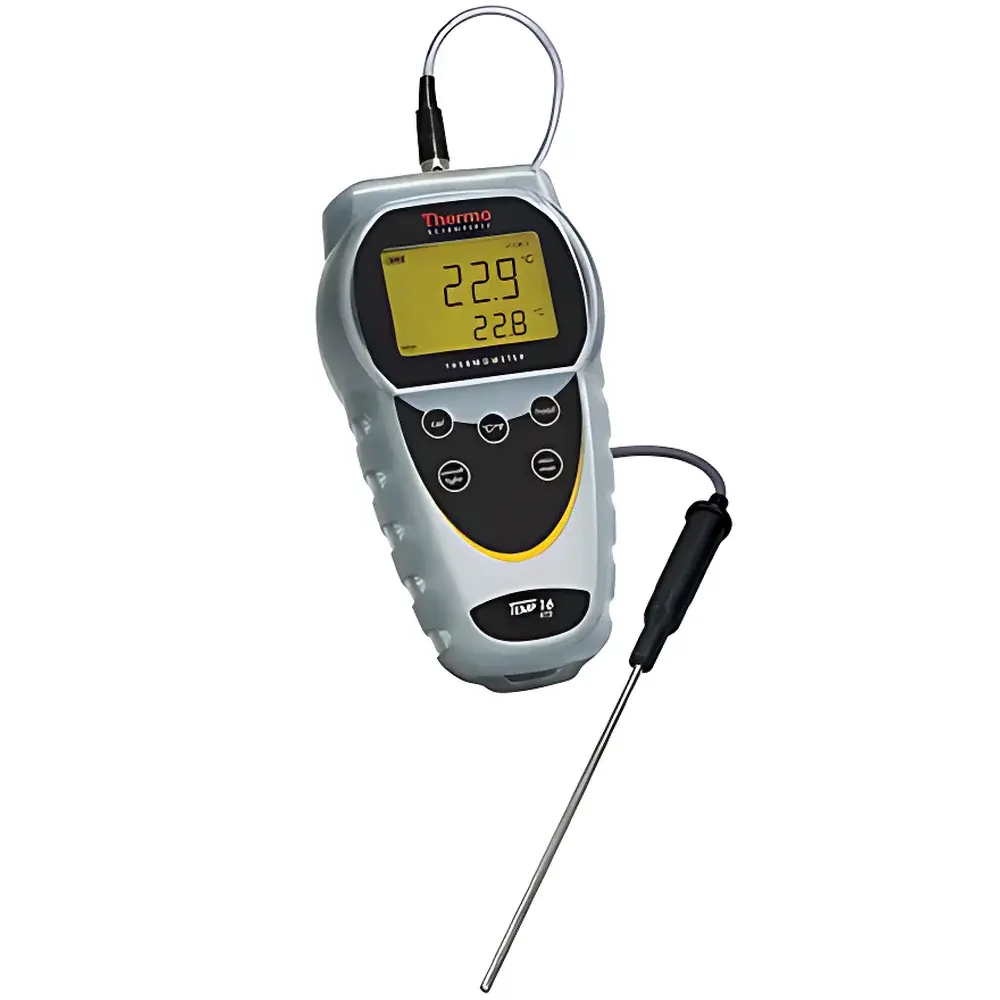
Thermo Fisher Scientific Temp 16 Single-Channel Precision RTD Temperature Meter
| Brand | Thermo Fisher Scientific |
|---|---|
| Origin | Singapore |
| Manufacturer | Yes |
| Import Status | Imported |
| Model | Temp 16 |
| Price | Upon Request |
| Measurement Range | −200.0 to +850.0 °C (−392.0 to +1562.0 °F) |
| Resolution | 0.1 °C / 0.1 °F (−200.0–999.9), 1 °F (1000–1562) |
| Accuracy | ±2.0 °C (−200.0 to −100.0 °C), ±0.2 °C (−99.9 to +199.9 °C), ±2.0 °C (+200.0 to +850.0 °C) |
| Display | 58 × 40 mm backlit LCD, dual-line |
| Min/Max Hold | Yes |
| Auto Power-Off | 17.5 min (configurable) |
| Data Hold & Stability Indicator | Yes |
| Input | Single-channel 3-pin TA3F connector |
| Power | 3 × AA 1.5 V alkaline batteries (>750 h without backlight) |
| Operating Environment | −20 to +50 °C, 10–90 % RH (non-condensing) |
| Storage | −40 to +65 °C, 10–90 % RH |
| Dimensions (w/o case) | 175 × 97 × 42 mm |
| Weight (w/o case) | 267 g |
| Enclosure Rating | IP54 |
| Compliance | CE (EN 61326-1/A1:1998), IEC 529 |
Overview
The Thermo Fisher Scientific Temp 16 is a single-channel precision resistance temperature detector (RTD) meter engineered for laboratory, industrial process, and quality control environments requiring traceable, high-stability temperature measurements across an exceptionally wide thermal range. It operates on the fundamental principle of measuring the electrical resistance change of platinum-based RTD sensors (e.g., Pt100 or Pt1000), which exhibit a well-defined, repeatable, and nearly linear relationship with temperature per IEC 60751 and ASTM E1137 standards. Unlike thermocouple-based instruments, the Temp 16 eliminates cold-junction compensation uncertainty and delivers superior long-term stability and repeatability—critical for applications governed by ISO/IEC 17025, FDA 21 CFR Part 11, and GMP/GLP-compliant workflows. Its robust architecture, sealed keypad, and IP54-rated enclosure ensure reliable operation in demanding settings—from cleanroom QC labs to manufacturing floors and food processing lines.
Key Features
- High-resolution dual-line backlit LCD (58 × 40 mm) enabling simultaneous display of real-time reading and user-accessible min/max values—even under low-light or high-glare conditions.
- Three-point accuracy profile optimized for metrological integrity: ±0.2 °C within the critical −99.9 to +199.9 °C range (e.g., calibration baths, incubators, sterilization validation), with expanded tolerance at cryogenic and high-temperature extremes where sensor self-heating and lead-wire resistance effects dominate.
- Integrated stability indicator and manual data hold function, supporting documented measurement protocols requiring visual confirmation of thermal equilibrium before recording.
- Intuitive one-button ice-point calibration (using certified 0.0 °C reference bath) and configurable auto-power-off (17.5 min default) to extend battery life beyond 750 hours (alkaline, no backlight).
- Ruggedized ABS housing with overmolded rubber boot, integrated kickstand, and multiple mounting options—including magnetic base attachment, strap suspension, and desktop placement—enabling flexible deployment across static and mobile use cases.
Sample Compatibility & Compliance
The Temp 16 accepts standard 2-, 3-, or 4-wire Pt100/Pt1000 RTD probes via its TA3F 3-pin circular connector, supporting industry-standard probe configurations without external signal conditioning. It is compatible with Class A and Class B RTDs per IEC 60751, and supports common industrial probe form factors—including sheathed, surface-mount, and immersion-style sensors—for direct contact measurement of liquids, gases, solids, and surfaces. The instrument complies with EN 61326-1/A1:1998 for electromagnetic compatibility in industrial environments and meets IEC 529 IP54 requirements for dust resistance and protection against water splashes from any direction. Its design facilitates audit-ready documentation when used in regulated sectors: the absence of internal memory or wireless transmission ensures deterministic behavior, while its fixed calibration architecture aligns with ISO 17025 clause 6.5.2 on equipment verification and traceability.
Software & Data Management
The Temp 16 operates as a standalone, firmware-based measurement terminal with no embedded software stack, cloud connectivity, or proprietary drivers—eliminating cybersecurity vulnerabilities and reducing validation burden in regulated laboratories. All readings are displayed locally only; no data logging, export, or PC interface is provided, preserving measurement integrity and simplifying 21 CFR Part 11 compliance for manual record-keeping systems. For users requiring digital capture, third-party analog-to-digital interfaces (e.g., USB DAQ modules) may be connected downstream of calibrated RTD transmitters—but the Temp 16 itself functions strictly as a high-fidelity analog readout device, consistent with ALCOA+ principles of attributable, legible, contemporaneous, original, and accurate data generation.
Applications
- Chemical synthesis monitoring: Tracking exothermic reaction profiles and jacket temperature uniformity in pilot-scale reactors.
- Food safety validation: Verifying cold chain integrity during storage and transport, and validating thermal processing parameters (e.g., pasteurization hold times at ≥72 °C).
- Automotive component testing: Measuring surface temperatures of brake rotors, exhaust manifolds, and battery modules under dynamic load conditions.
- Pharmaceutical manufacturing: Supporting environmental monitoring of stability chambers (ICH Q1), autoclave cycle qualification, and lyophilizer shelf temperature mapping.
- Metal heat treatment: Monitoring furnace zones and quench media during annealing, tempering, and hardening processes up to 850 °C.
FAQ
What RTD probe types are supported?
The Temp 16 accepts standard 2-, 3-, and 4-wire Pt100 and Pt1000 RTD sensors. Probe wiring configuration must match the instrument’s internal excitation and lead-compensation logic; 3-wire connection is recommended for optimal accuracy in field installations.
Does the instrument support data logging or PC connectivity?
No. The Temp 16 is a dedicated analog readout device with no internal memory, USB port, Bluetooth, or serial interface. Data recording requires manual transcription or external DAQ integration.
Is the calibration traceable to national standards?
Yes—when calibrated using NIST-traceable reference sources (e.g., dry-block calibrators or precision baths), the Temp 16’s measurement uncertainty can be formally documented per ISO/IEC 17025. Factory calibration certificates are available upon request.
Can it be used in hazardous locations?
No. The Temp 16 is not intrinsically safe or ATEX/IECEx certified. It is intended for general-purpose industrial and laboratory use only.
What is the battery life under typical usage?
With alkaline AA cells and backlight disabled, battery life exceeds 750 hours. Backlight activation reduces operational duration proportionally; battery status is indicated via on-screen icon prior to depletion.