
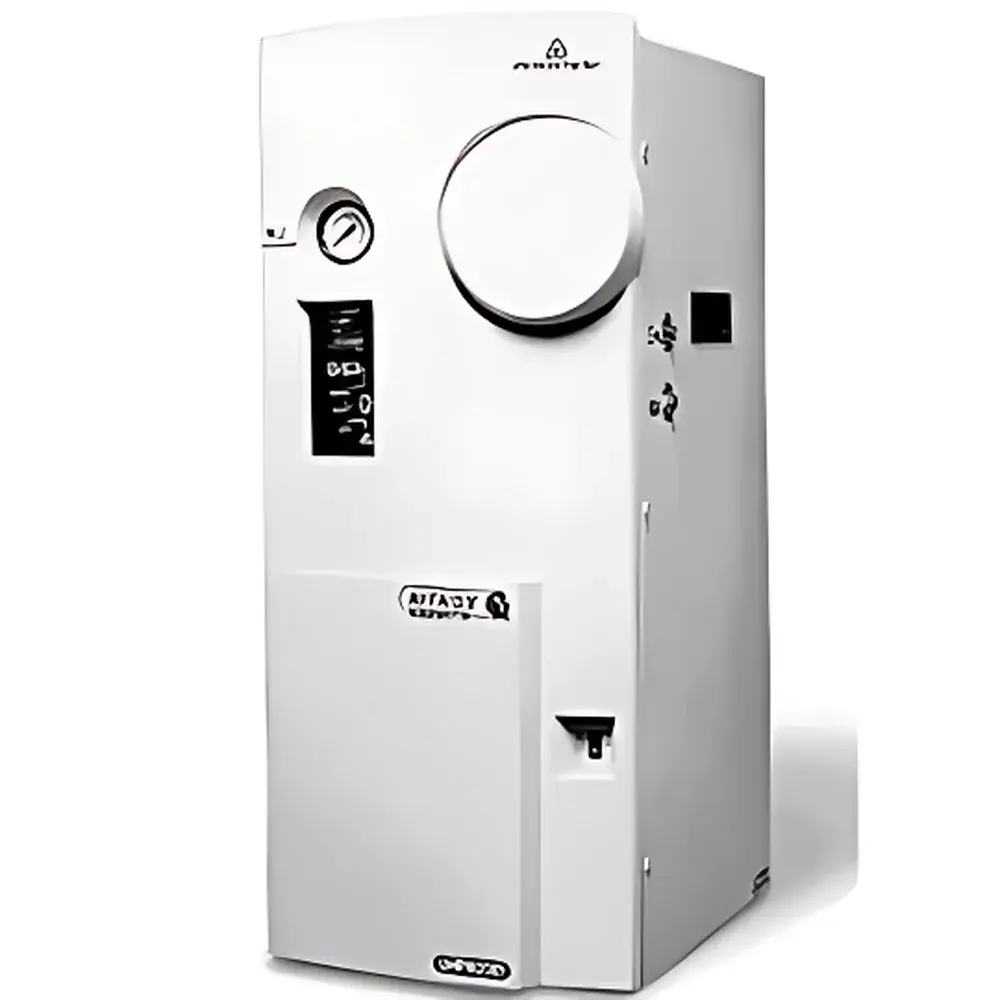
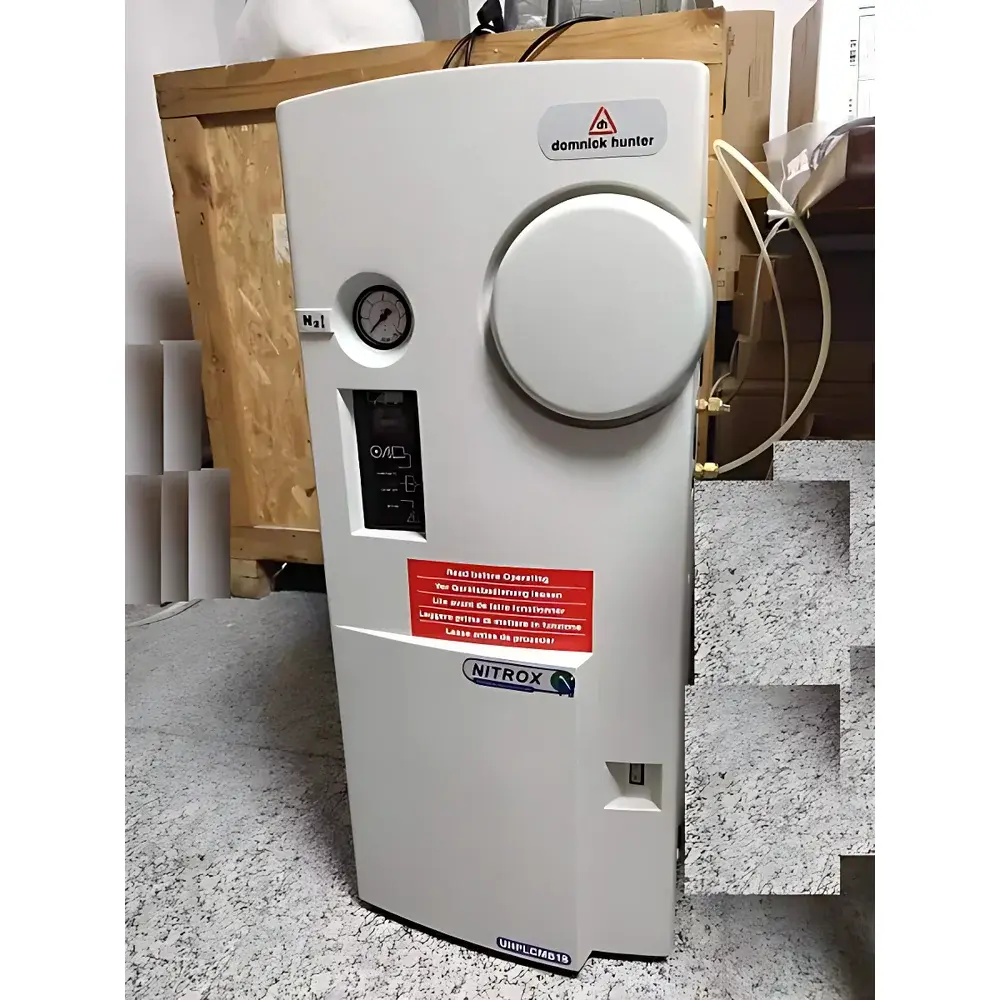
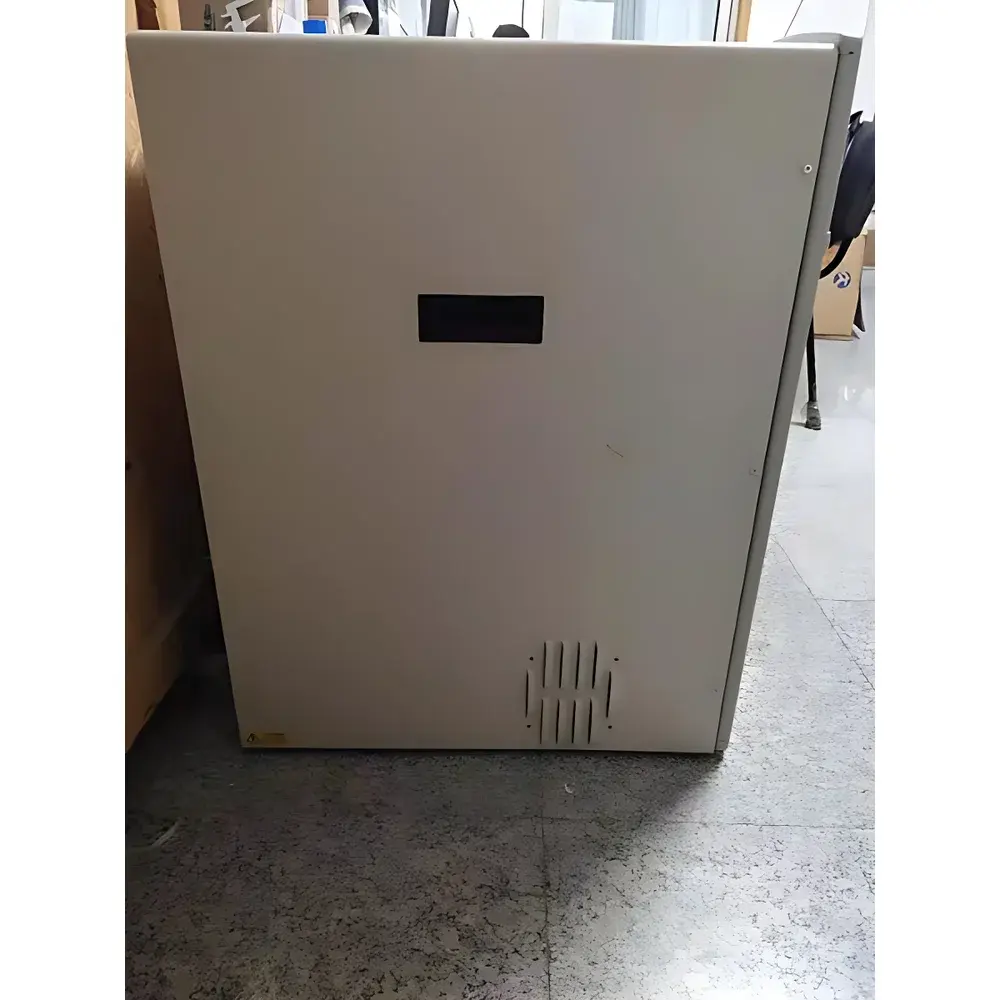
Parker Domnick Hunter Nitrox Model 18L LC-MS Nitrogen Generator
| Brand | Supelco |
|---|---|
| Origin | United Kingdom |
| Manufacturer Type | Authorized Distributor |
| Import Status | Imported |
| Model | 18L |
| Flow Rate | 18 L/min |
| Output Pressure | 7 bar (100 psig) |
| Nitrogen Purity | 99.5% |
| Dew Point | ≤ −50 °C |
| Inlet Air Pressure | 8.5 bar (125 psig) |
| Power Supply | 110 VAC, 50–60 Hz, 50 W |
| Dimensions (H×W×D) | 84 × 36 × 46 cm |
| Weight | 75 kg |
| Connection | 1/4" Swagelok® |
| Technology | Pressure Swing Adsorption (PSA) with Carbon Molecular Sieve (CMS) |
| Compressor | Integrated oil-free air compressor |
Overview
The Parker Domnick Hunter Nitrox Model 18L LC-MS Nitrogen Generator is an engineered solution for laboratories requiring a continuous, reliable supply of high-purity nitrogen gas to support liquid chromatography–mass spectrometry (LC-MS) systems. Utilizing pressure swing adsorption (PSA) technology, the unit draws ambient air, compresses it via an integrated oil-free rotary vane compressor, and passes the compressed stream through dual carbon molecular sieve (CMS) beds. During the adsorption phase, oxygen, moisture, carbon dioxide, and trace hydrocarbons are selectively retained by the CMS, while nitrogen—due to its larger kinetic diameter and lower affinity—passes through with minimal retention. The alternating cycle between two CMS beds ensures uninterrupted nitrogen delivery at stable purity and pressure, eliminating dependency on high-pressure cylinders or cryogenic liquid nitrogen dewars. Designed specifically for analytical instrumentation demanding consistent gas quality, the Nitrox 18L meets the stringent flow, purity, and stability requirements of electrospray ionization (ESI) and atmospheric pressure chemical ionization (APCI) interfaces.
Key Features
- Integrated oil-free air compressor delivering clean, particle-free feed air—no external compressed air source required
- Dual-bed PSA architecture with automatic cycling for continuous nitrogen output at ≥99.5% purity
- Robust filtration train including coalescing, activated carbon, and desiccant stages upstream of CMS beds to protect adsorbent integrity and extend service life
- Visual service indicators on all filter housings for proactive maintenance scheduling
- Compact footprint (84 × 36 × 46 cm) optimized for under-bench installation in space-constrained LC-MS labs
- Low power consumption (50 W nominal) and quiet operation (<60 dB(A)) suitable for shared laboratory environments
- Standard 1/4″ Swagelok® stainless-steel fittings for leak-tight, UHP-compatible gas delivery
- Overpressure protection, thermal cut-off, and auto-shutdown safeguards compliant with IEC 61000-6-2/6-4 electromagnetic compatibility standards
Sample Compatibility & Compliance
The Nitrox Model 18L delivers nitrogen meeting ISO 8573-1:2010 Class 2:2:2 specifications for particulate, water, and oil content—ensuring compatibility with sensitive LC-MS detectors, ESI/APCI sources, and other high-value analytical platforms. Its output purity (≤0.5% O₂) and dew point (≤−50 °C) satisfy method requirements for ASTM D6304 (water determination), USP residual solvents testing, and EPA Method 8270D (semivolatile organics). The system supports GLP/GMP workflows through configurable audit trails when paired with optional data logging modules. While not inherently 21 CFR Part 11 compliant, its operational logs, alarm history, and maintenance records can be exported in CSV format for integration into validated laboratory information management systems (LIMS).
Software & Data Management
The Nitrox 18L operates as a standalone, microprocessor-controlled instrument without proprietary software dependencies. All operational parameters—including inlet pressure, outlet pressure, flow rate, CMS bed status, filter life countdown, and fault codes—are displayed on a backlit LCD interface with intuitive navigation buttons. Optional RS-232 or analog 4–20 mA outputs enable connection to building management systems (BMS) or centralized lab monitoring platforms. Firmware updates are performed via USB port using manufacturer-provided utilities; version history and calibration timestamps are stored internally and accessible via diagnostic mode. For laboratories implementing digital quality assurance protocols, third-party SCADA integration is supported through Modbus RTU over RS-485 (adapter required).
Applications
- LC-MS mobile phase nebulization and drying gas (ESI/APCI)
- GC carrier gas (for non-MS applications where 99.5% purity suffices)
- ICP-OES plasma purge and auxiliary gas
- ELSD (evaporative light scattering detection) drift tube purge
- NMR sample probe purging and cryoprobe maintenance
- Blank solvent sparging and inert atmosphere glove boxes
- Automated sample preparation workstations requiring dry, oxygen-free purge gas
FAQ
What is the expected service life of the carbon molecular sieve (CMS) beds?
Under typical operating conditions (8–10 h/day, ambient temperature <30 °C, inlet air dew point <−20 °C), CMS beds maintain specified purity for ≥20,000 hours before replacement is recommended.
Can this generator supply multiple LC-MS instruments simultaneously?
The Model 18L is rated for single-instrument use. For multi-instrument deployment, Parker recommends parallel installation of units or upgrading to the Nitrox 35L model with flow-sharing manifold capability.
Is the nitrogen output suitable for use as a GC carrier gas?
Yes—provided the application does not require ultra-high purity (e.g., <1 ppm O₂) or helium-equivalent linear velocity; users should verify method suitability per ASTM D6304 or ISO 6425 guidelines.
Does the unit require periodic calibration?
No routine calibration is required. However, annual verification of outlet purity using an independent electrochemical oxygen analyzer (e.g., Michell XDT-100) is recommended for ISO/IEC 17025-accredited labs.
What maintenance intervals apply to the integrated compressor?
The oil-free compressor requires no lubrication; scheduled maintenance includes filter replacements every 6–12 months depending on ambient particulate load, with full CMS bed replacement every 3–5 years.



