
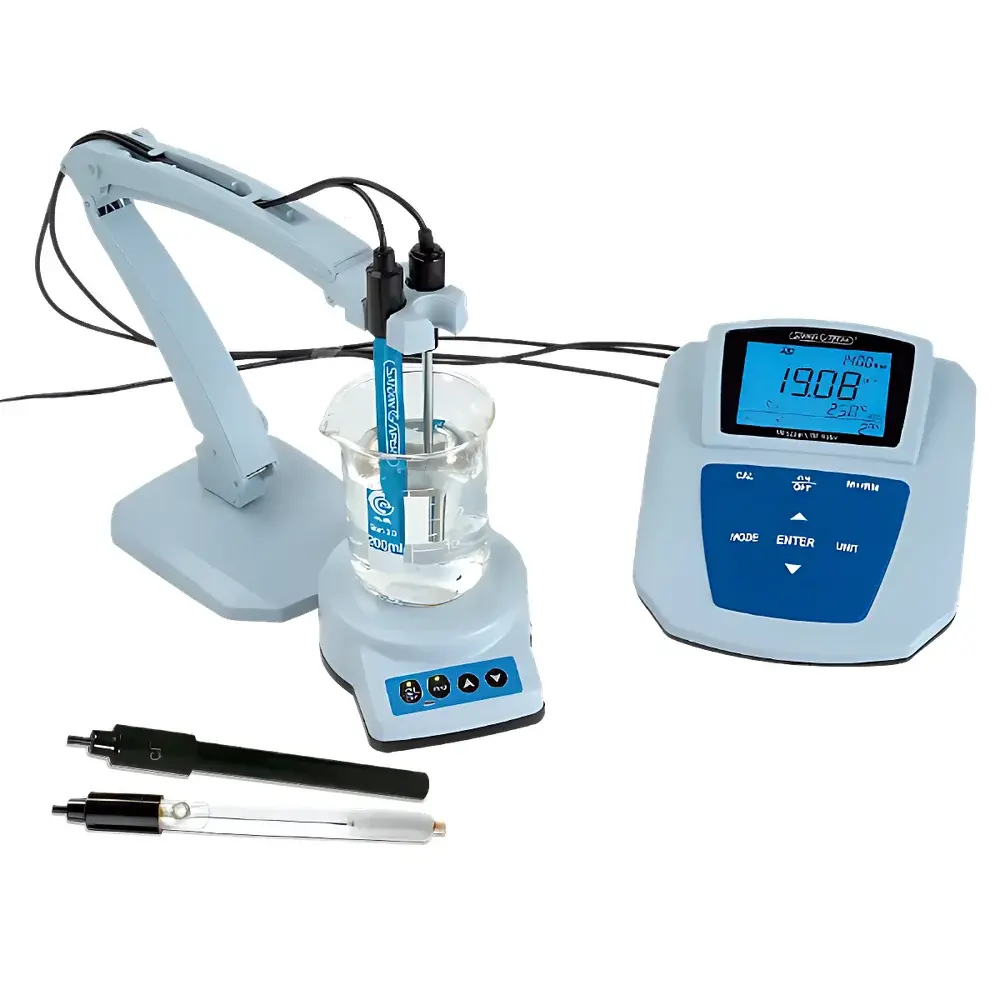
SANXIN MP523-05 pH and Chloride Ion Concentration Analyzer
| Brand | SANXIN |
|---|---|
| Origin | Shanghai, China |
| Manufacturer Type | Direct Manufacturer |
| Instrument Category | Domestic Lab-Based Water Quality Analyzer |
| Model | MP523-05 |
| Detection Principle | Electrochemical Potentiometry |
| Measured Parameters | pH and Chloride Ion (Cl⁻) Activity/Concentration |
| pH Range | −1.999 to 19.999 |
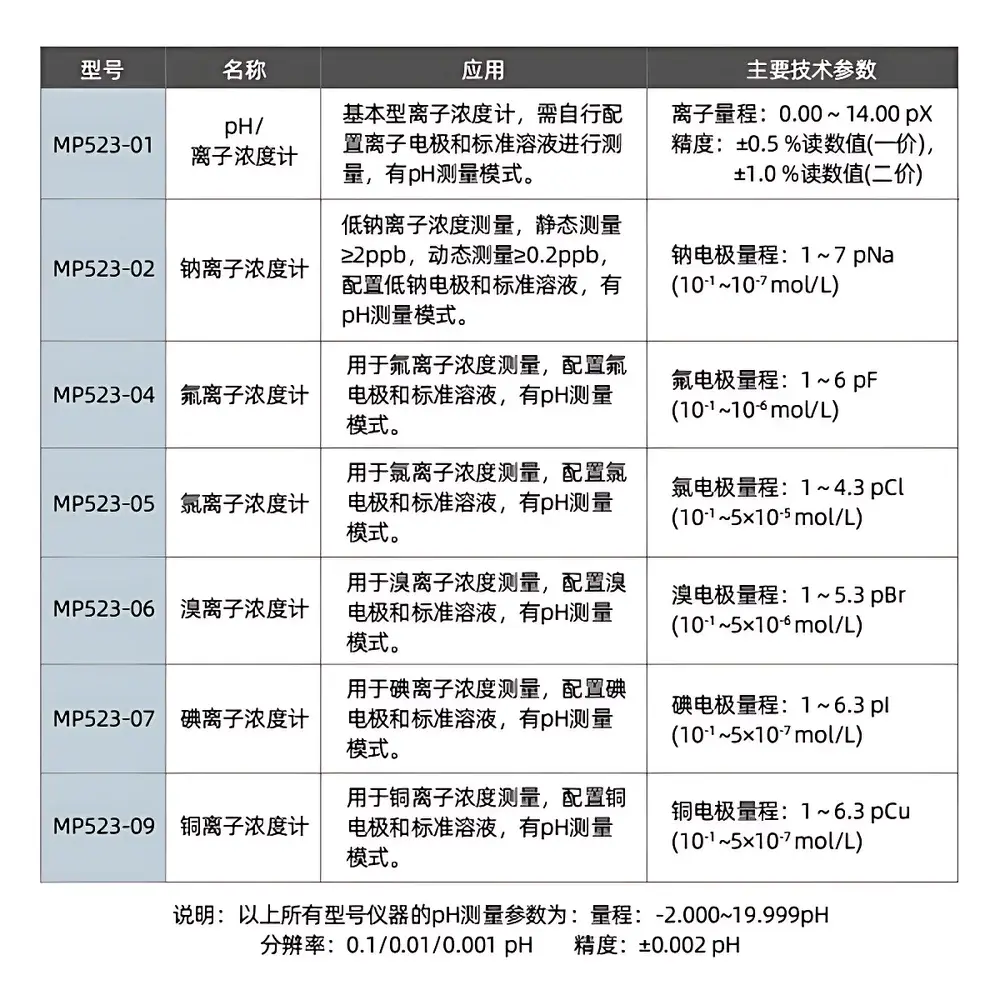
| pCl Range (Meter) | 0.00 to 14.00 pX (pCl scale) |
| Electrode-Specific Range | 1.0 to 4.3 pCl |
| Display Units for Cl⁻ | pCl, mol/L, mg/L, ppm |
| pH Accuracy | ±0.002 pH |
| pCl Accuracy | ±0.04 pCl |
| Temperature Compensation | pH: 0–100 °C |
| Cl⁻ | 0–50 °C |
| mV Range | ±1999.9 mV |
| Resolution | 0.1 mV |
| Accuracy | ±0.1% FS |
| Temperature Measurement | −10 to 110 °C |
| Resolution | 0.1 °C |
| Accuracy | ±0.5 °C (5–60 °C), ±1.0 °C (elsewhere) |
| Data Storage | 600 sets |
| Interface | RS232 |
| Power Supply | DC 9 V / 300 mA |
| Dimensions & Weight | 160 × 190 × 70 mm / 880 g |
Overview
The SANXIN MP523-05 pH and Chloride Ion Concentration Analyzer is a dual-parameter benchtop electrochemical instrument engineered for precise, trace-level quantification of hydrogen ion activity (pH) and chloride ion concentration (Cl⁻) in aqueous environmental, municipal, and industrial water samples. It operates on the principle of potentiometric measurement—utilizing high-stability glass electrodes for pH and solid-state or liquid-membrane ion-selective electrodes (ISEs) for selective Cl⁻ detection. The analyzer employs Nernst equation-based signal processing with automatic temperature compensation (ATC) to correct for thermal drift across wide operational ranges. Designed specifically for laboratory-based water quality assessment, the MP523-05 meets functional requirements aligned with standard methods including ASTM D1293 (pH of water), ASTM D4192 (chloride by ISE), and ISO 10523 (water quality — determination of pH). Its architecture supports routine compliance testing under GLP frameworks where documented calibration history, measurement traceability, and data integrity are essential.
Key Features
- Dual-channel potentiometric measurement engine enabling simultaneous or independent pH and chloride ion analysis without cross-interference
- High-resolution 0.001-unit display for pH and 0.01-unit resolution for pCl, supporting rigorous method validation and inter-laboratory comparability
- Extended pH range from −1.999 to 19.999, accommodating highly acidic or alkaline process streams, leachates, and regeneration solutions
- Multi-unit Cl⁻ reporting: direct conversion between pCl, mol/L, mg/L, and ppm—calculated in real time using user-defined molecular weight and valence inputs
- Integrated ATC with platinum resistance thermometer (Pt1000) sensor, providing temperature compensation for both pH and Cl⁻ measurements within their respective valid ranges (0–100 °C and 0–50 °C)
- 600-point internal memory with timestamped storage, compliant with basic audit-trail requirements for QA/QC documentation
- RS232 serial interface for secure, low-latency data export to LIMS or spreadsheet environments; compatible with standard terminal emulation protocols
- Robust mechanical design: compact footprint (160 × 190 × 70 mm), lightweight (880 g), and powered via regulated DC 9 V supply—optimized for shared lab benches and mobile field labs
Sample Compatibility & Compliance
The MP523-05 is validated for use with potable water, surface water, groundwater, wastewater effluents, cooling tower water, and desalination brine matrices. Sample conductivity should exceed 50 µS/cm for reliable Cl⁻ ISE response; low-ionic-strength samples require ionic strength adjuster (ISA) addition per electrode manufacturer guidelines. All measurements conform to EPA Method 300.0 (Ion Chromatography) and USP (pH) foundational principles, though the instrument itself serves as a primary potentiometric platform—not a regulatory-substitutable alternative to certified reference methods. Calibration verification follows two-point pH (e.g., 4.01 and 7.00 buffers at 25 °C) and multi-point Cl⁻ standards (e.g., 10⁻¹ to 10⁻⁴ mol/L NaCl). Device firmware supports user-defined calibration curves and slope monitoring for electrode health assessment.
Software & Data Management
While the MP523-05 does not include proprietary PC software, its RS232 output transmits ASCII-formatted data packets containing measurement value, unit, temperature, date/time stamp, and electrode status flags. This enables seamless integration with third-party data acquisition tools such as LabVIEW, MATLAB, or custom Python scripts using pySerial libraries. Each stored record includes unique session ID, operator ID field (manually entered), and calibration log metadata. For laboratories operating under FDA 21 CFR Part 11 or ISO/IEC 17025, external validation of the communication protocol and manual entry controls is required prior to use in regulated workflows. Audit trail functionality is limited to chronological storage—no electronic signature or change-tracking capability is embedded.
Applications
- Regulatory monitoring of chloride ingress in drinking water distribution systems per WHO and EU Drinking Water Directive limits (250 mg/L)
- Corrosion potential assessment in cooling water circuits via [Cl⁻]–pH correlation modeling
- Leachate characterization from landfill monitoring wells to assess halide mobilization risks
- Validation of reverse osmosis membrane performance through feed/brine/permeate Cl⁻ profiling
- Educational laboratories conducting fundamental electrochemistry experiments on Nernstian behavior and selectivity coefficients
- QC release testing of pharmaceutical excipients and purified water (PW) where chloride is a critical quality attribute
FAQ
What type of chloride ion electrode is compatible with the MP523-05?
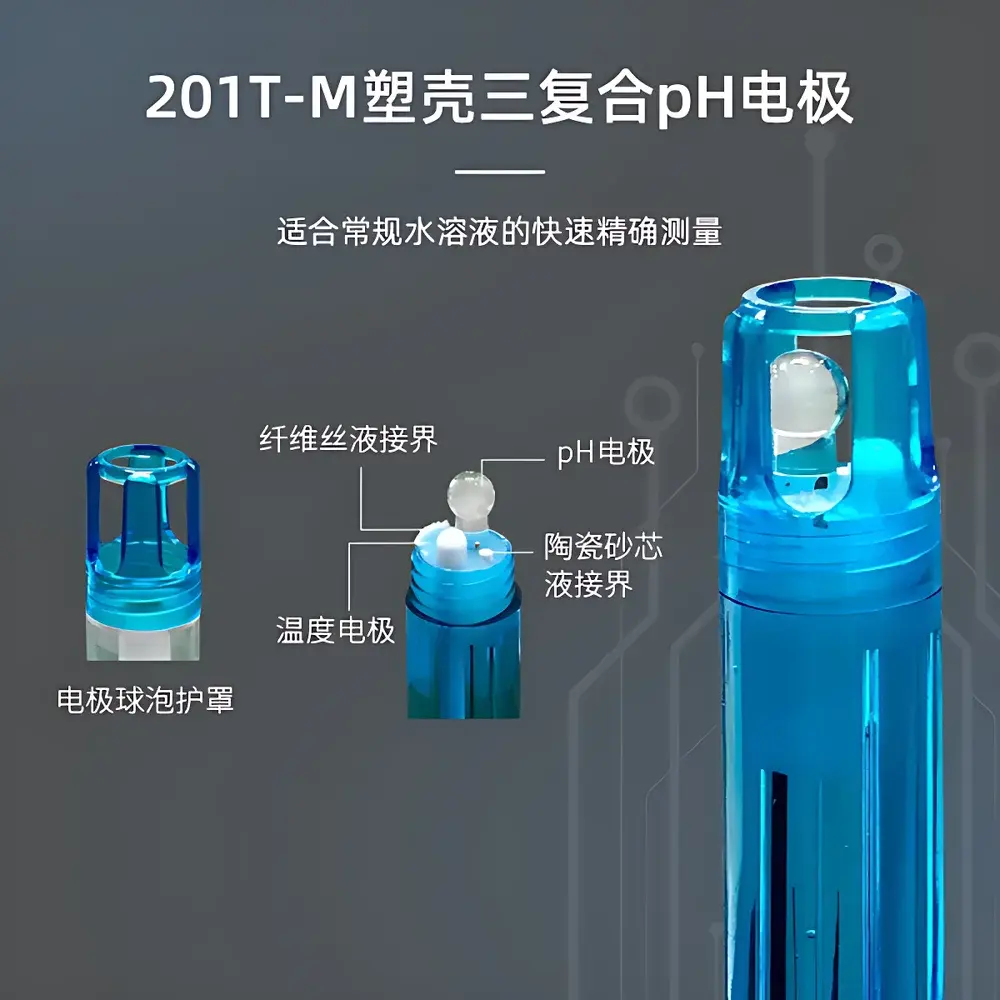
The analyzer supports standard BNC-input chloride ISEs, including Ag/AgCl-based solid-contact and PVC-membrane liquid-filled electrodes. Compatibility depends on electrode output impedance and millivolt range alignment—refer to the electrode’s datasheet for recommended meter input specifications.
Does the MP523-05 support GLP-compliant calibration logging?
It records calibration dates and values in non-editable sequence but lacks electronic signatures, password protection, or revision history—thus requiring supplementary procedural controls (e.g., bound logbooks or LIMS-integrated calibration workflows) to meet full GLP requirements.
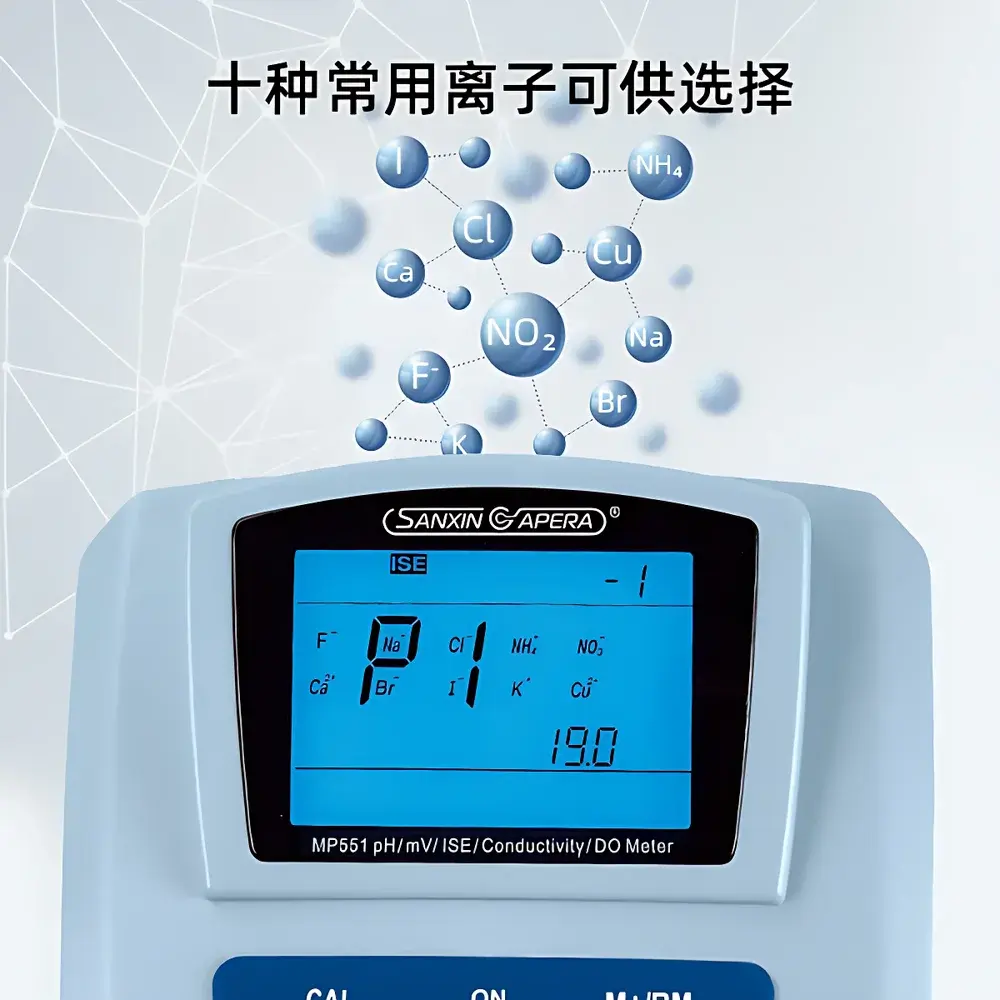
Can the instrument measure bromide or fluoride ions?
No. The MP523-05 is hardware- and firmware-configured exclusively for pH and chloride ion detection. Other anions require dedicated ISEs and meters with configurable ion selection logic.
Is temperature compensation applied automatically during pCl measurement?
Yes—within the 0–50 °C range—using the built-in Pt1000 sensor. Outside this range, manual temperature input is required, and accuracy degrades per NIST SRM guidance for ISEs.
How frequently should the pH and Cl⁻ electrodes be calibrated?
Daily calibration is recommended for routine QC use; for high-precision applications, calibration before each sample batch and after electrode cleaning or storage is advised per ISO 7870-2 and ASTM E2087 best practices.







