
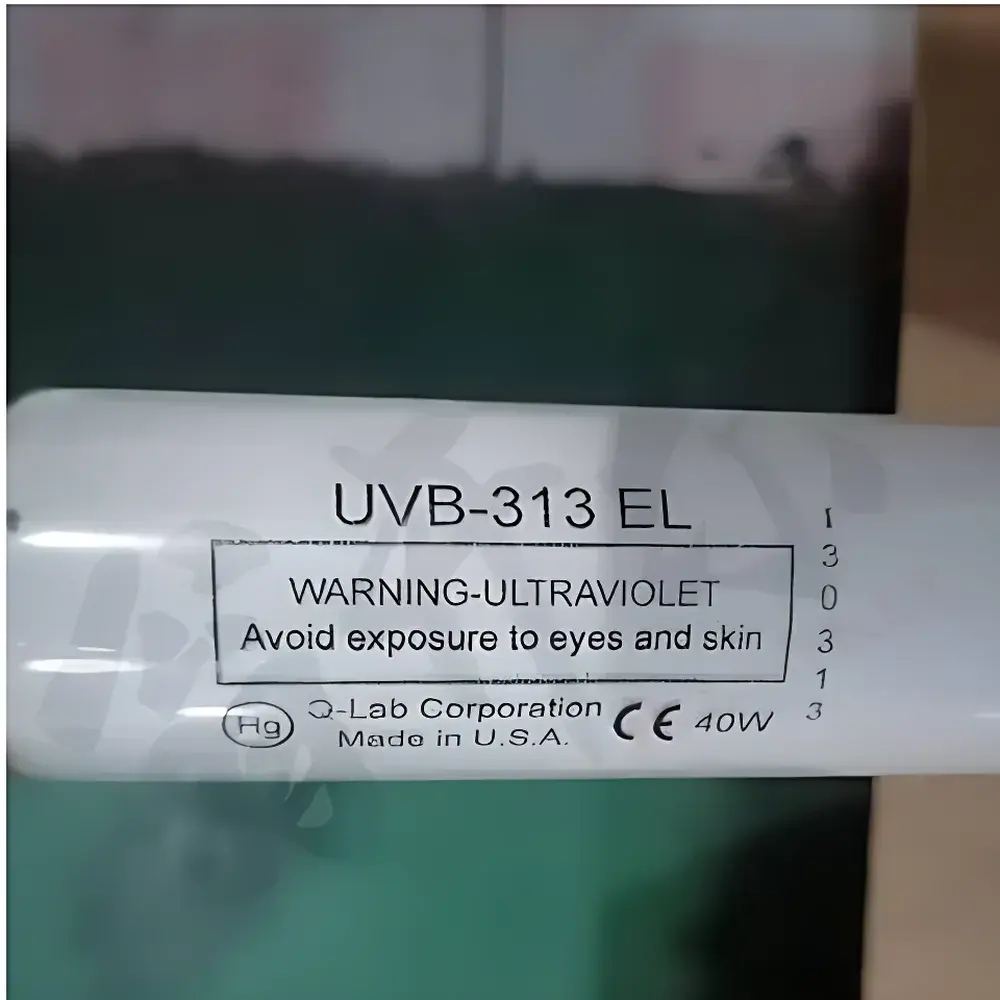
Q-Lab UVB-313EL+ / QFS-40 Fluorescent UV Lamp for QUV Accelerated Weathering Test Chambers
| Brand | Q-Lab |
|---|---|
| Origin | USA |
| Model | UVB-313EL+ (formerly QFS-40) |
| Lamp Power | 1800 W |
| UV Wavelength Peak | 313 nm |
| Typical Exposure Duration Range | 1–3000 h |
| Compliance | ASTM G154, ISO 4892-3, SAE J2020, JIS D0205 |
Overview
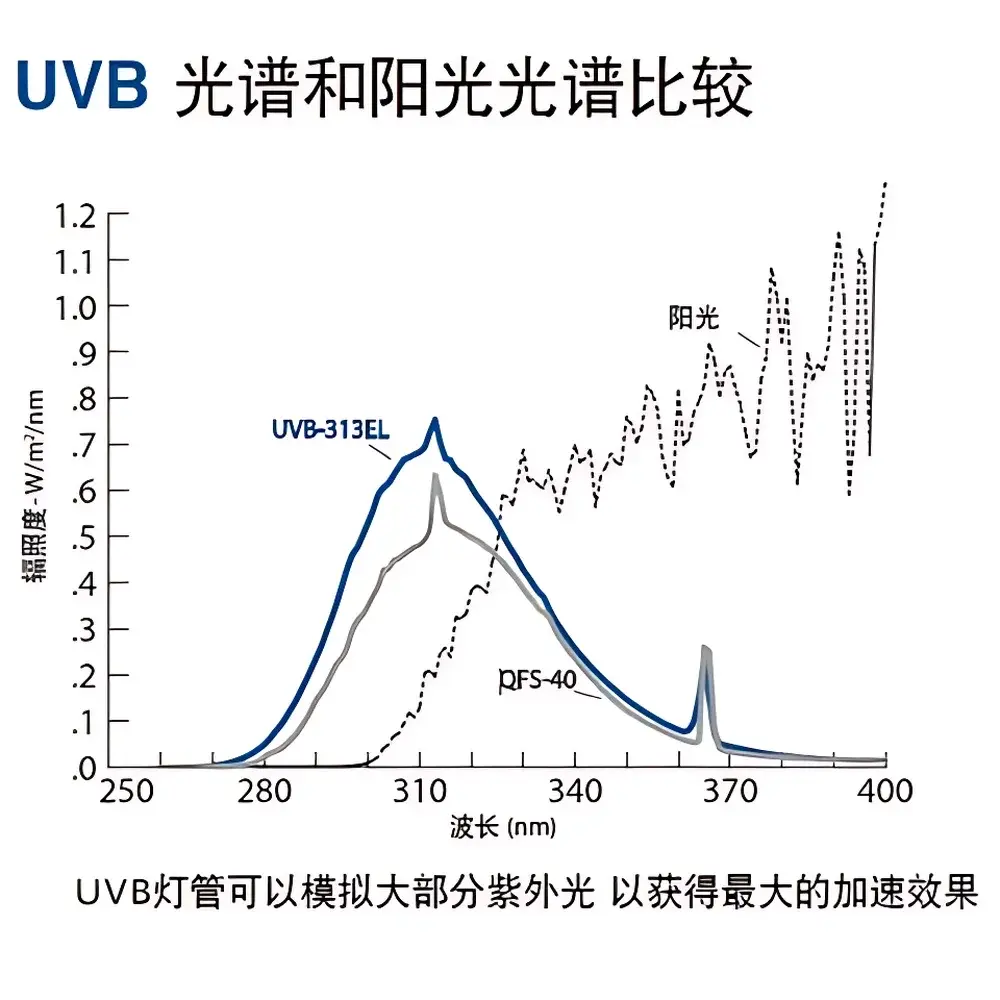
The Q-Lab UVB-313EL+ fluorescent lamp (formerly designated QFS-40) is an industry-standard short-wave ultraviolet light source engineered specifically for accelerated weathering testing in QUV series benchtop and floor-standing environmental test chambers. Unlike broad-spectrum xenon arc or natural sunlight simulation, the UVB-313EL+ lamp emits a narrow spectral output centered at 313 nm — a wavelength significantly more energetic than terrestrial solar UV radiation below 320 nm. This spectral profile accelerates photochemical degradation mechanisms such as polymer chain scission, pigment fading, chalking, and surface embrittlement, enabling rapid evaluation of material durability under controlled, repeatable conditions. The lamp is not intended to replicate full-spectrum solar irradiance but rather to provide a highly reproducible, high-stress UV exposure protocol widely adopted in quality control (QC), research and development (R&D), and regulatory compliance testing for outdoor-exposed materials.
Key Features
- Fluorescent phosphor-coated tube delivering stable, narrow-band UV emission peaking at 313 nm — optimized for accelerated photodegradation studies
- Rated power input of 1800 W per lamp set (standard configuration for QUV systems with 8-lamp arrays)
- Direct replacement for legacy QFS-40 and UVB-313 lamps; fully compatible with Q-Lab’s QUV/se, QUV/cw, and QUV/spa chamber platforms
- Engineered for long-term spectral stability and uniform irradiance distribution across specimen surfaces
- Compliant with standardized calibration protocols using Q-Lab’s calibrated radiometers (e.g., UC-2000 or UC-3000 sensors) traceable to NIST standards
- Designed for operation within QUV chamber temperature and humidity control envelopes — black panel temperature range typically 35–70 °C, chamber air temperature 30–60 °C, relative humidity 10–95% RH (system-dependent)
Sample Compatibility & Compliance
The UVB-313EL+ lamp is routinely applied to evaluate polymeric coatings, architectural roofing membranes, automotive exterior plastics and paints, geotextiles, and aerospace composites. Its aggressive UV spectrum makes it particularly suitable for testing materials with high inherent UV resistance — where conventional UVA-340 lamps may yield insufficient degradation over practical test durations. Testing conducted with this lamp adheres to internationally recognized standards including ASTM G154 (Standard Practice for Operating Fluorescent Ultraviolet (UV) Lamp Apparatus for Exposure of Non-Metallic Materials), ISO 4892-3 (Plastics — Methods of Exposure to Laboratory Light Sources — Part 3: Fluorescent UV Lamps), SAE J2020 (Laboratory Accelerated Weathering of Automotive Exterior Materials), and JIS D0205 (Automotive Paints — Accelerated Weathering Test Method). All test protocols require documented instrument calibration, irradiance monitoring, and environmental parameter logging to support GLP/GMP audit readiness and regulatory submission validity.
Software & Data Management
When used in conjunction with Q-Lab’s QUV Control Software (v5.x or later), the UVB-313EL+ lamp supports automated irradiance control, cycle sequencing (UV irradiation + condensation or spray phases), real-time black panel temperature logging, and comprehensive data export in CSV/Excel formats. System logs include timestamped irradiance values (W/m² @ 313 nm), chamber ambient and black panel temperatures, relative humidity, and lamp operational hours — all structured to satisfy FDA 21 CFR Part 11 requirements for electronic records and signatures when deployed in regulated environments. Audit trails are retained for ≥12 months and support full traceability from test initiation through final report generation.
Applications
- Rapid screening of coating formulation robustness against UV-induced gloss loss and color shift
- Comparative lifetime prediction of thermoplastic elastomers in automotive trim applications
- Validation of UV stabilizer package efficacy in PVC-based roofing membranes
- Accelerated qualification of fluoropolymer films for solar reflectance retention
- Correlation studies between QUV UVB-313EL+ exposure and real-world field performance in subtropical and desert climates
- Supporting ISO 11341 (Paints and varnishes — Artificial weathering and exposure to artificial radiation — Exposure to fluorescent UV lamps and water)
FAQ
What is the difference between UVB-313EL+ and UVA-340 lamps?
The UVB-313EL+ emits predominantly at 313 nm, producing higher-energy photons that accelerate degradation of UV-resistant materials; the UVA-340 better simulates solar UV down to 340 nm and is preferred for general-purpose weathering correlation studies.
Can UVB-313EL+ lamps be used interchangeably with older QFS-40 tubes?
Yes — UVB-313EL+ is the direct successor to QFS-40 and maintains identical electrical, thermal, and mechanical specifications for seamless integration into existing QUV systems.
How often should UVB-313EL+ lamps be replaced?
Q-Lab recommends replacement after 1,500–2,000 hours of cumulative UV exposure or upon observed irradiance drift exceeding ±10% from initial calibration — whichever occurs first.
Is irradiance calibration required before each test?
While not mandatory for every run, periodic calibration (minimum quarterly or per test campaign) using a NIST-traceable UV radiometer is essential for data comparability and standard compliance.
Does this lamp meet FDA or ISO 17025 requirements for accredited testing labs?
The lamp itself is a component — accreditation applies to the full test system, including calibrated instrumentation, documented procedures, environmental controls, and personnel training per ISO/IEC 17025:2017.



