
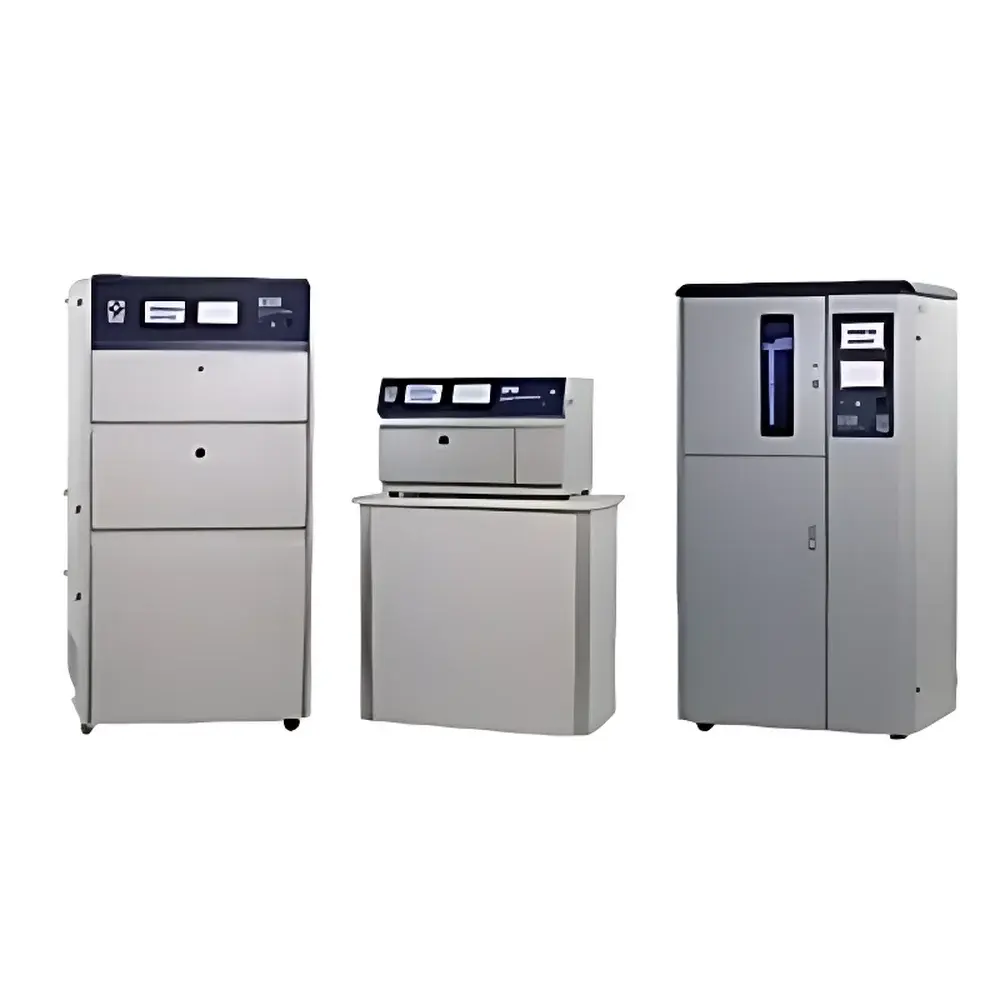
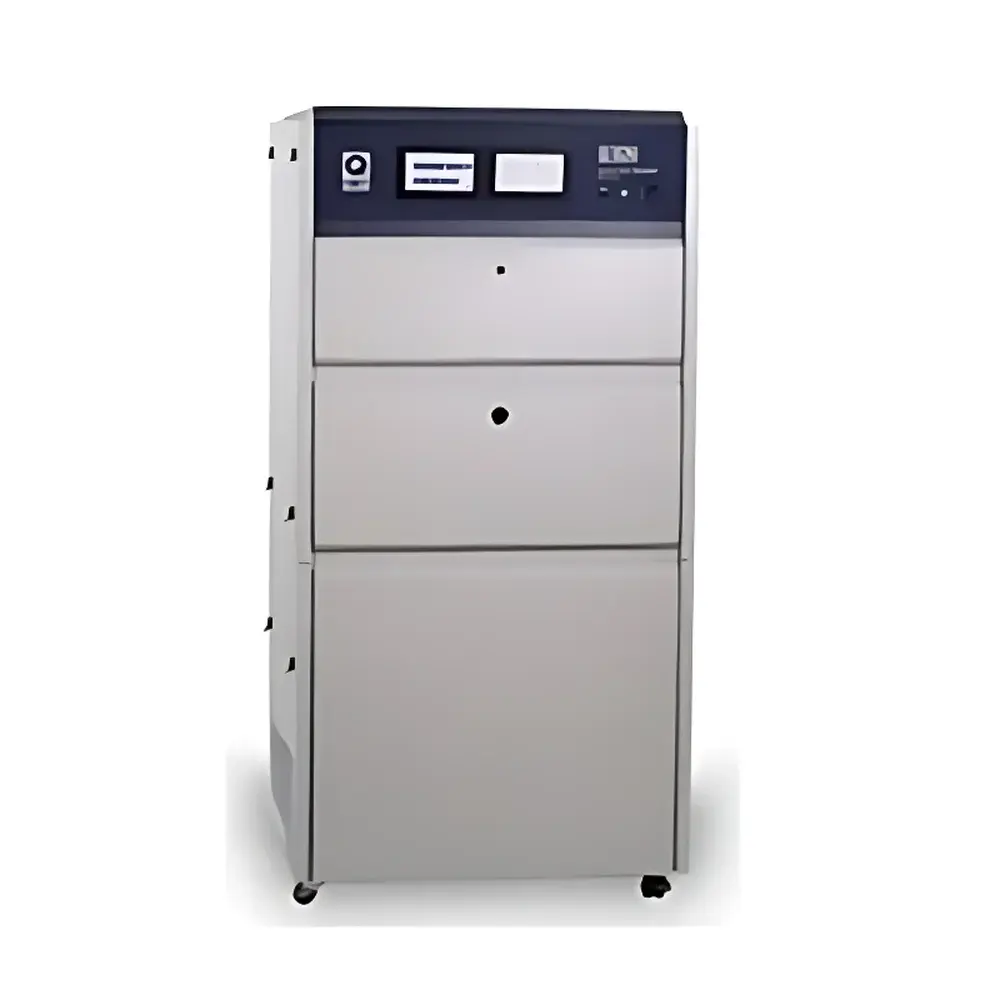
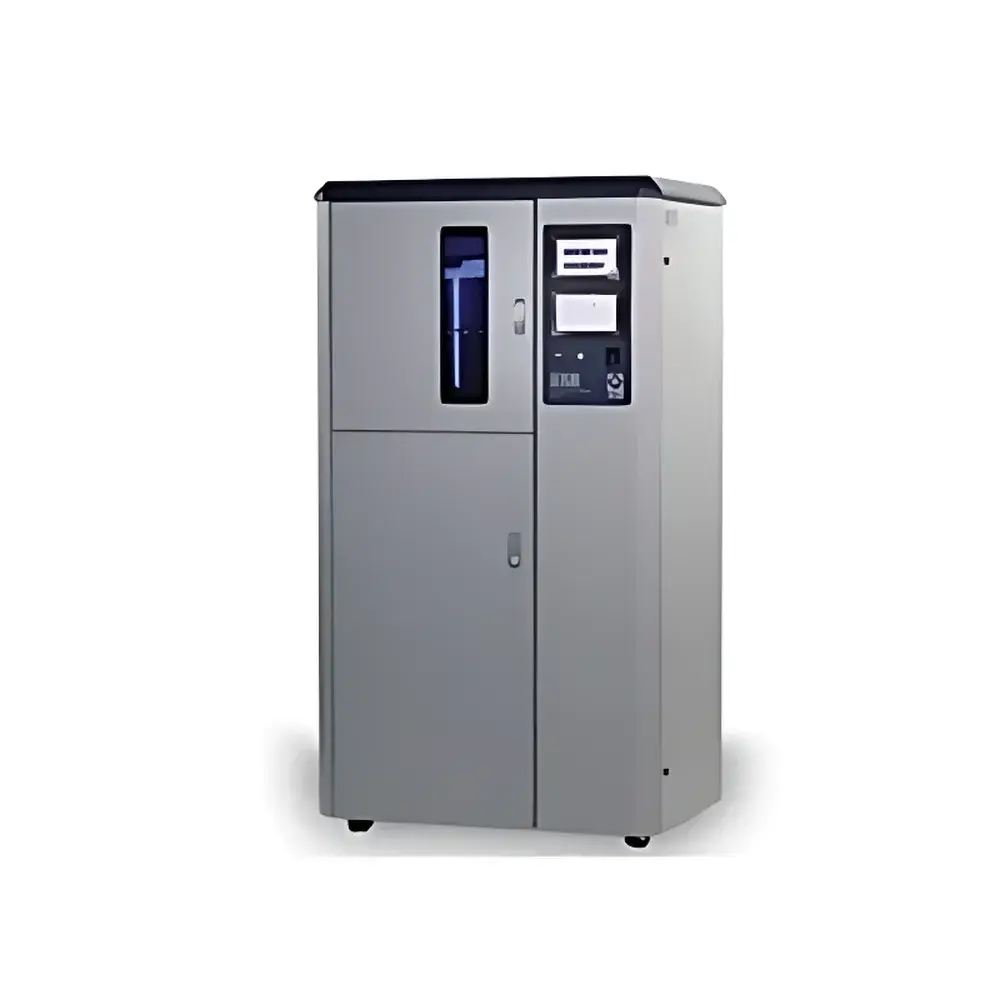
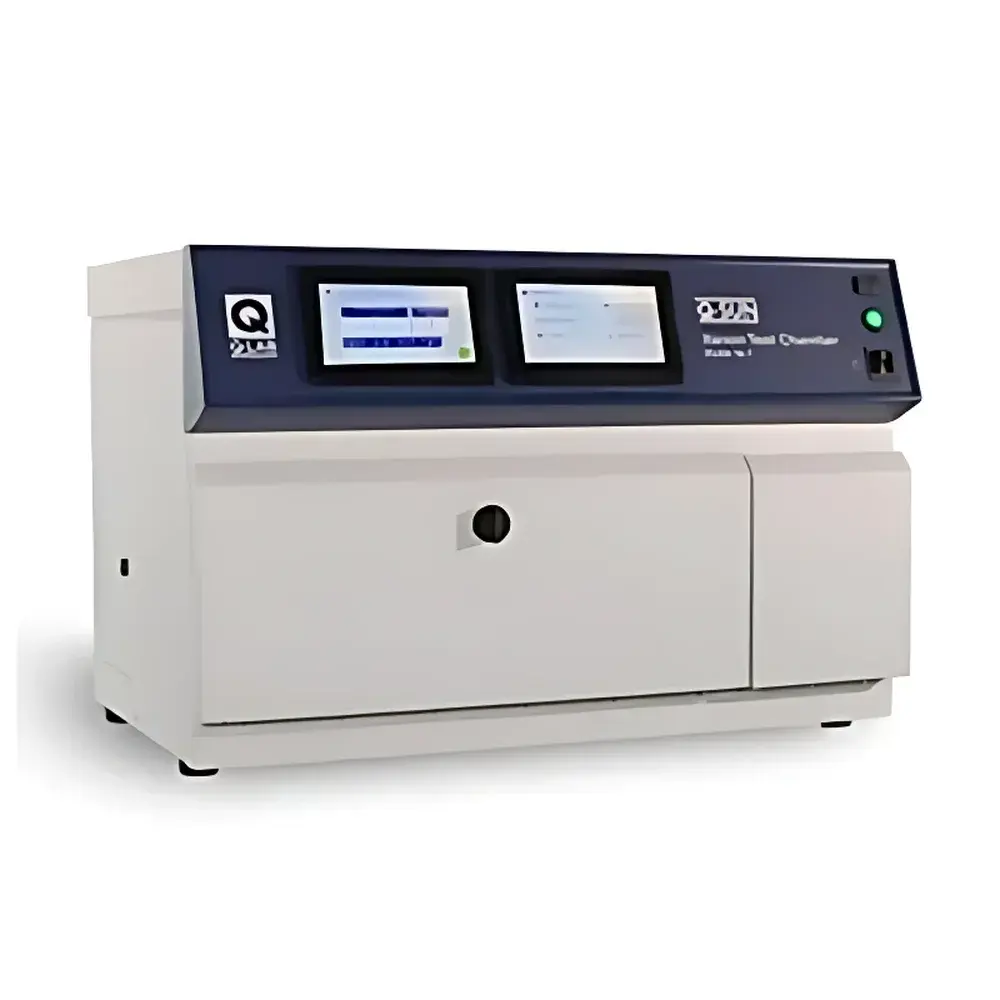
Q-Lab Q-SUN Xe-3 Xenon Arc Weathering Tester
| Brand | Q-Lab |
|---|---|
| Origin | Germany |
| Manufacturer Type | Authorized Distributor |
| Product Category | Imported Instrument |
| Model | Q-SUN Xe-3 |
| Test Duration Range | 1–5000 h |
| Irradiance Range | 10 W/m² (at 340 nm) |
| Lamp Configuration | Triple-air-cooled xenon arc lamps |
| Humidity Control Range | 10–95% RH (non-condensing) |
| Black Panel Temperature Range | 35–110 °C |
| Chamber Dimensions (L×W×H) | 850 × 720 × 800 mm |
| Light Spectrum | Full-spectrum xenon arc filtered to simulate daylight (ISO 4892-2, ASTM G155, SAE J2527 compliant) |
Overview
The Q-Lab Q-SUN Xe-3 is a high-precision, triple-lamp xenon arc weathering tester engineered for accelerated simulation of solar radiation exposure under controlled environmental conditions. It utilizes air-cooled xenon arc lamps with optical filtering systems to replicate the full solar spectrum—including ultraviolet (UV), visible, and near-infrared (NIR) radiation—enabling physicochemically relevant degradation pathways in polymeric, organic, and composite materials. Unlike UV-only fluorescent lamp testers, the Xe-3 delivers spectrally accurate irradiation aligned with international exposure standards such as ISO 4892-2, ASTM G155, and SAE J2527. Its design emphasizes metrological integrity: irradiance is monitored and stabilized via calibrated broadband or narrowband (340 nm) sensors; black panel temperature (BPT) and chamber relative humidity (RH) are independently regulated to ensure reproducible stress profiles across test cycles. The system supports both indoor and outdoor exposure simulation through interchangeable optical filters (Daylight, Window Glass, Extended UV), allowing users to match spectral output to application-specific service environments.
Key Features
- Triple xenon arc lamp configuration: Delivers uniform irradiance distribution over large sample areas (up to 600 × 600 mm exposure plane); enables extended test duration without lamp replacement interruption.
- Advanced irradiance control: Real-time feedback loop maintains ±5% stability at 340 nm (0.35 W/m²/nm nominal), traceable to NIST-calibrated reference sensors.
- Independent climate control: Precision RH regulation (10–95% non-condensing) and BPT control (35–110 °C) operate concurrently with irradiation, enabling realistic moisture–light interaction studies.
- Integrated water spray system: Deionized water spray simulates dew, rain, and thermal shock effects; programmable to activate during light or dark phases per ISO 4892-2 Cycle 1–5 protocols.
- Modular sample handling: Sliding tray design accommodates 3D specimens up to 75 mm height; flat-panel fixtures support ISO 105-B02–compliant textile mounting and ASTM D4329–aligned plastic panels.
- Filter longevity & spectral fidelity: Long-life borosilicate and quartz filters maintain spectral output within ASTM G155 Class A tolerances for ≥5,000 hours of operation.
Sample Compatibility & Compliance
The Q-SUN Xe-3 accepts flat, curved, and three-dimensional samples—including coated substrates, molded plastics, textiles, automotive trim, and architectural coatings—without requiring custom jigs. Sample holders conform to ISO 105-B02, ASTM D4329, and GB/T 1865 standards for specimen geometry and mounting orientation. All operational parameters comply with GLP documentation requirements: audit trails log irradiance setpoints, BPT/RH deviations, lamp runtime, and filter usage history. The instrument meets electromagnetic compatibility (EMC) per EN 61326-1 and safety standards per IEC 61010-1. Data generated satisfies regulatory submission criteria for FDA 21 CFR Part 11 (when paired with Q-Lab’s optional software validation package) and supports ISO/IEC 17025-accredited laboratory workflows.
Software & Data Management
Control and monitoring are managed via Q-Lab’s proprietary SunTest™ software (v5.2+), installed on an embedded industrial PC. The interface supports fully programmable test cycles—including multi-step irradiance ramping, RH profiling, and timed spray sequences—with automatic data logging at user-defined intervals (minimum 1-minute resolution). All raw sensor outputs (irradiance, BPT, RH, chamber temp) are timestamped and stored in CSV-compatible binary archives. SunTest™ includes built-in compliance reporting modules for ASTM G155, ISO 4892-2, and SAE J2527; reports include pass/fail flags against specified irradiance dose thresholds (e.g., 1.5 MJ/m² @ 340 nm). Optional 21 CFR Part 11 compliance add-on provides electronic signatures, role-based access control, and immutable audit logs meeting FDA and EMA regulatory expectations.
Applications
The Q-SUN Xe-3 serves as a core tool in R&D, quality assurance, and regulatory testing across industries where photostability and weather resistance are critical. In automotive OEM supply chains, it validates exterior trim durability per GMW14124 and Ford CETP 00.00-L-467. Coatings manufacturers use it to rank pigment fade resistance under simulated window-filtered light (ISO 11341). Textile labs apply it for colorfastness assessment (AATCC TM16, ISO 105-B02), while pharmaceutical packaging developers assess UV-induced polymer chain scission in blister foil laminates. Electronics encapsulants, solar panel backsheets, and medical device polymers undergo accelerated aging to predict service life under tropical or desert climatic profiles. Its ability to decouple light, heat, and moisture variables makes it indispensable for failure mode analysis and root-cause investigation of yellowing, chalking, cracking, and gloss loss.
FAQ
What spectral filters are available for the Q-SUN Xe-3, and how do they differ?
The standard filter set includes Daylight (Q/B), Window Glass (Q/FS40), and Extended UV (Q/UV). Daylight replicates unfiltered terrestrial sunlight; Window Glass simulates interior exposure behind standard architectural glass (blocking <310 nm); Extended UV enhances short-wavelength output for aggressive screening of UV-sensitive additives.
Is the Q-SUN Xe-3 suitable for testing ISO 105-B02-compliant textile specimens?
Yes—the sliding tray accommodates ISO 105-B02 specimen frames (100 × 45 mm) and supports rotational mounting for uniform exposure. Optional textile-specific humidity cycling profiles are preloaded in SunTest™ software.
How is irradiance calibrated, and what is the calibration interval recommendation?
Calibration uses NIST-traceable broadband or narrowband (340 nm) reference sensors. Q-Lab recommends annual recalibration by an ISO/IEC 17025-accredited service provider; internal verification checks can be performed daily using the built-in reference cell.
Can the Xe-3 operate continuously for 5000 hours without maintenance?
Lamp lifetime is rated at 1500 hours per set; full 5000-hour tests require two lamp changes. Filter sets maintain spectral integrity beyond 5000 hours of cumulative operation. Routine maintenance includes weekly condensate drain inspection and quarterly air filter replacement.
Does the system support remote monitoring and alarm notifications?
Yes—SunTest™ includes Ethernet/IP connectivity and optional cloud-based telemetry (Q-Lab Cloud Connect). Email/SMS alerts trigger on parameter deviation, lamp failure, or door-open events, configurable via web dashboard.



