
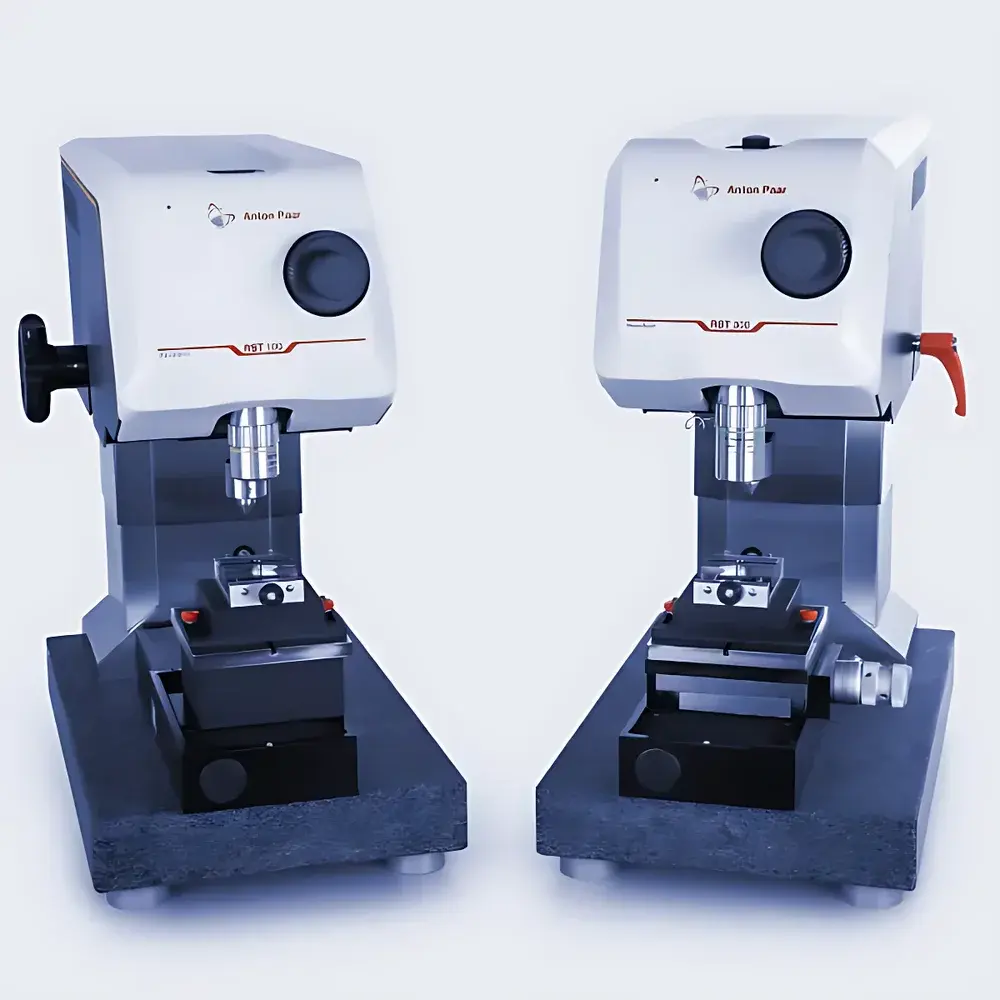
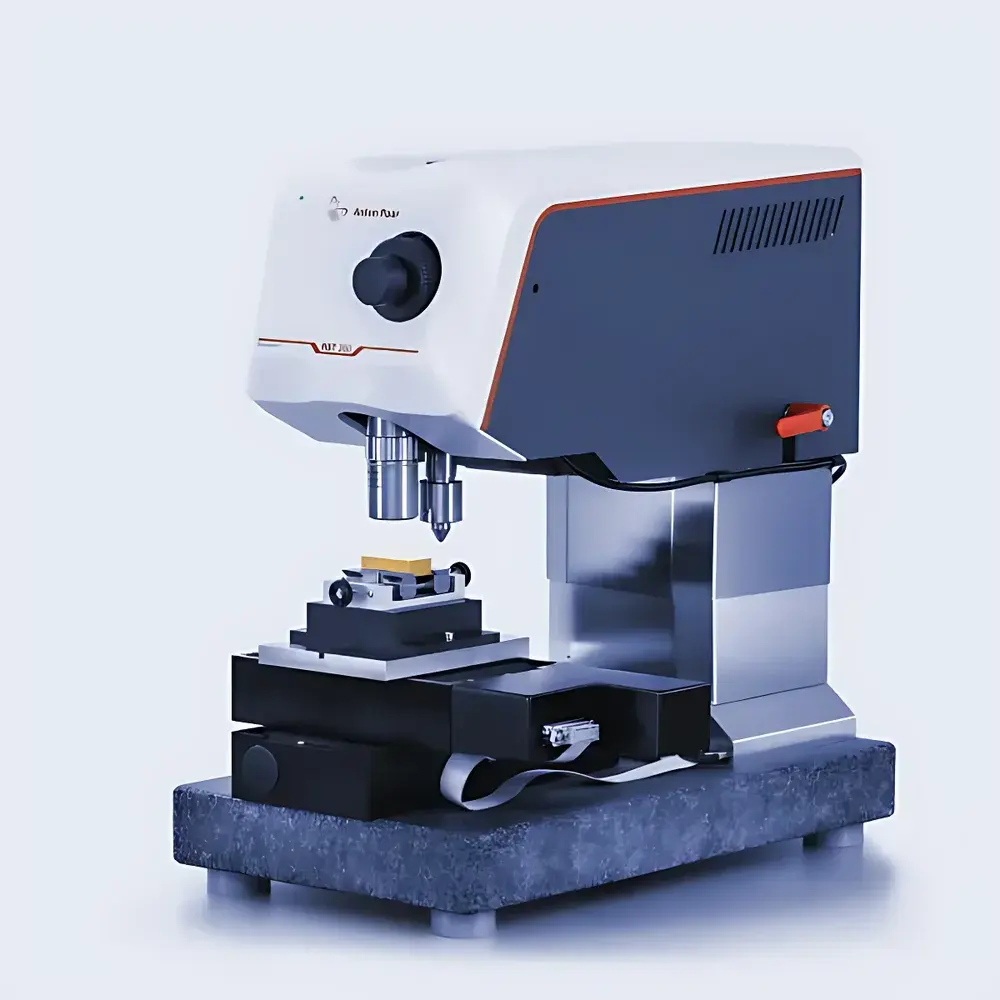
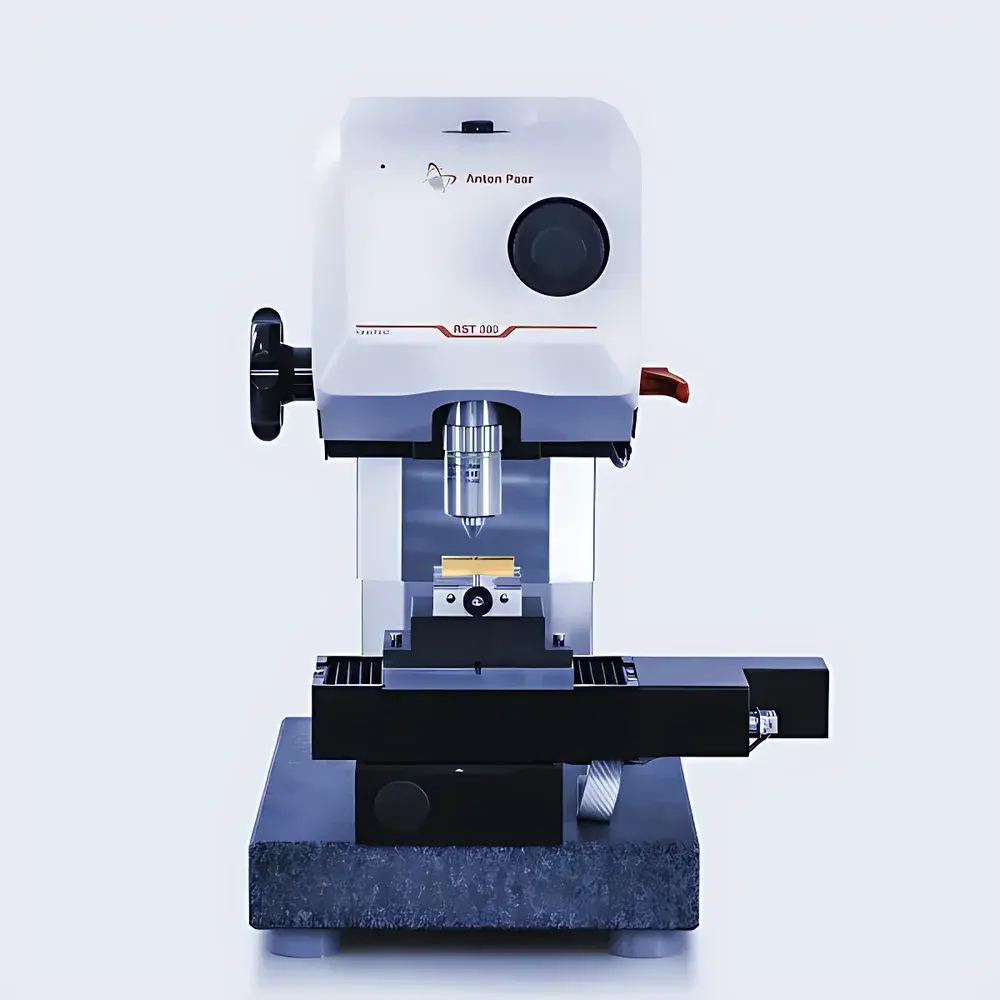
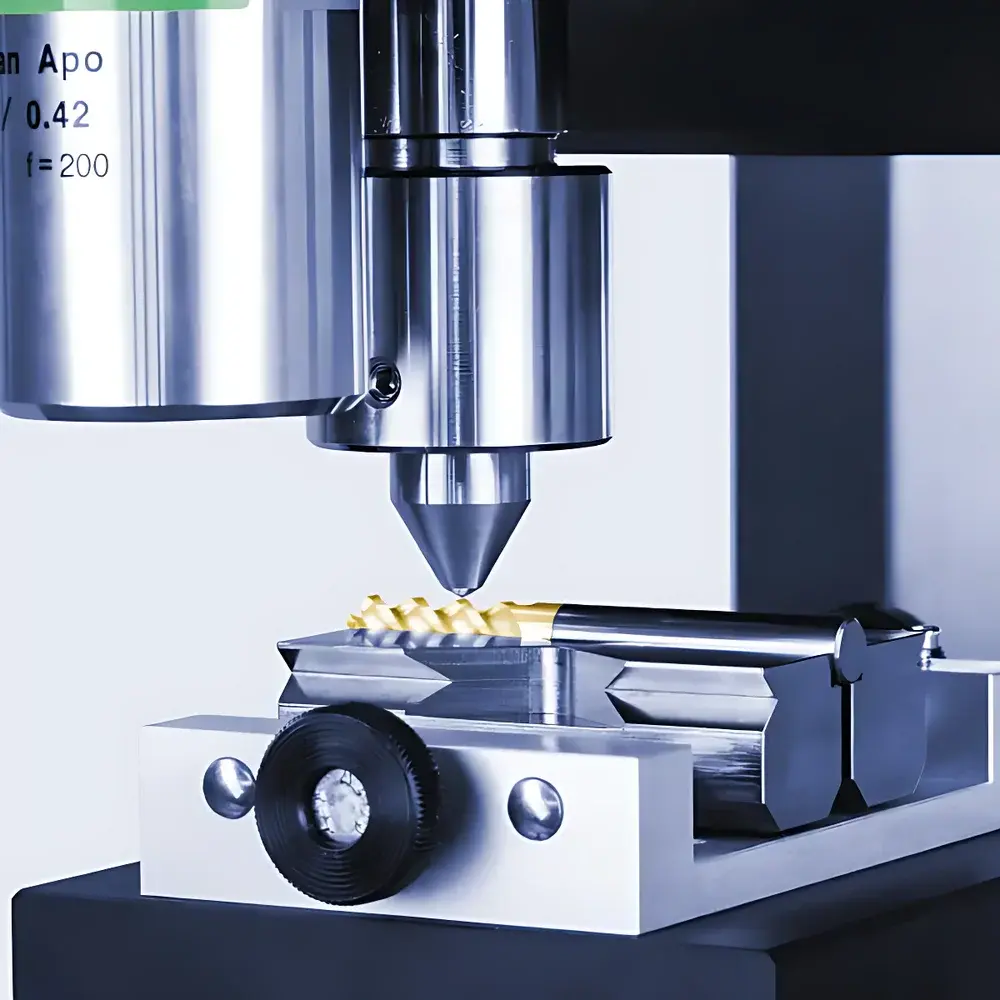
Anton Paar RST 300 Large-Load Scratch Tester
| Brand | Anton Paar |
|---|---|
| Origin | Switzerland |
| Manufacturer Type | Original Equipment Manufacturer (OEM) |
| Instrument Category | Imported |
| Model | RST 300 |
| Instrument Type | Micro/Nano Scratch Tester |
| Maximum Indentation Depth | 100 / 1000 µm |
| Effective Normal Load Range | 100 / 200 N |
| Load Resolution | 100 µN |
| Displacement Resolution | 0.05 / 0.5 nm |
| Maximum Friction Force | 100 / 200 N |
| Friction Resolution | 0.1 / 0.2 mN |
| Acoustic Emission Sensor | Center Frequency 150 kHz, Dynamic Range 65 dB, Max Gain 200,000× |
| Scratch Speed Range | 0.4 – 600 mm/min |
| Scratch Length | Up to 70 mm |
| In-situ Scratch Inspection Length | Up to 30 mm |
| Compliance | ASTM C1624, ISO 20502, ISO EN 1071 |
Overview
The Anton Paar RST 300 Large-Load Scratch Tester is an industrial-grade, high-precision mechanical characterization system engineered for quantitative evaluation of adhesion, scratch resistance, and hardness in hard coatings with thicknesses exceeding 1 µm. Based on the proven Revetest® platform—deployed in over 1,500 installations worldwide—the RST 300 applies controlled normal loading while simultaneously monitoring multiple physical response channels: normal force, frictional force, penetration depth, acoustic emission (AE), and real-time optical imaging. Its measurement principle relies on quasi-static and dynamic load-controlled scratching under precisely regulated kinematic conditions, enabling reproducible quantification of interfacial failure modes—including cohesive cracking, adhesive delamination, and plastic deformation—across heterogeneous coating/substrate systems.
Key Features
- Synchronized Panoramic Imaging Mode: A proprietary Anton Paar innovation (U.S. Patent No. US 12/324,237; EP 2065695), this feature time-synchronizes high-resolution optical images of the scratch track with all sensor waveforms (load, depth, friction, AE) at sub-millisecond resolution. This enables pixel-accurate correlation between visual failure events (e.g., chipping, buckling) and corresponding anomalies in force-depth or AE signatures.
- Active Topography Compensation: Utilizing a closed-loop load sensor feedback architecture, the RST 300 dynamically adjusts actuator position to maintain constant normal force even on curved or rough surfaces (Ra up to 5 µm). This eliminates topographical artifacts that compromise data fidelity in conventional scratch testers.
- Automated Vickers Hardness Determination: Integrated optical analysis algorithms automatically detect and measure diagonal lengths of Vickers indentations (HV0.1–HV5), compute hardness values per ISO 6507-1, and report statistical dispersion (mean ± SD) across multi-point arrays—eliminating subjective operator interpretation and manual caliper measurements.
- Multi-Sensor Critical Load (Lc) Detection: Simultaneous acquisition from depth sensors, friction transducers, and broadband AE allows algorithmic identification of Lc1 (first micro-crack), Lc2 (cohesive failure), and Lc3 (complete delamination) using user-defined thresholds. All Lc values are traceable to raw signal derivatives and annotated directly on synchronized plots.
- Modular Tip Mounting System: A single chuck accommodates conical, Rockwell, Berkovich, Vickers, and spherical indenters (up to 6 mm diameter), with interchangeable holders for diamond, sapphire, or tungsten carbide spheres—ensuring method flexibility without mechanical recalibration.
Sample Compatibility & Compliance
The RST 300 supports flat, convex, or concave substrates (radius ≥ 5 mm) with surface roughness up to Ra = 5 µm and maximum sample dimensions of 100 × 100 × 50 mm (W × L × H). It complies fully with ASTM C1624 (Standard Test Method for Adhesion Strength of Ceramic Coatings by Scratch Testing), ISO 20502 (Fine Ceramics — Determination of Adhesion of Hard Coatings by Scratch Testing), and ISO EN 1071 (Advanced Technical Ceramics — Methods of Test for Ceramic Coatings). All firmware and software modules adhere to GLP/GMP-aligned audit trail requirements, including electronic signature support, user access control tiers, and immutable data logging compliant with FDA 21 CFR Part 11 Annex 11 principles.
Software & Data Management
Instrument control, test sequencing, and post-processing are managed via the unified ScratchWare™ software suite. It provides ISO-compliant reporting templates, customizable pass/fail criteria based on Lc thresholds, batch processing for multi-sample series, and export to CSV, PDF, or HDF5 formats. Raw data files include embedded metadata (operator ID, timestamp, calibration certificate IDs, environmental conditions) and are hashed for integrity verification. The software architecture supports network deployment in centralized QC labs and integrates with LIMS via RESTful API endpoints for automated result ingestion.
Applications
- Quantitative adhesion assessment of PVD/CVD TiN, CrN, DLC, and AlTiN coatings on tool steels and aerospace alloys
- Scratch resistance ranking of automotive clearcoats, optical anti-reflective films, and biomedical hydroxyapatite layers
- Hardness mapping of gradient coatings (e.g., thermal barrier systems) using automated grid-based indentation arrays
- Failure mode analysis during qualification of wear-resistant coatings for oil & gas downhole components
- Method development for ISO/ASTM-compliant QC protocols in certified production environments
FAQ
What standards does the RST 300 support for scratch testing?
ASTM C1624, ISO 20502, and ISO EN 1071 are natively supported with preconfigured test templates, reporting structures, and uncertainty calculation frameworks.
Can the RST 300 test curved or rough substrates?
Yes—its active topography compensation system maintains constant normal load on surfaces with curvature radii ≥5 mm and roughness up to Ra = 5 µm.
How is critical load (Lc) determined automatically?
By concurrent analysis of depth deviation, friction coefficient spikes, AE energy bursts, and video-derived crack onset—each Lc event is validated against ≥2 independent signal modalities.
Is Vickers hardness testing fully automated?
Yes—the system captures indentation images in situ, detects diagonals using sub-pixel edge detection, computes HV values per ISO 6507-1, and reports repeatability statistics without manual intervention.
What data security and compliance features are included?
Full 21 CFR Part 11 and EU Annex 11 compliance: role-based access, electronic signatures, immutable audit trails, data encryption at rest and in transit, and calibration traceability to national metrology institutes.



