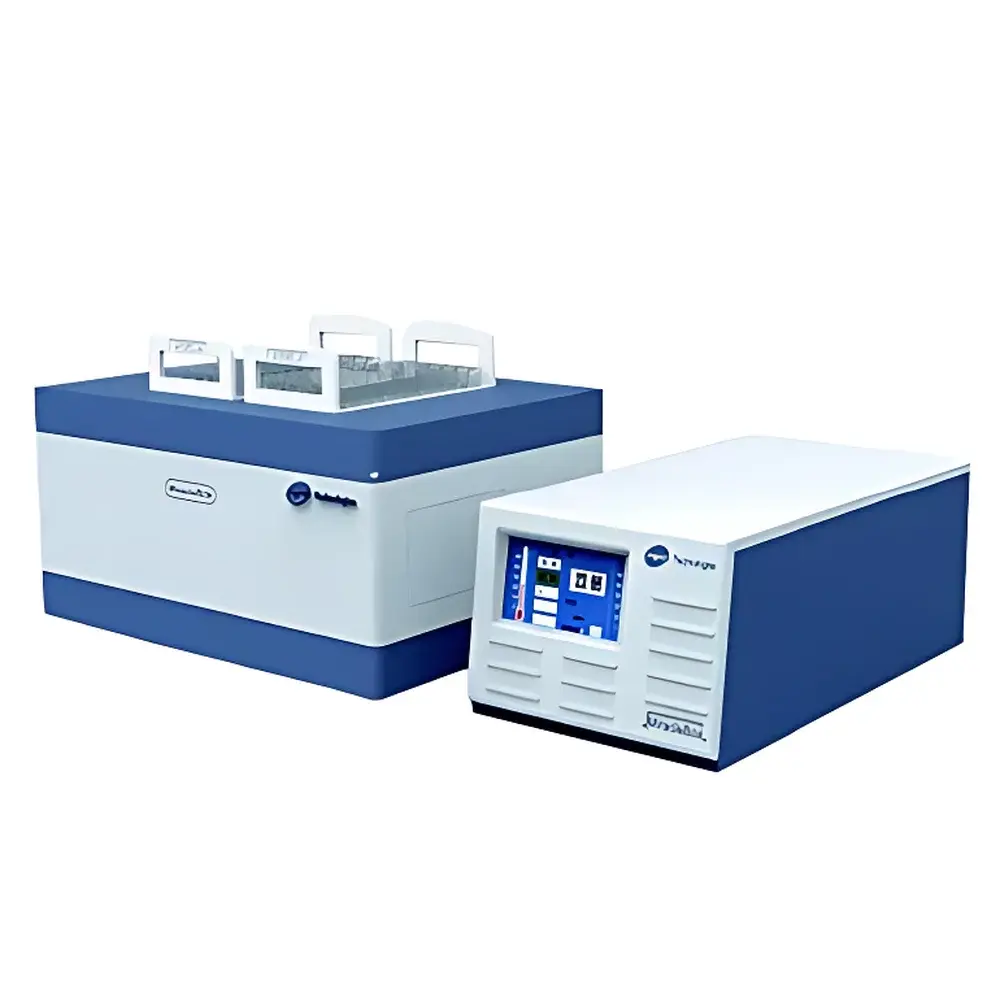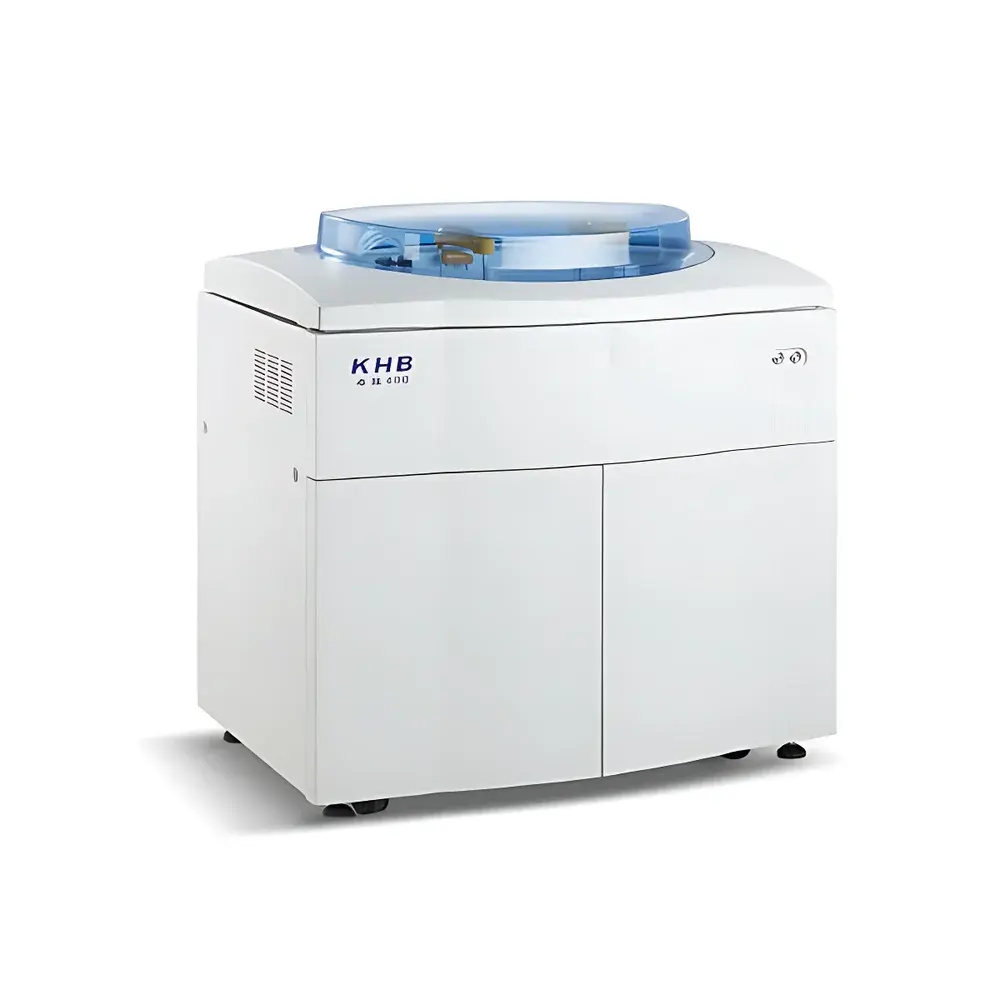
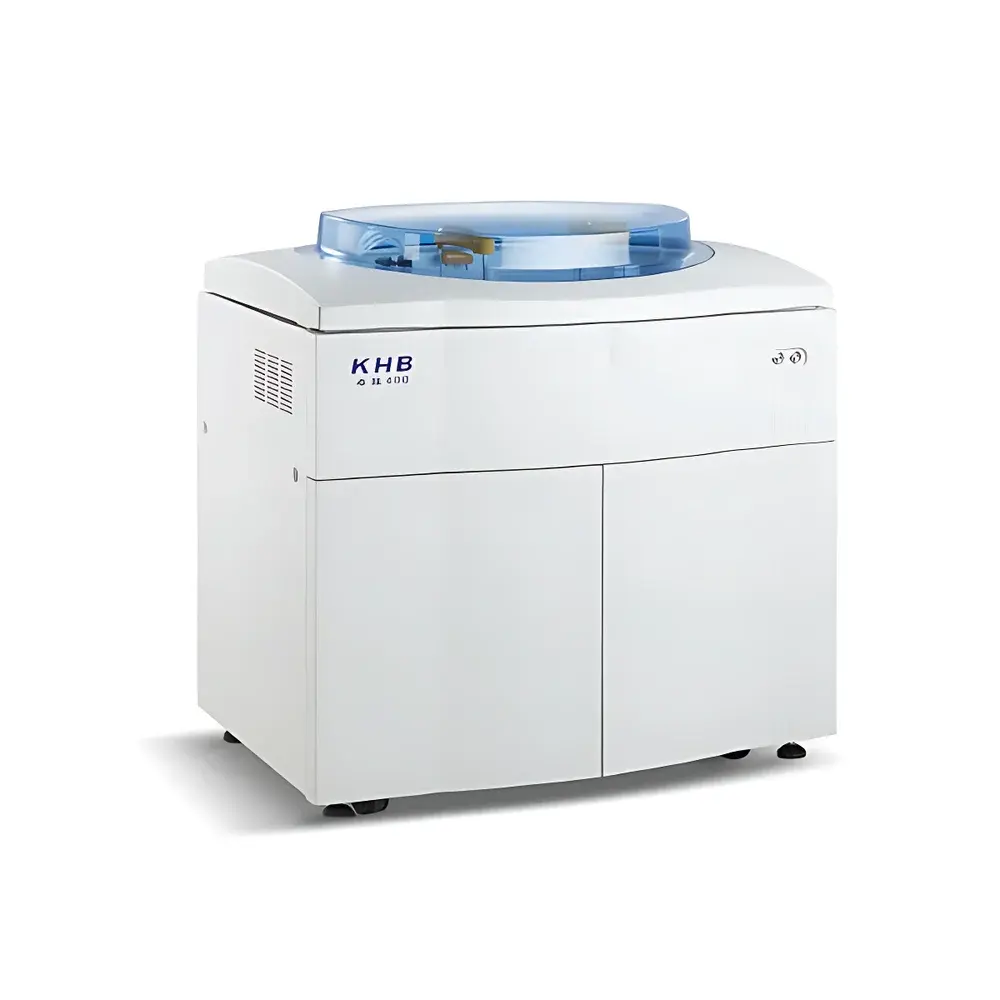
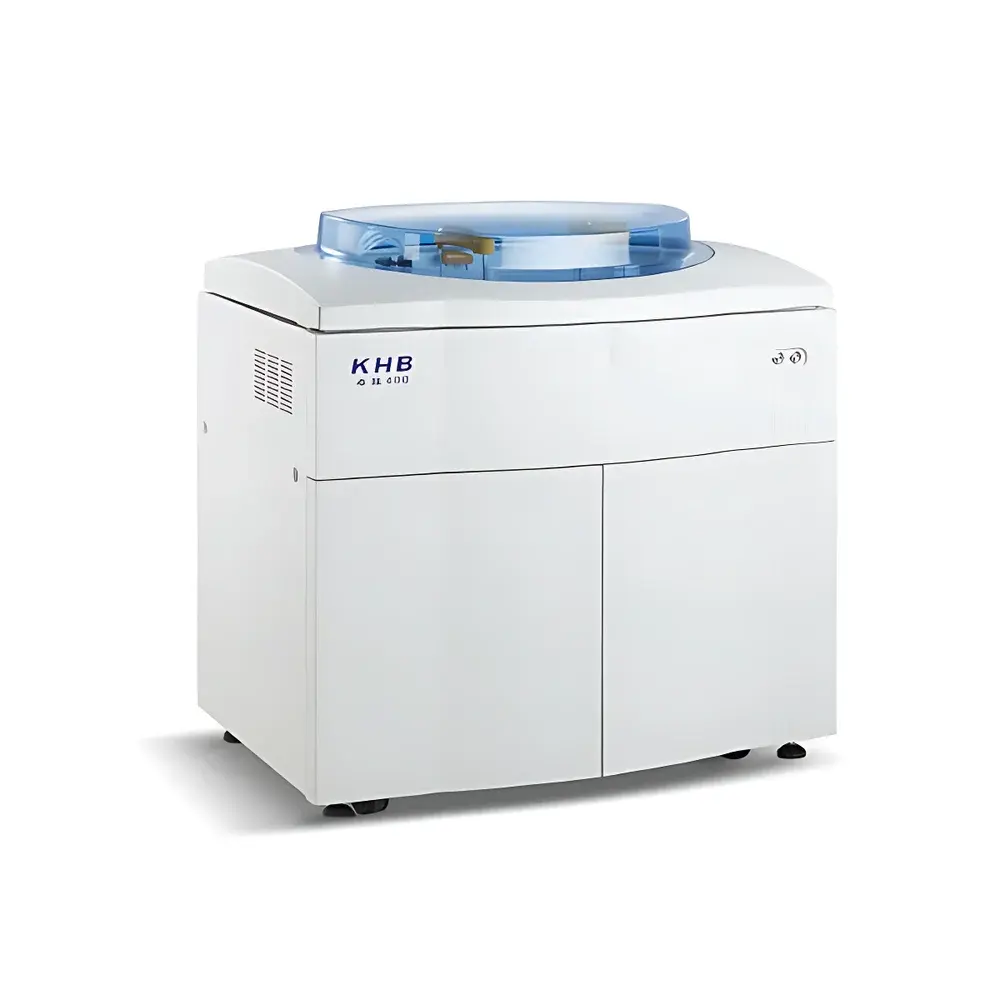
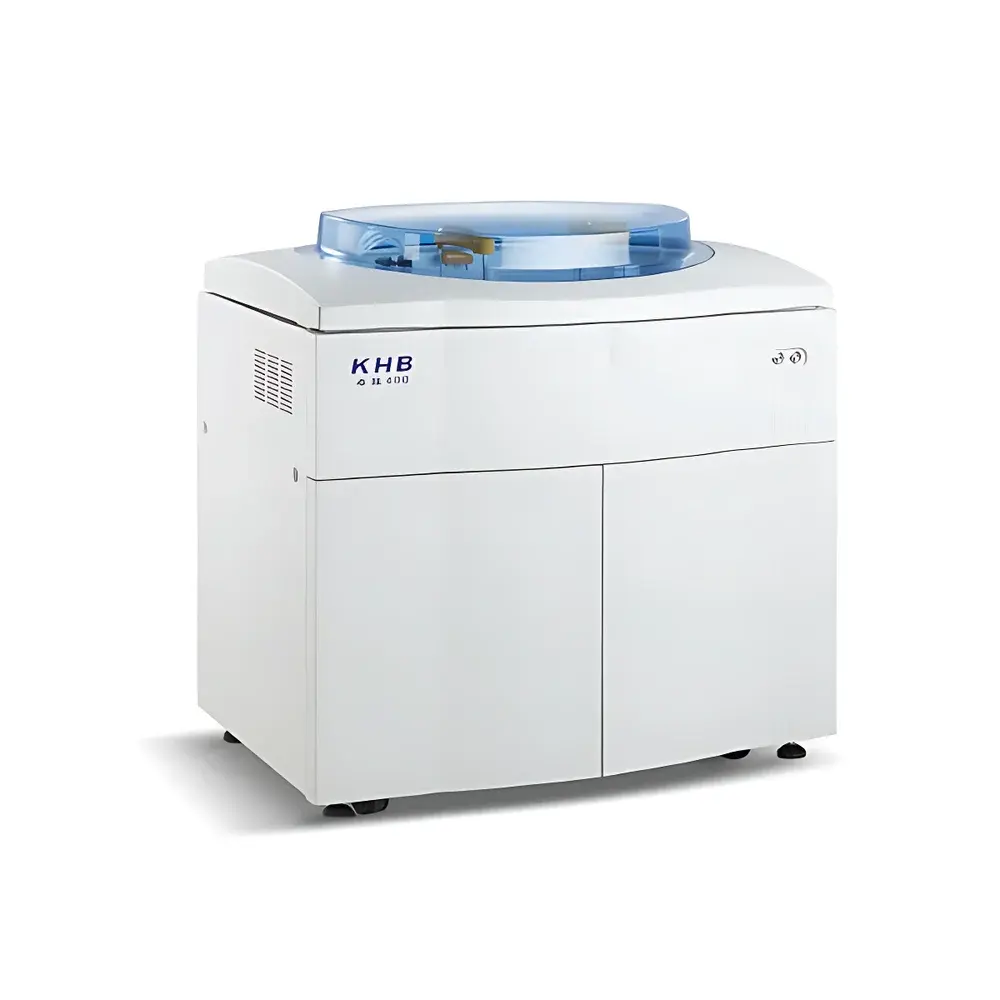
Kehua Bio ZY-400 Fully Automated Clinical Chemistry Analyzer
| Brand | Kehua Bio (KHB) |
|---|---|
| Origin | Shanghai, China |
| Model | ZY-400 |
| Instrument Type | Low-speed fully automated analyzer (0–400 tests/h) |
| Sample Types | Whole blood, serum, plasma, urine (per reagent instructions) |
| Throughput | 400 photometric tests/h (biochemistry) |
| Cross-contamination rate | <0.08% |
| Sample volume range | 1.5–70 µL (0.1 µL increment) |
| Cuvette material | Permanent optical glass |
| Reaction temperature control | Dual-phase liquid-gas thermostatic system, maintained at 37 ± 0.1 °C with real-time display and over-limit alarm |
| Calibration methods | Linear (K-factor, 2-point/multi-point), nonlinear (spline, piecewise linear, exponential, logarithmic, 3P/4P/5P logistic) |
| Analytical methods | End-point (single/dual), kinetic (rate), fixed-time, ISE potentiometry |
| Reagent refrigeration | Semiconductor-cooled reagent tray |
| Reagent monitoring | Real-time residual volume tracking with estimated remaining test count |
| Interface | Bidirectional LIS/HIS connectivity via standard network protocols (TCP/IP, ASTM, HL7) |
| User management | Role-based access control with audit trail |
| Compliance | CNAS-accredited medical laboratory validation framework |
| Power management | 24-hour continuous operation with auto-sleep/wake cycle |
Overview
The Kehua Bio ZY-400 Fully Automated Clinical Chemistry Analyzer is an ISO 13485–compliant in vitro diagnostic platform engineered for mid-volume clinical laboratories requiring high reliability, regulatory traceability, and seamless integration into hospital information ecosystems. It employs standardized photometric (colorimetric and turbidimetric) and potentiometric (ion-selective electrode) measurement principles to quantify analytes—including enzymes, metabolites, electrolytes, and proteins—in human biological specimens. The system operates on a fixed-time reaction kinetics model for enzymatic assays and endpoint detection for non-enzymatic reactions, with dual-wavelength correction to minimize interference from hemolysis, lipemia, or icterus—quantified via integrated serum index algorithms. Its core architecture features a permanent optical glass cuvette disc, eliminating disposable plastic consumables and ensuring long-term photometric stability across >100,000 cycles. Temperature regulation utilizes a liquid-gas dual-phase thermostatic system, maintaining the reaction chamber at 37.0 ± 0.1 °C with continuous digital feedback and thermal deviation alerts—meeting CLSI EP10-A3 verification requirements for incubation consistency.
Key Features
- Optical system: High-stability halogen lamp with automatic sleep/wake cycling; real-time intensity monitoring and spectral calibration compensation
- Cuvette handling: Multi-step warm-water cleaning protocol per cycle; polished stainless-steel stirrers with vortex mixing geometry and anti-adhesion surface treatment
- Precision fluidics: Dual independent pipetting channels (sample and reagent) with liquid-level sensing, volume-following aspiration, and collision avoidance logic
- Contamination control: <0.08% cross-contamination rate verified per CLSI EP21-A2 guidelines; internal needle wash stations with Kehua-certified detergent formulation
- Reagent management: Semiconductor-cooled reagent tray (4–12 °C); barcode-scanned reagent identification; real-time volume tracking with predictive test-count estimation
- Sample flexibility: 90-position sample carousel expandable to 120; accommodates microcuvettes, standard 13 mm tubes, and pediatric capillaries; 1.5–70 µL dispensing range at 0.1 µL resolution
- Emergency prioritization: Dynamic queue reordering for STAT samples without interrupting ongoing assays; auto-dilution and repeat testing triggered by flag conditions
Sample Compatibility & Compliance
The ZY-400 accepts whole blood (EDTA/K₂EDTA/Li-heparin), serum, plasma, and urine—provided specimen handling adheres to manufacturer-recommended centrifugation parameters and reagent-specific stability windows. All assay protocols align with CLSI GP10-A3 preanalytical guidance and are validated per CLSI EP15-A3 for precision and EP05-A3 for accuracy. The platform supports full traceability under GLP/GMP-aligned quality systems, including electronic audit trails for user actions, calibration events, and QC result review. CNAS accreditation of Kehua’s reference laboratory ensures method transfer validity for all bundled reagents, calibrators, and controls. Optional clot detection (via impedance sensing) and probe occlusion monitoring comply with IEC 62304 software safety classification Class B.
Software & Data Management
The embedded operating system provides role-based user authentication (administrator, operator, QC supervisor) with configurable permissions and mandatory password rotation. All analytical data—including raw absorbance values, reaction curves, calibration logs, and QC charts—are stored locally with optional encrypted export to external PACS or LIMS via ASTM E1384 or HL7 v2.5.1 interfaces. The software supports 12+ predefined report templates compliant with ISO 15189 reporting clauses and allows custom layout design with embedded reference intervals, delta-check flags, and critical value escalation workflows. Audit logs record timestamped entries for every calibration, maintenance event, and result modification—fully compliant with FDA 21 CFR Part 11 electronic signature requirements when deployed with time-stamped digital certificates.
Applications
The ZY-400 delivers routine and specialized testing across core clinical chemistry domains: hepatic function (ALT, AST, ALP, GGT, total bilirubin), renal profile (creatinine, urea, uric acid), lipid metabolism (cholesterol, triglycerides, HDL-C), cardiac markers (CK-MB, LDH), electrolytes (Na⁺, K⁺, Cl⁻, Ca²⁺ via ISE), and metabolic panels (glucose, HbA1c surrogate assays). Its serum index quantification enables objective triage of lipemic, hemolyzed, or icteric samples prior to analysis—reducing manual review burden. The system also supports therapeutic drug monitoring (e.g., phenytoin, lithium) and toxicology screening (e.g., ethanol, salicylate) when paired with validated Kehua reagent kits.
FAQ
What regulatory certifications does the ZY-400 hold for international deployment?
The instrument complies with ISO 13485:2016 for QMS, IEC 61010-1 for electrical safety, and IEC 61326-1 for EMC. CE marking is pending; FDA 510(k) clearance is not currently held.
Can the ZY-400 interface with third-party LIS systems outside China?
Yes—via configurable TCP/IP-based ASTM E1384 or HL7 v2.5.1 message routing, supporting bidirectional order entry and result transmission with configurable field mapping.
Is routine maintenance required beyond daily cleaning cycles?
Preventive maintenance is recommended every 6 months by certified Kehua Field Service Engineers, including photometric verification, pipetting accuracy checks per CLSI EP10-A3, and thermostat calibration validation.
How does the system handle reagent lot transitions?
The software enforces mandatory reagent lot registration with built-in calibration curve migration tools, allowing K-factor transfer between lots while preserving historical QC continuity.
Does the ZY-400 support remote diagnostics or firmware updates?
Remote secure access is available via Kehua’s authorized service portal using TLS 1.2–encrypted tunnels; firmware updates require signed digital packages and dual-operator authorization.