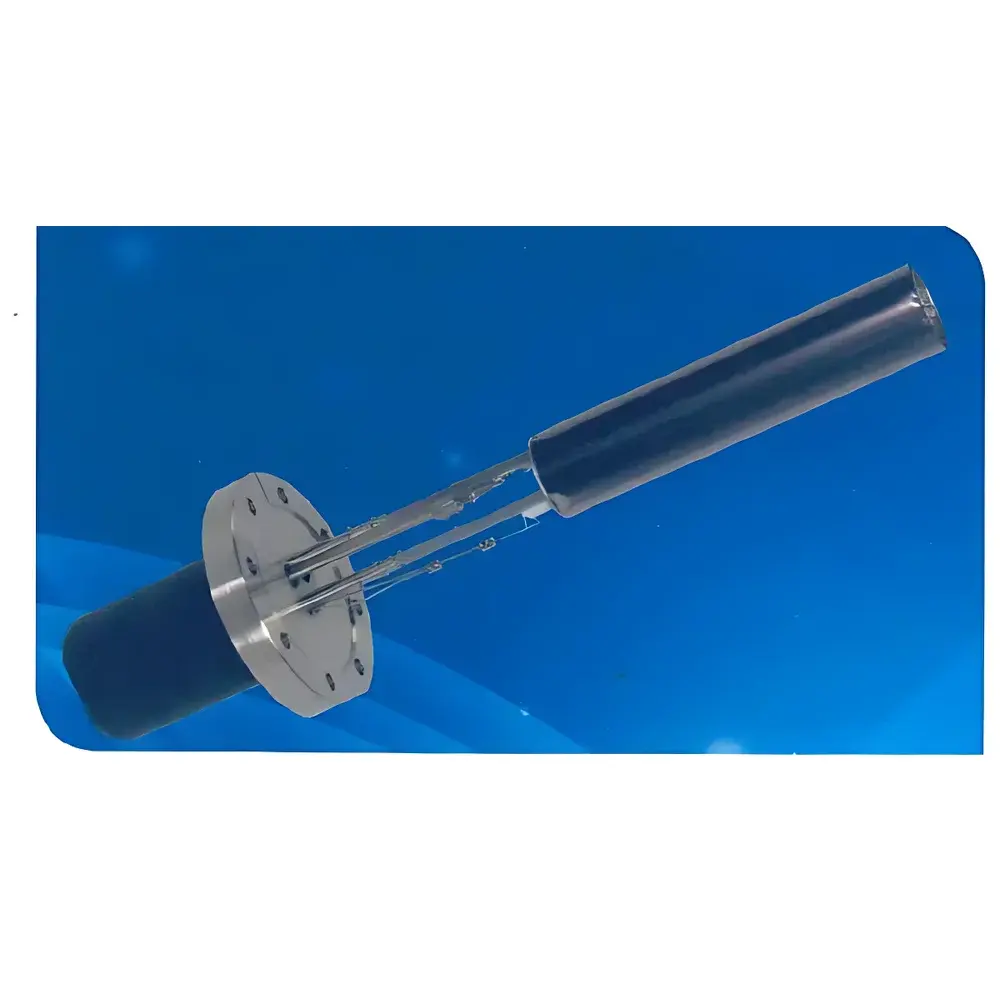
SVT Associates MBE Effusion Cell / Molecular Beam Epitaxy Source
| Brand | SVT Associates |
|---|---|
| Origin | USA |
| Model | CL/HL/HT Series |
| Temperature Range | 0 °C to 1,400 °C |
| Power | 600 W or 1 kW |
| Temperature Stability | ±0.1 °C |
| Temperature Repeatability | ±0.1 °C |
| Thermocouple | Type C (Type D optional) |
| Crucible Capacity | 16–80 cm³ |
| Standard Flange | 2.75″ or 4.5″ OD-CF |
| Standard Length | 12″ (305 mm) |
| Filament | Amphenol annular filament |
| Thermocouple Connector | Omega subminiature |
Overview
The SVT Associates MBE Effusion Cell series is a family of high-precision, ultra-high vacuum (UHV)-compatible molecular beam epitaxy (MBE) sources engineered for controlled thermal evaporation of elemental and compound materials during thin-film growth. Designed specifically for semiconductor epitaxy systems, these effusion cells operate on the principle of Knudsen effusion—where vapor-phase species escape through a thermally isolated orifice under UHV conditions (<1×10⁻¹⁰ Torr), enabling precise atomic flux control essential for monolayer-resolved heterostructure fabrication. The HL, CL, and HT variants address distinct material classes: HL cells maintain elevated port temperatures to prevent condensation of medium-vapor-pressure elements (e.g., Ga, In); CL cells incorporate actively cooled apertures to suppress aluminum creep and oxidation at the effusion orifice; and HT cells deliver up to 2,000 °C operating capability for refractory metals (e.g., Cr, Mo, W) and low-vapor-pressure oxides. All units are fully characterized pre-shipment—including thermal mapping, outgassing rate validation, and effusion flux calibration—and comply with UHV-compatible material selection (OFHC copper, molybdenum, tungsten, and alumina insulators).
Key Features
- Three purpose-built architectures: HL (high-port-temperature), CL (cold-lip), and HT (high-temperature) configurations optimized for specific evaporation chemistries and vapor pressure regimes
- Integrated temperature control system with ±0.1 °C stability and repeatability, using Type C thermocouples (Type D available upon request) and programmable PID regulation
- Annular Amphenol filament design ensures uniform radial heating and extended operational lifetime under continuous UHV thermal cycling
- Modular flange interface: standard 2.75″ or 4.5″ outer diameter ConFlat (OD-CF) compatible with industry-standard MBE chamber feedthroughs
- Optional water-cooled shroud and integrated shutter assembly for 4.5″+ aperture models, supporting rapid flux interruption and thermal management during multi-source growth
- Cold-lip variants qualified for operation in UHV ammonia environments (e.g., GaN MBE), featuring direct water-cooled crucible lips to suppress NH₃ decomposition byproducts and Al/N migration
Sample Compatibility & Compliance
SVT effusion cells support evaporation of Group III (Al, Ga, In), Group V (As, Sb), transition metals (Cr, Fe, Ni), rare-earth elements (Gd, Er), and oxide precursors (e.g., Sr, Ba). Crucible geometries include cylindrical (16–80 cm³) and tapered-wall (16 cm³ and 22 cm³) configurations—optimized for improved thermal uniformity and reduced axial temperature gradients. All cells are constructed from ASTM B152-certified oxygen-free high-conductivity (OFHC) copper, ASTM B386 molybdenum liners, and high-purity alumina (99.8% Al₂O₃) electrical insulation. Units meet ISO 10110 surface finish requirements for UHV components and conform to SEMI F27-0202 standards for semiconductor process equipment cleanliness. Pre-shipment validation includes residual gas analysis (RGA) monitoring and bakeout performance verification per ASTM E1557.
Software & Data Management
While hardware-controlled via external DC power supplies and analog temperature controllers, SVT effusion cells integrate seamlessly with industry-standard MBE control platforms (e.g., Riber EVO, Veeco Gen10, SPECS MBE Control Suite) through 0–10 V analog I/O and RS-232/RS-485 interfaces. Optional digital modules provide IEEE-488 (GPIB) or Ethernet-based communication for traceable setpoint logging, real-time temperature trending, and audit-ready data export compliant with FDA 21 CFR Part 11 requirements when deployed in regulated R&D or pilot-line environments. Temperature profiles and effusion rates are recorded with timestamped metadata, supporting GLP/GMP-aligned process documentation workflows.
Applications
- GaAs, InP, and GaN-based heterostructures for high-electron-mobility transistors (HEMTs) and laser diodes
- Magnetic multilayers (e.g., Co/Cu, Fe/MgO) for spintronic device research
- Topological insulator thin films (Bi₂Se₃, Sb₂Te₃) requiring stoichiometric flux control
- Oxide MBE (SrTiO₃, LaAlO₃) using high-temperature HT cells with dual-zone thermal profiling
- In-situ calibration of reflection high-energy electron diffraction (RHEED) intensity vs. flux relationships
FAQ
What distinguishes the HL, CL, and HT series?
The HL series features elevated crucible lip temperature to prevent condensation of medium-vapor-pressure elements; the CL series uses active water cooling at the effusion orifice to inhibit aluminum creep and oxidation; the HT series employs refractory heater assemblies capable of sustained 2,000 °C operation for low-vapor-pressure materials.
Are these sources compatible with UHV ammonia environments?
Yes—SVT’s cold-lip (CL) configuration is specifically designed and validated for use in UHV NH₃ ambient, incorporating water-cooled lips and ammonia-resistant metallization.
Can I retrofit an existing MBE system with SVT effusion cells?
All models use standard 2.75″ or 4.5″ OD-CF flanges and accept common thermocouple and power connector types (Amphenol annular, Omega subminiature), enabling drop-in integration with minimal chamber modification.
What crucible volume options are available, and how do they affect flux stability?
Capacities range from 16 cm³ to 80 cm³; tapered-wall 16 cm³ and 22 cm³ crucibles demonstrate superior axial temperature homogeneity, reducing flux drift during long-duration growth runs.
Is post-installation calibration required?
No—each unit undergoes full thermal characterization and effusion flux mapping at SVT’s facility prior to shipment, with documented calibration curves supplied for each serial-numbered cell.