
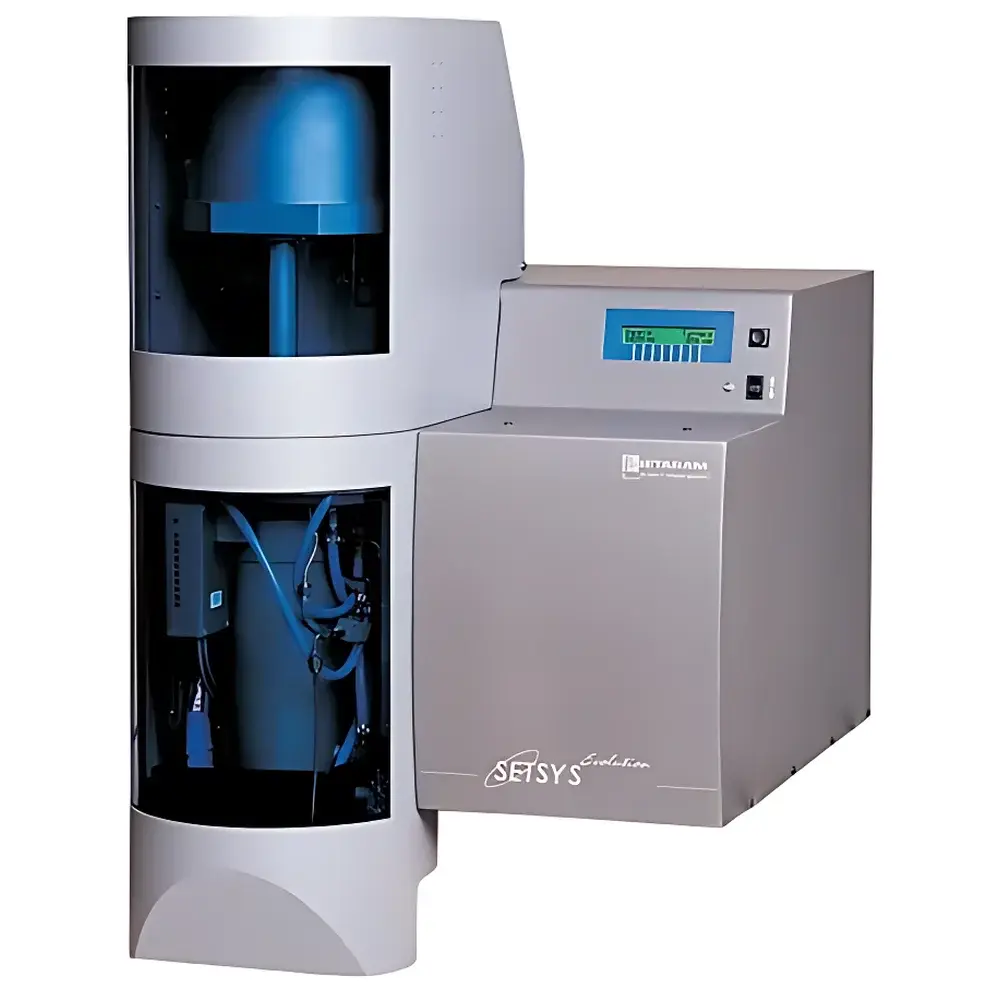
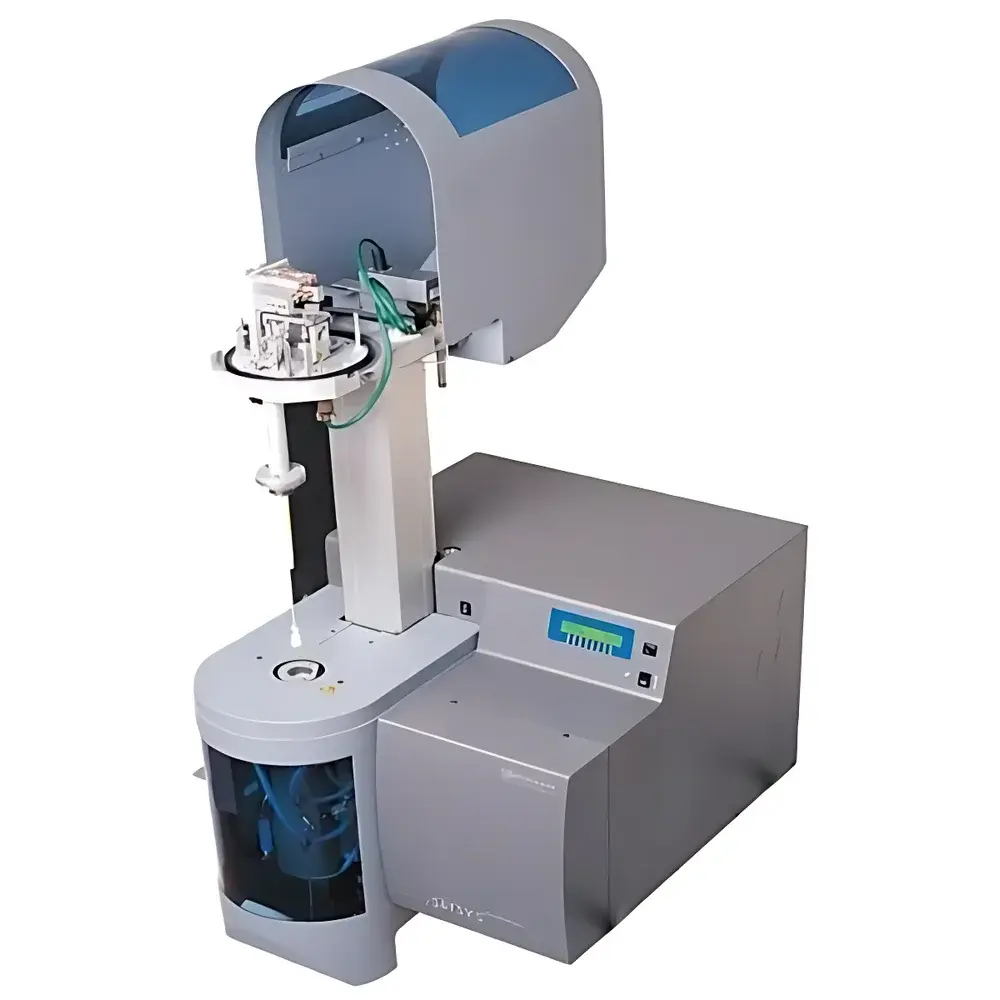
SETARAM Setsys EVO High-Temperature / Ultra-High-Temperature Thermogravimetric Analyzer
| Brand | SETARAM |
|---|---|
| Origin | France |
| Model | Setsys EVO |
| Temperature Range | −150 °C to 1750 °C (upgradable to 2400 °C) |
| Heating Rate | 0–100 K/min (full range) |
| Max. TG Sample Capacity | 35 g / 100 g |
| TG Resolution | 0.002 µg / 0.02 µg |
| TG Baseline Repeatability | <10 µg (RT to 1750 °C) |
| DSC Resolution | 1 µW |
| DTA Resolution | 0.4 µW |
| Gas Lines | 3 carrier + 1 auxiliary/reactive gas, controlled via MFCs and solenoid valves |
| Atmosphere Options | inert, oxidative, reductive, steam, corrosive gases |
| Vacuum System | up to 10⁻⁴ mbar (10⁻² torr) |
| EGA Compatibility | MS, FT-IR, GC |
| Optional Modules | Wetsys humidity control, H₂-safe operation kit, corrosive gas kits (SO₂, NH₃, H₂S) |
Overview
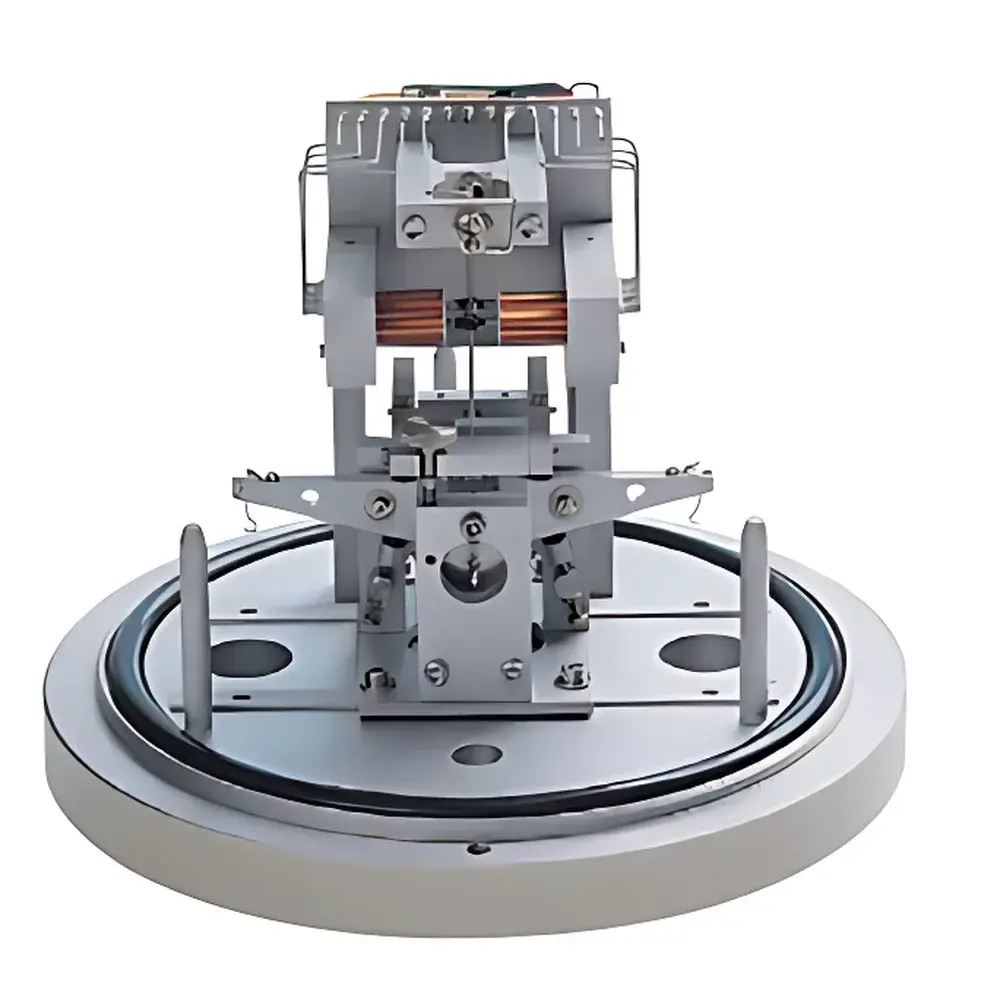
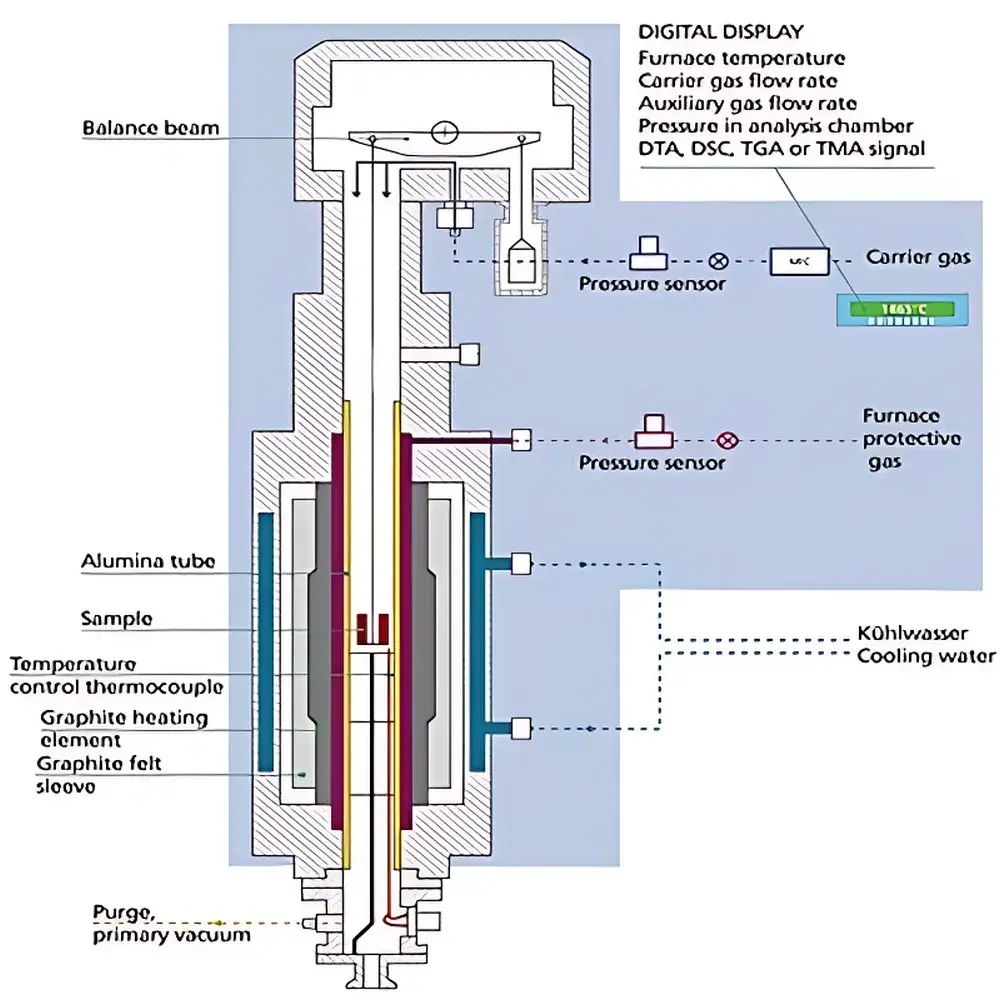
The SETARAM Setsys EVO is a high-performance, ultra-high-temperature thermogravimetric analyzer engineered for precision mass-change measurement under extreme thermal conditions. Based on the principle of micro-balance gravimetry coupled with differential thermal analysis (DTA) or differential scanning calorimetry (DSC), the system delivers synchronized thermogravimetric and thermal signal acquisition across an industry-leading temperature span—from cryogenic −150 °C to 1750 °C (extendable to 2400 °C). Its proprietary top-mounted, suspended optical balance eliminates mechanical drift and thermal interference inherent in conventional bottom-loading electronic microbalances—enabling stable, water-bath-free operation without pre-heating stabilization periods. The furnace incorporates active water cooling, ensuring thermal uniformity and long-term stability even during extended dwell cycles at >1600 °C. Designed as a modular platform, the Setsys EVO supports seamless integration of TGA, DTA, DSC, TMA, and simultaneous TGA-DSC/DTA configurations—all within a single, mechanically and thermally optimized framework.
Key Features
- Optical suspension balance architecture delivering sub-microgram resolution (0.002 µg) and baseline repeatability <10 µg over the full operating range
- Single-furnace design enabling continuous operation from −150 °C to 2400 °C without hardware swaps or recalibration
- Three-pair thermocouple DTA sensor providing enhanced sensitivity and signal-to-noise ratio versus conventional single-junction designs
- Corrosion-resistant DTA probe compatible with aggressive atmospheres including H₂, SO₂, NH₃, and H₂S—validated per ISO 8502-9 for material compatibility
- Four-channel gas management system: three independently controlled carrier gases plus one reactive/auxiliary line, all regulated via mass flow controllers (MFCs) and software-synchronized solenoid valves
- Integrated high-vacuum capability (10⁻⁴ mbar) with standardized EGA ports for real-time coupling to quadrupole mass spectrometers (QMS), Fourier-transform infrared spectrometers (FT-IR), or gas chromatographs (GC)
- Wetsys humidity module option enabling precise RH control (1–95% RH) for hygrothermal degradation studies compliant with ASTM E104 and ISO 11140-5
- H₂-safe operational mode featuring dual-pressure monitoring, flame arrestors, and automatic purge sequencing aligned with IEC 60079-10-1 hazardous area classification guidelines
Sample Compatibility & Compliance
The Setsys EVO accommodates diverse sample geometries and chemistries—including refractory metals, oxide ceramics, catalysts, nuclear fuels, and composite precursors—without compromise in data fidelity. Its inert alumina or graphite crucible options support both oxidizing and reducing environments. All gas-handling components are constructed from electropolished stainless steel or Hastelloy C-276 where required for sulfur- or chlorine-containing atmospheres. The system complies with GLP and GMP documentation requirements through audit-trail-enabled software (CALISTO), supporting 21 CFR Part 11-compliant electronic signatures, user access levels, and immutable raw-data archiving. Thermal calibration adheres to ISO 11357-1 (DSC), ISO 11358-1 (TGA), and ASTM E1131 (simultaneous TGA-MS) protocols.
Software & Data Management
CALISTO v6.2 provides unified instrument control, real-time data visualization, and post-acquisition analysis—including derivative thermogravimetry (DTG), peak deconvolution, kinetic modeling (e.g., Friedman, Ozawa-Flynn-Wall), and multi-step reaction fitting. Data export conforms to ASTM E1447 and ASTM E1593 standards for interoperability with third-party analytics platforms (OriginLab, MATLAB, Thermo-Calc). All method files, calibration records, and raw datasets are timestamped, digitally signed, and stored in encrypted SQLite databases. Audit trails log operator actions, parameter changes, and hardware status events—fully traceable for regulatory inspections.
Applications
- Oxidation kinetics and scale adhesion testing of Ni-based superalloys under simulated turbine conditions (ASTM G174, ISO 20699)
- Decomposition thermodynamics of metal-organic frameworks (MOFs) and battery cathode precursors
- Catalyst deactivation profiling under cyclic redox atmospheres (e.g., Fischer–Tropsch, NOₓ reduction)
- Sintering behavior and phase evolution in SiC/Si₃N₄ composites monitored via in situ TGA-DSC-EGA
- Thermal stability assessment of nuclear fuel cladding materials (Zr alloys, FeCrAl) under LOCA-relevant steam environments
- Humidity-driven degradation mechanisms in polymer electrolyte membranes (PEMs) using Wetsys-coupled TGA-DSC
FAQ
What is the maximum achievable vacuum level, and how is it maintained during high-temperature operation?
The integrated turbomolecular pumping system achieves and sustains ≤10⁻⁴ mbar up to 1750 °C; active cooling of the vacuum flange and differential pressure monitoring prevent outgassing-induced pressure spikes.
Can the Setsys EVO perform quantitative gas-phase speciation during decomposition?
Yes—standard EGA interfaces support direct coupling to QMS (with electron ionization and NIST library matching) or FT-IR (with 4 cm⁻¹ resolution and spectral averaging) for time-resolved identification and semi-quantitative concentration tracking.
Is calibration traceable to national metrology institutes?
All temperature and mass calibrations are performed using NIST-traceable reference materials (e.g., Ni, In, Al, Au, CeO₂), with certificates issued per ISO/IEC 17025 by SETARAM’s accredited calibration laboratory.
How does the optical balance handle thermal buoyancy effects at >1500 °C?
The top-loading geometry, combined with laminar gas flow shielding and symmetric thermal mass distribution, minimizes convective disturbance; baseline noise remains ≤0.03 µg RMS under steady-state 1700 °C nitrogen purge.
Are firmware updates and compliance patches provided post-purchase?
Yes—CALISTO receives biannual validated updates addressing new regulatory requirements (e.g., EU MDR Annex I, FDA guidance on legacy systems), delivered via secure download with installation validation reports.



