
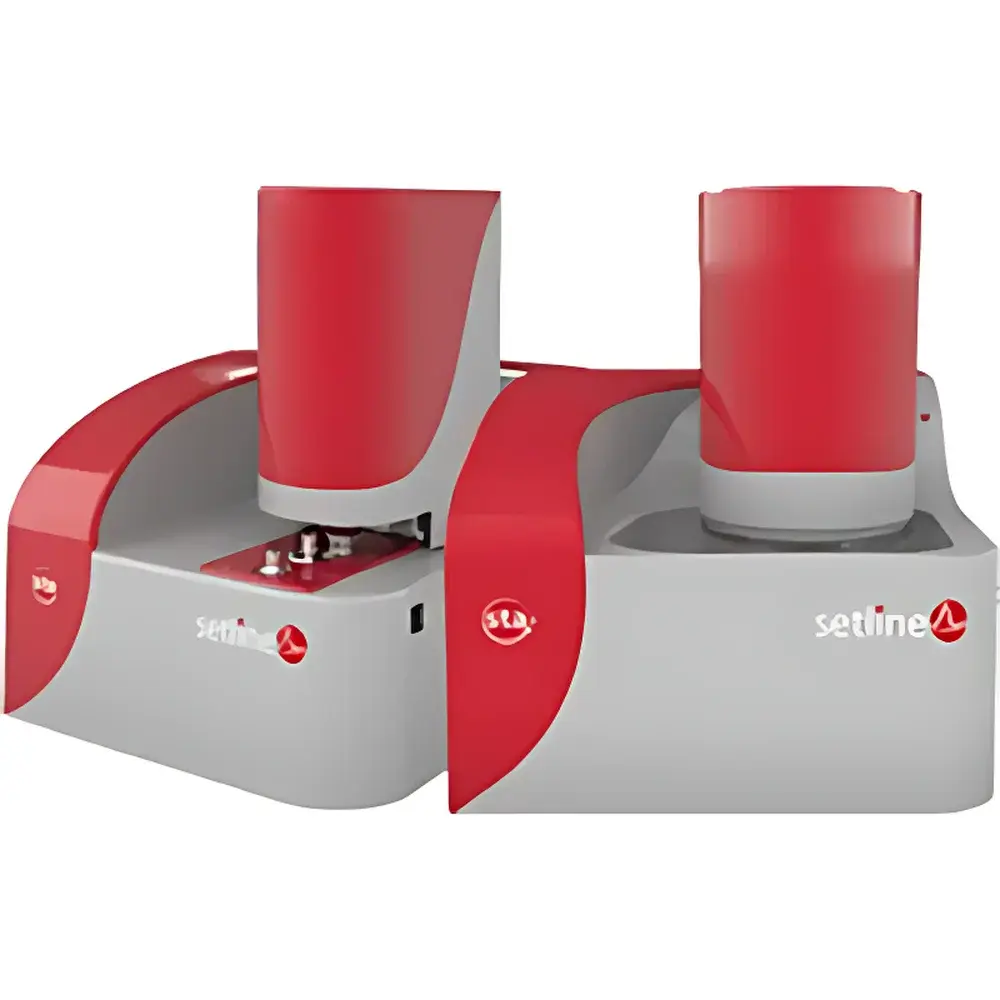
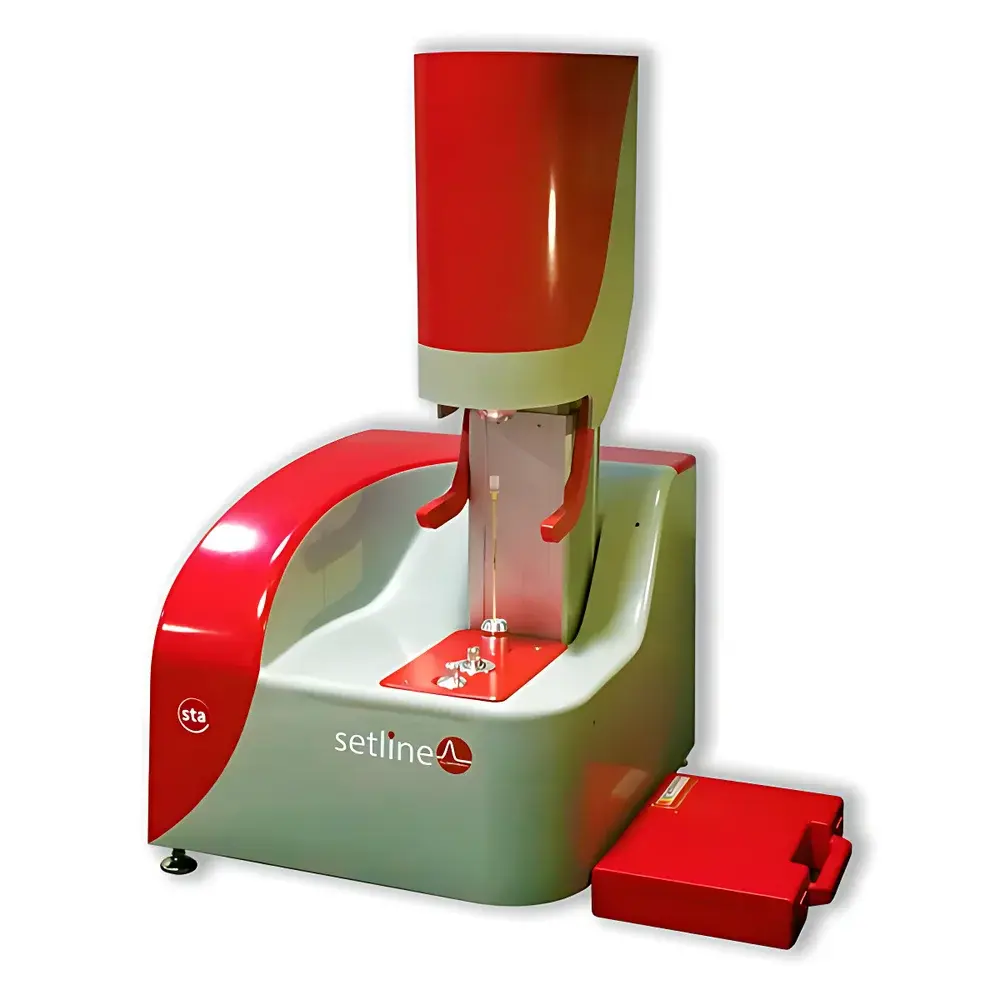
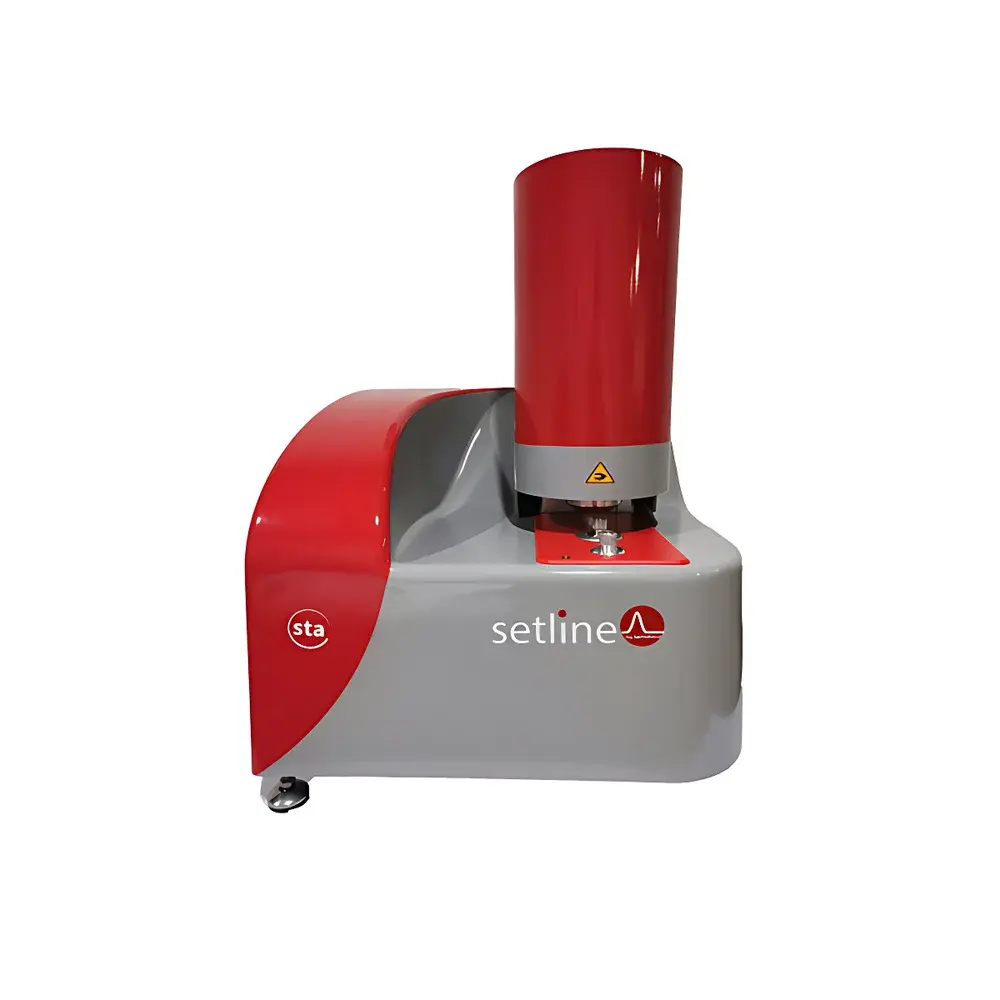
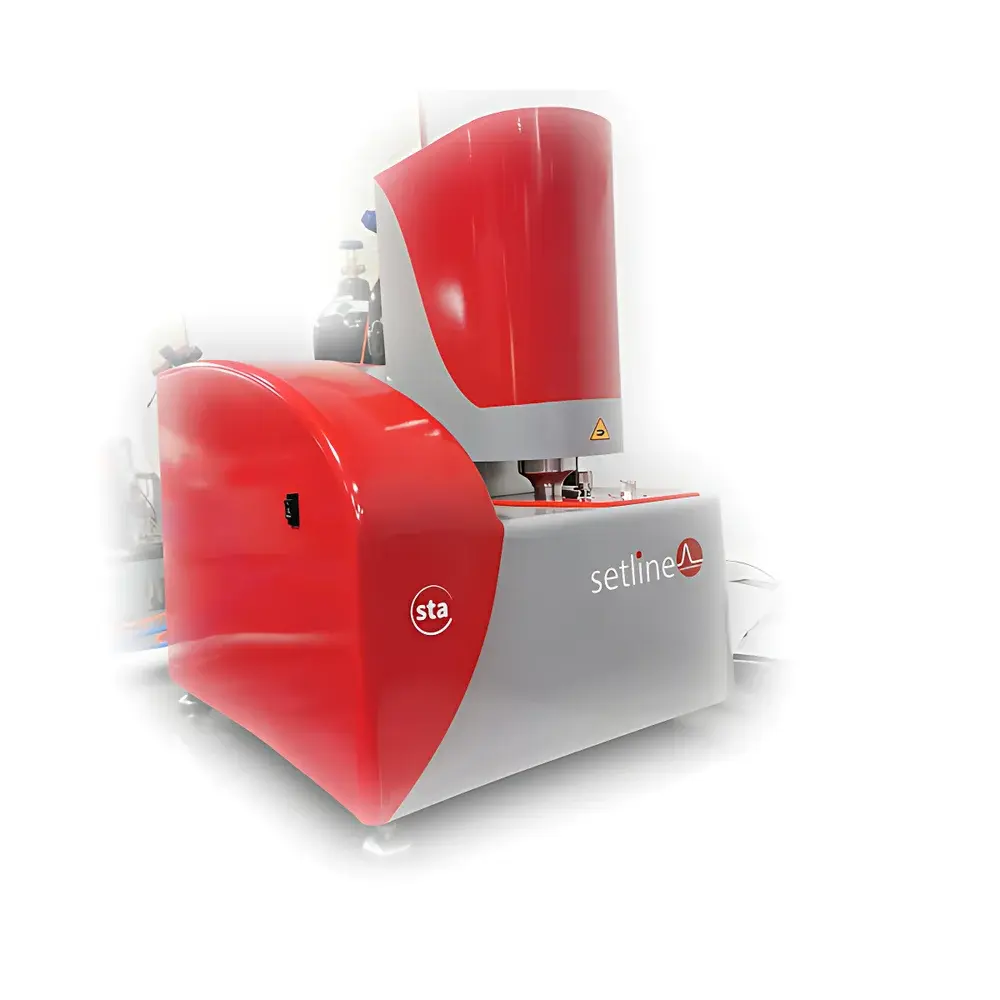
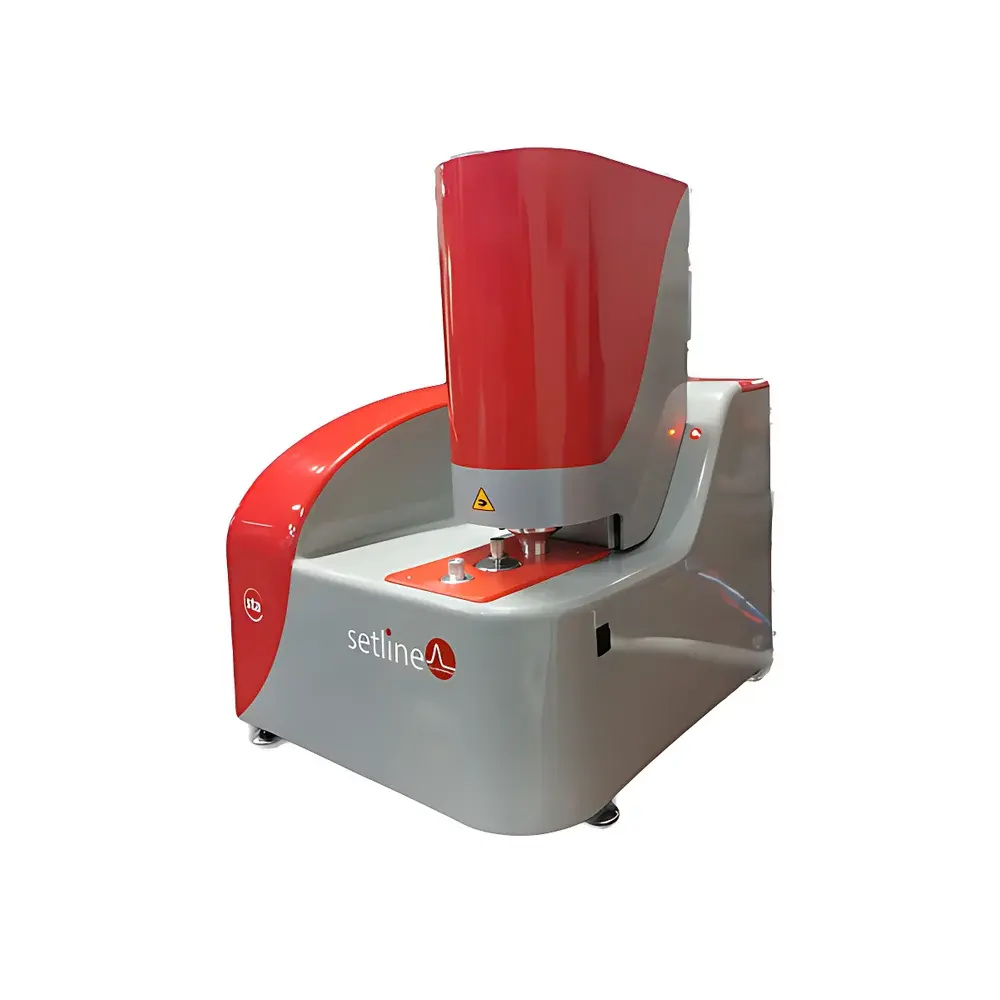
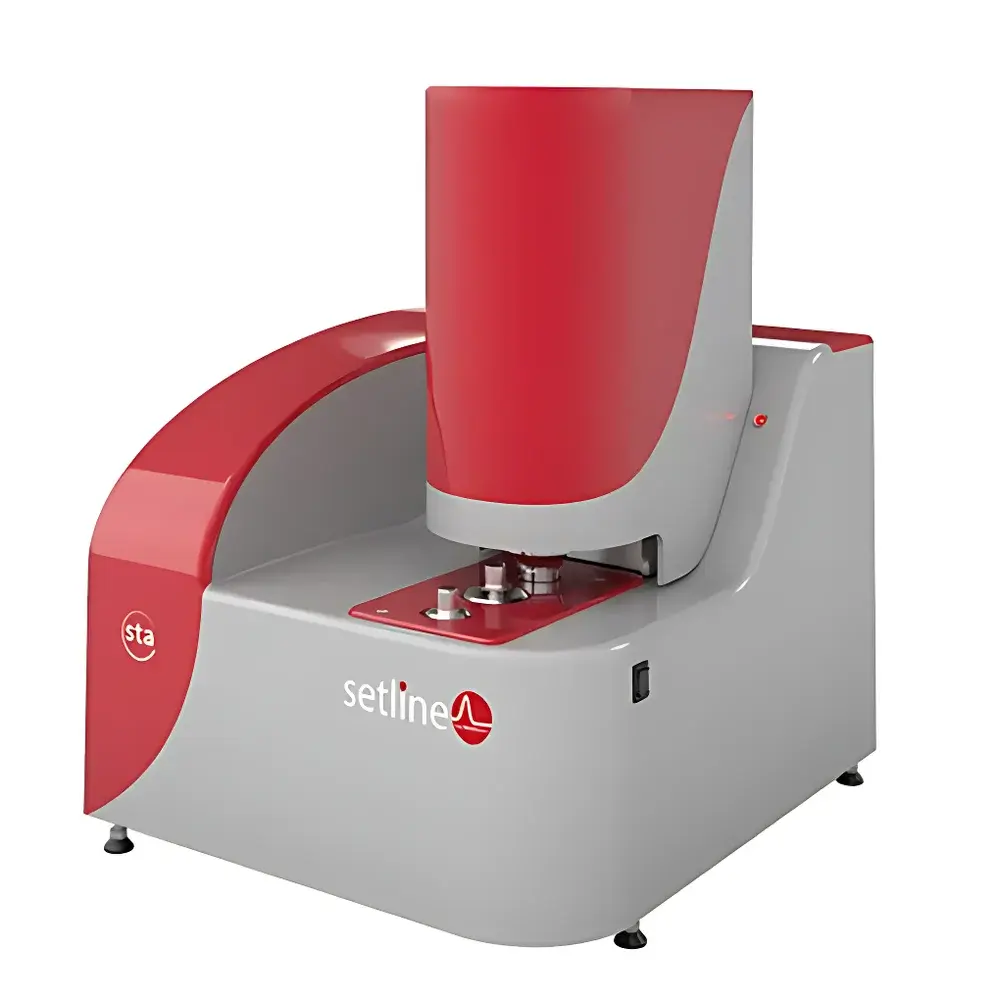
Setline STA Simultaneous Thermal Analyzer (TG-DSC/DTA) by SETARAM
| Brand | SETARAM |
|---|---|
| Model | Setline STA / Setline STA+ |
| Temperature Range | Ambient to 1100 °C |
| Heating Rate | 0.01–50 °C/min |
| Temperature Stability | ±0.05 °C |
| Max Sample Mass | 20 g |
| Atmosphere Options | Air, O₂, Inert (N₂, Ar) |
| Balance Resolution | 0.02 µg |
| TG Dynamic Range | ±200 mg / ±1000 mg |
| DSC Sensitivity | 1 µW |
| DSC Enthalpy Accuracy | ±1% |
| Optional Autosampler | 49-position |
| Cooling Method | Water-cooled furnace liner |
| Software | Calisto 2.0 (Data Acquisition & Processing) |
Overview
The Setline STA Simultaneous Thermal Analyzer is a high-performance, dual-sensor thermal analysis platform engineered for precise, real-time measurement of mass change (thermogravimetry, TG) and heat flow (differential scanning calorimetry, DSC, or differential thermal analysis, DTA) under controlled temperature programs and atmospheric conditions. Based on the proven Couette-type vertical microbalance architecture and integrated flat-plate thermal sensor design, the instrument delivers synchronized, high-fidelity data across its full operating range—from ambient to 1100 °C. Its core measurement principle relies on high-stability thermoelectric detection coupled with optical-interference-based microbalance technology, enabling sub-microgram mass resolution and µW-level heat flow sensitivity. Designed for reproducibility in regulated environments, the Setline STA complies with fundamental requirements of ISO 11358, ASTM E1131, and USP for thermal stability and decomposition profiling—making it suitable for method development, quality control, and materials qualification in GxP-aligned laboratories.
Key Features
- Simultaneous TG-DSC/DTA acquisition using a single sample pan and identical thermal history for both signals—eliminating inter-run variability and ensuring intrinsic correlation between mass loss and thermal events.
- Vertical top-loading microbalance system with no radiation shield, minimizing thermal lag and improving signal fidelity during rapid heating or cooling cycles.
- Water-cooled furnace liner enabling stable isothermal holds, precise ramp control, and extended service life—even under prolonged exposure to high-temperature oxidative atmospheres.
- Modular sensor architecture: interchangeable DSC/DTA sensors optimized for specific temperature ranges and sensitivity profiles (e.g., low-T polymer transitions vs. high-T ceramic phase changes).
- Full atmosphere flexibility: automated gas switching between inert (N₂, Ar), oxidizing (air, O₂), and reactive gases via integrated mass flow controllers with leak-tight sealing and laminar flow optimization.
- Calisto 2.0 software suite with dual-module architecture: CALISTO ACQ for instrument control, sequence programming, and real-time monitoring; CALISTO PROC for post-acquisition analysis—including baseline correction, peak deconvolution, derivative (DTG) calculation, enthalpy integration, and customizable macro-driven batch processing.
- Comprehensive data integrity framework supporting 21 CFR Part 11-compliant user access levels, electronic signatures, audit trails, and immutable raw data archiving.
Sample Compatibility & Compliance
The Setline STA accommodates a broad spectrum of solid and powdered samples—including polymers, pharmaceuticals, ceramics, composites, catalysts, battery materials, and geological specimens—using crucibles fabricated from aluminum, alumina, platinum, gold-plated alloys, and stainless steel (high-pressure variants available). Its 20 g maximum sample capacity supports statistically robust testing of heterogeneous or low-sensitivity materials without compromising resolution. All hardware and firmware adhere to IEC 61000-6-3 (EMC) and IEC 61010-1 (safety) standards. The system is routinely validated per ASTM E1582 for temperature calibration and ASTM E1356 for DSC accuracy—ensuring traceability to NIST-traceable reference materials. Routine operation meets GLP and GMP documentation requirements when paired with Calisto’s secure data management protocols.
Software & Data Management
Calisto 2.0 is a vendor-agnostic thermal analysis platform developed by SETARAM and refined in collaboration with Swiss metrology partners. It supports import and comparative analysis of data from all major thermal analyzers (TA Instruments, NETZSCH, PerkinElmer, Mettler Toledo), facilitating cross-platform method transfer and inter-laboratory validation. The acquisition module enables fully programmable multi-step temperature profiles—including isothermal holds, linear ramps, stepwise heating, and dynamic gas switching—with real-time visualization of TG, DSC, DTG, and derivative signals. The processing module provides advanced quantitative tools: automatic onset/peak/endpoint detection, mass-loss fractioning, residual ash quantification, kinetic modeling (e.g., Ozawa-Flynn-Wall), and custom report generation compliant with ISO/IEC 17025 reporting templates. All processed results are exportable in CSV, Excel, PDF, and image formats (PNG, SVG).
Applications
The Setline STA serves as a primary tool for thermal stability assessment, compositional analysis, and reaction kinetics studies across academia and industry. Typical use cases include: determination of decomposition onset temperatures and activation energies in polymer blends; quantification of moisture, solvent residues, and volatile additives in pharmaceutical dosage forms; characterization of dehydration, decarbonation, and oxidation steps in inorganic hydrates and carbonates (e.g., CaC₂O₄·H₂O → CaCO₃ → CaO); evaluation of char yield and filler content in elastomers and composites; screening of thermal aging behavior in aerospace-grade resins; and validation of thermal safety parameters (e.g., exothermic onset, adiabatic time-to-maximum-rate) for energetic materials. Its compatibility with standard reference materials and regulatory workflows makes it widely adopted in QC labs serving ISO 9001-certified manufacturing sites and FDA-registered pharmaceutical facilities.
FAQ
What is the difference between Setline STA and Setline STA+?
The STA+ variant includes an integrated 49-position autosampler, enhanced furnace cooling capability, extended TG dynamic range (±1000 mg), and optional high-sensitivity DSC sensor—optimized for high-throughput R&D and routine QC applications.
Can the instrument operate under reducing atmospheres such as H₂ or CO?
Yes—custom gas modules with corrosion-resistant internal components and dedicated safety interlocks are available upon request for reactive or reducing gas environments.
Is calibration traceable to international standards?
All temperature and enthalpy calibrations use NIST-traceable reference materials (e.g., indium, zinc, alumina), with documented uncertainty budgets and certificate-of-calibration issued per ISO/IEC 17025 requirements.
How is data security ensured during long-term operation?
Calisto 2.0 enforces role-based access control, encrypted database storage, automatic backup scheduling, and full audit trail logging—including user actions, parameter changes, and data modifications—with timestamped digital signatures.
What maintenance intervals are recommended for optimal performance?
Routine maintenance includes quarterly balance recalibration, biannual furnace insulation inspection, and annual sensor verification—supported by remote diagnostics and on-site service contracts with guaranteed 24-hour response for critical issues.



