
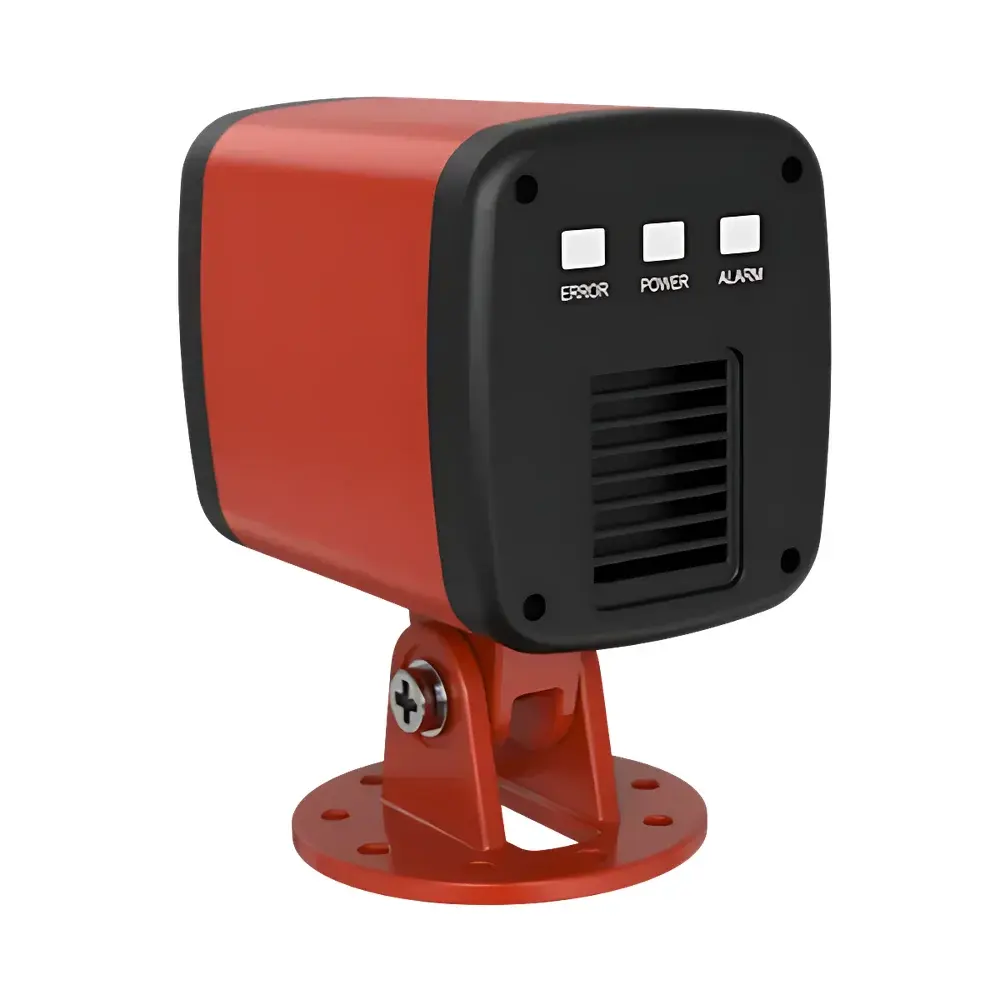
PERIC YWT-2024 Portable Oil Mist Detector for Marine Enclosure Monitoring
| Brand | PERIC |
|---|---|
| Origin | Hebei, China |
| Manufacturer Type | Direct Manufacturer |
| Country of Origin | China |
| Model | YWT-2024 |
| Pricing | Upon Request |
| Detection Principle | Light Scattering (Multi-Path Compensated) |
| Portability | Portable |
| Application Scope | Marine Engineering, Hydraulic Systems, Engine Rooms, and Industrial Enclosures |
| Target Aerosol Size Range | 1–10 µm |
| Measurement Range | 0–5 mg/L |
| Resolution | 0.01 mg/L |
| Output Interface | RS485 |
| Power Supply | 24 VDC |
| Ingress Protection Rating | IP56 |
| Operating Temperature | 0–70 °C |
| Compliance | IACS Unified Requirement UR67 (Oil Mist Detection in Main Engine Crankcases) |
Overview
The PERIC YWT-2024 Portable Oil Mist Detector is an engineered solution for continuous, real-time monitoring of airborne oil mist concentrations in confined and critical marine and industrial environments—particularly engine rooms, hydraulic power units, turbine enclosures, and crankcase compartments. Designed in strict accordance with the technical and safety requirements of the International Association of Classification Societies (IACS) Unified Requirement UR67, this detector employs a calibrated multi-path light scattering methodology to quantify oil mist mass concentration within the aerodynamically relevant 1–10 µm particle size range. This size domain corresponds to respirable and deposition-prone aerosols generated during high-pressure lubrication, fuel injection, or mechanical wear—making precise detection essential for early warning of potential fire, explosion, or machinery failure risks. Unlike generic particulate sensors, the YWT-2024 is specifically optimized for hydrocarbon-based mists (e.g., mineral hydraulic oils, marine diesel, turbine oils), minimizing cross-sensitivity to water vapor, dust, or non-oily aerosols through optical path compensation and spectral filtering.
Key Features
- Multi-path compensated light scattering optics—enhances signal stability and reduces drift caused by lens fouling or ambient light interference;
- Direct-reading mass concentration output (0–5 mg/L) with 0.01 mg/L resolution, traceable to NIST-traceable calibration standards;
- Robust straight-tube optical chamber design minimizes oil residue accumulation and extends maintenance intervals between cleanings;
- IP56-rated enclosure ensures reliable operation in high-humidity, salt-laden, and vibration-prone marine environments;
- RS485 Modbus RTU interface enables seamless integration into existing alarm control panels, SCADA systems, or centralized monitoring networks;
- 24 VDC low-voltage operation supports compatibility with shipboard DC distribution systems and battery-backed emergency circuits.
Sample Compatibility & Compliance
The YWT-2024 demonstrates consistent response across a representative spectrum of industrial oils, including ISO VG 32/46/68 hydraulic fluids, marine distillate fuels (DMA/DMB), and turbine oils meeting ISO 8573-1 Class 2 oil aerosol specifications. It is not intended for use with solvent-based mists, glycol-based coolants, or highly volatile organic compounds (VOCs). The device conforms to IACS UR67 Annex A requirements for oil mist detection sensitivity, alarm threshold accuracy (±10% of setpoint), and functional reliability under thermal cycling (0–70 °C) and long-term aging (≥10,000 hours MTBF verified per accelerated life testing). While not certified to ATEX or IECEx, its intrinsic safety profile supports deployment in non-hazardous zones (Zone 2 / Class I, Division 2) when installed per manufacturer-specified mounting guidelines.
Software & Data Management
The detector operates as a standalone analog/digital transducer and does not require embedded firmware updates or proprietary configuration software. All operational parameters—including alarm thresholds (programmable via external controller), sampling interval, and zero calibration mode—are configured externally via Modbus register mapping over RS485. Raw concentration values are transmitted at user-defined polling intervals (default: 1 Hz), supporting time-series logging in third-party historian platforms compliant with ISA-95 or IEC 62443-3-3 data integrity frameworks. For audit-ready environments, integration with controllers supporting FDA 21 CFR Part 11 electronic signature and audit trail capabilities is feasible through protocol-compliant gateway devices.
Applications
- Early-warning monitoring of crankcase oil mist in low-speed marine diesel engines (per IMO MSC.1/Circ.1450 guidance);
- Condition-based surveillance of hydraulic system integrity in offshore cranes, winches, and deck machinery;
- Preventive maintenance support for gas turbine enclosures and reduction gear sumps;
- Compliance verification for flag state and class society surveys requiring UR67-mandated oil mist detection coverage;
- Supplemental air quality assessment in enclosed workshops handling metalworking fluids or compressor lubricants.
FAQ
Does the YWT-2024 require periodic factory recalibration?
Yes—annual calibration against traceable oil mist reference generators (e.g., Palas MFP-3000 series) is recommended to maintain measurement uncertainty ≤±8% across the full range.
Can it be installed vertically or only horizontally?
The straight-tube optical path permits installation in any orientation; however, horizontal mounting is preferred to minimize gravitational settling of larger droplets within the sensing zone.
Is the detector compatible with DCS systems from Siemens, Yokogawa, or Honeywell?
Yes—when interfaced via standard RS485-to-Modbus gateways supporting RTU framing and configurable baud rates (9.6–115.2 kbps), it integrates without custom drivers.
What maintenance is required beyond routine cleaning?
Optical windows should be wiped with lint-free isopropyl alcohol swabs every 3 months in high-mist environments; no consumables or replaceable modules are specified in the design.
Does it meet GLP or GMP documentation requirements?
While the instrument itself is not GLP/GMP-certified, its Modbus data stream supports integration into validated systems that provide full electronic audit trails, calibration logs, and change control records.







