
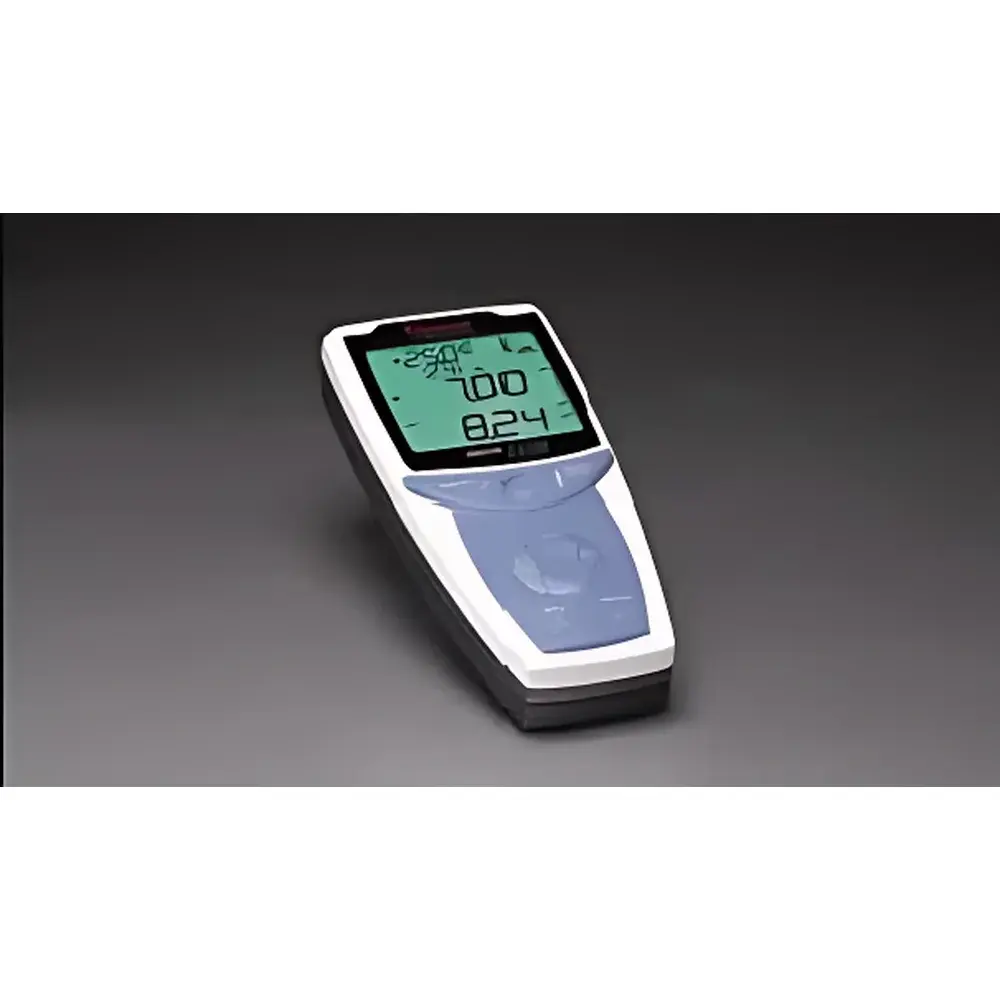
Thermo Scientific Orion Star A320C Precision Portable Conductivity/TDS/Salinity Meter
| Origin | USA |
|---|---|
| Manufacturer Type | Authorized Distributor |
| Origin Category | Imported |
| Model | 320C-01 |
| Price | Upon Request |
| Conductivity Range | 0.000–3000 mS/cm |
| Resolution | Up to 4 significant digits, down to 0.001 µS/cm |
| Accuracy | ±0.5% of reading or ±0.01 µS/cm (whichever is greater) |
| Resistivity Range | 0.0001–100 MΩ·cm |
| Salinity Range | 0.01–80.0 ppt NaCl |
| TDS Range | 0–19,999 mg/L |
| Cell Constant Range | 0.001–199.9 cm⁻¹ |
| Reference Temperatures | 15°C, 20°C, or 25°C |
| Electrode Compatibility | Two-electrode, four-electrode, and planar conductivity cells |
| Calibration Points | 1–5 points |
| Temperature Range | −5°C to 105°C |
| Temperature Resolution | 0.1°C (−5°C to 99.9°C), 1.0°C (>99.9°C) |
| Temp. Accuracy | ±0.1°C |
| Temp. Compensation | Automatic or manual |
| Display | Backlit LCD |
| Sensor Interface | Conductivity – miniDIN |
| Communication | Bidirectional RS232, optional USB cable |
| Data Logging | 200 entries |
| Calibration History | Last 10 calibrations |
| Method Storage | 10 user-defined methods |
| Self-Test | Yes |
| Password Protection | Yes |
| Firmware/Method Update | Via PC software |
| Power | 4 × AA batteries |
| Certifications | CE, CSA, UL, TÜV, FCC Class A |
| Operating Environment | 5–45°C, 5–85% RH |
| Ingress Protection | Benchtop – IP54 |
Overview
The Thermo Scientific Orion Star A320C Precision Portable Conductivity/TDS/Salinity Meter is an engineered solution for high-fidelity electrochemical measurement of aqueous solutions in field, laboratory, and quality control environments. Based on the principle of two- or four-electrode AC conductometric measurement—where a known alternating current is applied across a conductivity cell and the resulting voltage drop is used to calculate solution conductance—the instrument delivers traceable, reproducible results across an exceptionally wide dynamic range (0.001 µS/cm to 3000 mS/cm). Its dual-mode temperature compensation (linear or non-linear, with selectable reference temperatures at 15°C, 20°C, or 25°C) ensures compliance with standardized reporting conventions required by pharmacopeial and environmental testing protocols. Designed for rugged portability without compromising metrological integrity, the A320C meets IP67 ingress protection standards—enabling reliable operation in humid, dusty, or splash-prone conditions typical of wastewater treatment plants, pharmaceutical cleanrooms, aquaculture facilities, and environmental monitoring sites.
Key Features
- Smart Stability™ algorithm dynamically adjusts response threshold based on signal noise, reducing stabilization time without sacrificing accuracy.
- Smart Averaging™ function applies adaptive filtering to successive readings, improving precision and repeatability—especially critical for low-conductivity ultrapure water or unstable biological samples.
- Auto-recognition of three standard calibration solutions (e.g., 84 µS/cm, 1413 µS/cm, 12.88 mS/cm KCl) simplifies setup and minimizes operator error during multi-point calibration (1–5 points).
- Full electrode flexibility: compatible with two-electrode cells for routine measurements, four-electrode cells for high-ionic-strength or fouling-prone samples, and planar electrodes for surface or micro-volume applications.
- Integrated self-test diagnostics verify sensor integrity, battery status, memory health, and internal circuit functionality—providing immediate feedback prior to critical measurements.
- 10 password-protected method configurations allow secure, role-based access for multi-user labs operating under GLP or GMP frameworks.
- Backlit LCD display with large numeric characters ensures legibility under low-light field conditions or in glove-box environments.
Sample Compatibility & Compliance
The A320C supports analysis of diverse aqueous matrices—including purified water (PW), water-for-injection (WFI), seawater, brines, process coolants, boiler feedwater, and municipal effluents—without hardware modification. Its extended resistivity range (up to 100 MΩ·cm) enables direct assessment of ultrapure water per ASTM D5127 and USP . All conductivity, TDS, and salinity calculations adhere to ISO 7888, ASTM D1125, and APHA Standard Methods 2510B. The instrument’s firmware architecture fully supports FDA 21 CFR Part 11-compliant data management when paired with optional Orion Software Suite—providing electronic signatures, audit trails, and immutable record retention essential for regulated pharmaceutical and biotechnology QA/QC workflows.
Software & Data Management
Data integrity is maintained through embedded GLP-compliant logging: 200 measurement records store timestamp, sample ID, operator ID, electrode serial number, calibration history, temperature, and raw/conversion parameters. The last 10 calibrations—including date, standard used, slope, offset, and cell constant—are retained for traceability. RS232 or optional USB connectivity enables bidirectional transfer of methods, firmware updates, and datasets to LIMS or ELN platforms. Orion PC software facilitates report generation compliant with ISO/IEC 17025 documentation requirements, including customizable templates for certificate-of-analysis output.
Applications
- Pharmaceutical water system validation (PW, WFI, pure steam condensate)
- Environmental monitoring of surface water, groundwater, and wastewater effluent
- Food & beverage process control (brine concentration, cleaning solution verification)
- Aquaculture and hydroponics nutrient solution management
- Power plant boiler and cooling tower water chemistry surveillance
- Academic and industrial research requiring portable, high-resolution conductivity profiling
FAQ
Does the A320C support automatic temperature compensation for non-linear electrolyte behavior?
Yes—users may select linear or non-linear (NaCl or KCl curve) temperature compensation modes, with configurable reference temperatures (15°C, 20°C, or 25°C) to align with method-specific requirements.
Can the instrument store calibration data for multiple electrodes independently?
No—the A320C stores the most recent 10 calibrations globally; however, each record includes electrode identification (if entered manually) and full calibration metadata for retrospective correlation.
Is the IP67 rating maintained when the battery compartment is open?
No—IP67 certification applies only when the battery cover and all ports are fully sealed per manufacturer instructions. Field replacement of AA batteries requires resealing before submersion or dust exposure.
What regulatory standards does the built-in GLP functionality satisfy?
The device meets core GLP data integrity requirements per OECD Principles of GLP, including time-stamped records, operator authentication, and uneditable calibration logs—serving as foundational evidence for inspection readiness under FDA, EMA, or PMDA audits.
Is the optional FDA 21 CFR Part 11 compliance module pre-installed or licensed separately?
The Part 11 feature set is enabled via a separate software license key; firmware includes the underlying security architecture (role-based access, audit trail buffer, digital signature framework), but activation requires authorized licensing through Thermo Fisher Scientific.



